

You've paid rent, utilities, insurance, and everyday bills on time for years. Then a mortgage lender reviews your application and says there isn't enough credit history to produce a usable score. The decision feels unfair because your financial habits are responsible, yet the credit report doesn't show enough of that responsibility.
That situation usually points to a thin credit file, not automatically to bad credit. The difference matters. A damaged file contains negative information such as late payments, collections, charge-offs, or high balances. A thin file may contain too little information for a lender or scoring model to evaluate you confidently. For a first-time homebuyer, the solution may involve building new tradelines, documenting nontraditional payment history, correcting credit report errors, or combining all three approaches.
Table of Contents
- When a Clean Payment Record Is Not Enough
- What a Thin Credit File Actually Means
- Why Mortgage Lenders Treat Thin Files as a Real Risk
- Common Causes of a Thin Credit File
- Comparing Strategies to Build a Fuller Credit File
- A Six to Twelve Month Action Plan for Homebuyers
- Alternative Data and Nontraditional Underwriting Paths
- Misconceptions, Mistakes, and When Professional Help Makes Sense
When a Clean Payment Record Is Not Enough
Maya is 29 and has rented the same apartment for several years. She pays rent, utilities, streaming services, and insurance bills on time. She doesn't carry large balances, hasn't dealt with collections, and assumed her responsible payment habits would translate into a strong mortgage application.
During a pre-approval conversation, her loan officer reviewed her credit profile and noticed that only a small amount of conventional account information was reporting. Maya's rent and utility payments weren't appearing as standard tradelines, and her limited card history didn't give the scoring system enough recent data. The automated underwriting response returned an insufficient-data result.
Maya asked whether the lender was saying she had bad credit. The loan officer clarified that the issue wasn't a pattern of missed payments. The issue was that the credit report didn't contain enough account history, account depth, or credit types to support a confident score and underwriting decision.
That distinction can be difficult to absorb. A person can be financially reliable in everyday life while remaining largely invisible to traditional credit models. Paying bills on time only helps a mortgage application when the payments are reported in a form the lender and scoring model can use.
Practical rule: A clean payment record is valuable, but an unreported payment record may not strengthen a conventional credit profile.
Before applying for a home loan, it's wise to check credit before home loan so you can confirm whether the issue is limited history or whether inaccurate, outdated, or missing information is also involved. A report review can reveal whether you have a thin file, a damaged file, or a combination of both.
Maya's experience is common in principle, even though every borrower's file is different. A thin credit file can affect FHA, VA, USDA, and conventional mortgage preparation because each lender may apply its own documentation standards and underwriting requirements. Results vary according to the loan program, lender policy, reported accounts, payment behavior, and the evidence available for review.
What a Thin Credit File Actually Means
A thin credit file contains too few active accounts, too little recent activity, or too little account variety for a scoring model or lender to evaluate credit risk confidently. Some consumer-facing explanations use fewer than five accounts as a practical description, but the exact threshold can vary by lender and scoring model. A file can also become thin after accounts close, loans are paid off, or reporting activity becomes stale.
A thin file differs from a damaged file in an important way. With damaged credit, a score may exist, but late payments, collections, charge-offs, repossessions, high utilization, or other negative information can pull it down. With a thin file, the primary concern is often the absence of enough usable information rather than the presence of severe negative information.
Credit invisible describes a related but distinct situation. The CFPB reported that 26 million U.S. adults were credit invisible, while another 19 million had unscorable files, including 9.9 million with thin files and 9.6 million with stale files. Together, these 45 million consumers could face denied access to credit because their records were too limited for mainstream models to score them, according to the CFPB policy report on credit invisibility and unscorable files.
Thin, damaged, and invisible are different profiles
| Profile Type | Typical Cause | Score Status | Underwriter View |
|---|---|---|---|
| Thin credit file | Few accounts, limited recent activity, or limited account mix | A score may be unavailable or less informative | Needs more conventional history or supporting documentation |
| Damaged credit file | Late payments, collections, charge-offs, high balances, or other negative reporting | A score usually exists but may be reduced | Reviews severity, recency, balances, and repayment patterns |
| Credit invisible | No reportable history with a nationwide consumer reporting agency | No conventional score may be generated | Requires new reported activity or an approved alternative path |
FICO and VantageScore don't treat every sparse file in exactly the same way. One mortgage-focused explanation states that FICO generally needs at least one account with roughly six months of reporting history before producing a score, while mortgage materials describe VantageScore 4.0 as capable of analyzing up to 24 months of trended data and identifying qualified borrowers with four accounts or fewer. These differences mean a borrower may be scoreable under one model and unscoreable under another, as explained in this thin-file mortgage credit overview.
The practical question is whether you have a data problem, a score problem, or both. Consumers seeking broader financial education may also find it useful to find help with debt and credit while they determine which accounts and records need attention.
Why Mortgage Lenders Treat Thin Files as a Real Risk
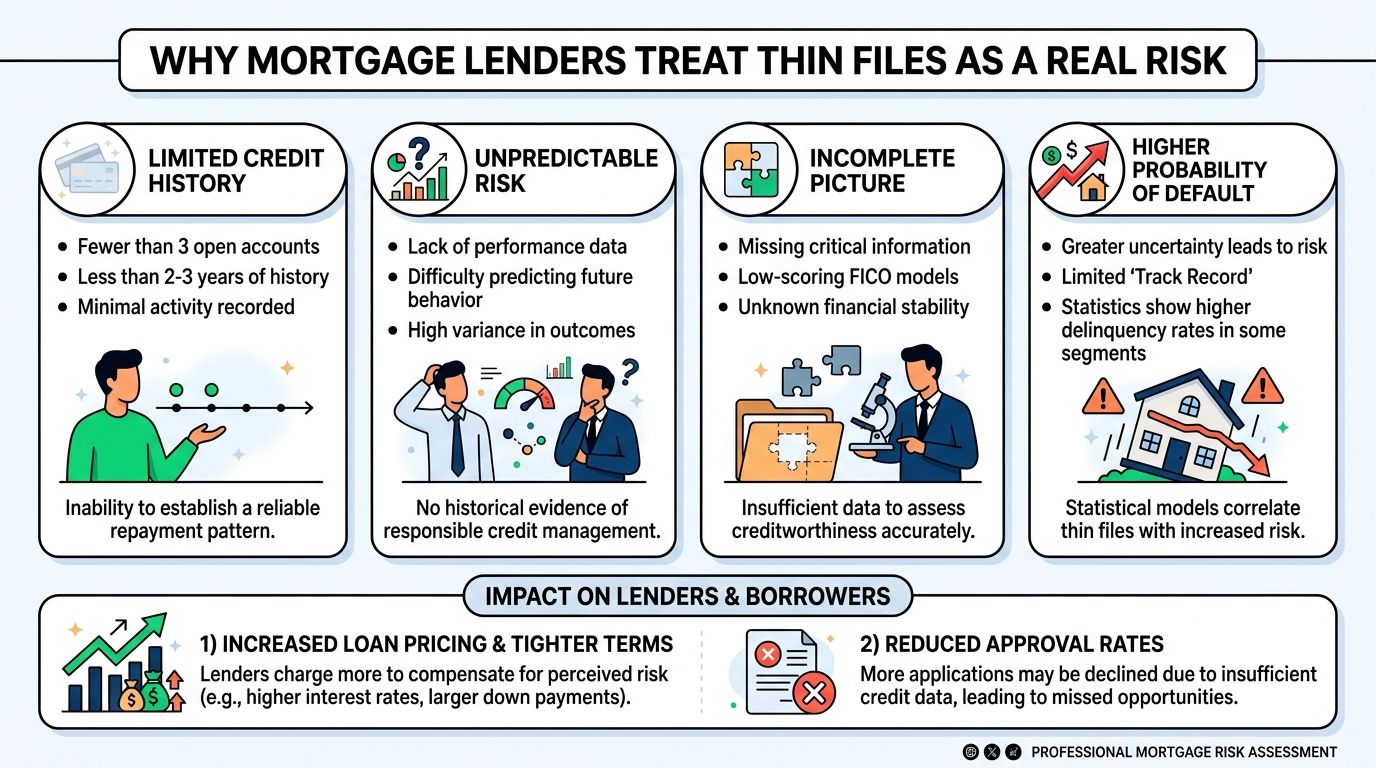
Mortgage lenders use credit history to estimate how consistently a borrower has managed obligations over time. A scoring model can compare patterns such as account age, payment history, balances, and the mix of revolving and installment accounts. When those signals are missing, the lender has less evidence to separate a stable borrower from someone who may struggle after taking on a large housing payment.
The concern isn't personal. It's a limitation in the available data. The Federal Reserve Bank of San Francisco found that, holding other factors constant, first-time borrowers with thin credit files had about a five percentage point higher likelihood of serious delinquency, as described in its analysis of first-time borrower credit risk. That finding helps explain why lenders may apply additional review to a thin file, even when the applicant has no obvious history of missed payments.
A more recent Federal Reserve assessment reported that roughly 32 million American adults were unscoreable in 2025, including 7 million credit invisible adults and 25 million adults with thin files. The Fed described that group as 9.8% of all U.S. adults, according to the Federal Reserve assessment summarized by Yahoo Finance.
Score, risk tier, and underwriting are not the same thing
A credit score is a numerical output from a scoring model. A risk tier is the lender's broader classification of the application, which may include the score, debt-to-income ratio, loan-to-value ratio, reserves, payment history, and other factors. A manual underwriter review allows a qualified person to evaluate documents and compensating factors when an automated system can't make a straightforward decision.
Most loan officers can't ignore an unscored file. The lender must follow the requirements of the loan program, its investor, and its own underwriting policy. That can mean requesting rental history, bank statements, insurance records, or other documentation, or it may mean asking the borrower to establish more conventional account history first.
If you're comparing mortgage preparation options, understanding the hard pull credit impact on home loans can help you plan lender conversations without submitting unnecessary applications. The aim is to give underwriting a clearer, documented picture of your ability to manage credit.
Common Causes of a Thin Credit File
A sparse credit report can develop without irresponsible borrowing. Some consumers haven't used conventional credit long enough, while others have used financial products that don't routinely report to the major bureaus.
Young adults often begin with no established revolving or installment history. A person may have a checking account, debit card, job, and rental history but still lack the account depth that mortgage scoring models expect.
Recent immigrants may arrive with years of responsible financial behavior in another country, yet that history generally doesn't transfer automatically into a U.S. credit report. Without U.S. tradelines or approved alternative documentation, the borrower may appear new to the system.
People who rely on cash or debit cards can also have thin files. Paying with cash avoids debt, but it usually doesn't create the revolving or installment account history that scoring models analyze.
Life changes can remove useful history
Divorce, separation, or the death of a spouse can change a credit profile quickly. A borrower who previously benefited from joint accounts or authorized-user history may lose access to those accounts when ownership changes or accounts close.
Long periods without active reporting create another pathway. Paid-off auto loans, closed credit cards, and finished personal loans may leave a consumer with few currently reporting accounts. Older history can remain relevant, but lenders and scoring models also need recent activity.
The right rebuilding approach depends on the cause:
- No established history: Start with a manageable account that reports consistently.
- Closed or paid-off accounts: Consider whether a revolving account or credit-builder product fits the budget.
- Recent immigration: Ask lenders what documentation they accept for foreign financial history and current payment obligations.
- Divorce or account removal: Review whether information was reported correctly after responsibility for joint debts changed.
- Unreported rent or utilities: Explore reporting options or document payment history for a lender's nontraditional underwriting process.
A credit educator or housing counselor should evaluate the actual report before recommending new accounts. Opening products without a plan can create inquiries, fees, or payment obligations that don't improve mortgage readiness.
Comparing Strategies to Build a Fuller Credit File
There isn't one universal tradeline solution. Each tool creates a different type of information, and each carries different costs and responsibilities.
A secured credit card requires a refundable deposit that typically supports the account's credit limit. It can suit someone who wants a controlled revolving account, provided the issuer reports activity to the major credit bureaus and the borrower pays on time.
A credit-builder loan is usually offered through a credit union or lender. The borrowed funds are held in a savings account while the borrower makes scheduled payments, with access to the funds generally occurring under the product's terms after repayment. This can add installment history, but the borrower must understand the fees and payment obligation.
An authorized-user account can add an established card's history to another person's profile if the issuer reports authorized-user information and the account is managed responsibly. This option depends heavily on the primary cardholder's payment record, balance management, and willingness to keep the account open.
Rent and utility reporting may convert existing payments into reported information when the service, landlord, provider, and bureau rules permit it. That can be useful for a consumer who already pays reliably, but it may not satisfy every mortgage lender's requirements for conventional tradelines.
| Strategy | Typical Cost | Time to Score Impact | Ideal User | Key Trade-Off |
|---|---|---|---|---|
| Secured credit card | Refundable deposit and possible account fees | Depends on reporting and model requirements | Consumer who can manage a small revolving account | Adds payment and utilization responsibilities |
| Credit-builder loan | Product fees and scheduled payments | Depends on reporting continuity and model | Consumer seeking installment history | Creates a payment obligation while funds may be restricted |
| Authorized user | May involve no direct account fee | Potentially faster after reporting | Consumer with a trusted, responsible family member | The primary cardholder's behavior affects the account |
| Rent or utility reporting | Service-dependent fee or enrollment terms | Depends on provider and bureau acceptance | Consumer with reliable existing payments | May not replace conventional mortgage tradelines |
Using two complementary tools can create more useful data than relying on a single account, but affordability comes first. Readers also comparing credit preparation with broader borrowing topics may benefit from this bad credit car loan guide, while first-time homebuyers can review first-time buyer credit advice before choosing a starter product.
A Six to Twelve Month Action Plan for Homebuyers
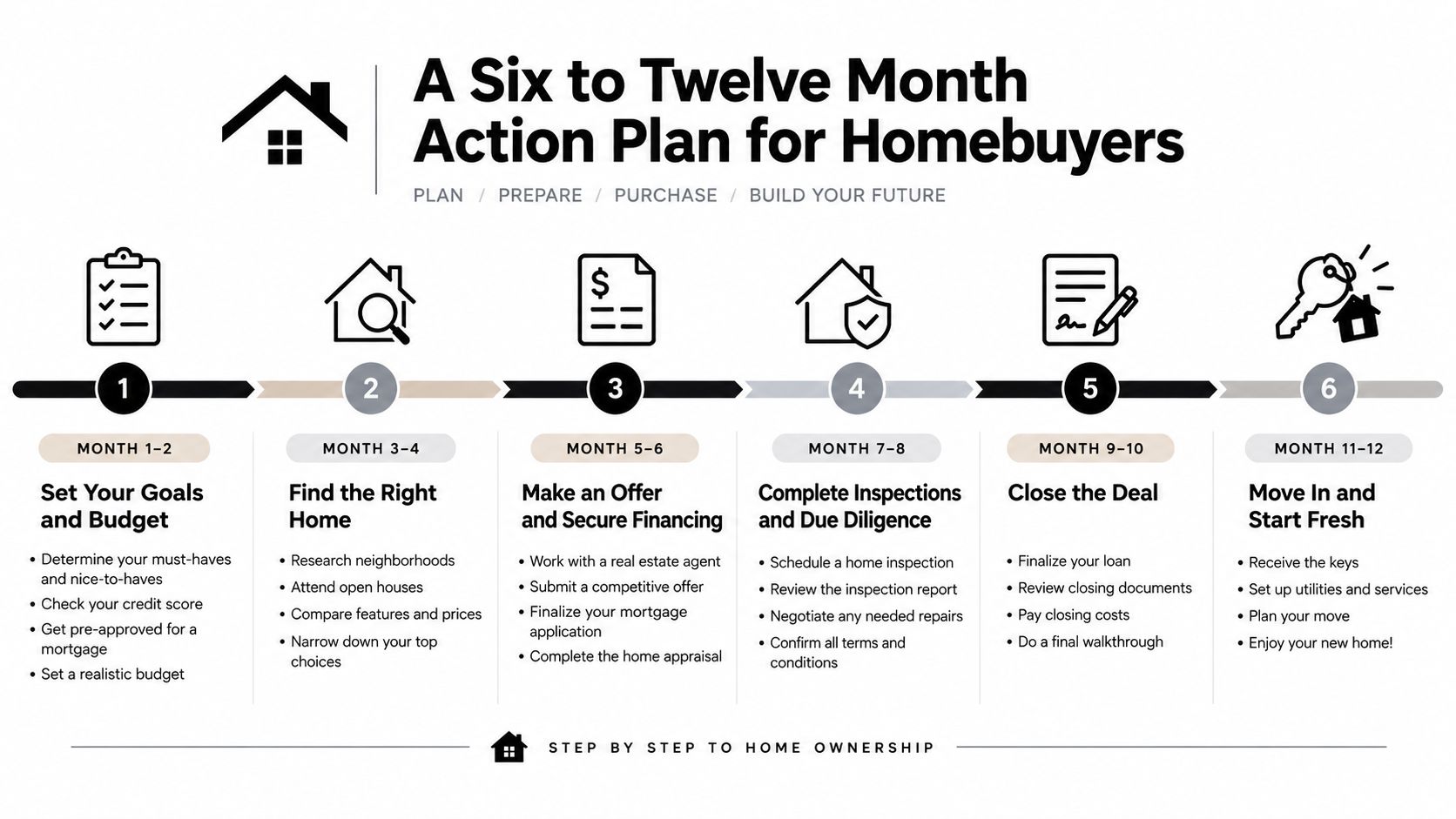
A homebuyer should begin with diagnosis, not applications. Pull the available credit reports, review account ownership and reporting status, and confirm whether the problem is a thin file, inaccurate information, damaged credit, or a combination. A mortgage professional can then explain which scoring model and documentation standards apply to the intended loan program.
Months one and two
Choose one manageable secured card if a revolving account is appropriate for your budget. Confirm that the issuer reports to the relevant consumer reporting agencies, set up automatic payment reminders, and use the account lightly rather than treating the available limit as spending capacity.
If a trusted family member has a well-managed seasoned card, discuss authorized-user status. The arrangement should be transparent, and you should confirm how the issuer reports authorized users before relying on the account for mortgage preparation.
Months three and four
Consider a small credit-builder loan only if the payment fits comfortably within your budget. The purpose is to create consistent installment reporting, not to borrow money for its own sake.
At the same time, investigate rent and utility reporting. Keep copies of leases, payment confirmations, bank statements, and provider records. A lender may accept some forms of nontraditional evidence, but acceptance depends on program and lender rules.
Months five and six
Keep reported balances low and pay before the statement closing date when practical. Continue every account's payment on time, and avoid applications that don't support a documented mortgage plan.
Review the reports again for account accuracy. Check names, addresses, balances, dates, ownership, and payment status. If information is inaccurate, outdated, unverifiable, or misleading, preserve supporting documents before starting a formal dispute.
Months seven through nine
If the existing accounts are stable and affordable, ask whether a second revolving account is appropriate. Don't add an account merely to increase the account count. Mortgage readiness depends on sustainable payment behavior, not a collection of products that strain your budget.
You can also ask existing issuers about credit-limit reviews, but understand that some requests may involve a credit inquiry. Check the issuer's process first.
Months ten through twelve
Begin prequalification conversations with multiple mortgage lenders rather than submitting formal applications without preparation. Ask whether the lender can evaluate rent, utilities, insurance, bank activity, or other nontraditional payment evidence.
Before a formal application, request the lender's credit-report requirements and correct residual inaccuracies. Timelines vary by scoring model, reporting cycle, lender policy, and whether you already have a score.
For additional education, review Superior Credit Repair on credit building. The most useful plan is the one you can maintain while also managing housing costs, savings, debt-to-income concerns, and ordinary household expenses.
Alternative Data and Nontraditional Underwriting Paths
Sometimes the fastest route to mortgage readiness isn't waiting for several new tradelines to age. A borrower with reliable rent, utility, phone, insurance, or bank-payment history may have strong evidence that traditional scoring doesn't capture. That evidence can support a lender's review when the loan program allows it.
Rent and utility records can demonstrate recurring payment behavior. Bank statements may help verify cash flow, reserves, and the source of recurring payments. Insurance and phone records may also be relevant where a lender accepts them, although consumers shouldn't assume that every payment type will qualify.
Fannie Mae Desktop Underwriter and Freddie Mac Loan Product Advisor use their own rules and data inputs. Trended data may provide additional context about balances and payment patterns, while asset and reserve analysis can help a lender evaluate the broader application. FHA, VA, USDA, conventional, and non-QM programs can differ substantially in how they handle limited conventional credit history.
| Program / Path | Minimum Tradeline Requirement | Alternative Data Accepted | Typical Use Case |
|---|---|---|---|
| Conventional automated underwriting | Varies by scoring and lender requirements | May include permitted rental, trended, asset, or reserve information | Borrower with limited history but strong overall documentation |
| FHA review | Depends on the applicable underwriting path | May include documented nontraditional credit and compensating factors | First-time buyer with limited conventional history |
| VA review | Depends on lender and program requirements | May include payment history and broader financial documentation | Eligible veteran or service member with limited U.S. credit history |
| USDA review | Depends on program and lender rules | May include approved nontraditional credit evidence | Eligible buyer in a qualifying location with limited tradelines |
| Non-QM underwriting | Set by the specific lender and product | May consider bank cash flow or other alternative documentation | Borrower who doesn't fit standard automated underwriting |
Alternative documentation isn't a replacement for responsible credit management. It's a documentation path that may bridge a data gap when the lender permits it. If you're deciding whether to fix thin credit with tradelines, ask the mortgage lender whether new accounts or nontraditional evidence is more useful for the intended program.
Misconceptions, Mistakes, and When Professional Help Makes Sense
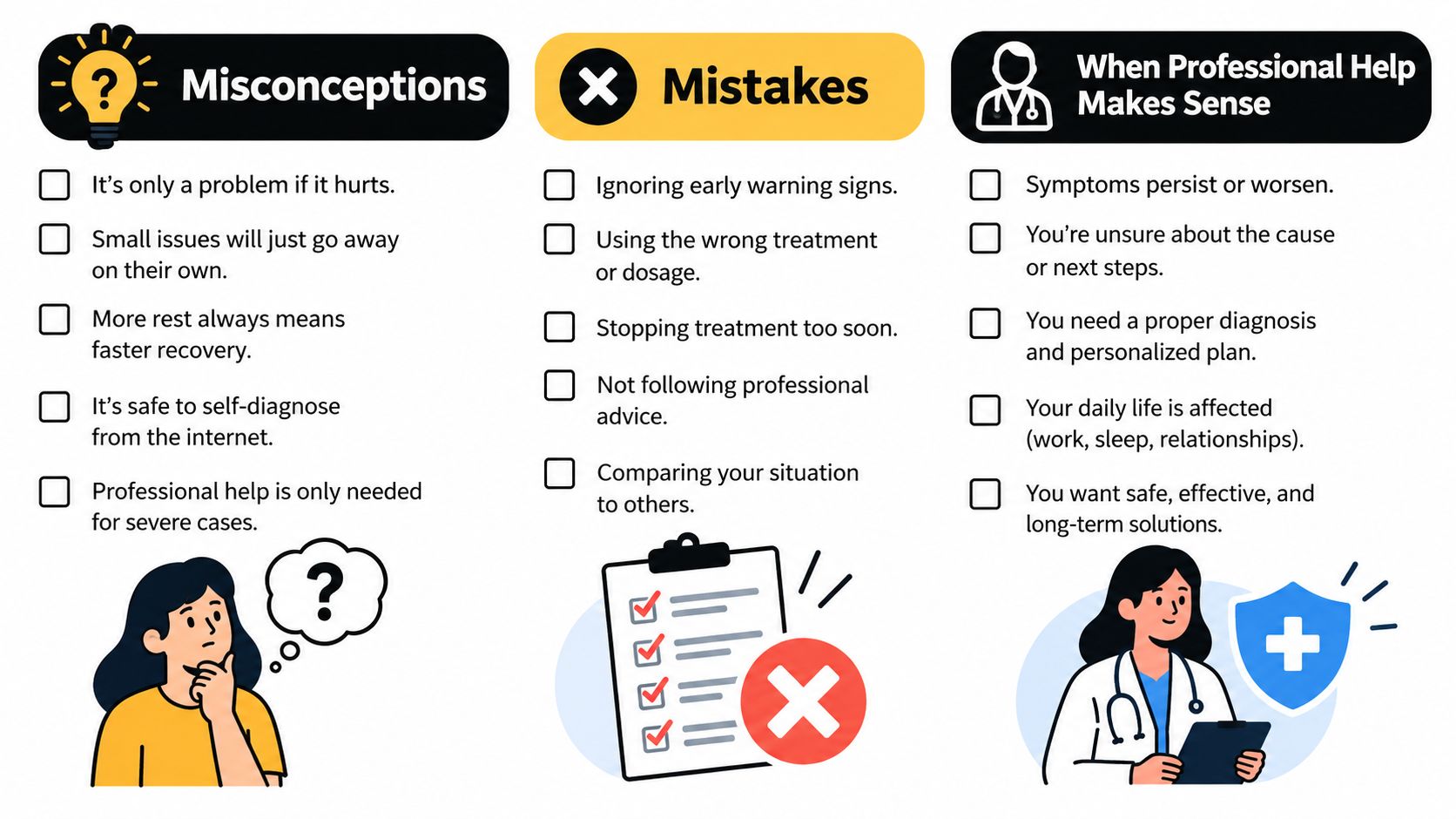
Closing an old credit card doesn't automatically improve a credit profile. It may remove available revolving credit, change utilization, or eliminate an account that contributes useful history. Before closing an account, review its fees, terms, balance, ownership, and possible effect on the rest of the file.
Rate shopping also needs careful planning. Mortgage inquiries may receive special treatment under scoring rules, but the exact treatment depends on the model and timing. Don't assume every credit application is harmless, and don't authorize unnecessary hard inquiries before speaking with a lender.
Paying a collection account doesn't automatically resolve every mortgage concern. The account may be inaccurate, reported by the wrong company, outside the relevant reporting period, or subject to lender-specific treatment. A consumer should review the information and supporting records before deciding whether to pay, dispute, negotiate, or seek professional guidance.
What legitimate credit repair can and cannot do
A compliant credit repair process reviews reports, identifies potentially inaccurate or unverifiable information, gathers documentation, and uses formal dispute and verification procedures. It cannot lawfully guarantee deletion, promise a particular score increase, or guarantee FHA, VA, USDA, conventional, apartment, auto, or personal financing approval.
A HUD-approved housing counselor may help with homebuyer education and loan readiness. A licensed or compliant credit repair company may help consumers organize disputes involving credit report errors, erroneous collections, inaccurate late payments, charge-offs, medical collections, or other questionable reporting. The right choice depends on the complexity of the file and the consumer's ability to handle documentation independently.
Superior Credit Repair can review a consumer's credit report, help identify inaccurate or questionable items, and explain a structured plan for credit restoration and mortgage preparation. The company's work focuses on documentation-based disputes and credit-building education, including utilization planning and tradeline guidance. Results vary according to the file, documentation, creditor responses, account history, and current credit behavior.
Frequently asked questions
Is a thin credit file the same as bad credit?
No. A thin credit file usually means there isn't enough current or varied information to evaluate you confidently. Bad credit generally means a score exists but negative information is affecting it. Some consumers have both conditions, so a full report review matters.
Can a thin credit file prevent mortgage approval?
It can make approval more difficult, especially when the lender's automated system can't generate or use a score. Some lenders may consider nontraditional payment history or manual underwriting, but acceptance depends on the loan program, lender policy, documentation, debt-to-income profile, and other application factors.
Should I open several accounts to thicken my file?
Usually, no. Opening multiple accounts without a budget or lender strategy can create payment risk and unnecessary inquiries. A measured plan using one or two suitable, reporting accounts may be more sustainable than a rush to increase account count.
Can rent and utility payments help with mortgage preparation?
They may help when they're documented and the lender or loan program accepts them. Reporting services can also make some payment activity visible to consumer reporting agencies, but that doesn't guarantee a score or replace every conventional tradeline requirement.
When should I seek credit repair or housing counseling?
Consider professional help when you find inaccurate collections, late payments, charge-offs, identity information, account ownership problems, or disputed balances. Housing counseling can help with homebuyer preparation, while a compliant credit repair service can help organize documentation and legal disputes. Neither service can guarantee deletion or loan approval.
Superior Credit Repair can review your credit report, help identify inaccurate or questionable items, and explain a step-by-step plan for building a fuller, more lender-ready profile. Visit Superior Credit Repair to request a free credit analysis or consultation and discuss whether dispute support, tradeline education, or mortgage credit repair fits your situation.
If this information helped you better understand your credit report or your next steps, we would appreciate your honest feedback. You are welcome to share your experience with Superior Credit Repair on our Google Business Profile. Share your feedback on Google