

You've probably done the exciting parts already. You've checked home listings, compared neighborhoods, started thinking about monthly payments, and maybe even set aside money for a down payment. Then the less exciting question shows up: what does your credit look like right now, and what will a mortgage lender see when they review it?
That's where many first-time homebuyers get stuck. They know their score matters, but they don't always know which details inside the report could delay an FHA loan, create questions for a VA underwriter, or weaken a conventional mortgage application. A smart credit report helps turn that confusion into something more useful. It gives you a clearer view of the accounts, patterns, and possible errors that shape mortgage readiness.
Table of Contents
- Your Path to Homeownership and the Role of Credit
- What Exactly Is a Smart Credit Report
- Decoding the Key Elements of Your Credit Profile
- How Mortgage Lenders Use These Credit Insights
- How to Identify Inaccurate and Questionable Items
- A Compliant Strategy for Credit Profile Improvement
- Frequently Asked Questions About Credit and Mortgages
Your Path to Homeownership and the Role of Credit
A lot of buyers begin with the same assumption: if the credit score looks decent, the mortgage process should be simple. Sometimes that's true. Sometimes it isn't.
A buyer may have enough income, steady work, and a realistic budget, but still run into trouble because the report shows old collections, a recent late payment, high card balances, or inconsistent information between accounts. In that moment, a basic score isn't enough. You need a fuller picture of what lenders may question and what you can address before you apply.
Consider a common situation. A renter has spent months preparing to buy a first home. Savings are improving, the debt load feels manageable, and online mortgage calculators suggest the payment could work. Then a closer review of the credit file shows a collection account, a balance reporting higher than expected, and an account history that doesn't line up cleanly. That doesn't always mean the goal is out of reach, but it does mean the file needs attention.
For buyers dealing with unpaid collections or underwriter concerns, it helps to understand how those issues can affect lender decisions. This overview of Mortgage Approval With Collections gives a useful look at why even one unresolved account can change the conversation.
Why the report matters more than most buyers expect
Mortgage lending is detail-driven. Lenders don't just glance at a number and move on. They review patterns. They look for signs of reliability, stability, and unresolved risk.
A smart credit report is useful because it helps you see those patterns earlier. Instead of treating credit as a mystery, you start reading it the way a lender might read it.
A homebuyer usually benefits most from credit work done before the mortgage application, not after the lender raises a concern.
What clarity gives you
When buyers understand their credit profile before they apply, they can make better decisions about timing. They can hold off on opening new accounts, reduce revolving balances, gather records for disputes, and deal with questionable reporting before a loan file goes to underwriting.
That's not hype. It's preparation.
For people working toward FHA loan preparation, VA loan preparation, USDA loan preparation, or conventional mortgage approval, the smartest first step often isn't shopping for rates. It's reviewing the full credit picture with calm, clear eyes.
What Exactly Is a Smart Credit Report
A traditional credit report often feels like a stack of data. It lists accounts, dates, balances, and remarks, but it doesn't always help the reader understand what matters most or what action to take next.
A Smart Credit Report is more useful for practical review because it does more than display information. It helps a consumer examine credit data, compare details, and respond to problems in a more active way.
A practical definition in plain English
Think of a standard report as a printed road map. It shows the roads, but you still have to figure out traffic, detours, and which route makes the most sense.
A smart credit report is closer to a live GPS. It still shows the route, but it also helps you spot trouble areas, compare options, and respond when something doesn't look right.
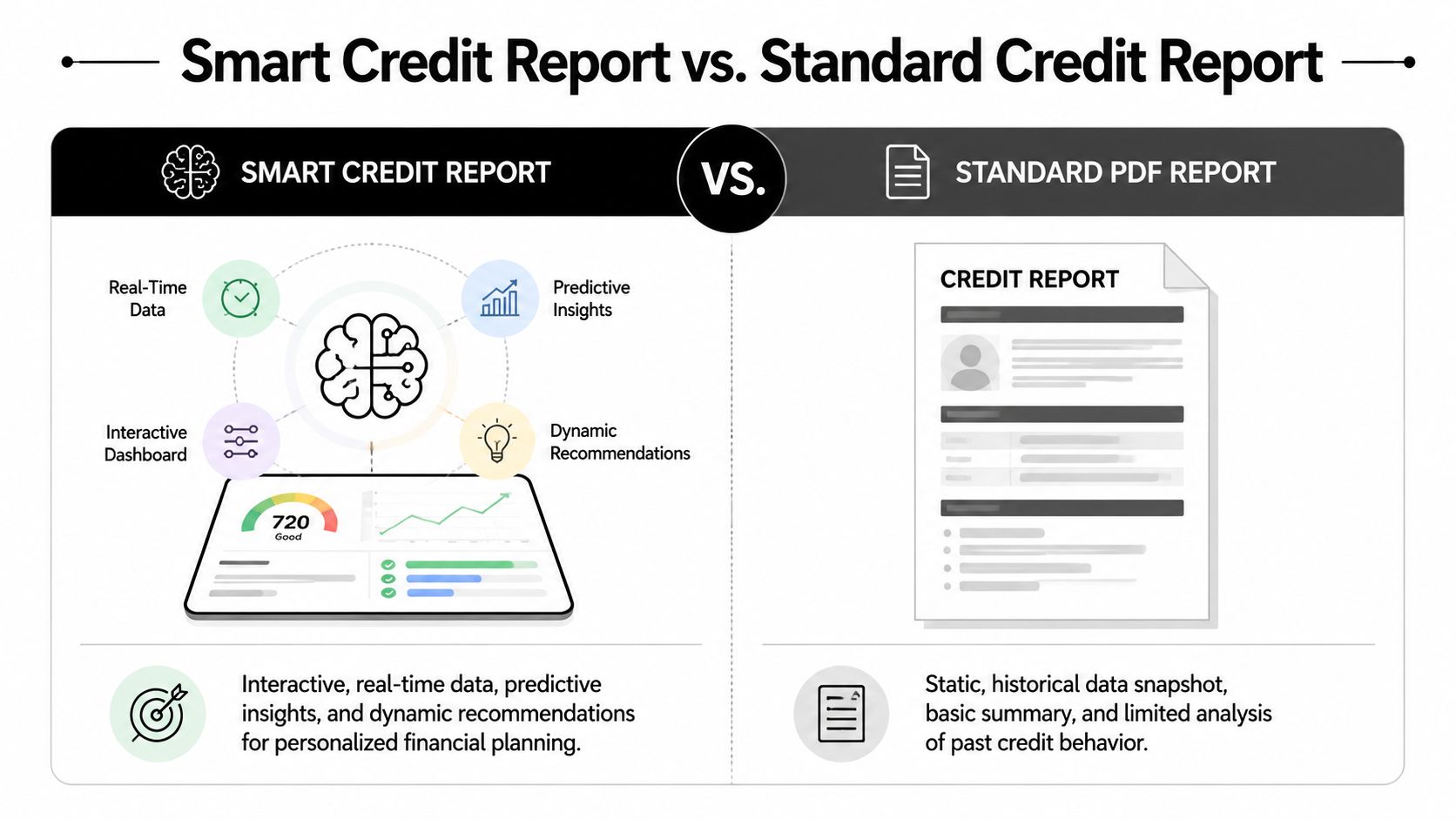
One important distinction comes from SmartCredit's own description. The company states that the Smart Credit Report® is not a traditional credit report but a consumer-facing communication medium that integrates additional data and formatting derived exclusively from TransUnion®, enabling users to interact directly with creditors via patented Action Buttons without generating a hard or soft inquiry on their credit file, thereby ensuring the report does not negatively impact credit scores while allowing real-time dispute resolution of inaccuracies through its SmartCredit FAQ explanation.
That matters because many consumers worry that reviewing or interacting with credit data will hurt their score. In this case, the system is designed so those interactions don't create a hard or soft inquiry on the file.
If you want a broader consumer-level explanation of why your file matters in everyday financial decisions, it may also help to learn about credit report significance before you focus specifically on mortgage prep.
Why this matters before a mortgage application
Mortgage credit repair is rarely about one dramatic issue. More often, it's about seeing the whole file clearly enough to catch the smaller things that can become larger underwriting questions later.
A practical smart credit report can help you:
- Compare account details more easily across reporting lines
- Spot missing or inconsistent information before a lender does
- Review possible dispute issues tied to inaccurate, outdated, unverifiable, or misleading entries
- Track behavior patterns such as revolving balances or recent account activity
A standard report might tell you what is there. A smarter report helps you understand what deserves follow-up.
That's especially valuable for first-time buyers who are trying to improve credit score habits, remove inaccurate items where appropriate, and rebuild credit profile strength before asking a lender to make a decision.
Decoding the Key Elements of Your Credit Profile
A lender's review of your credit is a lot like a home inspector's walk-through. The inspector is not glancing at random walls and windows. They are looking for patterns that suggest the house is solid or needs attention. Your credit profile works the same way.
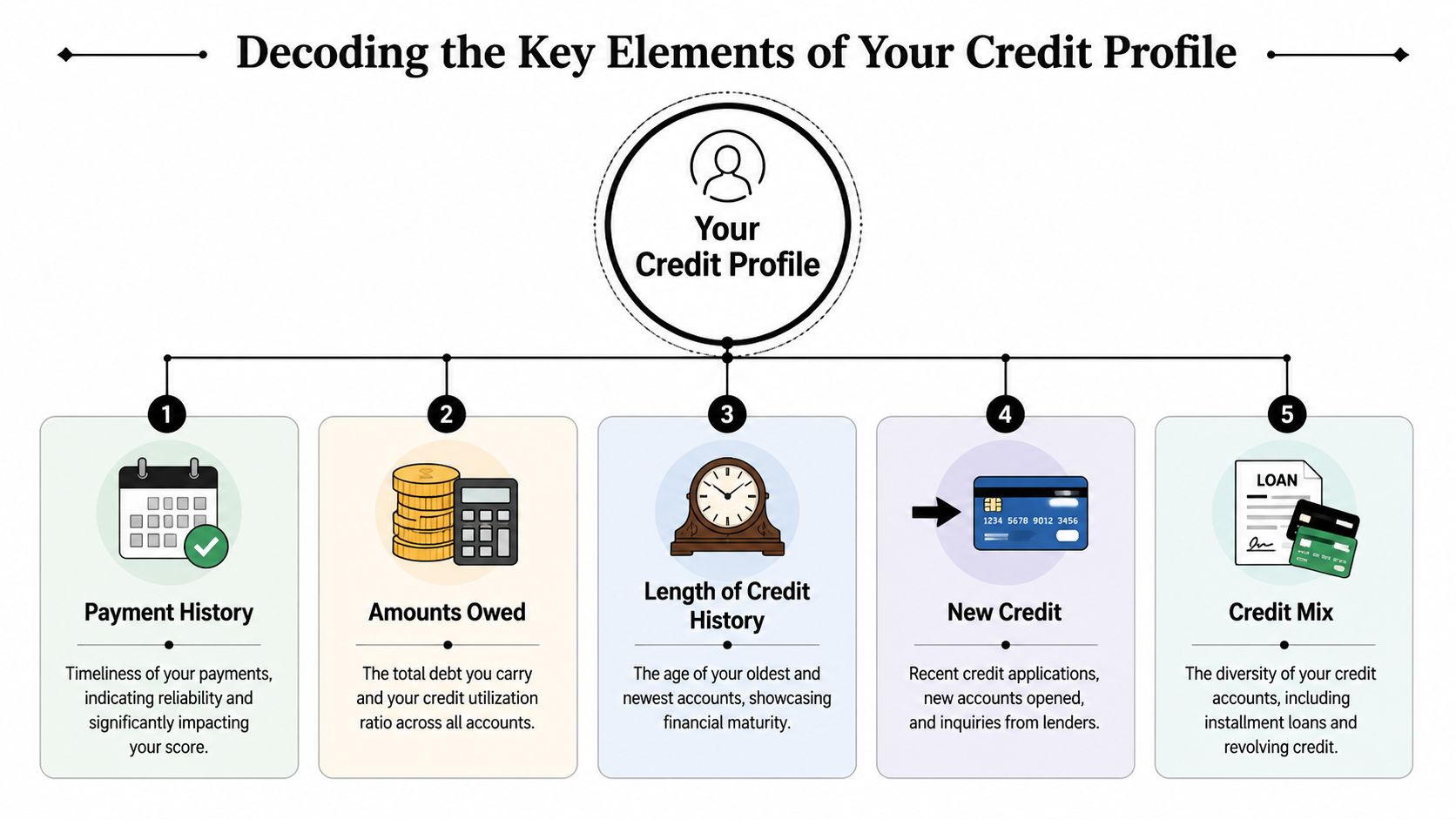
According to SmartCredit's credit report overview, FICO scoring gives the most weight to payment history and amounts owed, followed by length of credit history, with new credit and credit mix carrying less weight. The same source also notes that very low credit card utilization can support stronger scores. For a buyer preparing for a mortgage, that breakdown helps translate a confusing report into a practical checklist.
If you want a separate explanation of the scoring formula itself, How credit scores are calculated connects each report category to the score you see.
Payment history
This is usually the first place a mortgage lender looks for trouble.
A late payment from years ago may carry less weight than a pattern of missed payments in the last year. That is why buyers often feel confused. They see one score, but the lender sees timing, frequency, and whether the problem appears resolved.
For mortgage readiness, payment history answers a simple question. Have you shown that bills get paid on time, month after month?
Practical rule: During mortgage prep, protecting current on-time payments often helps more than trying a quick fix elsewhere.
Amounts owed and utilization
This category is mostly about balance management, especially on credit cards. A high balance can raise concern even if you have never paid late, because it can suggest your monthly budget is already under strain.
Utilization is the share of your available revolving credit that is currently in use. If you have a $5,000 limit and a $4,000 balance, the card is heavily used. To a mortgage lender, that can make your file look tighter than your income alone might suggest.
This is one of the easiest areas to misunderstand. A buyer may think, "I make my payments, so the balance should not matter much." For mortgage review, the balance still matters because lenders are trying to judge how much room is left in your budget before a housing payment is added.
Length of credit history
Older accounts can help show consistency over time. That matters for a mortgage because lenders prefer a file that looks established rather than newly built.
First-time buyers often wonder whether they should close old accounts they no longer use. Sometimes that cleanup instinct backfires. An older account can support the average age of your credit file, which may help the overall picture look steadier.
The goal is not to keep every account forever. The goal is to understand what role an older account plays before you make changes during mortgage preparation.
New credit
Recent applications and newly opened accounts can create questions, especially close to a mortgage application date.
A lender may see a burst of new credit and wonder whether your debt picture is changing. Did you finance furniture? Open store cards? Take out a personal loan? Even small new obligations can affect how your file reads during underwriting.
Mortgage files usually benefit from calm, predictable activity. If you are getting ready to apply, it often helps to avoid unnecessary credit applications until the loan process is complete.
Credit mix
Credit mix looks at the types of accounts on your report, such as revolving accounts and installment loans. It is a smaller scoring factor, but it still adds context.
This does not mean you should open accounts just to create variety. For mortgage prep, the better question is whether your existing report shows a history of handling credit in a stable, ordinary way.
Here is a simple mortgage-focused view of the five factors:
| Credit factor | What a lender may read from it |
|---|---|
| Payment history | Whether you have paid reliably over time |
| Amounts owed | How much financial pressure your current balances may suggest |
| Length of history | Whether the file looks established and consistent |
| New credit | Whether your obligations may be changing right before applying |
| Credit mix | Whether you have experience handling different account types |
A smart credit report makes these categories easier to use. Instead of staring at account lines and guessing what matters, you can match each issue to a lender concern and decide what to address before you apply for a mortgage.
How Mortgage Lenders Use These Credit Insights
Once a mortgage file reaches underwriting, the lender is trying to answer one basic question: does this applicant look financially consistent enough to handle a long-term housing payment?
That answer usually comes from the story inside the credit file, not just the score at the top.

What underwriters are really looking for
If a lender sees high credit card utilization, they might question whether your current debt load is pressuring your budget. If they see recent late payments, they may ask whether the payment problem was temporary or part of a pattern. If they see collections, they may want clarification, documentation, or proof of resolution depending on the loan file and lender guidelines.
That's why a lender-ready credit profile is broader than a score. It includes clean reporting, reasonable balance management, consistent payment behavior, and fewer surprises.
Here's how that often plays out in practice:
- If balances are high, a lender may worry about repayment strain even if income appears steady.
- If there's a recent collection, an underwriter may ask for more context before moving forward.
- If account information looks inconsistent, the file may need clarification before final approval.
- If the report shows stable, predictable behavior, the lender may feel more comfortable with the application overall.
For a deeper look at how lenders review files, this Superior Credit Repair mortgage guide is a helpful companion resource.
How loan type can shape the conversation
Different loan types can lead to different underwriting discussions. Some first-time buyers focus on FHA financing. Others may qualify through VA benefits. Conventional financing may involve a different level of scrutiny around overall file strength and account management. USDA applicants also need a clean, understandable credit picture because underwriters still want evidence of responsible use.
One point that often gets attention is score range. SmartCredit notes that for first-time homebuyers, a score above 700 is often required for FHA loans, while VA loans may accept scores as low as 580, according to its article on credit score update timing and mortgage impact. Even when a file appears to meet those thresholds, report accuracy still matters because the lender is reviewing the underlying details.
That same source also states that a 30-point increase in all consumers' credit scores could save up to $28 billion annually in credit card costs alone. For a homebuyer, the practical takeaway isn't the national figure itself. It's the idea that cleaner reporting and stronger habits can affect borrowing costs in meaningful ways.
Mortgage underwriting usually rewards stability. Sudden account activity, unresolved errors, and unclear explanations tend to slow things down.
How to Identify Inaccurate and Questionable Items
Reviewing your own report can feel intimidating at first, especially if you're not sure what counts as a real problem. The good news is that many issues are easier to spot when you know what to look for.
That matters because Brookings reports that more than one in five consumers, over 20%, have at least one potentially material error in their credit file that makes them appear riskier to lenders than they are.
A review checklist for homebuyers
Start slowly. You're not trying to become a credit auditor overnight. You're checking whether the information is accurate, current, and clearly yours.
Look for issues like these:
- Wrong personal details such as a misspelled name, incorrect address, or mixed file information
- Accounts you don't recognize that may reflect identity theft, reporting errors, or merged consumer data
- Balances that look inflated compared with your own records
- Duplicate negative accounts where the same debt appears more than once
- Outdated derogatory items that may no longer belong on the report
- Status errors such as an account marked unpaid after it was resolved or updated incorrectly
If you find something that looks off, documentation matters. Statements, payment confirmations, settlement letters, and identity records can all support a dispute review.
For readers who want a practical format for raising a dispute, this guide on How to Write a Credit Report Dispute Letter can help you organize the issue clearly.
What counts as questionable versus accurate
Many consumers find this frustrating: a negative item is not automatically inaccurate just because it hurts the score.
A late payment that really happened is still accurate, even if it's inconvenient. A collection account tied to a debt you owed may still be reportable if the reporting details are correct. A charge-off can remain if it is being reported accurately and within the allowed timeframe.
Questionable items are different. They may be:
- Inaccurate, meaning the facts are wrong
- Outdated, meaning the reporting period may have expired
- Unverifiable, meaning the furnisher cannot confirm the information properly
- Misleading, meaning the status or balance creates a false impression
Review your report like a lender would. Ask whether each item is accurate, documented, current, and relevant to your real credit history.
When buyers do this before applying, they often catch issues that would otherwise surface later during mortgage review, apartment approval screening, or other financing decisions.
A Compliant Strategy for Credit Profile Improvement
Good credit repair isn't built on tricks. It's built on documentation, timing, and legal process.
That matters because consumers do have rights, but those rights work best when they're used carefully. If information is inaccurate, outdated, unverifiable, or misleading, it can be disputed. If the information is accurate and still within the lawful reporting period, it usually can't be permanently removed just because it's inconvenient.
What the law allows you to do
The Fair Credit Reporting Act gives consumers the right to dispute information they believe is wrong. According to Bridgeforce Data Solutions, credit bureaus must complete a reasonable investigation of disputed items within approximately 30 days, and if the furnisher cannot verify the information within that timeframe, the bureau is legally required to correct or delete the item from the report.
There are also limits on how long many negative items can remain. CLA Legal explains that, under the FCRA, most negative items such as late payments, missed payments, and collections must be removed seven years after the date of first delinquency in its explanation of the FCRA seven-year rule.
Working Credit adds an important caution in its guide to credit repair realities. Accurate negative information generally cannot be permanently removed unless it is older than seven years for most items or older than ten years for bankruptcy information, and if an accurate item is removed only because of a reporting deadline miss, it typically reappears within 2 to 3 months.
What realistic credit repair looks like
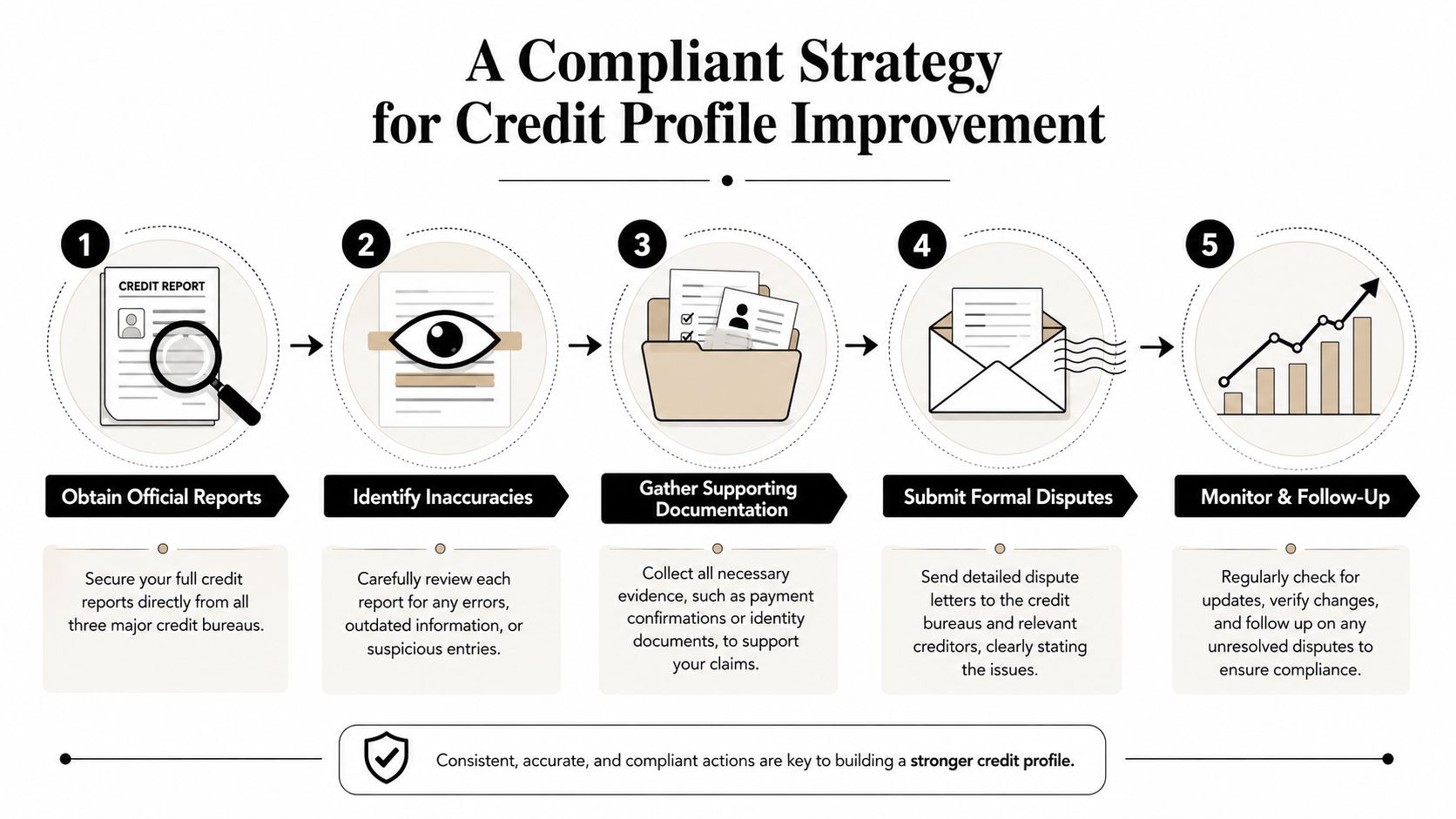
A compliant strategy usually includes several moving parts:
- Reviewing all reports carefully for inaccuracies, outdated items, and questionable reporting
- Gathering records before filing a dispute
- Disputing with precision instead of sending broad, unsupported claims
- Improving current habits by protecting payment history and managing balances responsibly
- Monitoring updates so you can confirm whether corrections were made
This process takes patience. Results vary based on your credit file, your documentation, creditor responses, account history, and your current credit behavior.
For homebuyers who want a broader mortgage-focused preparation plan, this Credit guide for homebuyers can help frame the next steps.
If you're looking for support, Superior Credit Repair can review your credit report, help identify inaccurate or questionable items, and explain a step-by-step plan for improving your credit profile. You can request a free credit analysis or consultation to better understand your options.
Frequently Asked Questions About Credit and Mortgages
Can using a smart credit report service lower my score
Not necessarily. SmartCredit states that its Smart Credit Report® lets users interact with creditors through Action Buttons without creating a hard or soft inquiry on the credit file, so the interaction itself is designed not to harm scores, as noted earlier in the article.
How quickly can I fix errors on my report before a mortgage application
There isn't one universal timeline. The dispute process depends on documentation, creditor responses, and what the bureaus find during investigation. Under the FCRA, disputed items generally must be investigated within about 30 days, but your overall mortgage readiness may still take longer if multiple issues need review.
Do mortgage lenders prefer one credit bureau over another
Lenders review credit data according to their own underwriting process and loan program requirements. What matters most for a borrower is consistency and accuracy across the file, especially when preparing for FHA, VA, USDA, or conventional mortgage review.
What is a thin file and how can I build credit for a mortgage
A thin file usually means there isn't much active credit history to evaluate. In practice, that can make underwriting harder because the lender has less information about how you handle debt. Building responsibly often means keeping payments on time, using revolving accounts carefully, and avoiding unnecessary new debt while creating a stable history over time.
Can credit repair guarantee mortgage approval
No. Credit repair can help identify and dispute inaccurate, outdated, unverifiable, or misleading reporting and can support better long-term habits, but it cannot guarantee deletions, score increases, or loan approval. Mortgage decisions depend on the full file, including credit, income, debt, documentation, and lender guidelines.
If you're preparing for homeownership, refinancing, or another major financing goal, Superior Credit Repair can review your credit report, help identify inaccurate or questionable items, and explain a step-by-step plan for improving your credit profile. You can request a free credit analysis or consultation to better understand your options.
Was this guide helpful?
Superior Credit Repair Online provides educational credit guidance for individuals and families preparing for major financial goals like buying a home, applying for a mortgage, refinancing, or rebuilding after credit challenges.
If this information helped you better understand your credit report or your next steps, we would appreciate your honest feedback. You are welcome to share your experience with Superior Credit Repair on our Google Business Profile. Superior Credit Repair Google Business Profile