
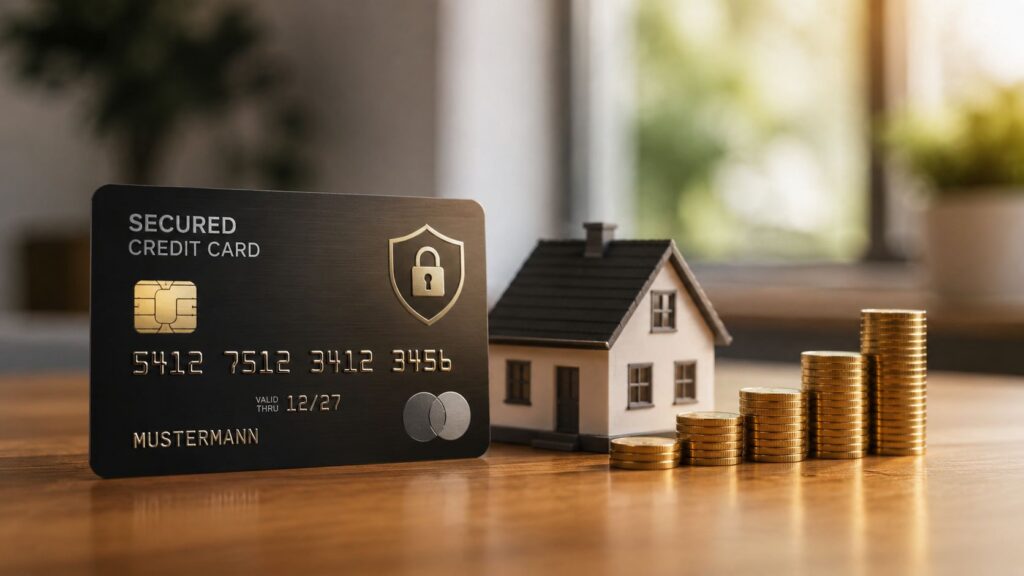
Buying a home often starts with an uncomfortable surprise.
You check your credit because you're thinking about an FHA loan, a VA loan, a conventional mortgage, or even just trying to qualify for a better rate. Then you see a problem. Maybe your file is thin. Maybe old late payments are still hurting you. Maybe your credit cards are maxed enough that lenders see risk, even though your income is steady and you're trying to do the right things now.
That moment can feel discouraging, but it doesn't mean you're out of options. Credit rebuilding is usually a structured process. It takes documentation, patience, and better habits over time. For many people, one of the most practical tools in that process is a secured credit card.
A secured card isn't magic, and it isn't a shortcut to guaranteed approval. What it can do is help you create recent, positive revolving credit activity in a way that's often more accessible than a traditional credit card. If you're trying to improve your credit score step by step, that matters.
This guide looks at secured credit card benefits through a homebuyer's lens. Instead of stopping at "it helps build credit," we'll look at how it works, why lenders care, where people make mistakes, and when a secured card may or may not be the smartest move for your mortgage timeline.
Table of Contents
- Introduction Rebuilding Your Credit for Major Financial Goals
- What Is a Secured Credit Card and How Does It Work
- The Primary Secured Credit Card Benefits for Your Score
- Beyond the Score Building a Lender-Ready Credit Profile
- Secured Cards Compared to Other Credit Rebuilding Tools
- Choosing the Right Secured Card and Avoiding Common Pitfalls
- Your Secured Card Journey FAQs and Next Steps
Introduction Rebuilding Your Credit for Major Financial Goals
You find a home that fits your budget, your job history is steady, and your down payment plan is coming together. Then your credit report becomes the part that needs work. For many first-time homebuyers, the goal is not a dramatic reset. The goal is a cleaner, more consistent credit profile that gives a mortgage lender fewer reasons to hesitate.
That difference shapes the strategy.
Mortgage approval is not based only on old mistakes. Underwriters also look for recent signs that you can handle credit in a predictable way. If your reports contain inaccurate, outdated, unverifiable, or misleading information, those items may need to be reviewed through a proper dispute process. If your file is thin or lacks fresh positive activity, you may need a simple tool that helps add steady, current history. If you need a practical framework, this guide can help you improve your credit score step by step.
A secured credit card often fills that role well. It is one of the few rebuilding tools that can help you create the kind of recent account behavior lenders like to see: on-time payments, controlled balances, and ongoing account management. The deposit is the trade-off. You have to tie up cash upfront, which can feel frustrating when you are also saving for closing costs, inspections, and moving expenses. Still, that same deposit lowers the card issuer's risk, which can make approval easier and give you a realistic starting point for rebuilding.
A secured card works like training wheels for your credit file. You are still using real credit. You are still expected to pay the bill on time and keep the balance under control. The deposit makes the account possible for people who need a fresh start or a stronger recent track record.
A secured card works best as part of a larger plan. Check your reports for errors, address problem accounts legally, and build fresh positive history at the same time.
For homebuyers, that combination is important. A mortgage lender may review your score first, but the file behind the score also matters. A secured card can help you show stable behavior, not just a higher number, which is what starts turning a weak or limited file into a lender-ready one.
What Is a Secured Credit Card and How Does It Work
You are saving for a home, watching every dollar, and trying to show a future mortgage lender that your credit habits have changed. A secured credit card can fit into that plan because it gives you a real revolving account, backed by your own cash deposit.
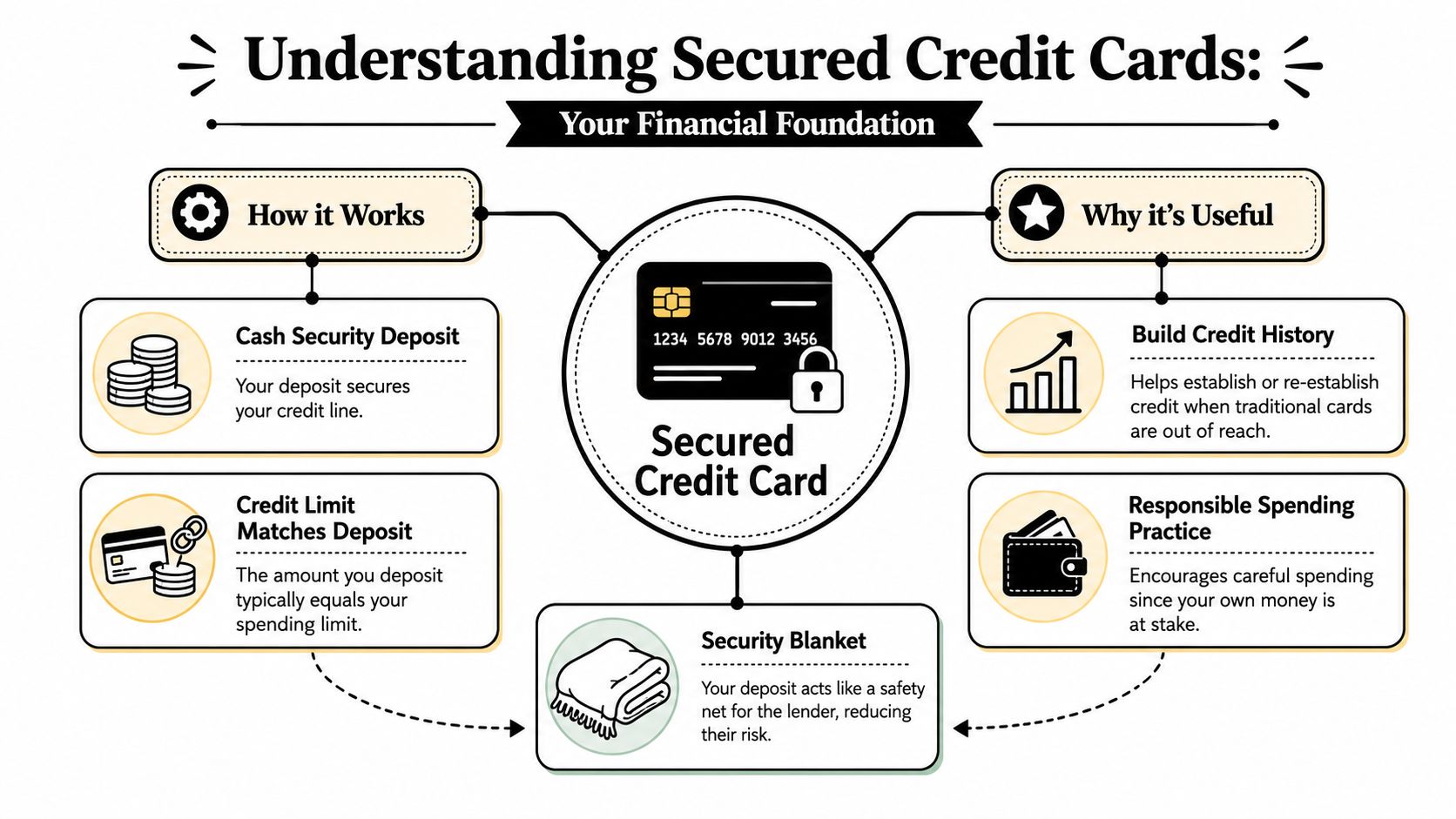
A secured credit card is a credit card that requires a refundable deposit as collateral. In many cases, the deposit matches your credit limit or comes close to it. That lower-risk setup helps issuers approve applicants who may have damaged credit, limited history, or a thin file.
The deposit is the foundation
The deposit sits in the background as protection for the card issuer. It is not money you swipe from like a prepaid card.
That difference matters. If you charge $50, you still owe $50 under the card's billing terms. You receive a statement, you make a payment, and your balance can rise or fall from month to month. The deposit provides the lender a safety cushion if the account is not paid as agreed.
For a first-time homebuyer, this trade-off deserves a clear look. The deposit can feel inconvenient because it ties up cash you might prefer to keep in savings. At the same time, that deposit can open the door to an account that reports the kind of recent activity mortgage lenders like to see: active use, on-time payments, and controlled balances.
Here is how the process usually works:
- You apply and provide a deposit. The issuer holds that money as collateral.
- You get a revolving credit line. You can borrow up to the limit, pay it down, and use it again.
- You receive monthly statements. Your payment due date and balance work like they would on a traditional credit card.
- Your account may be reported to the credit bureaus. That reporting is what gives the card value for understanding credit score calculations and for building recent positive history.
- Your deposit is generally returned if the account closes in good standing or graduates to an unsecured card, depending on the issuer's rules.
How it differs from a debit card
A debit card spends money already sitting in your checking account. A secured credit card uses a credit line that must be repaid later. That is why a secured card can help shape your credit file, while debit card activity usually does not appear on your credit reports.
A simple way to picture the difference is this: a debit card shows that you can spend your own money. A secured credit card can show that you can borrow a small amount, manage it carefully, and pay it back on schedule. For mortgage preparation, those are two very different signals.
If you want a general primer on building credit with secured cards, that resource gives useful background. The key point for homebuyers is more specific. You are not only trying to add points to a score. You are building a credit record that looks safer and more consistent to an underwriter.
Practical rule: Put one or two planned purchases on the card each month, keep the balance low, and pay on time. A secured card works best when it shows steady control, not heavy reliance.
The Primary Secured Credit Card Benefits for Your Score
The value of a secured card isn't the plastic itself. The value is the behavior it helps you demonstrate over time.
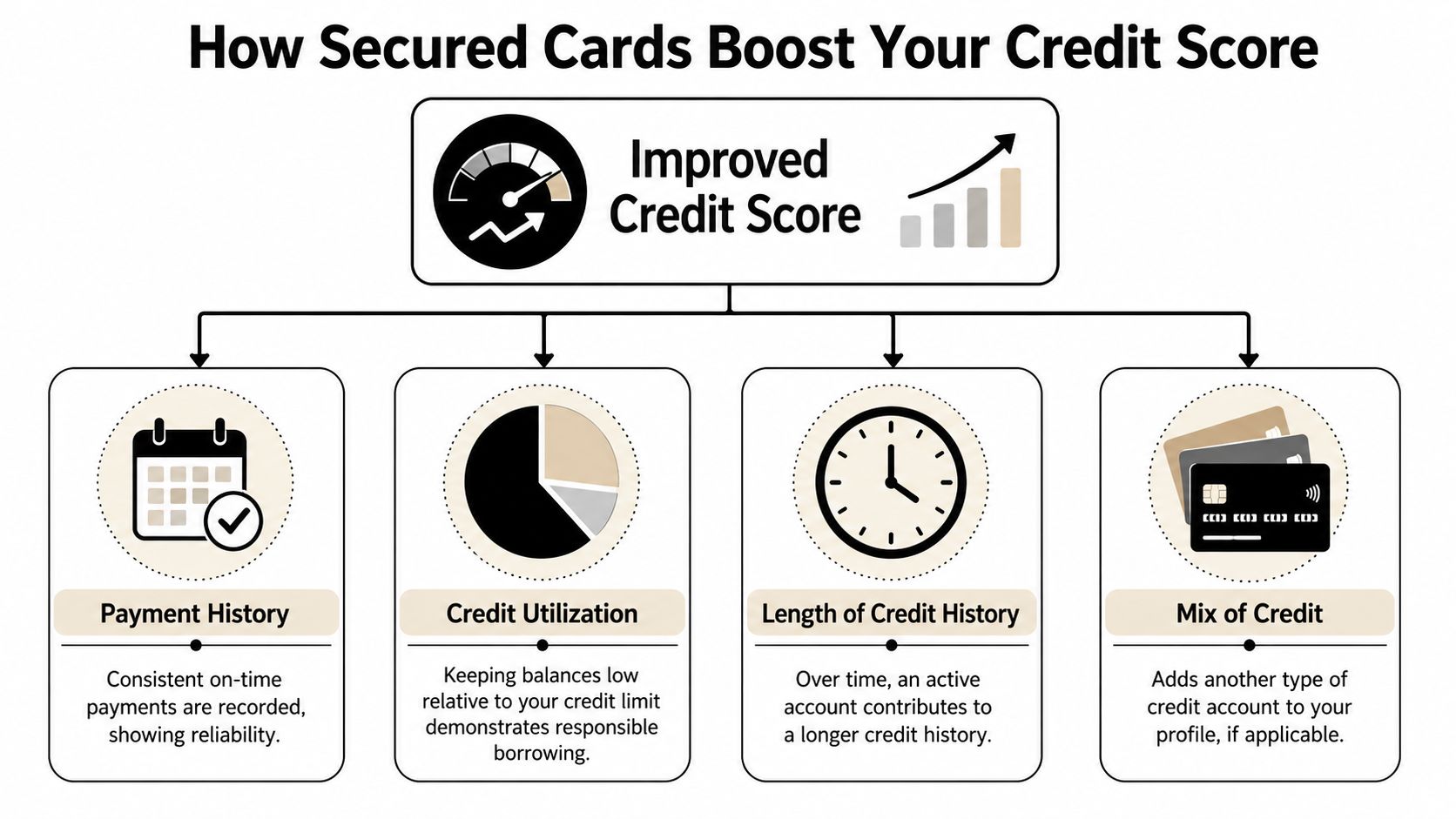
When people talk about secured credit card benefits, they usually mean three things. The card can help you build positive payment history, manage revolving utilization, and add a revolving account to a file that may be too thin or too damaged to look strong to lenders.
For a plain-language outside explanation of building credit with secured cards, this overview from Morgan & Morgan Attorneys at Law P.C. is a helpful companion to the mortgage-focused guidance here.
Payment history gives the card its real value
A card can't help much if it isn't paid on time. The strongest benefit comes from creating a steady record of on-time payments.
That matters because lenders and scoring models both care about whether you pay as agreed. A secured card gives you a manageable way to create that recent positive pattern, especially if your older history includes late payments, collections, or long gaps in active credit.
If you're newer to rebuilding, it also helps to spend time understanding credit score calculations so you know why one missed payment can undo a lot of consistent work.
Utilization can help or hurt
A secured card can improve your profile, but it can also create a problem if you run the balance too high. Since many secured cards start with modest limits, even a small purchase can push utilization up quickly.
For example, if you use the card for groceries, gas, and a utility bill all at once, your reported balance may look heavy compared with your limit. That's why a secured card often works best for a small recurring charge that you pay down consistently.
A simple habit can make a big difference:
- Choose a predictable bill. A streaming service, gas fill-up, or small subscription is easier to control.
- Watch the reported balance. Keep the balance low relative to the limit.
- Pay before carrying debt becomes a habit. A secured card is a credit-building tool, not a financing plan.
- Stay consistent month after month. Stability matters more than activity volume.
A new revolving account can strengthen a thin file
Some people don't have terrible credit. They just don't have much credit. That's common with younger buyers, recent graduates, people who mainly used cash, or consumers who avoided credit after financial hardship.
In that situation, a secured card can add a revolving tradeline that makes the file look more complete. It won't guarantee faster score gains or stronger underwriting by itself, but it can make your file easier for lenders to evaluate when paired with clean payment behavior and low balances.
Beyond the Score Building a Lender-Ready Credit Profile
You pull your credit before meeting a mortgage lender and see a score that finally looks better. That is encouraging, but a lender will look past the number. The key question is whether your report shows habits that support a mortgage payment month after month.
A secured card can help create that picture. It adds a current revolving account with recent activity, recent payments, and a track record you control. For a first-time homebuyer, that is often more useful than waiting for old negatives to fade on their own.
Mortgage lenders look for patterns not just points
Underwriters read a credit report a bit like a driving record. One good month does not outweigh a long history by itself, but a clear stretch of steady, careful behavior can show that the driver has changed. With credit, that steady stretch includes on-time payments, low revolving balances, and accounts that do not look strained.
A secured card fits into that story because it can show current discipline on active credit. That is different from the impact of old problems diminishing over time.
This is especially relevant for borrowers preparing for FHA financing or trying to recover from a previous denial. If that's your path, this FHA loan guide for homebuyers can help you understand the broader mortgage context around credit requirements and readiness.
A secured card will not remove charge-offs, collections, or late payments. What it can do is place fresh, positive information next to those older items. For underwriting, that can make a file look less fragile, especially if you are also correcting report errors and reducing other debt.
Recent stability matters to underwriters
Timing matters for homebuyers. Many issuers review secured accounts for graduation after a period of on-time use, often within several months, and the deposit is typically returned once the account is closed or upgraded and any balance is paid. That timing means a borrower may have a relatively short window to begin showing cleaner recent behavior on a revolving account before applying for a mortgage.
The trade-off is easy to miss. Your deposit can help you get the card, but it also ties up cash you might otherwise keep in reserves, use for moving costs, or add to a down payment fund. For a buyer preparing for underwriting, the best use of a secured card is not heavy spending. It is controlled, boring activity that proves consistency.
A small recurring charge works well for this. One bill, paid on time, with the balance kept low. A mortgage lender is not looking for excitement. They are looking for signs that your credit is stable, predictable, and under control.
Underwriters often respond well to a file that shows current control. A secured card can help demonstrate that, but only if the cardholder keeps the balance manageable and avoids late payments.
For first-time buyers, that is the lender-focused benefit. You are building a credit profile that looks more mortgage-ready, not just chasing a higher score.
Secured Cards Compared to Other Credit Rebuilding Tools
A secured card is useful, but it isn't automatically the right first step for everyone. The better question is whether it fits your specific constraints, especially if you're also saving for a down payment, reducing debt, or fixing credit report errors.
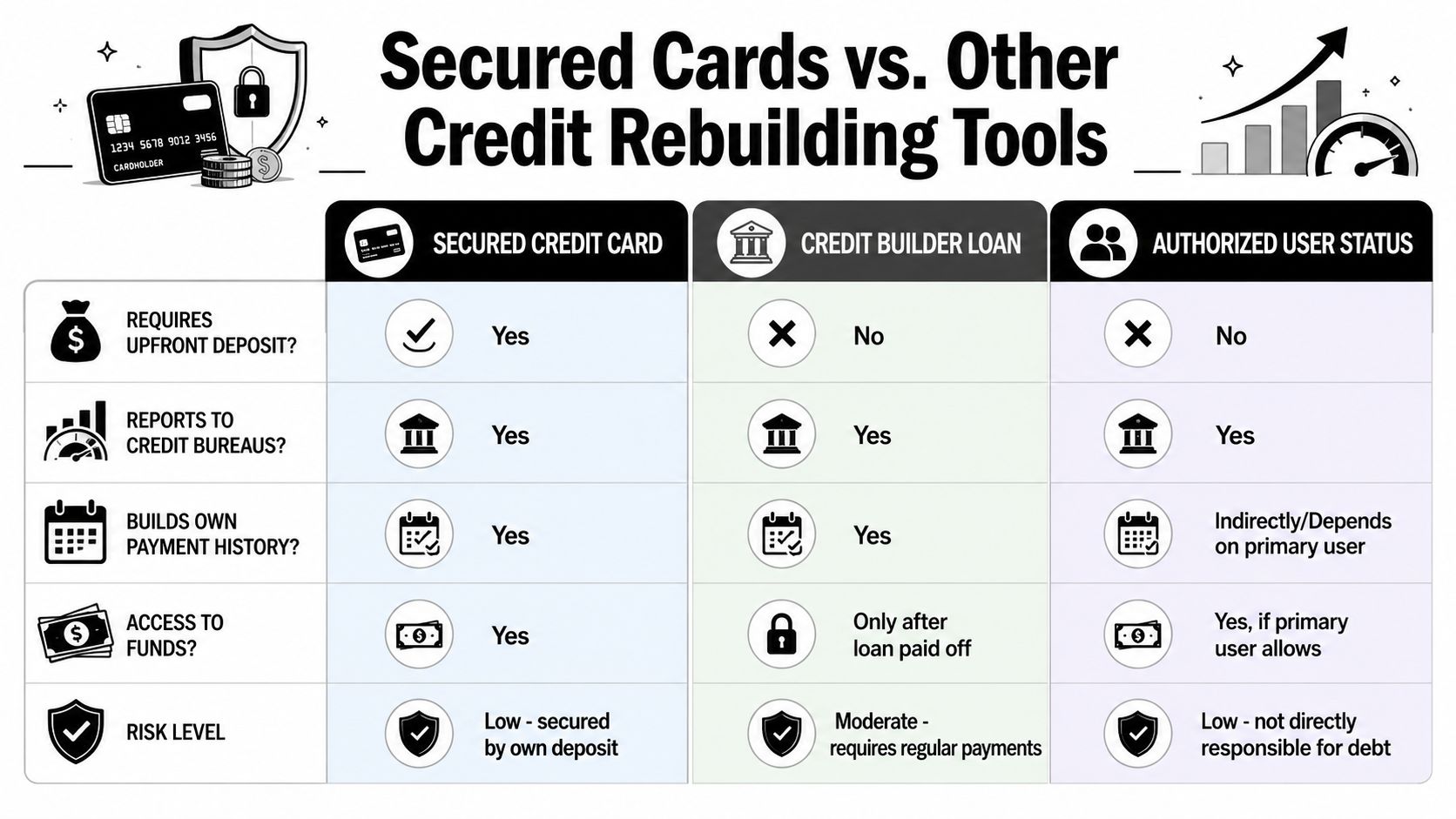
Equifax notes that secured cards mainly help when the issuer reports to all three bureaus and the cardholder keeps balances low and payments on time, but they don't guarantee faster score gains or a stronger underwriting profile by themselves. Equifax also raises an important tradeoff. The deposit is "dead money" while the account is open, which can make the tool less efficient for some borrowers trying to protect cash before homebuying, as discussed in Equifax's secured card article.
Secured cards versus credit-builder loans
A secured card is revolving credit. A credit-builder loan is installment credit. That difference matters.
With a secured card, you control utilization and payment timing on an ongoing account. With a credit-builder loan, you make fixed payments over time, which can help establish a different kind of payment history. If your file lacks any active accounts, either tool may help. If your file specifically needs stronger revolving behavior, a secured card may be more relevant.
A quick comparison helps:
| Tool | Main strength | Main tradeoff |
|---|---|---|
| Secured credit card | Builds revolving history and lets you practice utilization control | Requires cash deposit and can become expensive if you carry a balance |
| Credit-builder loan | Adds installment payment history with a set payment structure | Doesn't teach revolving balance management |
| Authorized user account | May add account history without opening your own new card | Depends heavily on another person's habits and issuer reporting |
Secured cards versus authorized user accounts
Authorized user status can be helpful, but it's indirect. You benefit from another person's account history only if the issuer reports authorized users and the primary account holder manages the account well.
That creates risk. If the primary user carries high balances or pays late, your file may reflect those problems. If you're trying to understand how tradelines help credit scores, it's important to understand both the upside and the dependency involved.
A secured card is different because the payment behavior is yours. The utilization is yours. The discipline is visible as your own pattern, which can matter more when you're trying to build a lender-ready file rather than merely add history.
When one tool may fit better than another
A secured card may fit well if you need your own revolving account and can comfortably set aside the deposit.
A credit-builder loan may fit better if you want a fixed payment and don't trust yourself with open-ended card access.
An authorized user strategy may help if a family member has a well-managed account and the arrangement is stable. It may not be enough by itself for someone who needs to demonstrate independent credit management before applying for a mortgage.
Choosing the Right Secured Card and Avoiding Common Pitfalls
Not all secured cards are the same. Some are much more useful for rebuilding than others.
The market has changed in meaningful ways. According to the Federal Reserve Bank of Philadelphia secured card market update, the share of new secured cards that were rewards cards rose from about 14% in 2015 to more than 31% in 2022. Over the same period, only about 4% of secured cards opened in 2022 carried an annual fee. The same report also found that the share of new secured cards with an APR of at least 25% increased from 2 in 100 in 2015 to 8 in 10 in 2022.
That tells you two things at once. Modern secured cards can be more consumer-friendly than many people assume. But carrying a balance can get expensive very quickly.
What to look for before you apply
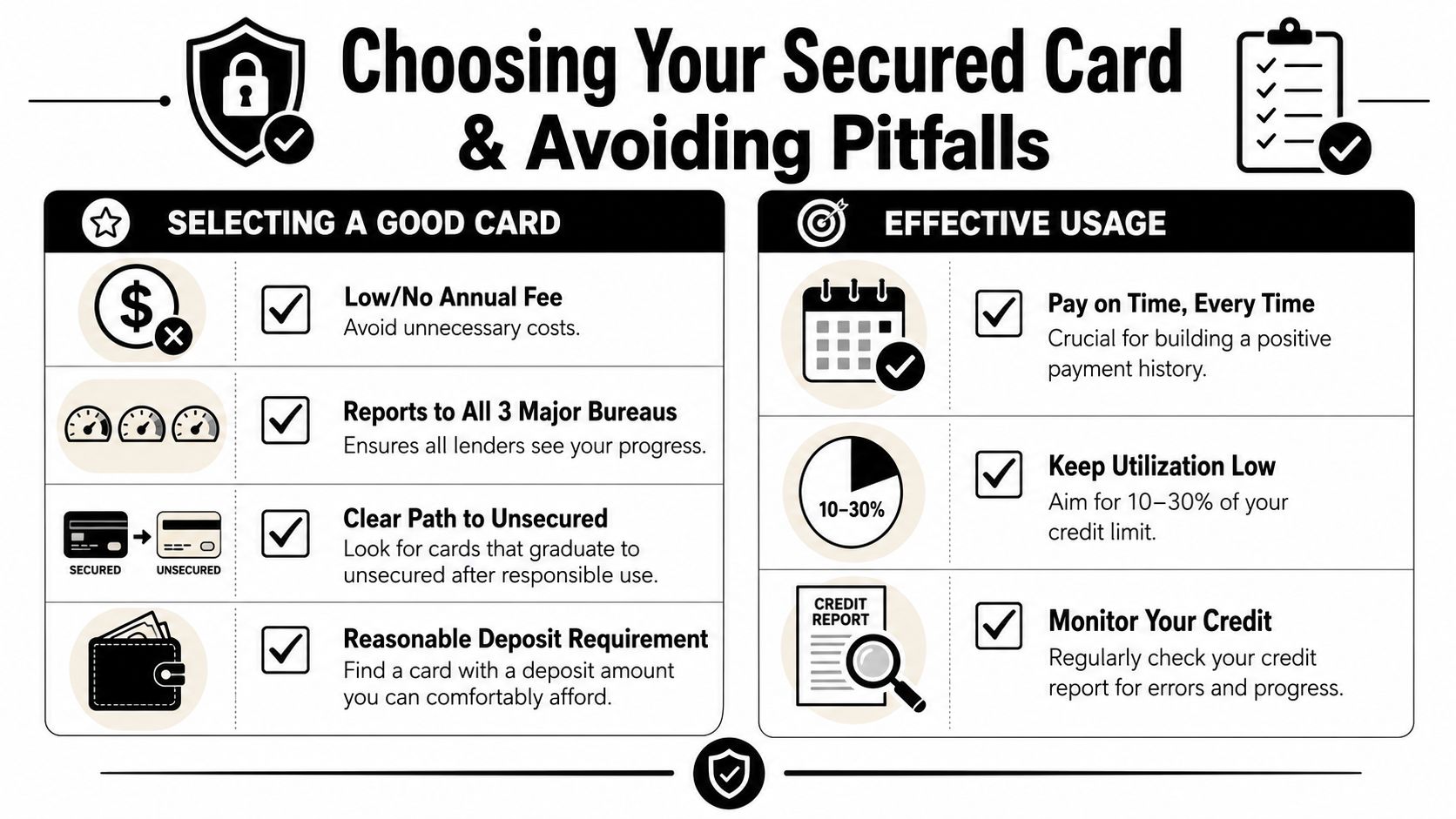
Start with reporting. If the issuer doesn't report to all three major bureaus, the rebuilding value may be limited.
Then review the operational details closely. Some cards offer no annual fee, some offer rewards or cash back, and some may even pay interest on the security deposit, while others still include fees or slower deposit-return timelines. Those differences matter when you're trying to rebuild efficiently.
Focus on these criteria:
- All-bureau reporting: Your progress should be visible across the major credit reporting system.
- Low friction costs: A low-fee or no-fee card leaves more room in your budget for savings and debt reduction.
- Clear graduation path: A card that may convert to unsecured status after responsible use can be more practical long term.
- Reasonable deposit requirement: The deposit should not drain money you need for emergency savings, rent, or mortgage preparation.
- Simple account management: Easy autopay, online access, and clear statements help prevent avoidable mistakes.
If you're rebuilding after a major setback, this guide on rebuilding credit with cards after bankruptcy can help you think through card selection more carefully.
Mistakes that reduce the benefit
The most common mistake is using the card like a fallback loan. Because many secured cards now carry very high APRs, revolving a balance can cancel out much of the benefit.
Another mistake is tying up too much cash in the deposit. A secured card can help, but not if the deposit leaves you unable to cover moving costs, pay down existing debt, or maintain basic savings before a mortgage application.
Watch out for these habits:
- Carrying a balance: High APRs make this expensive and unnecessary for credit-building purposes.
- Running the card too close to the limit: High utilization can weaken the message you're trying to send lenders.
- Opening the account without a plan: Random spending usually leads to messy balances.
- Closing it too quickly: If the account is helping show recent responsible behavior, closing it too early may not support your broader rebuilding strategy.
- Ignoring report accuracy: Positive new credit doesn't fix inaccurate negative items. Both issues may need attention.
Choose a secured card the way you'd choose a financial tool, not a reward gadget. The best option is the one you can manage cleanly every month.
One practical option some consumers review during the rebuilding process is service-based guidance from companies such as Superior Credit Repair, which helps clients review credit reports, identify questionable items for dispute, and build a step-by-step rebuilding strategy alongside tools like secured cards. That's different from claiming a card alone will solve the entire problem.
A simple use plan for homebuyers
If you're using a secured card to prepare for a mortgage, keep the plan boring. Boring is good in credit rebuilding.
Try this approach:
- Use one small recurring expense. Keep spending predictable.
- Set payment reminders or autopay. Never rely on memory.
- Pay early if needed. Keep the reported balance low.
- Review statements monthly. Watch for fees, errors, and due dates.
- Track the larger file too. A secured card works best when collections, late payments, charge-offs, and utilization issues are also being managed properly.
Your Secured Card Journey FAQs and Next Steps
You open your mortgage pre-approval paperwork and realize the question is no longer, "Can I get a credit card?" It's, "Will my credit file look steady and trustworthy to a lender reviewing a home loan application?"
That is the right question.
A secured card can help shape that kind of lender-ready profile, but only if you use it with a clear purpose. For homebuyers, the goal extends beyond acquiring a card. The goal is showing recent, controlled credit management that fits the bigger picture of mortgage approval.
Can a secured card help me prepare for a mortgage
Yes, it can.
A secured card may help by adding fresh revolving account history, keeping your credit mix more complete, and showing that you can manage a credit line without running it up. To a mortgage lender, that matters because they are not only reviewing a score. They are reviewing behavior.
A secured card works like a practice lane before a larger financial test. If you use a small portion of the limit, pay on time, and keep the account stable over time, you give lenders a cleaner recent pattern to review. That does not guarantee approval. It also does not erase older problems such as collections, charge-offs, late payments, debt-to-income strain, or reporting errors.
Will I get my deposit back
Often, yes. The timing depends on the card agreement and how the account is handled.
Some issuers return the deposit after the account is closed and paid in full. Others may return it if the account is upgraded to an unsecured card. The key trade-off is simple. That deposit can help you get access to a credit line, but it may also tie up cash you might need for savings, moving costs, or reserves for homeownership.
Read the disclosure carefully before you apply. Treat the deposit as money that may be unavailable for a while, not as cash you can count on getting back quickly.
Can I get one after bankruptcy or past credit trouble
Many applicants can, which is one reason secured cards are common in credit rebuilding plans.
The deposit lowers risk for the issuer, so approval can be more accessible than with many unsecured cards. Still, approval is only the starting point. A new secured account helps most when it becomes a record of calm, predictable use over time.
If you have a bankruptcy, collections, or serious late payments in your history, a secured card should support your rebuilding plan, not carry the whole plan by itself.
Should I use only a secured card to rebuild
Usually, no.
A secured card can add positive activity, but mortgage underwriting looks at more than one account and more than one number. An underwriter may review whether negative items are accurate, whether balances elsewhere are too high, whether there are unresolved collection accounts, and whether your overall obligations fit your income.
A better approach is to treat the card as one tool in a larger homebuying preparation process:
- Review your credit reports carefully: Check for inaccurate, outdated, unverifiable, or misleading items.
- Dispute only when there is a valid basis: The process should be documentation-based and compliant.
- Add new positive credit with intention: A secured card helps most when it fits your budget and your mortgage timeline.
- Protect your cash reserves: Do not tie up deposit money you may need for housing costs or emergencies.
- Stay consistent month after month: Lenders tend to trust stable patterns more than short bursts of improvement.
Ultimately, a secured card is best viewed as a tool for building a cleaner, steadier credit story. For a first-time homebuyer, that can be more useful than chasing quick score gains that do not hold up during underwriting.
Superior Credit Repair can review your credit report, help identify inaccurate or questionable items, and explain a step-by-step plan for improving your credit profile. You can request a free credit analysis or consultation to better understand your options.
Was this guide helpful?
Superior Credit Repair Online provides educational credit guidance for individuals and families preparing for major financial goals like buying a home, applying for a mortgage, refinancing, or rebuilding after credit challenges.
If this information helped you better understand your credit report or your next steps, we would appreciate your honest feedback. You are welcome to share your experience with Superior Credit Repair on our Google Business Profile.