


If your Chapter 7 case has been discharged, you're probably feeling two things at once. Relief that old unsecured debt is no longer controlling every decision, and uncertainty about what comes next when you need a car, an apartment, or eventually a mortgage. That tension is normal.
Those seeking information about credit cards after bankruptcy Chapter 7 often desire more than a generic tip about getting a secured card. Instead, they seek guidance on what aids in rebuilding credit effectively, earning lender respect. This involves focusing on report accuracy first, then using new credit carefully enough to support long-term financing goals, especially homeownership.
Table of Contents
- Your Fresh Start The Post-Bankruptcy Credit Landscape
- Choosing Your First Rebuilding Tool
- Using Your New Card for Maximum Credit Improvement
- Common Pitfalls That Can Derail Your Progress
- The Roadmap From Secured Card to Mortgage Readiness
- Frequently Asked Questions About Credit After Chapter 7
Your Fresh Start The Post-Bankruptcy Credit Landscape
You get the Chapter 7 discharge, feel the relief, and then pull your credit reports expecting a clean break. Instead, one old card still shows a balance, another account looks open when it should not, and a collection entry makes the file look more active than it really is. That is a common starting point after bankruptcy, and it matters if your long-term goal is not just a better score, but a mortgage approval.
Before you apply for any new credit card, review your reports at all three bureaus. A discharge eliminates personal liability on many debts. It does not guarantee that every creditor updated its reporting correctly. If the file is wrong, you can end up rebuilding on top of errors that create problems later with FHA, VA, and conventional underwriting.
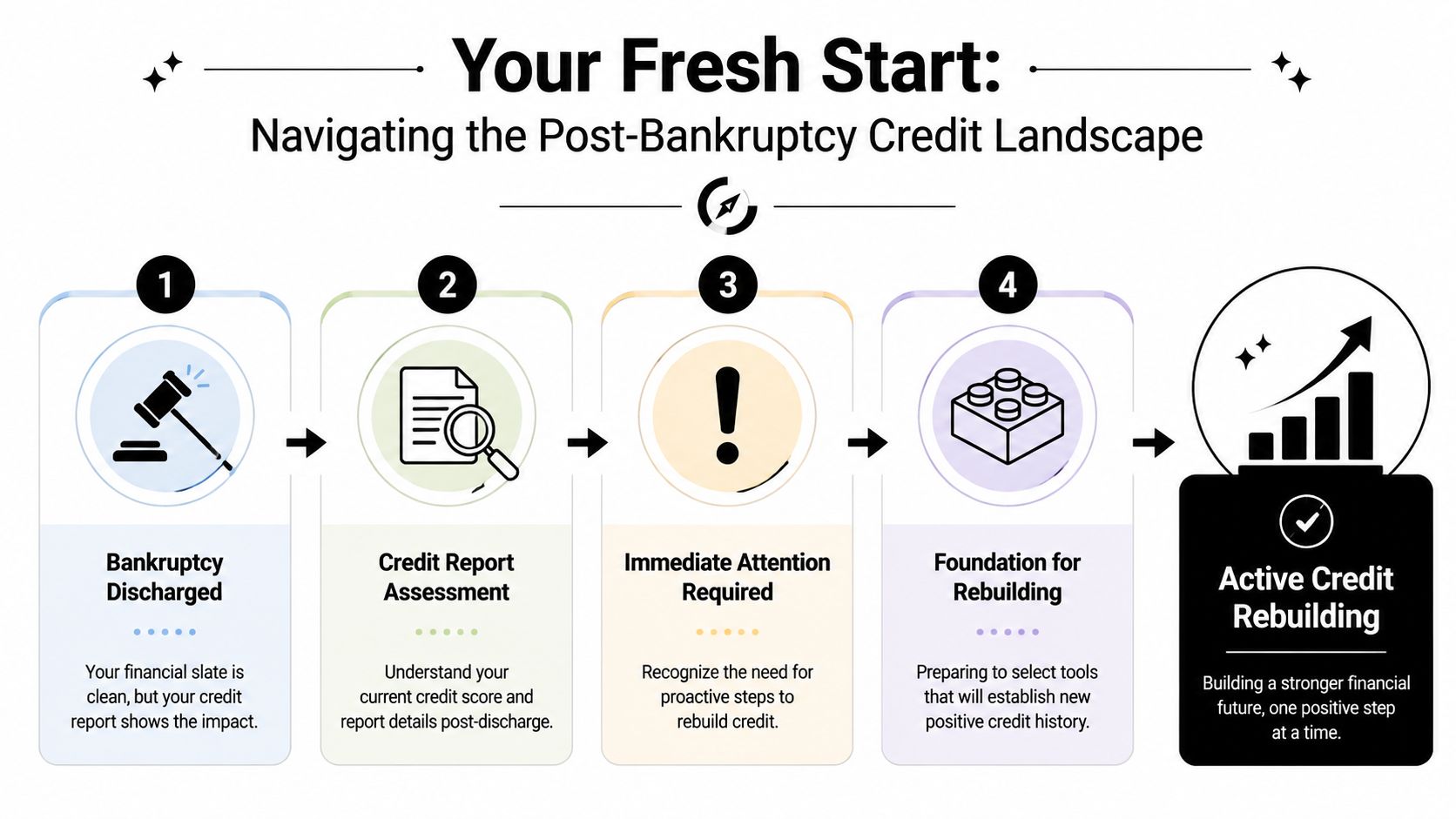
What your reports should show now
After discharge, accounts included in bankruptcy should stop reporting like active revolving debt you still owe. If a discharged card still shows a balance due, still appears open in a misleading way, or still reflects ongoing collection activity, that can affect both credit decisions and manual mortgage review.
Check for these issues first:
Discharged balances still showing as owed
An account included in Chapter 7 should not keep reporting as if the prior balance remains collectible.Collection activity that appears current
If discharged debt still looks like an active collection account, an underwriter may need extra explanation or documentation.Inconsistent reporting across bureaus
One report may be updated correctly while another is behind. Mortgage lenders often review the full file, not a single bureau.Dates or account status that do not match your records
Status codes, balance fields, and account remarks should line up with your discharge paperwork.
Practical rule: Fix reporting errors before you add new credit.
At this stage, borrowers often ask about removing bankruptcies for mortgage readiness. That review should stay tied to accuracy and documentation. If information is inaccurate, outdated, unverifiable, or misleading, it may be challenged. No ethical advisor should present that as a guaranteed deletion strategy.
Why report accuracy comes before new applications
A new card can help later. It does not solve reporting problems that are already on the file.
I have seen applicants do everything right with a secured card, then run into mortgage delays because an old account still looked unresolved on one bureau. The issue was fixable, but it cost time, added paperwork, and raised unnecessary questions during underwriting. That is avoidable if you clean up the report first.
For mortgage readiness, this step has a purpose beyond score recovery. FHA, VA, and conventional lenders want to see that the bankruptcy is fully discharged, old debt is reported properly, and any new credit is being managed in a stable, predictable way. Accurate reporting makes that story easier to document.
Use this order:
- Pull all three credit reports.
- Verify how each discharged account is reporting.
- Save your discharge paperwork and any account records that support a correction.
- Dispute reporting errors before applying for new revolving credit.
It is not the fastest part of rebuilding. It is one of the smartest.
Choosing Your First Rebuilding Tool
After the reports are reviewed, the next question is practical. What should you open first?
A secured credit card is often the answer. According to Discover's guidance on getting a credit card after bankruptcy, the most common post-Chapter 7 pathway is a secured card because issuers generally require the bankruptcy to be discharged first and then evaluate new applications. The same guidance notes that becoming an authorized user on a well-managed account can also be a workable entry point, while Chapter 7 may remain on the credit report for up to 10 years.

Why secured cards lead the list
A secured card is usually the cleanest starting point because it does two jobs at once. It gives you an active revolving account, and it helps you limit risk while you rebuild. You provide a deposit, the issuer opens a line, and the account typically reports like a regular credit card if managed properly.
That's different from a prepaid card. A prepaid product may help with spending control, but it usually doesn't help build a new revolving credit history. After Chapter 7, you want an account that can demonstrate current behavior to future lenders.
A good secured card option usually has:
Straightforward reporting
The account should report to the bureaus as a revolving trade line.Manageable fees
High-fee rebuilding products can eat up your budget without adding much underwriting value.A realistic path forward
Some issuers may later review the account for graduation or better terms, though outcomes vary.
How the main rebuilding options compare
Here's the practical comparison commonly needed:
| Option | Best use | Main strength | Main caution |
|---|---|---|---|
| Secured credit card | Primary rebuilding tool | Builds direct payment history on your own revolving account | Can still hurt you if you overspend or pay late |
| Authorized user account | Supplement or bridge strategy | May help if the primary account is managed very well | You don't control the account owner's behavior |
| Credit-builder loan | Add installment history later if needed | Can diversify the file | Another payment obligation isn't always wise right after bankruptcy |
An authorized user strategy can help in the right situation, especially when the primary user has a long-established account with clean habits. But it isn't a substitute for learning to manage your own revolving account well. If you want to understand where that fits, this overview of credit building tradeline advantages is useful as background.
A rebuilding tool only works if it creates stable, positive history without creating new stress.
That's why secured cards remain the standard recommendation. They're not glamorous, but they're practical, widely understood by lenders, and easier to manage with discipline.
Using Your New Card for Maximum Credit Improvement
Getting approved is only the start. The important part is how you use the card once it's open.
For rebuilding, the habits matter more than the product name on the plastic. As noted in NerdWallet's Chapter 7 guide, rebuilding to a good standing commonly requires a consistent 2-year period of on-time payments and low utilization, ideally under 10% and absolutely under 30%. That's the operating rule for using credit cards after bankruptcy Chapter 7 in a way that supports progress.
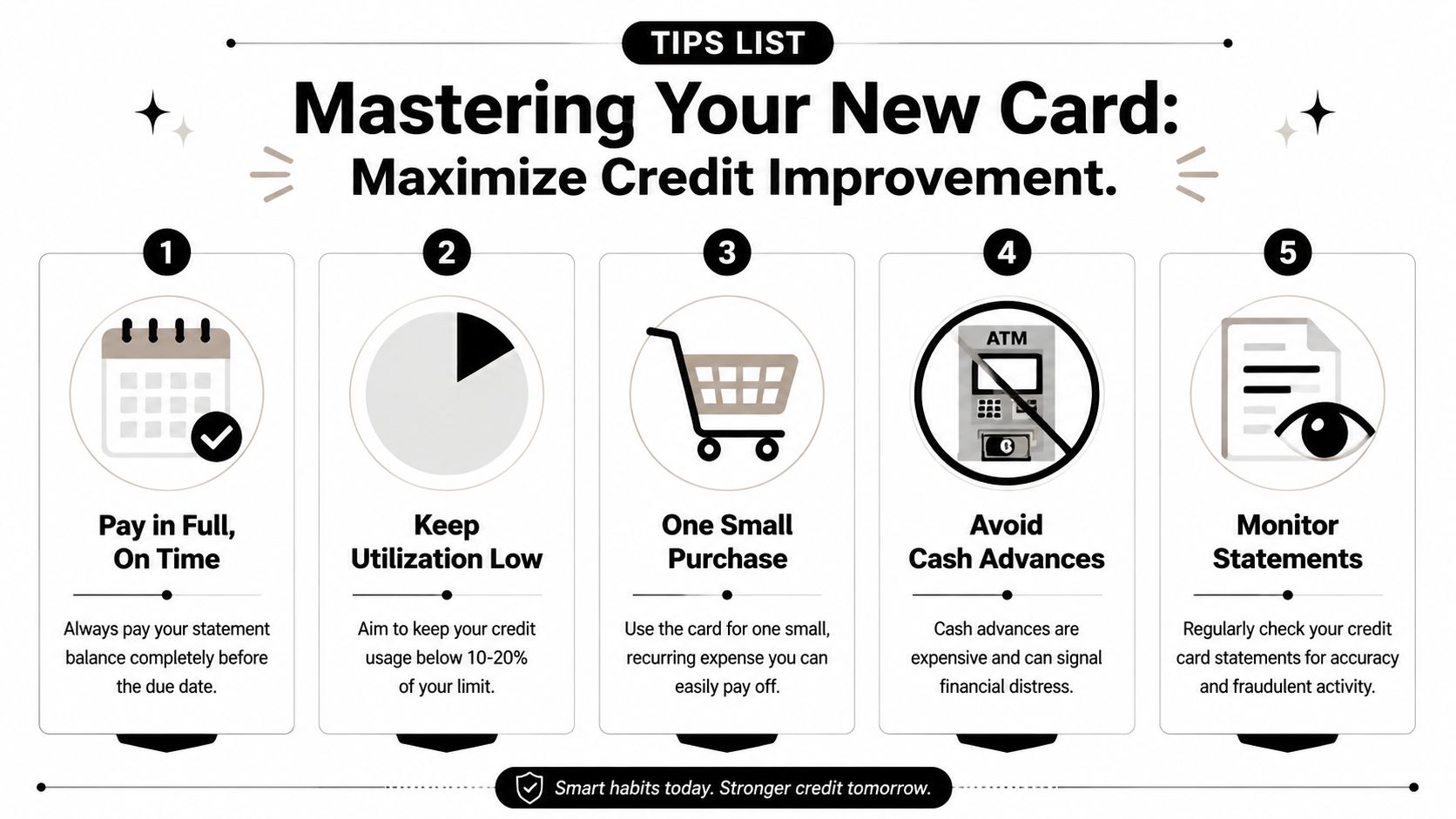
Do this instead of that
The best post-bankruptcy card strategy is boring on purpose.
Do this:
- Put one small recurring charge on the card.
- Set up automatic payment for the statement balance.
- Review the statement each month for accuracy.
- Keep the reported balance low.
Not that:
- Use the card for everyday budget shortfalls.
- Carry balances because you think it helps.
- Max it out and pay it down later.
- Treat the new account like proof you're fully recovered.
A simple example works well. Put a streaming subscription, phone app bill, or another small recurring charge on the card. Then set autopay to pay the statement balance in full. That creates activity, reduces missed-payment risk, and avoids turning the account into a debt trap.
Why this matters for future lenders
Mortgage underwriters don't just look for a score. They look for behavior. A new account can help if it shows stable use, clean payment history, and low utilization over time. The same account can hurt if it shows volatility, frequent balance swings, or fresh late payments.
Use this quick guide:
Payment history first
A single late payment after bankruptcy can undo trust you're trying to rebuild.Utilization second
Keeping balances low signals control. Letting the card report near the limit signals strain.Consistency over intensity
You don't need heavy card usage to prove responsibility. You need repeatable, low-risk behavior.
If you want a plain-English breakdown of why utilization and on-time payments matter so much, review Superior Credit Repair's guide to credit scores.
Use the card enough to report. Don't use it enough to create new problems.
Also skip cash advances. They're expensive, and they can make a fresh file look unstable. The goal is to create calm, predictable revolving history that an underwriter can trust.
Common Pitfalls That Can Derail Your Progress
A common setback looks like this. Someone gets a new card after Chapter 7, feels relieved to have credit again, then starts using it like the bankruptcy solved the cash-flow problem. Within a few months, the balance is high, a payment posts late, and the file that had started to stabilize now raises fresh questions for a future mortgage underwriter.
That pattern matters because FHA, VA, and conventional lenders look closely at what happened after the discharge, not just the fact that the bankruptcy is aging. A clean year of low-risk revolving use can support mortgage readiness. New late payments, maxed-out cards, or a burst of applications can push that goal further out.
The mistakes that quietly cost you time
The first trap is the application spree. One denial leads to three more applications in the same week. Each inquiry may be explainable on its own, but together they can make a lender read the file as renewed financial stress. If homeownership is the goal, protect your file from unnecessary activity.
Another mistake is accepting any card that says approval is easy. High-fee subprime products can still have a place in a rebuilding plan, but only if the terms are manageable and the account helps you build stable history. Annual fees, monthly maintenance fees, and low usable limits can create more strain than benefit.
A third problem is using the card to cover a budget shortfall. That turns a rebuilding tool into revolving debt. Mortgage underwriting is much easier when your post-bankruptcy accounts show control, not dependence.
Then there is the "it's only a small balance" mistake. Issuers do not give partial credit for a late payment because the amount was minor. The mark is still fresh, and anyone rebuilding should understand the late payment impact on credit before getting casual with due dates.
Applying too often in a short window
This can make a file look unstable before it has time to mature.Keeping a card near the limit
Even if you pay on time, high utilization can work against both score recovery and mortgage underwriting.Closing a new account too fast
If the card is affordable and reporting well, a short account history gives lenders less to work with.Using credit for non-urgent projects too early
Financing upgrades before your budget is steady can create avoidable pressure. If repairs cannot wait, review this guide to home renovation loans and compare the payment obligation against your mortgage timeline first.
What to assume about old cards that survived
Some filers hope an older zero-balance card will stay open and solve the rebuilding problem for them. Sometimes it does. Often it does not.
Issuers can reduce the limit, freeze the account, or close it after reviewing the bankruptcy. Build your plan around the accounts you can manage now, not around the possibility that an old issuer leaves a card alone. If a pre-bankruptcy card remains open, treat it conservatively and watch for policy changes.
The safer plan is simple. Keep one or two affordable accounts in good standing, avoid new mistakes, and give future mortgage lenders a post-bankruptcy record that looks calm, documented, and repeatable.
The Roadmap From Secured Card to Mortgage Readiness
The focus shifts. Rebuilding after Chapter 7 isn't only about improving a score. It's about creating a file that looks stable to a mortgage lender.
That distinction matters. As discussed in guidance on rebuilding credit with mortgage readiness in mind, lenders look beyond the score itself and review payment history, new-account stability, and utilization, especially when the file includes a recent bankruptcy. For first-time buyers, that's the right lens to use from the beginning.
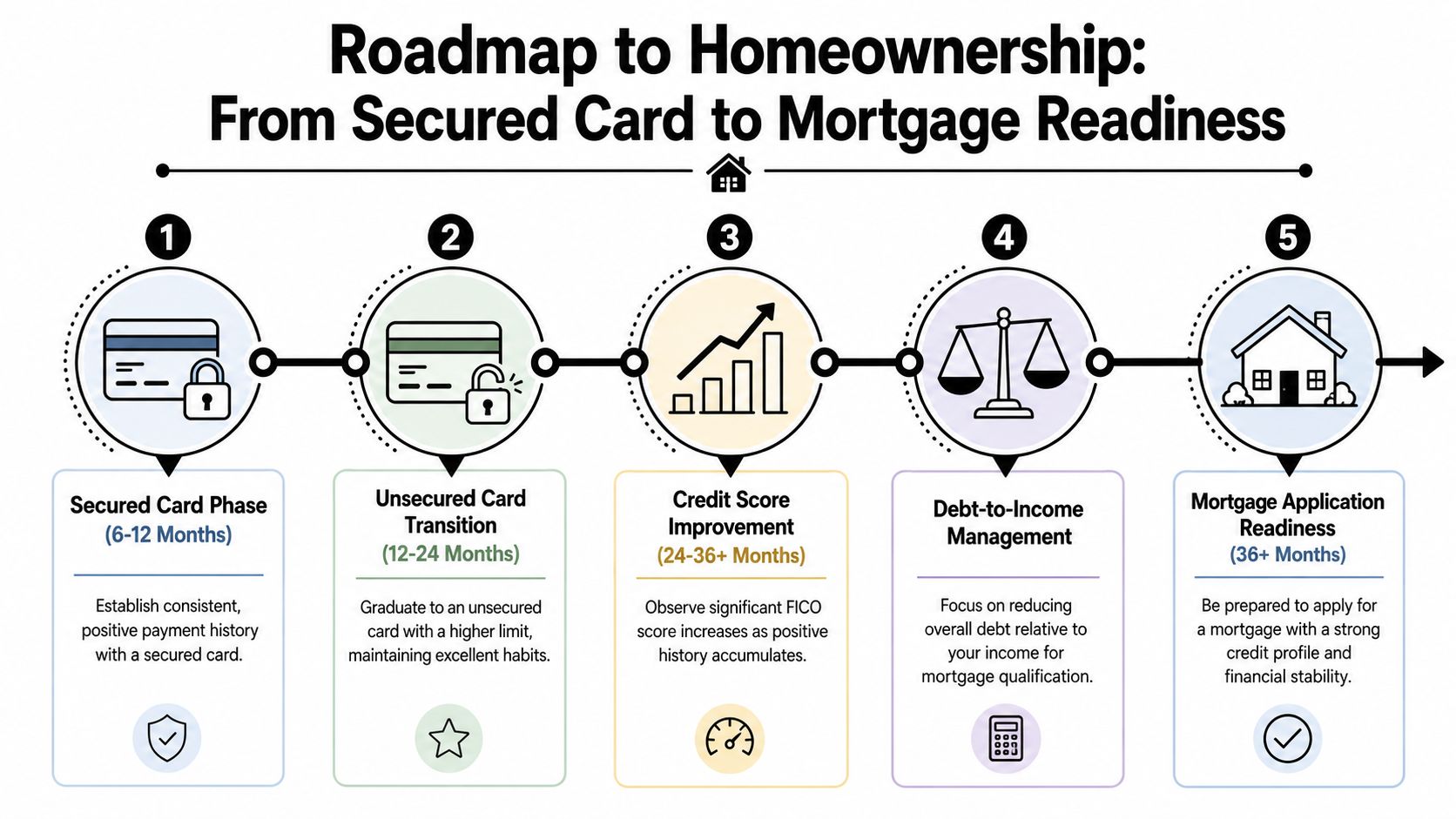
Months 1 through 6
The job in the early phase is simple. Open one suitable rebuilding account, use it lightly, and protect every payment.
At this stage, underwriters would rather see a thin but calm file than a busy one full of new activity. If you're thinking ahead to a home purchase, this is also the time to clean up budgeting habits, avoid new collections, and make sure any remaining non-discharged obligations stay current.
Focus on:
- One primary revolving account
- Low reported balances
- No missed due dates
- No unnecessary credit shopping
If you're also planning future property improvements once you become a homeowner, it helps to understand borrowing options in advance. A practical outside resource is this guide to home renovation loans, which explains common financing paths without assuming every project should be funded the same way.
Months 7 through 12
If the first account is stable and your budget supports it, this can be the point to consider whether a second rebuilding account makes sense. Not everyone needs one. The right answer depends on your file, your income stability, and whether another account would add meaningful depth without adding risk.
People often get too ambitious at this point. They see some progress and assume more accounts automatically means a stronger profile. Sometimes it doesn't. For mortgage readiness, lenders usually prefer controlled growth over fast expansion.
A useful checkpoint during this phase:
| Question | Healthy answer |
|---|---|
| Have all payments been on time since discharge? | Yes |
| Is card use predictable and low? | Yes |
| Have you avoided new derogatory items? | Yes |
| Would another account fit the budget comfortably? | Yes, without strain |
If any answer is no, keep working the first account well before adding complexity.
Months 12 through 24 and beyond
This period is where a rebuilding file starts to mature. Some consumers may become eligible for an unsecured starter card or another mainstream product over time. Others may continue with a secured card longer. Either path can work if the account history is clean and stable.
What matters for mortgage preparation is that your file begins showing disciplined behavior over a meaningful stretch of time. That includes:
- Established positive payment history
- Reasonable utilization
- Limited recent credit-seeking
- No new collections or charge-offs
- Stable housing, income, and budget habits
For buyers aiming at government-backed options, many also start researching credit repair for FHA approval, since FHA applicants often need a lender-ready profile that goes beyond a single score number. The same broader principle applies to VA, USDA, and conventional financing. Underwriters want evidence that the bankruptcy was followed by financial stability, not just the passage of time.
A practical timeline works like this:
Early rebuild
Prove you can manage one revolving account cleanly.Stability phase
Keep balances low, avoid new derogatories, and don't overapply.File strengthening
Add depth only when it helps more than it risks.Pre-mortgage review
Check reports again, review utilization, and make sure the file is clean before speaking with lenders.
Mortgage readiness after Chapter 7 is less about finding a secret product and more about producing a stable, credible paper trail. That's why credit cards after bankruptcy Chapter 7 should be treated as underwriting tools, not spending tools.
Frequently Asked Questions About Credit After Chapter 7
Can I keep any credit cards after Chapter 7
Sometimes. The issuer decides whether an account stays open after the bankruptcy, and many lenders close cards even if the balance was current or already at zero.
If one survives, treat it as a temporary benefit, not the foundation of your rebuilding plan. I tell clients to assume any post-bankruptcy card could be closed later and to build around accounts they can control, especially if the long-term goal is mortgage approval.
How long does Chapter 7 stay on my credit report
Chapter 7 can remain on your credit report for up to 10 years. Accounts included in the bankruptcy usually follow a shorter reporting timeline, which is why the file can look very different from one year to the next even though the public record is still present.
For mortgage planning, the reporting period matters less than the condition of the file right now. FHA, VA, and conventional underwriters all care about whether discharged accounts are reporting correctly, whether new credit is being handled well, and whether the borrower has re-established stable habits since the bankruptcy.
Will a new secured card actually help me qualify for a mortgage
A secured card can help. It gives you a way to add fresh revolving payment history, which is useful after Chapter 7 because many borrowers have a thin file once old accounts are closed or stop updating.
Still, one new card does not make a mortgage file lender-ready by itself. Underwriters look at the whole picture: recent late payments, current balances, open collections, cash reserves, income stability, and how long you have managed credit cleanly after the discharge. A secured card works best when it supports a pattern the lender can trust.
What if I get denied for a secured card
Pause before you submit another application. A denial often means there is something on the report or in the application that needs attention first.
Start here:
Read the adverse action notice carefully
It may point to credit report issues, identity verification problems, or bank-specific approval rules.Review all three credit reports
Look for discharged debts still showing balances, duplicate accounts, or any new negative item that should not be there.Use a temporary alternative if needed
An authorized user account or a credit-builder loan can help you start re-establishing history while you sort out the denial.Avoid applying repeatedly
Several hard inquiries in a short period can make a recently discharged file look more risky to future card issuers and mortgage lenders.
Should I hire help to review my credit reports after bankruptcy
If your reports are clean and reporting correctly, you may be able to handle the review yourself. If you see discharged debts with balances, collection activity that appears inconsistent with the bankruptcy, or account details that do not look right, outside help can save time and keep the dispute process organized.
The standard should be simple. Any company you hire should explain what appears inaccurate, what documents support your position, and what result is realistically possible. No ethical advisor should promise deletions, score jumps, or mortgage approval.
Superior Credit Repair can review your credit report, help identify inaccurate or questionable items, and explain a step-by-step plan for improving your credit profile. If you're rebuilding after Chapter 7 and preparing for future financing, including homeownership, you can request a free credit analysis or consultation through Superior Credit Repair to better understand your options.
Was this guide helpful?
Superior Credit Repair Online provides educational credit guidance for individuals and families preparing for major financial goals like buying a home, applying for a mortgage, refinancing, or rebuilding after credit challenges.
If this information helped you better understand your credit report or your next steps, we would appreciate your honest feedback. You are welcome to share your experience with Superior Credit Repair on our Google Business Profile.