
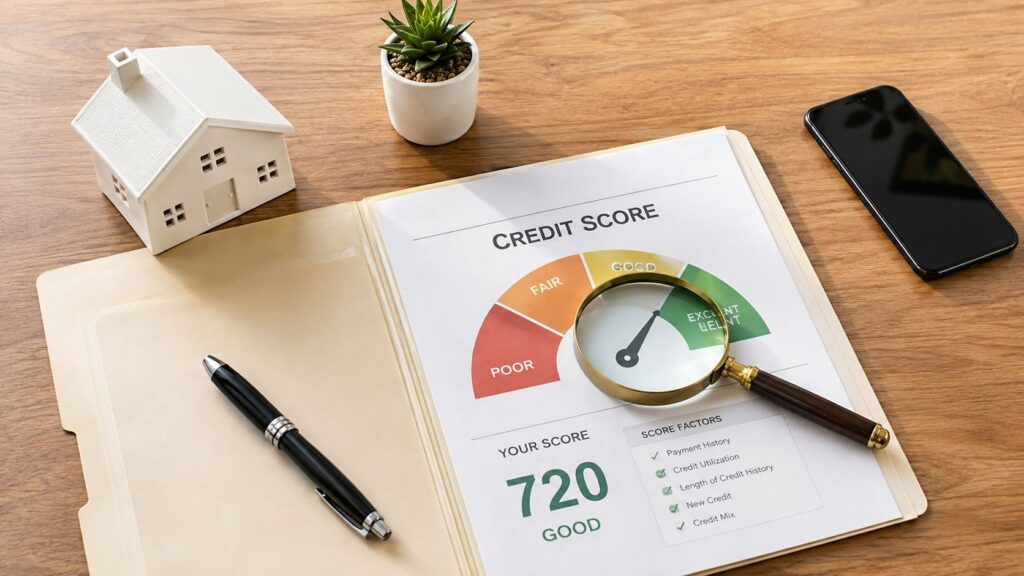
There is no single mortgage pre-approval credit score. Conventional loans commonly require 620, FHA loans can start at 580 with 3.5% down or 500 with 10% down, and many borrowers need to correct credit report errors before any score can tell the full story.
Why do so many first-time buyers search for one magic number when mortgage lenders evaluate an entire financial file? A score matters, but the loan program, payment history, credit utilization, debts, and accuracy of the underlying report all influence whether a lender considers you ready for pre-approval.
A borrower in the high 500s may feel shut out, yet an FHA pathway could look different from a conventional application. Another borrower with a score above a commonly used benchmark might still face questions about collections, recent late payments, or debt-to-income ratio. Mortgage readiness is less about chasing a headline number and more about presenting a complete, accurate, stable credit profile.
Table of Contents
- Understanding the Real Answer to Mortgage Pre Approval Credit Score Questions
- How Mortgage Pre Approval Credit Score Requirements Differ by Loan Type
- Why Your Credit Report Matters Just as Much as Your Score
- Common Credit Issues That Block Mortgage Pre Approval
- Practical Steps to Improve Your Credit Before Mortgage Pre Approval
- Maintaining Credit Stability After Pre Approval and Before Closing
Understanding the Real Answer to Mortgage Pre Approval Credit Score Questions
Jordan had spent months browsing homes online. After checking a credit-monitoring app, Jordan saw a score in the high 500s and assumed homeownership would have to wait. A friend mentioned that conventional mortgages commonly use 620, so Jordan focused entirely on reaching that number.
That approach missed important context. FHA loans can start at 500 with a 10% down payment or 580 with 3.5% down, while conventional loans commonly use 620 as a benchmark. The difference between a score in the high 500s and one in the low 600s can change which loan paths a borrower may discuss with lenders, but it doesn't guarantee approval or determine the final terms. Experian's mortgage credit-score guidance explains why loan type matters more than a universal cutoff.
The score is an entry point, not a decision
A mortgage lender may review your full credit report, income, debts, assets, employment information, and monthly obligations. The score summarizes credit behavior, but it doesn't show every detail that an underwriter may need to evaluate.
For example, two borrowers can have similar scores while carrying very different risks. One may have clean payment history and modest revolving balances. The other may have a recent late payment, an unresolved collection, or an account that doesn't belong to them. The lender's questions will likely differ even if the displayed score looks alike.
Practical rule: Treat your credit score as a starting signal. Treat your credit report and debt profile as the evidence behind it.
This is why early mortgage planning helps. Reviewing your reports before speaking with a lender gives you time to identify errors, gather documentation, and understand whether your main obstacle is credit history, utilization, debt-to-income ratio, or something else. If you're comparing financing paths or want broader guidance before applying, reviewing mortgage solutions from Bluevectis may help you frame useful questions for a qualified lender.
Jordan's next step shouldn't be an application submitted blindly to every lender. It should be a calm review of the full file, followed by a conversation about loan programs that may fit the borrower's circumstances. That shift from score obsession to lender readiness can make the process more manageable.
How Mortgage Pre Approval Credit Score Requirements Differ by Loan Type
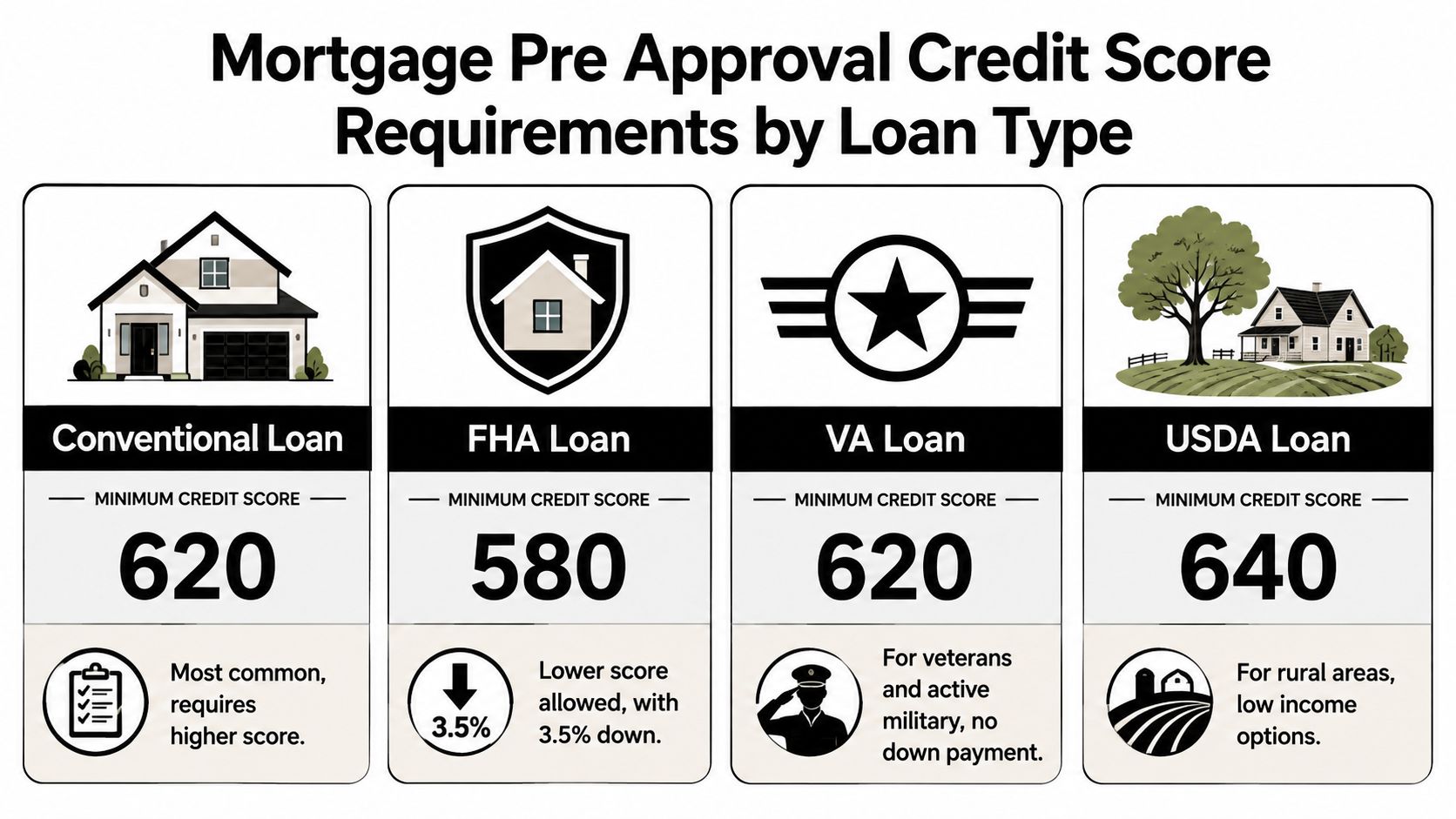
Which credit score do you need for mortgage pre-approval? The answer depends on the loan program, the lender, and the rest of your financial profile. Each pathway sets a different starting point, while lender overlays can add stricter requirements. An overlay is an extra standard a lender applies beyond the broader program guideline.
Conventional loans
Conventional financing commonly uses a 620 credit-score benchmark, but current automated underwriting does not depend on one fixed 620 minimum in every case. Lenders may still set their own floors, pricing tiers, and risk standards. A borrower near that benchmark should ask which rules apply to the specific file. The score is one gate, while utilization, debt-to-income ratio, payment history, and documentation help determine whether the application can pass through the lender's review.
FHA loans
FHA financing may fit borrowers with lower scores. A score of 580 is commonly associated with a 3.5% down payment, while a score of 500 may be accepted with a 10% down payment, subject to lender requirements and the rest of the application. A high card balance can still weaken the file, and debts that raise the debt-to-income ratio may affect approval even when the score meets the stated floor. This makes FHA preparation relevant for first-time buyers with limited savings or recent credit damage.
VA loans
The Department of Veterans Affairs does not set one program-wide minimum credit score for VA loans. Individual lenders may impose their own standards and review payment history, debts, income, and overall credit strength. Veterans and active-duty service members can use this VA loan credit score guide to prepare questions before contacting a lender.
USDA loans
USDA loans also have no single official program-wide minimum score, although lenders may apply overlays. Eligibility includes property and borrower requirements established by the program and lender, so a qualifying score alone does not settle the decision. Confirm current standards with participating lenders rather than relying on an assumed number.
| Loan pathway | Common credit guidance | What to remember |
|---|---|---|
| Conventional | 620 is commonly used by lenders | Overlays and pricing may apply |
| FHA | 580 with 3.5% down, or 500 with 10% down | The full file still matters |
| VA | No single VA program-wide minimum | Lender standards can differ |
| USDA | No single official program-wide minimum | Lender overlays may apply |
The right preparation depends on the pathway. FHA, VA, USDA, and conventional applicants should compare the relevant lender standards, then check utilization, debt-to-income, and report accuracy before pre-approval. A score target is useful, but it is not the entire decision.
Why Your Credit Report Matters Just as Much as Your Score
Could two borrowers with the same score receive different mortgage decisions? Yes. A score is a compact summary, while the credit report shows the accounts and events behind it. Lenders may review payment history, late payments, collections, charge-offs, recent inquiries, balances, and other details when evaluating an application. Rework's mortgage pre-approval process guidance explains why reviewing the underlying records matters.
Payment history carries substantial weight in common FICO scoring guidance, at 35%, while credit utilization represents 30%, as described in AmeriSave's mortgage pre-approval credit guidance. A late payment can therefore affect an application even when the overall score remains near a lender's stated floor. The report gives the lender context, much like the notes behind a test grade.
Utilization affects the picture lenders see
Credit utilization measures the share of available revolving credit currently in use. Mortgage guidance often suggests keeping utilization under 30%, although no universal official cutoff applies. Quicken Loans explains credit utilization and mortgage approval, including why lower card balances may present a stronger credit profile.
A borrower may pay every bill on time yet carry high card balances. Payment history then looks positive, while utilization suggests heavy reliance on available credit. Paying balances down responsibly may improve the file over time. Avoid closing useful accounts without understanding how that change could affect available credit and account history. Ask the lender how statement dates and reported balances may affect the application.
A soft-pull review can help you understand your position before a formal application. A mortgage pre-approval review typically uses a hard inquiry. These Superior Credit Repair soft pull tips explain the difference and can help you organize credit checks.
Debt-to-income can become the binding issue
A score that clears the lender's floor does not settle affordability. Debt-to-income ratio, or DTI, compares recurring monthly debt obligations with gross monthly income. Conventional manual underwriting commonly targets 36% back-end DTI, with documented exceptions up to 45%, while automated approvals can reach about 50%. FHA guidance commonly allows around 43%, with possible stretching to roughly 57% when compensating factors exist. These figures come from AmeriSave's DTI explanation.
Car payments, student loans, personal loans, and credit-card minimums can leave too little qualifying income even after a score improves. Families comparing monitoring tools may find best Credit Karma replacements for families useful for organizing personal tracking. Monitoring supports awareness, but official credit reports and lender documentation control the mortgage decision.
Common Credit Issues That Block Mortgage Pre Approval
Could an acceptable score still lead to a mortgage pre-approval problem? Yes. Lenders review the credit report behind the score to decide whether the information reflects the borrower's real obligations and repayment history. Inaccurate, outdated, unverifiable, or misleading entries can raise questions even when the score appears to meet a program's general floor.
Review each account before applying. Confirm ownership, balance, account status, payment history, and reported dates. A wrong balance or late-payment notation can change an underwriter's view of the file. A dispute should identify a specific error and include supporting records. Accurate information cannot properly be disputed because it hurts the application.
Derogatory accounts need careful identification
Collections and charge-offs are negative items, but they describe different events. A charge-off means the creditor has written off an account as unlikely to be collected under its normal terms. A collection means the debt was placed with or sold to another collection agency. Either account may be listed as paid, unpaid, settled, or subject to a payment plan. This credit preparation guide explains the distinction.
Medical collections, older late payments, and unresolved accounts can prompt questions about repayment patterns and current obligations. Paying an account does not automatically remove accurate reporting. A borrower should keep account statements, correspondence, payment confirmations, and settlement records so the lender can verify what happened.
Collections may receive different treatment under FHA, VA, conventional, and USDA underwriting rules. The loan program and lender can affect whether a balance must be paid, documented, included in qualifying debts, or explained. Borrowers reviewing a mortgage with collections guide can organize questions before speaking with a lender: mortgage with collections guide.
A thin credit file creates a different concern. Someone with little borrowing history may give the lender limited evidence of managing installment and revolving accounts. That situation is not the same as severely damaged credit, but it can make the risk harder to evaluate.
Use a focused pre-approval review
Check these items before a formal review:
- Ownership: Confirm that every account belongs to you.
- Dates: Look for incorrect dates or old information shown as current.
- Statuses: Check paid, settled, open, and past-due descriptions.
- Balances: Compare reported amounts with statements and payment records.
- Documentation: Save records supporting a correction or dispute.
- Utilization: Identify revolving balances that may affect the application.
Credit repair for homebuyers means finding information that is wrong, incomplete, outdated, or unverifiable, then using a lawful, documented dispute and verification process when appropriate. It does not mean hiding accurate financial history.
Practical Steps to Improve Your Credit Before Mortgage Pre Approval
Could one incorrect account matter more than a small change in your score? It can, especially when a lender is checking whether your credit history, debt-to-income ratio, and loan program requirements fit together. A stronger mortgage file usually comes from several coordinated actions, not one dramatic fix.
Build a documented action plan
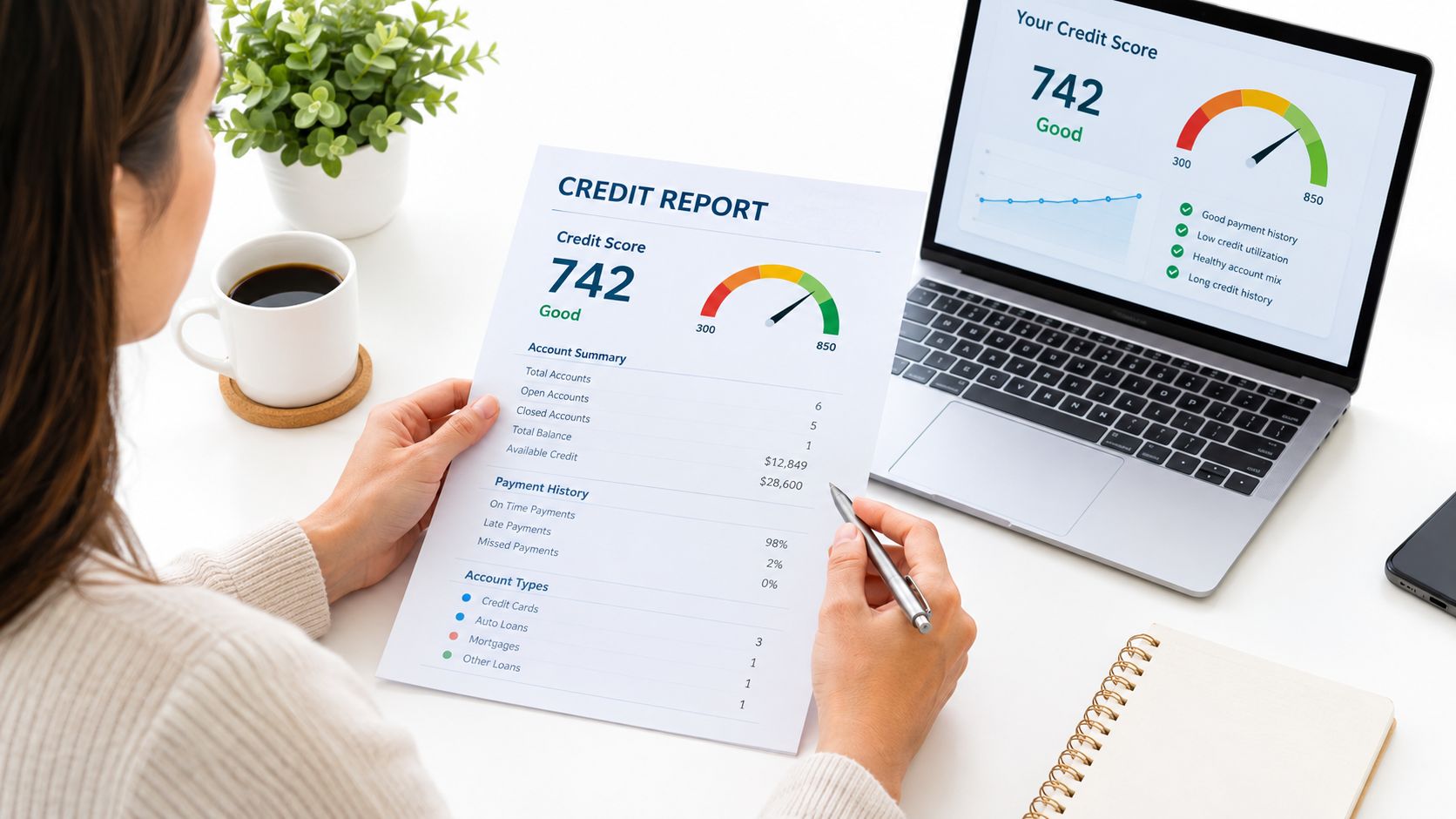
Start with your credit reports rather than the score shown in an app. Review account ownership, balances, payment history, collections, charge-offs, inquiries, and account status. Separate information you can confirm from items that need investigation.
Write down each issue and the evidence connected to it. If a late payment is wrong, gather statements showing when you paid. If a collection is not yours, collect documents supporting that position. If an account status is misleading, note the exact field that needs correction.
A lawful credit-repair process can include reviewing reports, disputing inaccurate information with the appropriate reporting agency or furnisher, allowing time for investigation, and checking the response. Results depend on the credit file, documentation, creditor responses, account history, and current credit behavior. No ethical company can promise deletion of accurate information, a specific score increase, or mortgage approval.
Protect the positive information
Report corrections are only one part of mortgage readiness. Keep current accounts paid on time and manage revolving balances carefully. A lower card balance can help utilization, while the required monthly payment still affects your debt-to-income ratio. Both pieces may matter to a lender.
Superior Credit Repair's step-by-step guide to rebuild credit for loan approval can help readers review reports, plan utilization, and build positive credit habits.
Do not close accounts impulsively or apply for several new products because an advertisement promises a quick change. New accounts can affect inquiries, average history, available credit, and monthly obligations. A stable file may give the lender clearer information than a burst of unexplained activity before an application.
Decide whether professional support fits
Some consumers can review their reports and submit well-supported disputes independently. Others have errors across multiple bureaus, identity-related problems, medical collections, late payments, charge-offs, or account histories that are difficult to organize. A compliance-focused credit restoration company can help identify questionable information, assemble documentation, explain dispute steps, and connect report correction with longer-term credit education.
Superior Credit Repair offers credit restoration support for consumers preparing for FHA, VA, USDA, or conventional financing. Its services include report review, dispute assistance for potentially inaccurate information, utilization planning, and credit education. Its process uses documentation and legal dispute procedures, while outcomes vary by consumer file.
The right timeline depends on report complexity and how quickly furnishers respond. Some corrections may be straightforward; others require more documentation or follow-up. A realistic plan favors consistent habits, accurate records, and clear lender communication over claims of overnight credit repair or an immediate score boost.
Maintaining Credit Stability After Pre Approval and Before Closing
What changes after pre-approval can affect whether the lender confirms your loan before closing? A pre-approval reflects the income, debts, credit information, and assets reviewed at that stage. It is not permission to change your financial profile without telling the lender. Continue paying every account on time, keep revolving balances steady, and avoid unexplained activity.
A new account can create an inquiry, reduce your average account age, increase utilization, or add a monthly payment. Financing furniture, buying a vehicle, opening a credit card, using buy now, pay later products, or taking out a personal loan can therefore affect both your credit profile and debt-to-income ratio. Even if your score appears unchanged, the lender may need to reassess your repayment capacity.
A pre-approval letter reflects the information reviewed at that stage. Protect the file that earned it.
Ask the lender before making a major purchase or applying for credit. Keep copies of pay records, bank statements, dispute correspondence, and explanations for unusual deposits or account activity. Report changes in employment, income, debts, or housing plans promptly. A clear explanation supported by documents gives the lender something to review. Silence leaves gaps in the file.
Check your credit reports again before closing if possible. An inaccurate balance, newly reported late payment, collection, or account that does not belong to you can change the lender's view of your application. Score improvement alone cannot fix incorrect underwriting information. If you find an error, document it and ask the lender how a dispute could affect the closing timeline.
If a lender denies pre-approval using a credit score, CFPB guidance says the lender must send a notice with the score used and instructions for obtaining a free report. The CFPB's pre-approval guidance explains information you may request and steps to consider.
Installment-style payment products also deserve attention after approval. A new BNPL payment can add to monthly obligations even when each individual purchase seems small. This superior credit repair BNPL mortgage guide discusses payment stability and new obligations during the homebuying process.
Frequently asked questions
What credit score do I need for mortgage pre approval?
There is no universal score. Conventional loans commonly use 620. FHA loans can allow 580 with 3.5% down or 500 with 10% down. VA and USDA programs do not have one official program-wide minimum, although individual lenders may set their own standards.
Does mortgage pre-approval hurt my credit?
A hard mortgage inquiry typically lowers a FICO-based score by fewer than 5 points, and many borrowers see a change of only 2 to 3 points. FICO treats multiple mortgage inquiries within a shopping window as one event for scoring purposes. AmeriSave's explanation of mortgage inquiries provides further context.
Can I qualify with collections or a charge-off?
Possibly. The answer depends on the loan program, lender rules, account details, payment obligations, and the rest of your file. Review collections and charge-offs for accuracy and status, then ask the lender how each account affects underwriting.
Should I repair my credit before applying for a mortgage?
Reviewing your reports can give you time to correct inaccurate information, reduce revolving balances, organize documents, and address debt-to-income concerns. Credit repair cannot guarantee deletion, a score outcome, or approval. Focus on accurate records and sustainable payment behavior.
What should I do after being denied pre-approval?
Ask for the written reason, the score used if credit was the basis, and instructions for obtaining the applicable report. Review the report for specific errors, then discuss the file with a qualified lender or compliant credit professional before applying again.
Superior Credit Repair can review your report, identify inaccurate, outdated, unverifiable, or misleading information, and provide education about utilization, collections, late payments, charge-offs, and mortgage readiness. Visit Superior Credit Repair to request a free credit analysis or consultation. You can also Share your feedback on Google after discussing your experience.