


You're probably doing what many first-time homebuyers do. You've started browsing listings, estimating payments, and wondering whether it's time to talk to a lender. Then someone mentions a soft pull, someone else warns you about a hard pull, and suddenly a basic credit check feels like a major risk.
That anxiety is understandable. Mortgage preparation already comes with enough moving parts. If your credit still needs work, or if you're trying to avoid mistakes before applying for an FHA, VA, USDA, or conventional loan, the difference between these two types of inquiries matters.
The good news is that credit pulls are much less mysterious once you understand what each one does, when lenders use it, and how mortgage rate shopping is handled. For many buyers, learning the rules around soft pull vs hard pull credit helps replace guesswork with a plan.
Table of Contents
- Preparing for a Mortgage and Facing Credit Pull Anxiety
- Understanding the Soft Credit Pull
- Understanding the Hard Credit Pull
- Soft Pull vs Hard Pull A Direct Comparison for Homebuyers
- How Credit Inquiries Impact Your Mortgage Application
- Strategic Steps to Manage Credit Inquiries Before Buying a Home
- Building a Lender-Ready Profile with Professional Guidance
- Frequently Asked Questions About Credit Pulls
Preparing for a Mortgage and Facing Credit Pull Anxiety
A common homebuying moment looks like this. A couple sits down at the kitchen table, opens a mortgage calculator, and starts comparing monthly payments. One lender offers to pre-qualify them. Another asks for permission to check credit. Then the worry starts. Will one conversation hurt the score? Will several lenders create a problem?

That concern is even stronger when you're trying to qualify after past credit issues, high card balances, collections, late payments, or a thin credit file. It also shows up when buyers are trying to understand the credit scores used by mortgage lenders and realize mortgage lending doesn't always feel as simple as checking a banking app score.
Why this feels confusing
The terms sound similar, but they don't work the same way. A soft pull is usually part of research, monitoring, or pre-qualification. A hard pull is tied to a real application for new credit.
For homebuyers, that difference affects timing, expectations, and confidence. If you know when a lender is only taking a preliminary look and when a lender is opening a full underwriting file, you can make better decisions before you authorize anything.
Many buyers aren't afraid of the mortgage itself. They're afraid of making a credit mistake before the mortgage.
Where this matters most
This topic matters at three points in the mortgage process:
- Before talking to lenders when you're checking your own reports and trying to improve credit score habits.
- During pre-qualification and pre-approval when lenders may use different inquiry methods.
- While rate shopping when timing becomes important.
If you're working on credit repair, credit restoration, or credit repair before buying a home, this is one of the first concepts worth getting clear on. It helps you protect your credit profile while still moving toward a lender-ready file.
Understanding the Soft Credit Pull
A soft credit pull is the lighter-touch version of a credit check. It uses limited credit information and doesn't function like a formal review for a new debt application.
What a soft pull actually means
Think of a soft pull as a glance, not a deep read. It gives the person or company checking your file a narrower view than a full lending review.
Unlike hard pulls, soft pull credit inquiries have no negative impact on an individual's credit score and are not visible to other lenders when reviewing credit reports. Because soft inquiries are not connected to a specific application for new credit, they are treated differently by credit scoring models and are excluded from risk assessments, according to Ramp's explanation of soft pull vs hard pull.
That's why soft pulls are useful early in the mortgage process. They let you gather information without creating the same kind of footprint a formal loan application creates.
Common times a soft pull happens
You may see a soft inquiry when:
- You check your own credit through a monitoring service or personal review.
- A lender offers pre-qualification based on limited information.
- A credit card company screens for pre-approved offers.
- An employer or landlord reviews credit-related information in a screening context.
- A business verifies identity or basic qualification criteria without opening a full lending file.
These situations often confuse people because the word “inquiry” sounds negative. In reality, a soft inquiry is usually part of everyday credit visibility.
Why soft pulls help homebuyers
For a first-time buyer, a soft pull can be helpful because it creates room to prepare. You can review your file, spot possible credit report errors, and get a rough idea of mortgage readiness before you apply.
That matters if you're dealing with:
- Collections dispute help questions before buying a home
- Late payment dispute help concerns
- Charge-off dispute help
- High utilization that may need to be reduced before a mortgage
- Apartment approval and rental screening while planning a future purchase
Practical rule: If you're still gathering information and haven't decided to submit a formal credit application, ask whether the lender can start with a soft pull.
A soft inquiry doesn't replace the full mortgage approval process. It acts as a safer starting point while you rebuild credit profile strength and prepare documentation.
Understanding the Hard Credit Pull
A hard pull is the formal version of a credit check. It happens when you apply for new credit and the lender needs your full credit history to evaluate risk.
What makes a hard pull different
A hard inquiry goes deeper than a soft one. The lender isn't just checking whether you might qualify. The lender is reviewing your file as part of a real lending decision.
A hard pull credit inquiry typically reduces an individual's FICO credit score by fewer than five points per occurrence, and these inquiries remain visible on the credit report for up to two years, though most scoring models cease counting them in score calculations after 12 months, according to Experian's explanation of hard inquiry vs soft inquiry.
That's why timing matters. A single inquiry is usually not catastrophic, but several scattered applications can create unnecessary noise before a mortgage review.
When homebuyers usually see hard pulls
A mortgage lender usually uses a hard pull when you move from casual research into a formal application or underwriting process. This is the point where the lender needs to verify the full credit picture, not just estimate general eligibility.
Typical hard-pull situations include:
- Mortgage applications
- Auto loan applications
- Credit card applications
- Other new financing requests
This is also why buyers should be careful about opening new accounts shortly before applying for a home loan. Even if the new debt seems manageable, the inquiry and new account activity can make the file look more active than a mortgage underwriter would prefer.
Permission matters
A hard pull isn't supposed to happen casually. It requires your authorization as part of the application process.
If you review your report and see a hard inquiry you don't recognize, that's worth investigating. You can also learn more in this guide to removing credit inquiries, especially if you're trying to remove inaccurate items or clean up your file before a mortgage application.
If a lender is about to run credit, ask one direct question first. “Will this be a hard inquiry or a soft inquiry?”
That one sentence can prevent a lot of confusion.
Soft Pull vs Hard Pull A Direct Comparison for Homebuyers
For most buyers, the easiest way to understand soft pull vs hard pull credit is to see the differences side by side.
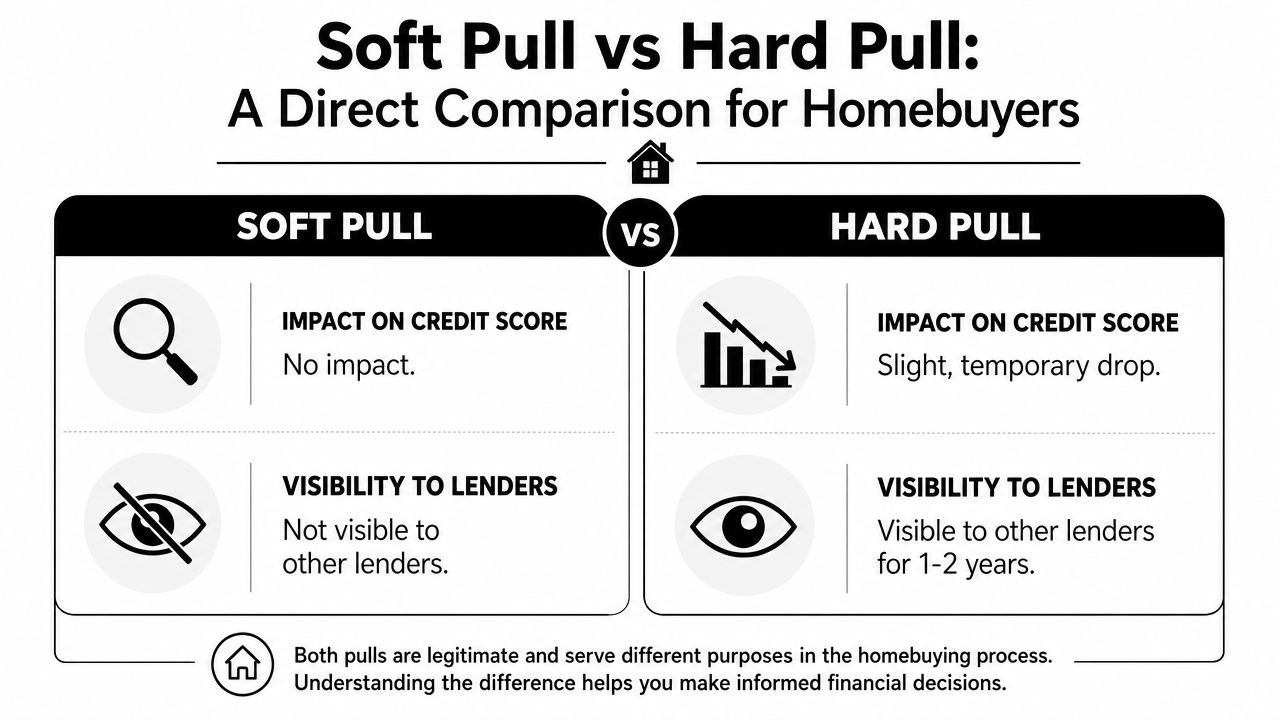
Quick comparison table
| Feature | Soft Pull | Hard Pull |
|---|---|---|
| Credit score impact | No impact | Typically lowers the score by 3 to 5 points, based on TowneBank Mortgage's overview of soft vs hard credit pulls |
| Visibility to other lenders | Not visible to other lenders | Visible to lenders reviewing your report |
| Permission required | Can happen without explicit permission in some situations | Requires explicit authorization |
| Depth of review | Limited version of the credit report | Full credit history review |
| Common use cases | Pre-qualification, self-checks, pre-approved offers, screening | Mortgage, auto loan, credit card, and other formal credit applications |
How to think about the difference
The practical difference is simple.
A soft pull helps you explore.
A hard pull means you're taking action on new credit.
That distinction matters because many homebuyers treat all credit checks the same. They avoid asking lenders questions, skip pre-qualification, or delay reviewing their own reports because they think any inquiry is harmful. That's not how the system works.
Here's a clearer way to frame it:
- Soft pull means limited access, no score damage, and no visibility to other lenders.
- Hard pull means full review, a small temporary score effect, and visibility during lending review.
Where confusion usually happens
The most common misunderstanding is around pre-approval versus pre-qualification.
A lender may advertise an easy starting point, but the actual inquiry type depends on what stage you're in. Some early affordability checks may use a soft pull. A formal pre-approval tied to a real mortgage file often leads to a hard pull because the lender needs more complete information.
Another point of confusion is whether seeing an inquiry on your personal copy of a report means lenders see it too. Soft inquiries may appear on reports you review yourself, but that doesn't mean outside lenders can use them in lending decisions.
A soft inquiry can still appear in your own records. The key difference is that other lenders don't see it the way they see a hard inquiry.
For anyone working on mortgage credit repair, credit repair for FHA approval, credit repair for VA loans, or conventional mortgage preparation, this side-by-side distinction helps you know when to monitor and when to commit.
How Credit Inquiries Impact Your Mortgage Application
Mortgage lending treats inquiries differently than many consumers expect. That's especially true when you're shopping for rates.
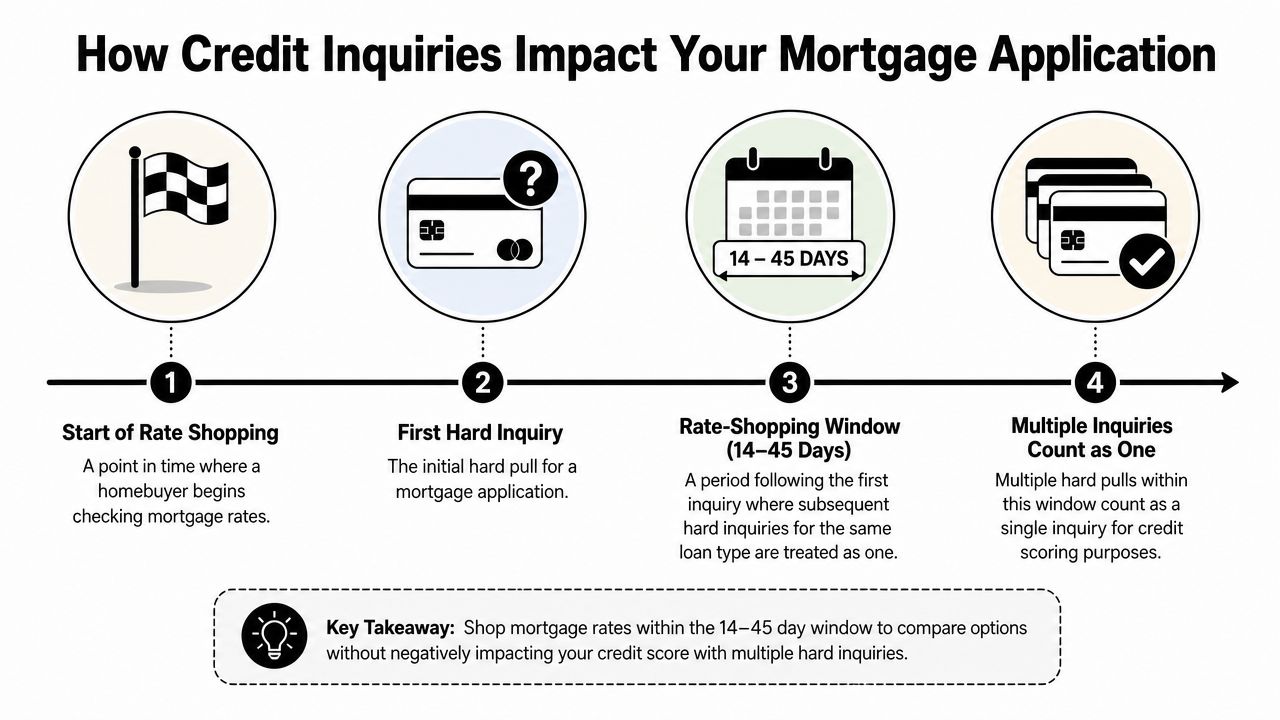
How rate shopping works in mortgages
For mortgage applications, the credit industry uses a mortgage rate shopping window where multiple hard inquiries from different lenders within a 45-day period are consolidated into a single inquiry on the credit report, according to the Consumer Financial Protection Bureau's explanation of mortgage lender credit checks.
This rule matters because homebuyers should compare loan options. Mortgage shopping isn't supposed to punish you the same way repeated unrelated credit applications might.
If you speak with several mortgage lenders during that window, the scoring impact is treated the same regardless of how many lenders you consulted within that period. For buyers trying to compare FHA, VA, USDA, and conventional options, that's an important protection.
What lenders notice outside the mortgage window
Mortgage underwriters don't only look at your score. They also review the broader story your report tells.
If your file shows multiple recent hard inquiries for other credit products, such as credit cards or auto loans, that can raise questions about current borrowing behavior. It doesn't automatically mean a denial. It does mean the lender may view the file as more active or less stable.
That's why buyers often get advice to avoid new financing right before applying for a mortgage. The concern isn't only the inquiry itself. It's also the possibility of new debt, new minimum payments, and a more complicated underwriting review.
For a homebuyer, those questions can affect:
- Debt-to-income review
- Perceived account stability
- How organized the file looks to underwriting
- The need for added documentation
You can read more about what mortgage lenders look for in 2026 if you're trying to prepare a cleaner, lender-ready profile before applying.
Why this matters for FHA, VA, and conventional buyers
Different loan programs have different underwriting standards, but they all care about credit behavior, documentation, and risk assessment. A buyer preparing for an FHA loan may be working through collections or limited savings. A VA buyer may be focused on maximizing affordability. A conventional applicant may be trying to protect a stronger score tier.
In all of those cases, inquiry management is part of mortgage readiness. Smart rate shopping helps. Random new credit activity usually doesn't.
Shop for mortgage terms with intention. Don't stack unrelated credit applications around the same time.
Strategic Steps to Manage Credit Inquiries Before Buying a Home
Good mortgage preparation usually starts before the first application. If you manage inquiries on purpose, you reduce surprises and keep your file easier to explain.
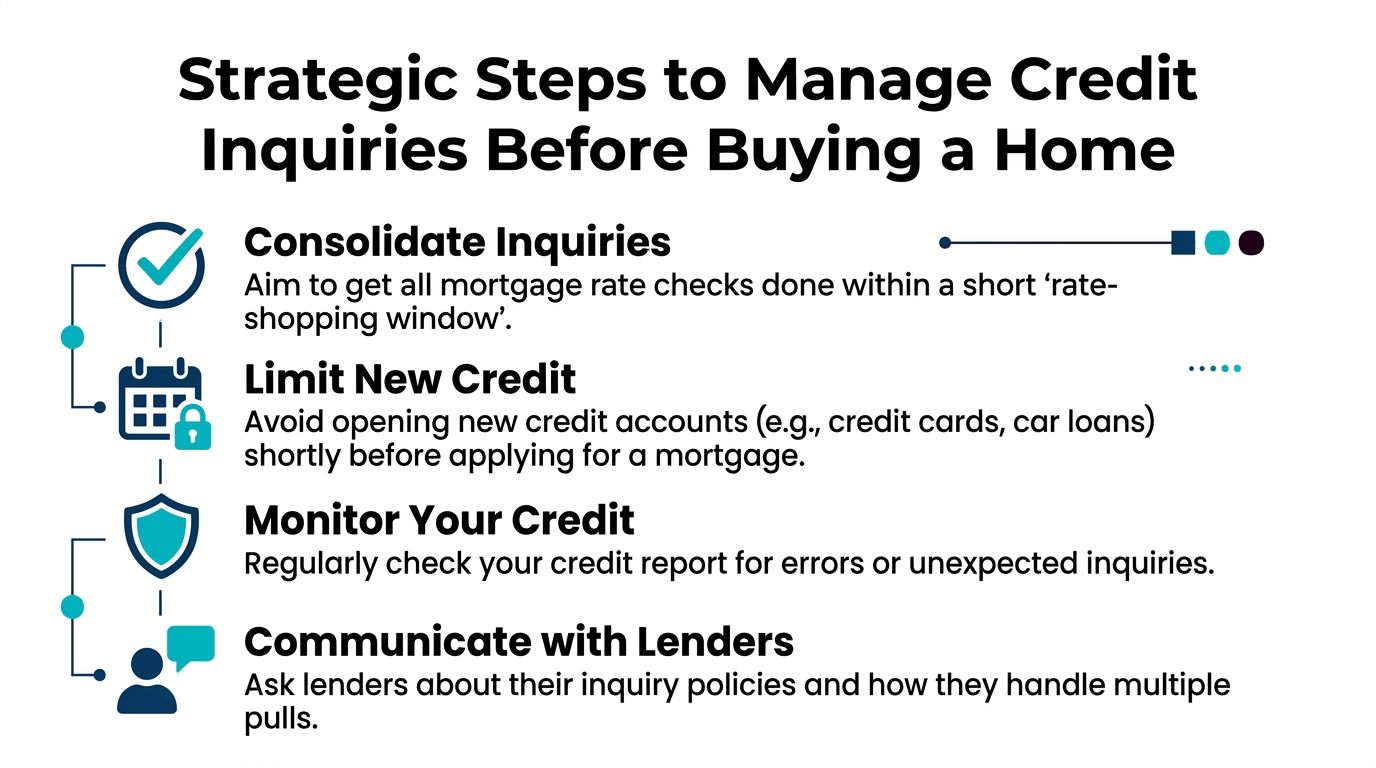
A practical mortgage prep checklist
Review your own credit first. Personal credit monitoring and self-checking generally fall into the soft inquiry category, which means you can examine your report without creating score damage. That gives you time to spot credit report errors, outdated information, or questionable negative accounts.
Use pre-qualification carefully. Some lenders can offer a starting estimate using a soft pull. That can help you gauge affordability before you authorize a full mortgage application.
Group mortgage applications tightly. If you're going to compare lenders, do it in a focused timeframe instead of spreading applications out.
Pause other financing moves. Don't apply for a store card, personal loan, or auto loan just because an offer appears convenient. Even small new accounts can complicate a pending mortgage file.
Questions worth asking before consent
Hard pulls require the consumer's explicit permission and legally occur only when applying for new credit such as a mortgage, auto loan, or credit card, while soft pulls can occur without permission for purposes like pre-approvals or personal credit monitoring, as explained by Eastrise's summary of soft credit pull vs hard credit pull.
That means you should ask direct questions before any lender runs credit:
- Will this be a soft pull or a hard pull?
- Is this pre-qualification or a formal application?
- What documents should I prepare before authorizing a hard inquiry?
- Should I avoid any new accounts while my mortgage file is being reviewed?
If you're trying to build a clearer plan, this mortgage approval credit guide can help you think through your next steps.
A well-managed inquiry strategy won't solve every mortgage issue by itself. But it supports a stronger overall file, especially if you're also working to dispute negative accounts, rebuild credit profile stability, lower utilization, and address collections before mortgage approval.
Building a Lender-Ready Profile with Professional Guidance
Credit inquiries are only one part of mortgage readiness. A lender-ready profile also depends on payment history, account stability, utilization, collections, charge-offs, and whether the information on your reports is accurate.
Inquiry management is only one part of mortgage readiness
If you check your reports and find unauthorized hard inquiries, inaccurate late payments, medical collections, charge-offs, or other questionable negative items, you have the right to dispute inaccurate, outdated, unverifiable, or misleading information through a documentation-based process.
That's where many people get stuck. They know something looks wrong, but they aren't sure what's disputable, what needs supporting records, or how to sequence credit rebuilding while preparing for a mortgage. A structured review can help sort out what belongs in a dispute, what requires behavior changes, and what requires time and consistency.
This matters whether you're focused on credit repair for homebuyers, medical collection credit repair, credit repair for conventional mortgage approval, or cleaning up a file after hardship, divorce, or a mortgage denial.
If you need a broader roadmap, this guide for first-time homebuyers can help you think through lender readiness in a more complete way.
Results vary because every credit file is different. Creditor responses, documentation, account history, and current credit behavior all affect what happens next. Credit repair works best as a structured review process, a legal dispute and verification process, and a long-term improvement plan rather than a quick fix.
Frequently Asked Questions About Credit Pulls
Some of the most important questions come up after you've learned the basics, especially when you're preparing for a mortgage and reviewing your report closely.
Hard inquiries remain visible on credit reports for up to two years and can be seen by other lenders, while soft inquiries may appear on reports but are only visible to the consumer and cannot be used by third parties in lending decisions, according to BSB's explanation of hard vs soft credit pulls. That distinction is important when you're checking for unauthorized activity.
| Question | Answer |
|---|---|
| Will checking my own credit hurt my score? | No. Checking your own credit is generally treated as a soft inquiry, so it doesn't damage your score. |
| Can I talk to multiple mortgage lenders without harming my credit too much? | Mortgage rate shopping is treated differently from scattered unrelated applications. If your mortgage inquiries are grouped within the accepted shopping window discussed earlier, scoring models are designed to reduce the impact. |
| What should I do if I see a hard inquiry I don't recognize? | Review the date and the company name, then gather your records. If you didn't authorize the inquiry, you may need to dispute it and ask the bureau or creditor to verify it. |
| Do soft pulls show up anywhere? | They may appear on the version of the report you see, but other lenders generally don't use them in lending decisions. |
| Should I avoid all credit activity before buying a home? | You don't need to avoid checking your own credit. But it's usually wise to avoid unnecessary new credit applications before a mortgage, because formal new accounts and hard inquiries can complicate underwriting. |
A related issue that surprises some buyers is insurance. Soft inquiries don't hurt FICO scores, but consumers should still read disclosures carefully when applying for related financial products because insurance pricing, mortgage affordability, and debt-to-income planning can overlap in practical ways during homebuying.
Superior Credit Repair can review your credit report, help identify inaccurate or questionable items, and explain a step-by-step plan for improving your credit profile. If you're preparing for home, auto, business, or personal financing, Superior Credit Repair offers compliance-focused credit restoration guidance built around documentation, legal dispute processes, and long-term credit rebuilding habits. You can request a free credit analysis or consultation to better understand your options.
Was this guide helpful?
Superior Credit Repair Online provides educational credit guidance for individuals and families preparing for major financial goals like buying a home, applying for a mortgage, refinancing, or rebuilding after credit challenges.
If this information helped you better understand your credit report or your next steps, we would appreciate your honest feedback. You are welcome to share your experience with Superior Credit Repair on our Google Business Profile. Leave feedback for Superior Credit Repair