
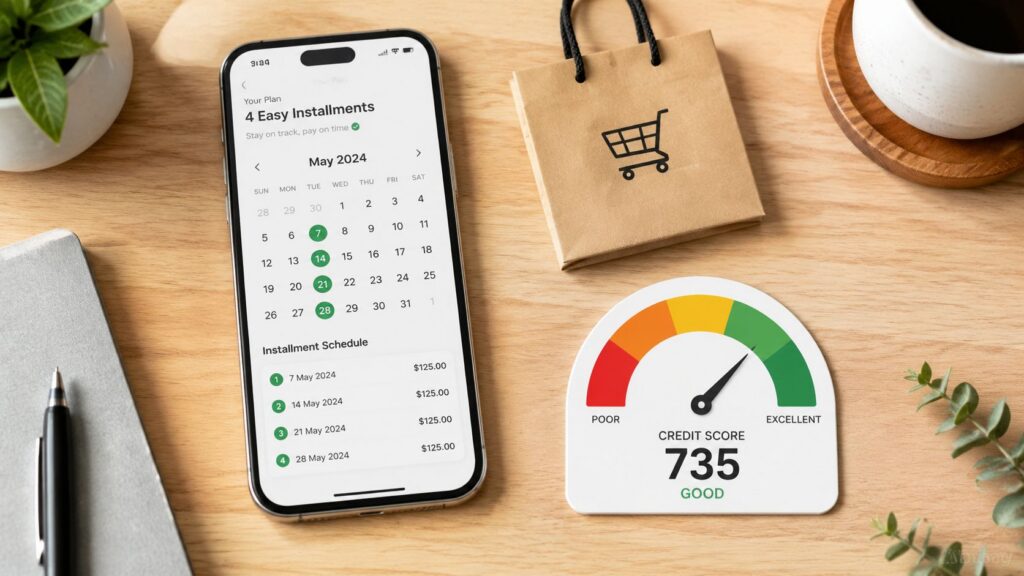
You're getting serious about buying a home. You've cut back on spending, paid down credit cards, and started watching your bank balance more closely. Then you remember a few purchases you split through Klarna, Affirm, Afterpay, Sezzle, or another pay-over-time service. Maybe it was furniture, school clothes, tires, or a laptop.
That's where many families get confused. Buy now pay later apps can feel separate from “real debt” because the payments are small, the checkout process is fast, and some plans don't look like a traditional loan. But mortgage lenders don't always see them that way. They may treat those payments as debt, ask questions about recent account activity, or flag a missed payment if it appears on a credit report or in a collection file.
For homebuyers, the issue usually isn't one small purchase by itself. It's the combination of hidden monthly obligations, changing credit reporting practices, and timing. A loan that felt harmless at checkout can become a problem when an underwriter reviews your debt-to-income ratio, payment history, or overall file stability.
Table of Contents
- The Rise of Pay-in-Four and What It Means for Your Credit
- How Buy Now Pay Later Apps Work
- How BNPL Activity Can Affect Your Credit Report
- The Specific Credit Risks of Using BNPL Services
- Strategies for Using BNPL Responsibly Before a Mortgage
- How to Address Negative BNPL Items on Your Credit Report
- How Superior Credit Repair Prepares Your Credit for a Mortgage
- Frequently Asked Questions About BNPL and Credit
The Rise of Pay-in-Four and What It Means for Your Credit
At checkout, buy now pay later apps are designed to feel simple. You see a purchase broken into four smaller amounts, often with no interest if you pay on time. That can make the decision feel easier than putting the full amount on a credit card or waiting until next month.
But convenience can hide a significant issue. BNPL is still a form of credit. Even when it doesn't look like a loan, you're agreeing to repay money over time. For a family preparing for a mortgage, that matters because lenders care about ongoing obligations, recent payment behavior, and how stable your financial picture looks.
The reason this matters more now than it did a few years ago is scale. The Consumer Financial Protection Bureau's BNPL market research says the market for BNPL credit continued to expand between 2019 and 2023, and the Richmond Fed estimated that BNPL transaction value kept growing about 20% per year since 2021 and reached roughly $70 billion in 2025, equal to about 1.1% of total U.S. credit-card spending. That tells you two things at once. BNPL is no longer a niche payment option, but it's also still much smaller than the traditional credit card market.
Why homebuyers should pay attention
For everyday shopping, a pay-over-time plan may seem minor. For mortgage underwriting, even a minor recurring obligation can change how your file is viewed. A lender may ask whether you have any undisclosed debts, recent delinquencies, or payment arrangements that don't fully appear on a standard credit report.
That creates a common misunderstanding. Many borrowers think, “If it's not on my report, it won't matter.” That's not a safe assumption.
Practical rule: If you have to make future payments on it, treat it like debt when you're preparing for a mortgage.
Why BNPL confuses people
Traditional credit products come with familiar signals. A monthly statement. A credit limit. A long application. BNPL often skips that look and feel. You may approve the purchase in seconds and move on.
That doesn't mean the obligation disappears. It means you need to track it yourself, understand the terms, and think like a future borrower, not just a shopper. Families who want mortgage credit repair, FHA loan preparation, VA loan preparation, or conventional mortgage approval should treat buy now pay later apps with the same caution they'd apply to any other debt.
How Buy Now Pay Later Apps Work
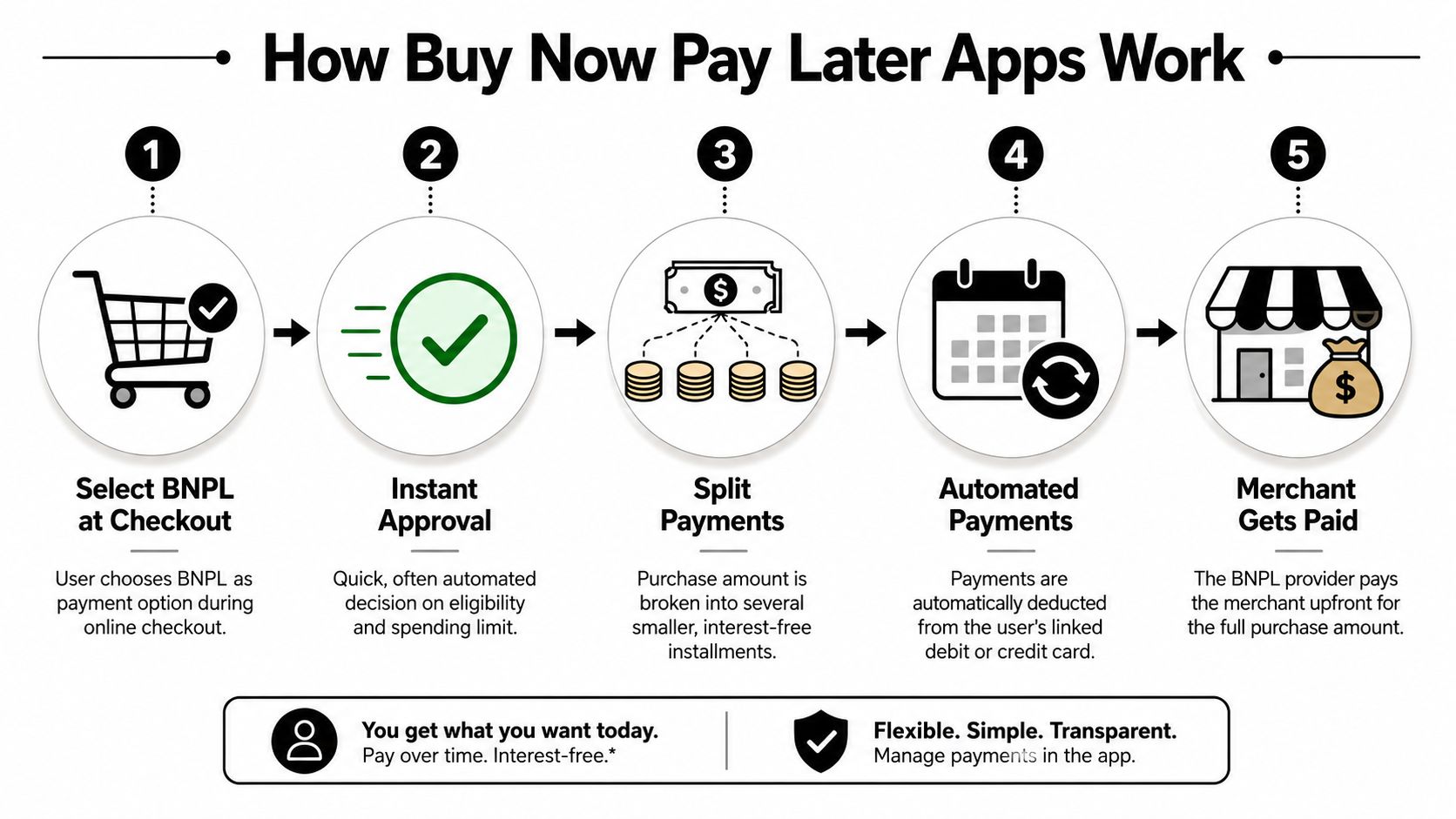
The mechanics are straightforward once you strip away the marketing language. A BNPL plan is a small installment loan attached to a purchase. You buy the item now, the provider pays the merchant, and you repay the provider over time.
The basic checkout process
Most buy now pay later apps follow a path like this:
- You choose BNPL at checkout. This can happen on a retailer's website or inside the provider's app.
- The provider reviews your eligibility. That review is often automated and quick.
- The purchase is divided into installments. You agree to a payment schedule before completing the order.
- Payments are collected automatically. The provider usually charges a linked debit card, bank account, or credit card.
- The merchant gets paid upfront. Your obligation is now with the BNPL provider.
That last point is important. If a problem develops, you're not just dealing with the store. You may be dealing with a separate financial company that tracks repayment, collections activity, and credit reporting differently from a retailer.
Two common BNPL models
The most common setup is pay in 4. According to Firstcard's explanation of BNPL structures, most BNPL products use a pay-in-4 structure with one upfront payment followed by three additional installments, usually spread across about six weeks. The same source notes that longer plans can extend to 6, 12, 24, or 36 months and may charge interest similar to a credit card.
That difference matters because the risk profile changes.
| BNPL type | Typical setup | What to watch |
|---|---|---|
| Pay-in-4 | Short repayment window, usually with an upfront payment | Overlapping payments, autopay overdrafts, missed due dates |
| Longer-term installment plan | Monthly payments over a longer period, sometimes with interest | Larger debt load, extended monthly obligation, closer resemblance to a traditional loan |
A short pay-in-4 plan can still cause problems if you open several at once. A longer-term installment plan can matter even more for mortgage readiness because it may look and behave more like conventional financing.
A good working definition is simple. If the purchase creates future payments, put it in your monthly debt plan before you click approve.
How BNPL Activity Can Affect Your Credit Report
The primary source of confusion begins with reporting. Some people use buy now pay later apps for months and never see an account on their reports. Others suddenly find a BNPL tradeline, a late payment, or even a collection account they didn't expect.
The reporting rules aren't uniform, and they've been changing.
Why reporting feels inconsistent
Some providers may use a soft inquiry for an application or eligibility check. A soft inquiry usually doesn't affect your score the way a hard inquiry can. In other cases, a provider may use a harder review, especially for longer-term financing products. That means two BNPL purchases can look very different from a credit-reporting standpoint even if they feel similar at checkout.
Reporting itself has also expanded. A 2024 National Association of Credit Reporting study, cited by SCU's article on BNPL reporting changes, found that BNPL reporting increased by 300% in the last 12 months, with 22% of new BNPL accounts impacting credit scores within 30 days. That's one reason a borrower may see a credit change sooner than expected.
If you're trying to understand the scoring side, it helps to review how credit scores are calculated before you assume every BNPL account will be treated the same way.
A simple view of provider reporting
Policies vary by provider and by product type. The table below is a practical framework, not a provider-by-provider legal chart, because reporting practices can change and may differ across products.
| Provider | Reports to Credit Bureaus? | Bureau(s) Reported To | Reports On-Time Payments? | Reports Late Payments? |
|---|---|---|---|---|
| Klarna | Varies by product and reporting policy | May vary | May vary | May vary |
| Affirm | Varies by product and reporting policy | May vary | May vary | May vary |
| Afterpay | Varies by product and reporting policy | May vary | May vary | May vary |
| Sezzle | Varies by product and reporting policy | May vary | May vary | May vary |
| PayPal Pay Later products | Varies by product and reporting policy | May vary | May vary | May vary |
The takeaway is practical. Don't rely on old assumptions like “BNPL never shows up” or “only long-term loans matter.” Policies can differ by lender, by product, and by when you opened the account.
What to look for on your reports
Check all three credit reports, not just one. A BNPL item may appear on one bureau and not the others. Also review for:
- Unexpected inquiries tied to a financing application
- Installment accounts you forgot to include in your budget
- Late payment notations connected to a BNPL provider
- Collection accounts tied to missed repayment or charge-offs
One missing detail can change a mortgage timeline. A borrower may think a loan is invisible, while an underwriter sees unpaid installments or asks for statements that reveal them.
The Specific Credit Risks of Using BNPL Services
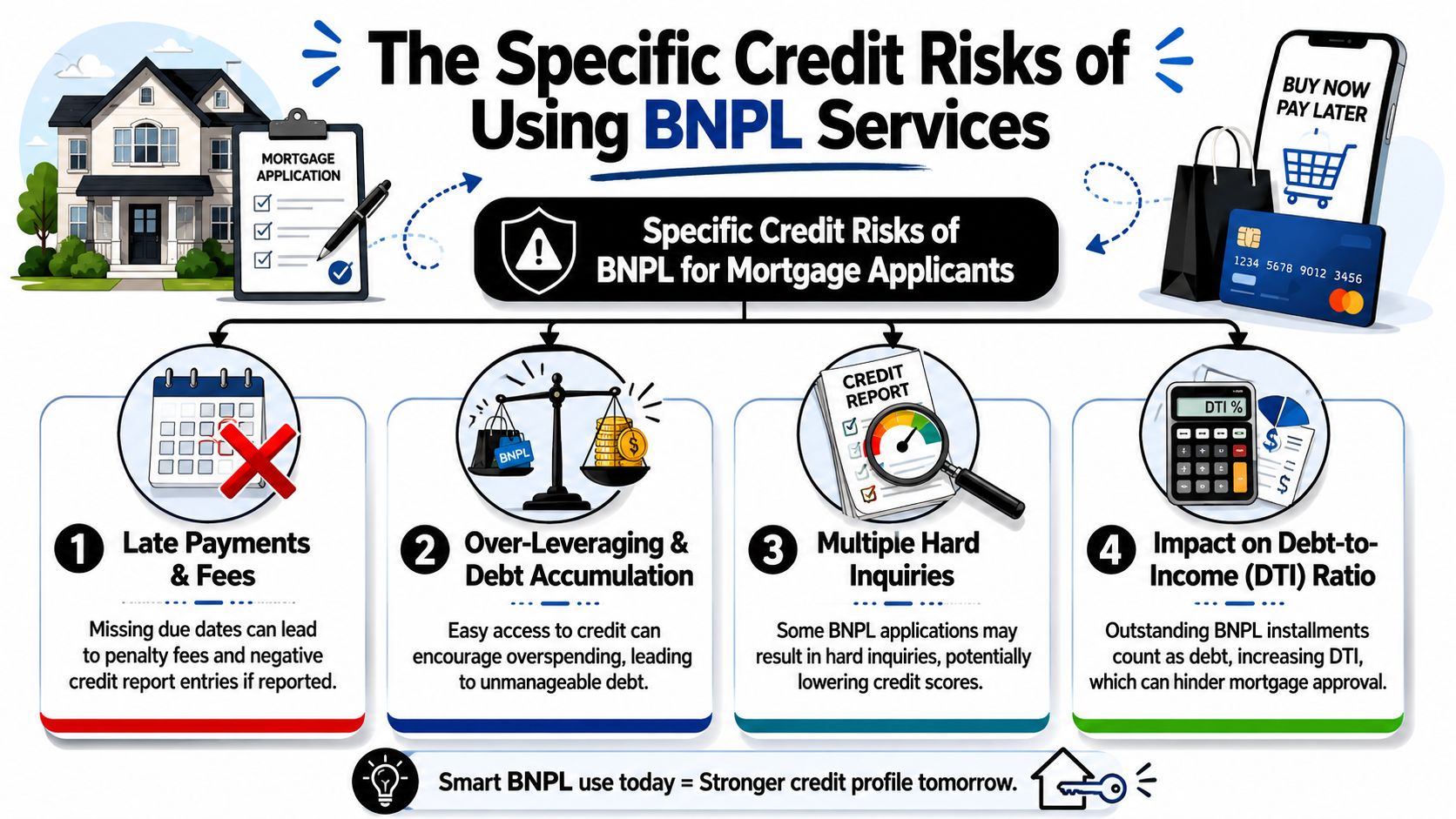
The biggest risks aren't abstract. They show up in ordinary ways. A payment date slips by. Several small plans overlap. A lender asks about debts that don't neatly show on a report. That's when a convenient purchase starts affecting mortgage readiness.
Missed payments can turn into bigger problems
Late payments are one of the clearest risks. LendingTree's BNPL survey data reported that 47% of BNPL users said they had paid late in the past year, up from 41% in 2025, and 15% had paid late before but not in the past year.
That doesn't mean every late payment will hit your credit file the same way. Some may trigger fees first. Some may lead to account restrictions. Others may eventually be reported or sent to collections. But for a mortgage applicant, the key point is simple. A late issue tied to any credit obligation can raise questions about repayment stability.
If you want a clearer picture of what late payments do to credit, focus on the chain reaction. One missed installment can lead to additional account problems, especially if autopay pulls from an account with low funds.
Small payments can stack fast
The payment amounts often look manageable because they're broken into smaller pieces. The problem isn't always the first plan. It's the third or fourth one running at the same time.
A family might split a set of tires, a back-to-school order, and a household appliance across different apps. None of those payments looks large on its own. Together, they can strain cash flow and increase the chance of a missed due date.
Common stacking risks include:
- Calendar crowding when several deductions hit in the same week
- Low account balance problems when autopay drafts sooner than expected
- Budget blind spots because payments are spread across apps, emails, and linked cards
- Impulse expansion when a small installment amount makes a bigger purchase feel affordable
Applications and account reviews can still matter
Consumers often hear “no credit check” and assume the account has no credit impact at all. That's too broad. Depending on the provider and the plan, there may be a soft check, a harder review, or later reporting tied to account performance.
For mortgage preparation, that means you shouldn't think only about your score. You should also think about how recent financing activity makes your file look. Multiple fresh obligations can suggest financial pressure, even if the balances seem modest.
Mortgage underwriting looks beyond your score
Mortgage lenders don't underwrite on score alone. They also look at debt-to-income ratio, account stability, documentation, and unexplained obligations. That matters because BNPL can still count against you even when the reporting trail isn't obvious.
A borrower may have perfect mortgage intentions and still run into trouble if underwriters see recurring installment obligations, recent bank statement withdrawals, or a debt the applicant didn't disclose clearly. This is especially important for credit repair for homebuyers and for people preparing for FHA, VA, USDA, or conventional mortgage approval.
Bottom line: A BNPL account doesn't have to be large to become a mortgage issue. It only has to affect your payment history, your cash flow, or your debt ratios at the wrong time.
Strategies for Using BNPL Responsibly Before a Mortgage
If you're within reach of a home purchase, your goal isn't perfection. Your goal is a lender-ready credit profile. That means fewer surprises, steadier payment history, and a monthly budget that makes sense on paper and in real life.
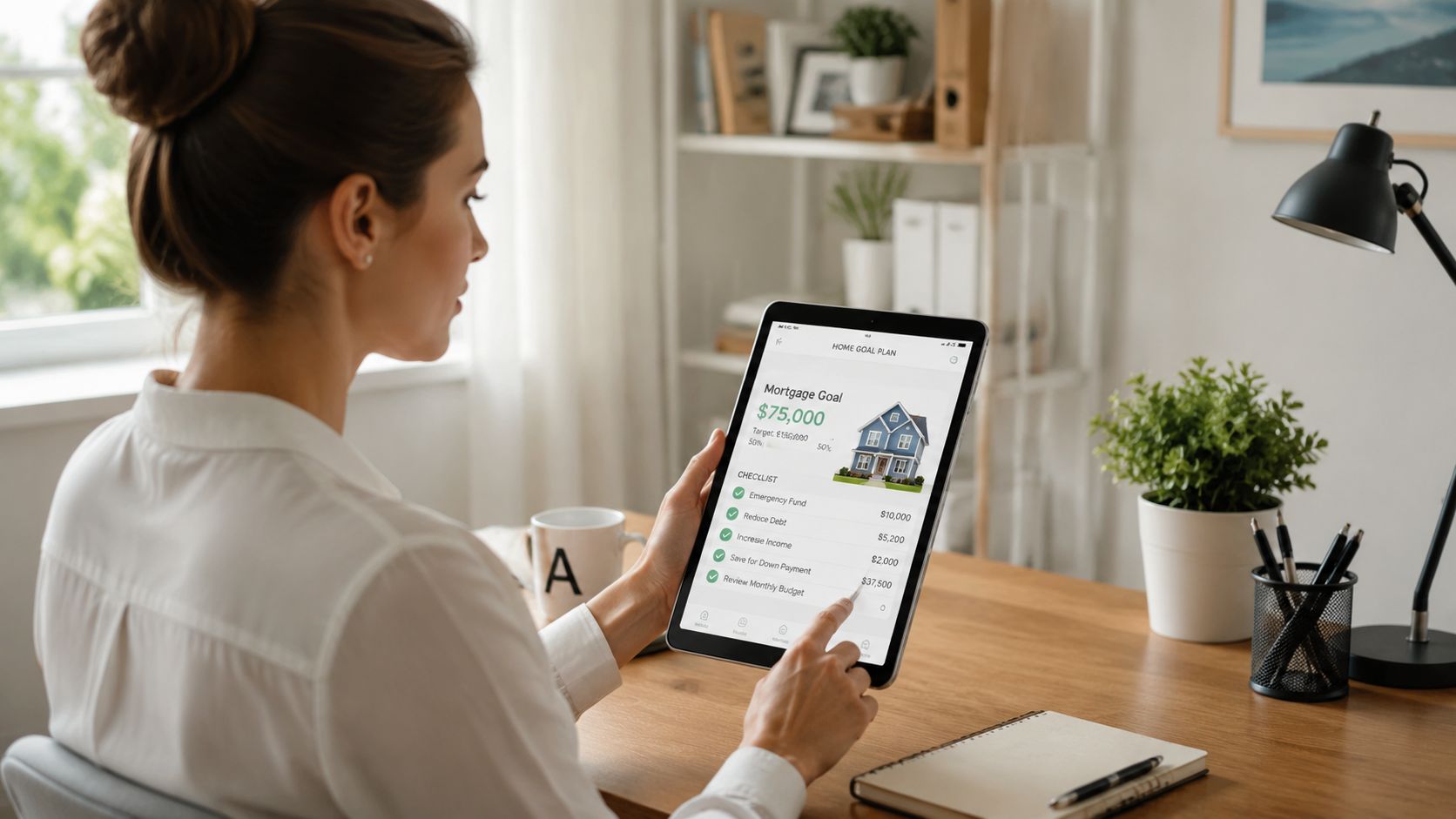
A 2024 CFPB report, discussed by the U.S. Chamber article on BNPL and mortgage debt-to-income concerns, found that mortgage lenders frequently treat unreported BNPL obligations as hidden debt, potentially disqualifying first-time homebuyers who assume BNPL is risk-free. The same article says only 12% of existing BNPL articles address the intersection with FHA and VA loan DTI calculations. That gap leaves many borrowers unprepared.
Build a lender-ready routine
Use a simple system and stick to it.
- List every active plan: Write down each provider, payment amount, due date, and final payoff date. Don't rely on memory or app notifications alone.
- Use one tracking method: A spreadsheet, budgeting app, or calendar reminder works. The method matters less than consistency.
- Link payments carefully: If possible, use the same funding source for all BNPL plans so you can see the total impact more clearly.
- Keep your mortgage timeline in mind: If you expect to apply soon, avoid adding new installment obligations unless the purchase is necessary.
Some buyers also benefit from reviewing Superior Credit Repair FHA loan tips to better understand how debt and credit habits can affect underwriting before they approach a lender.
When to stop using BNPL before applying
There isn't one universal rule that fits every lender or every borrower. Still, a conservative approach makes sense if your mortgage application is getting close.
Consider pausing buy now pay later apps when:
- You're actively saving for closing costs
- Your debt-to-income ratio already feels tight
- You're trying to clean up recent late payments or collections
- Your lender has asked for updated bank statements and debt explanations
This isn't about fear. It's about clarity. New financing activity can complicate underwriting, and homebuyers usually benefit from fewer moving parts.
Keep your file boring before a mortgage. Underwriters tend to prefer stable accounts, predictable payments, and no fresh surprises.
How to Address Negative BNPL Items on Your Credit Report
If a BNPL-related late payment, charge-off, or collection appears on your credit report, don't panic. Start with documentation. Credit repair works best when it's treated as a structured review process, not a rush to remove everything in sight.
Review the item carefully
Pull your credit reports and identify the exact entry. Look at the provider name, account number, balance, payment history, date reported, and status. Make sure you know whether you're dealing with the original BNPL provider or a third-party collection agency.
Then compare the entry against your own records:
- Payment confirmations
- Email notices from the provider
- Bank statements
- Settlement or payoff records
- Screenshots of account history
A common problem is mismatch. The amount may be wrong, the dates may be off, the account may have been reported more than once, or the item may not be adequately documented.
Dispute inaccuracies with documentation
Under the Fair Credit Reporting Act, you have the right to dispute information you believe is inaccurate, outdated, misleading, or unverifiable. That doesn't mean a legitimate debt disappears because you asked. It means the credit bureaus and furnishers must review challenged information through a formal process.
A practical dispute workflow looks like this:
- Identify the issue clearly. State what appears wrong.
- Gather supporting records. Include copies, not originals.
- Send a written dispute to the credit bureau reporting the item.
- Dispute with the furnisher when appropriate.
- Track deadlines, responses, and updated reports.
Here are examples of dispute grounds that may apply:
| Potential issue | Why it matters |
|---|---|
| Wrong balance | The reported amount may overstate your debt |
| Incorrect late date | Timing can affect mortgage underwriting reviews |
| Duplicate reporting | The same debt should not inflate the appearance of delinquency |
| Unverifiable account details | Credit reporting must be supported by adequate records |
If you need help organizing this process, some consumers look for credit repair for BNPL issues to review whether negative items are being reported accurately and whether formal disputes are appropriate.
Dispute the reporting, not reality. If the item is accurate and verifiable, the better strategy may be repayment, documentation, and rebuilding.
How Superior Credit Repair Prepares Your Credit for a Mortgage
BNPL problems are rarely just about one app or one missed payment. They usually involve a broader mortgage-readiness issue. A family may have a thin file, high utilization, an old collection, recent late payments, and a few buy now pay later accounts that make budgeting harder to track.
That's where a structured credit review can help. Superior Credit Repair works through a documentation-based process to review credit reports, identify inaccurate, outdated, unverifiable, or misleading items, and help consumers understand what needs attention before applying for major financing. Results vary because every file is different, and outcomes depend on the reporting history, supporting records, bureau investigations, and current credit behavior.
For borrowers preparing for FHA, VA, USDA, or conventional mortgage applications, the practical value is often clarity. You need to know which items may be hurting your profile, which accounts require direct action, and which habits need to change before a lender reviews your file. If your goal is to rebuild your credit score, that process usually includes both dispute review and stronger long-term credit habits.
A calm approach works best. Mortgage credit repair isn't about chasing fast score jumps or promising approval. It's about building a cleaner, more accurate, more stable file that gives lenders fewer reasons to pause.
Frequently Asked Questions About BNPL and Credit
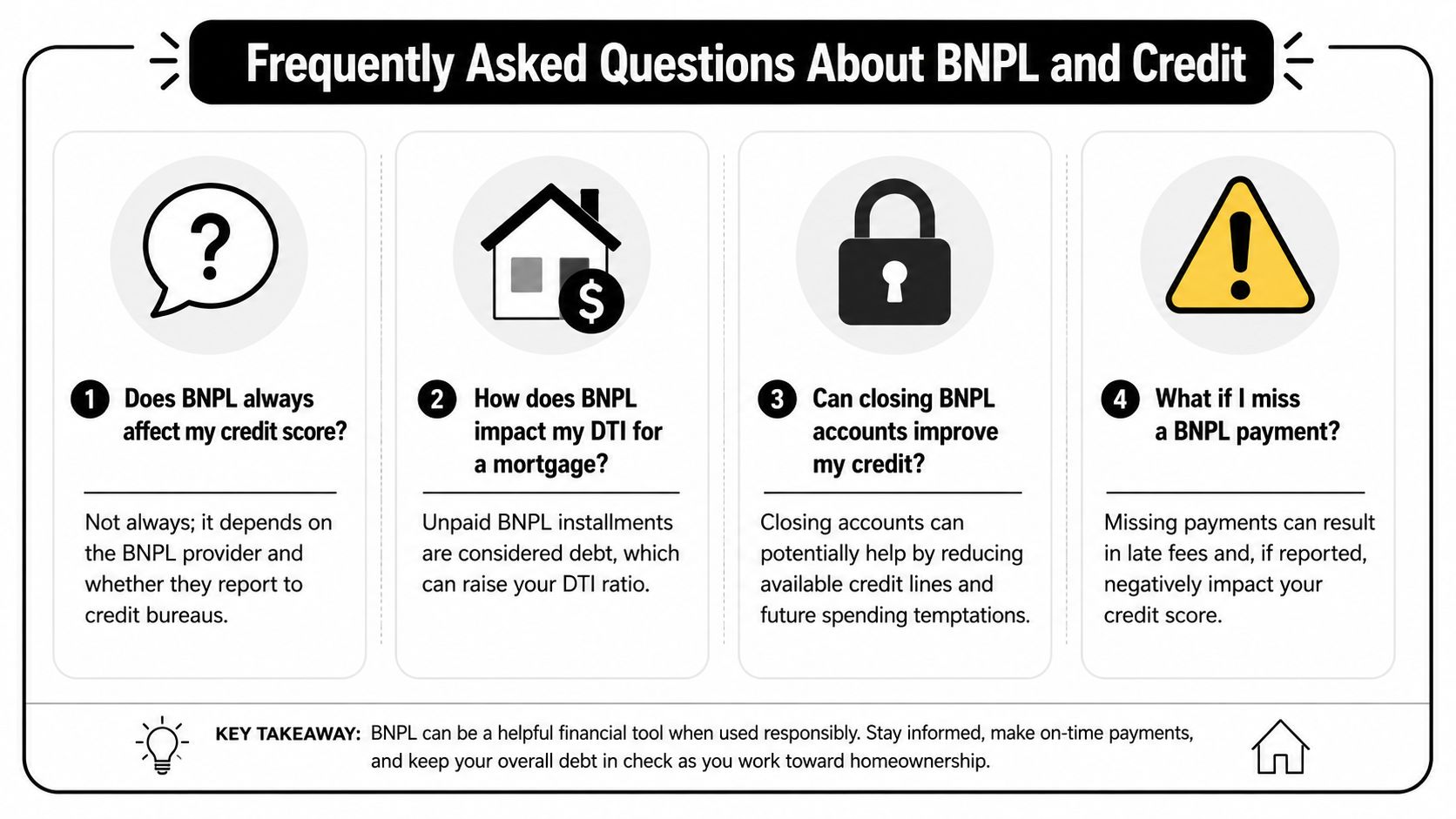
Can BNPL help build credit
Sometimes, but you shouldn't assume it will. Some providers may report certain products or payment activity, while others may not. Even when reporting happens, the effect depends on the rest of your credit profile. If your main goal is mortgage readiness, think of BNPL first as an obligation to manage carefully, not as a credit-building strategy.
How do lenders find BNPL debt that is not on a report
Mortgage lenders may see signs of BNPL activity through bank statements, application disclosures, updated account reviews, or documents requested during underwriting. If you're making recurring installment payments, those obligations can still come up even if the reporting isn't obvious on all three credit bureaus.
Does paying off a BNPL collection remove the damage
Not automatically. Paying a collection may resolve the balance, but it doesn't guarantee the item disappears from your reports. What matters is whether the reporting is accurate, how it's updated after payment, and whether any part of the tradeline is incorrect, outdated, or unverifiable.
Should I avoid BNPL completely before applying for a mortgage
Many borrowers benefit from being more conservative before applying. If your debt-to-income ratio is already tight, your cash flow is stretched, or your file has recent negatives, adding more installment obligations usually isn't helpful. A simpler budget and fewer active debts often make the underwriting process easier.
What should I do if I already used BNPL and I want to buy a home soon
Start by making a full list of active plans, checking your reports, and reviewing your recent bank statements. If you find a late payment, collection, or questionable reporting issue, address it early. If the account information appears inaccurate or incomplete, gather records and begin the dispute process.
Superior Credit Repair can review your credit report, help identify inaccurate or questionable items, and explain a step-by-step plan for improving your credit profile before a mortgage application. If you're dealing with buy now pay later apps, collections, late payments, or other issues affecting lender readiness, you can request a free credit analysis or consultation through Superior Credit Repair.
Was this guide helpful?
Superior Credit Repair Online provides educational credit guidance for individuals and families preparing for major financial goals like buying a home, applying for a mortgage, refinancing, or rebuilding after credit challenges.
If this information helped you better understand your credit report or your next steps, we would appreciate your honest feedback. You are welcome to share your experience with Superior Credit Repair on our Google Business Profile.