



What a hard inquiry actually means
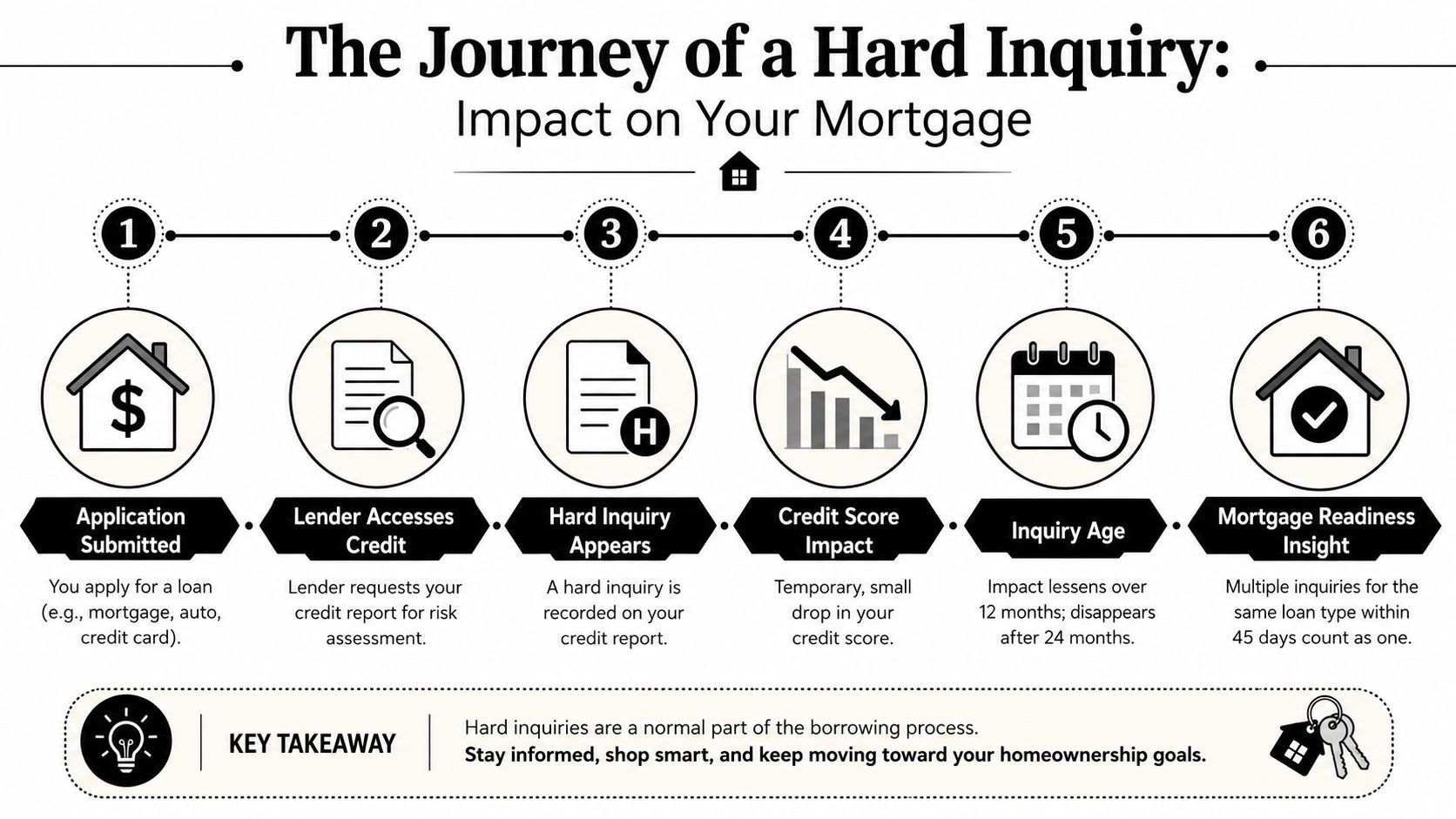
A hard inquiry records that a lender or other company pulled your consumer report in connection with something you asked for, usually applying for credit. Soft inquiries are different: they come from checking your own file, prescreened offers and many account reviews by companies you already do business with, and they never affect a score. Lenders see hard inquiries on your credit report; soft inquiries appear only on the copy of the credit report you request yourself.
Each of Experian, Equifax and TransUnion lists inquiries separately, because a lender usually pulls only one or two bureaus. That is why an inquiry can appear on one credit report and not the others, and why reviewing all three credit reports matters before disputing anything.
For most people, a single hard inquiry costs fewer than five points on a FICO score, and the effect fades within a year. Applying for credit several times in a few months has a bigger combined effect, especially on a thin file, which is the main reason to keep applications deliberate.
When you open the credit report, write down the inquiry date, bureau and exact name shown. Some card issuers use a parent-company name or servicing abbreviation, which may not match the name printed on your card. An entry reading JPMCB Card Services, for example, is a large bank’s legal card-division name rather than a card brand, so it often surprises people who only remember the card itself. Check the entry against application records before claiming identity theft.
For an inquiry audit, put all three credit reports next to your calendar of applications. A broker or dealer may submit an application to more than one lender, while another business may check only one bureau. The dates and transaction records are more useful than the number of different company names.
The legal test is permissible purpose
Section 604 of the Fair Credit Reporting Act, 15 U.S.C. 1681b, identifies the circumstances in which a consumer reporting agency may furnish a report. A permissible purpose may arise in connection with a consumer-initiated credit transaction, certain account reviews or other specified uses. An unfamiliar company name alone does not establish whether a permissible purpose existed.
For an actual mortgage application, a lender normally has a permissible purpose to request the credit report. Withdrawing the application afterward does not erase the prior lawful access. Compare the inquiry date with the application and any broker consent forms before alleging an improper pull.
By contrast, a report accessed out of curiosity or for an unrelated commercial reason may lack a permissible purpose. A person investigating such access should get the company’s explanation and preserve correspondence rather than claiming a deletion right without investigating.
An ex-partner who uses a work login to pull your report has no permissible purpose, and that is exactly the kind of misuse the false-pretenses penalties were written for.
The permissible purposes the FCRA allows
The Fair Credit Reporting Act lists the permissible purposes in Section 604. The ones that matter for inquiries are a credit transaction you initiated, a review or collection of an existing account, insurance underwriting, employment screening with your written consent, a court order, child support enforcement and a legitimate business need tied to a transaction you started, such as renting an apartment or opening a utility account.
Prescreened credit offers are also allowed under the FCRA, but they create soft inquiries rather than hard ones. You can opt out of them for five years at OptOutPrescreen.com, or permanently by mail, which is the official channel the bureaus run together.
Prescreening relies on a narrower permissible purpose: the company must make a firm offer of credit or insurance to everyone who meets its criteria, which is why those mailers say they are prescreened and include an opt-out notice.
Anyone who obtains a credit report without a permissible purpose can be liable under the FCRA, and obtaining one under false pretenses is a federal crime. That is why the question for every unfamiliar entry is not whether the inquiry hurts your score, but whether the company had a permissible purpose recognized by the Fair Credit Reporting Act at the time it pulled the credit report. When a company claims a permissible purpose, it is saying which of these categories applied.
Less obvious grounds for access
Your own written instructions are a permissible purpose under Section 604(a)(2). That is why signing a consent form at a dealership can authorize pulls by finance companies you have never heard of, so read what the form allows before you sign.
A court order or a federal grand jury subpoena is a permissible purpose that does not depend on your consent. Child support agencies have their own permissible purpose to set or enforce an award, but the parent must first get at least ten days’ notice by certified or registered mail.
A small business loan with a personal guarantee gives the lender a permissible purpose to pull the owner’s personal report, even though the loan is in the company’s name. Leasing a car works the same way as financing one, so a lease application creates the same kind of hard inquiry.
Questions to ask for every inquiry
Start with the name and date. Did you complete an application at a dealer or lender? Could the named company be a bank partner that processed the application? Did a broker submit information to several lenders with your instructions? Each answer helps evaluate permissible purpose.
Ask the company that accessed your report which application or customer relationship it used, and request enough detail to match it to your records. If it cites an account review, confirm that you had an existing account. A stated permissible purpose should correspond to a real transaction, not merely a generic category.
Companies that use consumer reports must certify their permissible purpose to the bureau before receiving any, so it is fair to ask which purpose the company certified for your pull and on what date.
Finally, organize the inquiry record by bureau and application window. A discrepancy may be an unfamiliar business alias rather than misconduct. That is a reason to verify, not a reason to abandon the inquiry dispute if the facts remain unexplained.
Can a legitimate hard inquiry be deleted?
A valid hard inquiry generally remains until it ages off. Inquiries are typically visible on the credit report for two years, while FICO generally counts those from the preceding twelve months in scoring. There is no fast deletion technique that reverses a genuine application.
If a hard inquiry on your credit report comes from an application you never authorized, and no other permissible purpose applies, evidence can support a dispute or a fraud block. But a company that truly had permissible purpose does not have to pretend the access never happened just because a mortgage application is pending.
A small number of valid inquiries is rarely the deciding factor in a lender’s evaluation. Lenders reviewing a mortgage file care far more about late payments and collections, reported balances and income documentation than about an accurate hard inquiry.
How to remove hard inquiries from your credit report
Knowing how to remove hard inquiries from your credit report starts with sorting them. Mark each one as recognized, possibly recognized through a dealer, broker or bank partner, or unknown. Only the unknown group, and any inquiry from a company you never authorized, is a candidate for removal.
Contact the company behind an unknown hard inquiry and request a dated explanation of the transaction. An unlocated application is a reason to investigate further, not automatic proof that no permissible purpose existed; account review or another lawful basis might apply. If the company confirms the report was obtained in error, ask it to notify the bureau and keep the credit report and its reply together.
If the company does not respond or cannot explain the access, file an inquiry dispute with each bureau whose credit report shows it, attach your letter to the company and its reply or the lack of one, and state that you did not authorize the access and that no permissible purpose applied. If the inquiry came from identity theft, use the FCRA identity theft block instead, which is faster and does not depend on the creditor agreeing.
That is how to remove hard inquiries from your credit report when they are wrong. Can you remove a hard inquiry from your credit report if you really applied? Not through a dispute. You cannot remove inquiries that reflect real applications, and credit repair services that promise to remove hard inquiries in bulk are usually disputing legitimate entries and hoping some are not verified in time.
How permissible purpose applies to real-world requests
A dealer submits one application to several finance companies
When a dealership submits one application to several finance companies, verify the consent terms and the identity of each recipient. Each lender still needs a permissible purpose for its hard inquiry, even if the relevant rate-shopping inquiries are grouped for scoring. Ask the dealer for the list of places it sent the application.
An unfamiliar card-company abbreviation appears
A card-company abbreviation can name a parent institution rather than the brand on the statement. If the inquiry reads JPMCB Card Services, look for any card you applied for in that window, including a store or travel card issued through a big bank, before you treat JPMCB as a stranger. Compare the pull date with your recent applications and verify the company’s permissible purpose before filing a credit bureau dispute. A mismatch is evidence to investigate, not by itself identity theft.
A bank reviews its existing customer account
Certain account-review situations can provide permissible purpose without a new application. Determine the relationship and the purpose before demanding inquiry removal.
A roommate says a lender checked both people
Each consumer’s record needs an independent permissible purpose tied to that person and transaction. An inquiry dispute may be appropriate when the supposed authorization is unsupported.
A prequalification website states it uses a soft check
Compare the prequalification disclosure with the credit report and ask whether the website requested a soft check only or a complete application. If a hard inquiry appears, keep the credit report and the disclosure together. Ask the company which permissible purpose it relied upon; a genuine credit application may explain the access even if the advertisement mentioned prequalification.
The consumer never visited the named lender
Before disputing an unfamiliar lender’s hard inquiry, ask whether a broker, retailer or financing marketplace forwarded your information. That paper trail may establish a permissible purpose or show that the inquiry has no apparent connection to any request you made.
A fraudulent application is confirmed
Identity theft documentation can show why no permissible purpose for the true consumer’s transaction existed. Protect the file and submit a focused credit report correction request.
An insurance firm appears in a consumer report disclosure
Access related to underwriting may have a permissible purpose distinct from a new credit account. Verify the reported access type before treating it as a hard inquiry.
An employer checks a consumer report
Employment-related uses are subject to separate legal requirements and may have permissible purpose only under specified conditions. Do not conflate an employment screening issue with hard inquiry removal for a mortgage application.
A consumer applies for several mortgage quotes
Each qualifying lender may have permissible purpose based on the consumer-initiated applications. Learn how scoring windows work before seeking to remove inquiries from legitimate rate shopping.
A service claims it can delete hard inquiries overnight
Ask how it will investigate permissible purpose and what evidence it will seek. A credible credit repair offer cannot guarantee deletion of genuine credit report access, and the Credit Repair Organizations Act bars any credit repair company from charging before the work is done.
Before paying for credit repair aimed at inquiries alone, weigh the cost against the points at stake. An inquiry rarely costs more than a few points and fades within a year, so inquiry-only credit repair is seldom worth a monthly fee.
A homeowner may ask, “Can someone repair credit near me by deleting every inquiry?” The answer needs to separate inaccurate report access from a genuine application. A credit restoration service cannot promise blanket inquiry deletion, and the FCRA does not require a bureau to remove legitimate access.
The furnisher says no application can be found
Ask whether the creditor can explain the permissible purpose through some other lawful use. Keep the response as evidence for a possible inquiry dispute.
A company provides an application with incorrect identity details
Compare signatures, dates and application records to assess permissible purpose and possible identity theft. Use a specific credit bureau dispute rather than a blanket allegation.
A firm cites a permissible purpose without any details
Request an explanation of the transaction or customer relationship on which permissible purpose allegedly rests. An unsupported response may justify further investigation, but is not itself proof of wrongdoing.
A lending denial follows the inquiry
The original application can still establish permissible purpose even when the lender rejects the loan. Inquiry removal is not a refund for denial or unfavorable terms.
A consumer merely checks personal reports
Access by the individual to their own credit report is generally treated as a soft inquiry. The permitted purpose for a personal disclosure differs from lender-initiated new credit access.
Your current card issuer shows a hard inquiry
Routine account review by your own issuer is a permissible purpose that usually appears as a soft inquiry. A hard inquiry from that same issuer usually means a limit increase, a new card or a product change was requested, so check your online account before disputing.
A landlord or utility checks credit
Tenant screening and a utility deposit check both rest on a permissible purpose created by your own application, and whether the pull shows as hard or soft depends on the screening company. Ask before applying if a mortgage is in progress.
A lender pulls again before closing
The application that gave the mortgage lender its permissible purpose usually covers a recheck before closing, which many lenders run as a soft pull to look for new debts. A second hard inquiry from the same lender days before closing is worth asking about, but it is rarely improper.
How to contact the creditor directly
Write to the company shown on the credit report using contact details you verify independently of any suspicious message. Include the inquiry date, any reference number and a request to explain the basis for access, and ask what permissible purpose it believed applied. Keep a copy of the letter and the reply.
If the firm claims a credit application, request enough transaction information to identify whether it was yours. A dealership or broker can sometimes explain a lender name the consumer does not recognize. If no authorized transaction can be located, the lack of explanation may strengthen the later credit bureau dispute.
Permissible purpose is tied to a specific transaction. A lender you applied to last year needs a new basis to pull your report again, unless you opened an account with it, in which case account review may apply.
Avoid sending a complete Social Security number through ordinary email. A secure portal or an official postal address is preferable when documents must be exchanged.
Crafting and submitting a formal inquiry dispute
An inquiry dispute should identify the date, bureau, company and the specific reason you believe the credit report is wrong. Attach your contact attempts and any evidence that the reported access did not match a transaction. Under the FCRA, a credit bureau generally has 30 days to investigate, with an extended period permitted in some circumstances. A debt collector’s validation process is separate.
When the company has provided records, compare them with the consumer's own application history. An assertion about permissible purpose should be evaluated against the transaction facts, not a formula that automatically declares every inquiry unauthorized. Keep the submission and any response.
If a credit report error is confirmed, the requested correction should be precise. A blanket request to delete hard inquiries across unrelated legitimate applications is unlikely to be well supported.

Identity theft and suspicious application activity
A fraudulent application usually creates a hard inquiry along with other signs of identity theft, such as a new account or an address you do not recognize. In that situation, secure your accounts, review all three credit reports from Experian, Equifax and TransUnion and use the official recovery process at IdentityTheft.gov. Ask affected companies to identify the transaction and preserve the evidence; fraudulent accounts often end up in collections months later. A fraudulent application gives the lender no permissible purpose as to you, even if the lender acted in good faith.
An identity theft report lets you ask each bureau to block the fraudulent hard inquiry and any account it created. Under the FCRA, a bureau usually has four business days to block it after it gets the report and your identification.
When a stolen identity is the likely explanation, the consumer's account should consistently describe the unauthorized activity. The issue is whether the report access had a permissible purpose and how inaccurate information can be corrected; it is not a tactic for undoing a real application.
A security freeze at each bureau restricts access to the credit report for many new applications and can be lifted temporarily when you apply. A freeze is free and has no direct scoring impact, but certain permitted uses may still occur. It will not erase existing entries, and an inquiry dispute still needs supporting facts.
Rate shopping before a mortgage
Credit-scoring models can group eligible mortgage, auto and certain student-loan rate-shopping inquiries made within their defined windows. FICO versions have used 14- or 45-day windows, so ask which model matters for the application. The score may count a group together even though every hard inquiry remains visible on the credit report.
If a homebuyer is comparing loan estimates, keep records of application dates and lenders. There is usually more value in a controlled comparison of terms than in avoiding all rate shopping from fear of a credit score movement.
Each lender you apply with during rate shopping has a permissible purpose, so every hard inquiry from those applications is accurate even when the score counts them as one.
A mortgage broker needs your authorization before pulling, because the permissible purpose comes from your application. Ask each lender to confirm it will wait for written consent, so you control when rate shopping starts.
Can you remove a hard inquiry from your credit report once the shopping window closes? No, each pull stays for its two years; the scoring model does the grouping, not the report.
Before choosing a mortgage program, ask the lender how it handles debt-to-income ratio, reserves and the relevant bureau data. This is a separate question from whether a specific company had permissible purpose for its report access.
When a dispute does not resolve the question
A bureau response may leave an inquiry unchanged because the company verified a qualifying transaction. Read the explanation and review the evidence before assuming the investigation was defective. If the response does not match the available records, organize the contradiction and consider the applicable CFPB complaint process or qualified legal advice.
If the evidence shows a pull without a permissible purpose, the FCRA lets you sue for actual damages, or statutory damages of $100 to $1,000 for a willful violation, plus attorney’s fees. Obtaining a report under false pretenses carries damages of at least $1,000.
Those claims have a deadline: generally two years from discovering that a company lacked a permissible purpose, and no more than five years from the pull itself.
Most disputes travel through e-OSCAR, the online system the bureaus use to send disputes to furnishers as short coded forms. e-OSCAR condenses your letter into a dispute code and a line or two of text, which is why attaching documents and stating the problem in one clear sentence matters.
Inquiries complicate this, because the company that pulled the report is not always a furnisher that answers e-OSCAR requests. A bureau may resolve an inquiry dispute from its own access logs for your credit report, so a follow-up should focus on the permissible purpose question, the transaction record and the specific entry, not on the e-OSCAR process itself.
DIY credit repair handles most inquiry problems well, because the work is mostly letters and records. Professional help can organize a complicated file, but nobody can guarantee inquiry removal or mortgage approval, and no business should encourage an invented identity theft allegation. If you are choosing between DIY credit repair and a paid service, compare what the service would add to the steps above; a credit report repair service worth paying would open with a credit report review of all three files. The Fair Credit Reporting Act gives you the same dispute rights a paid service uses.
Build a lender-ready file beyond inquiries
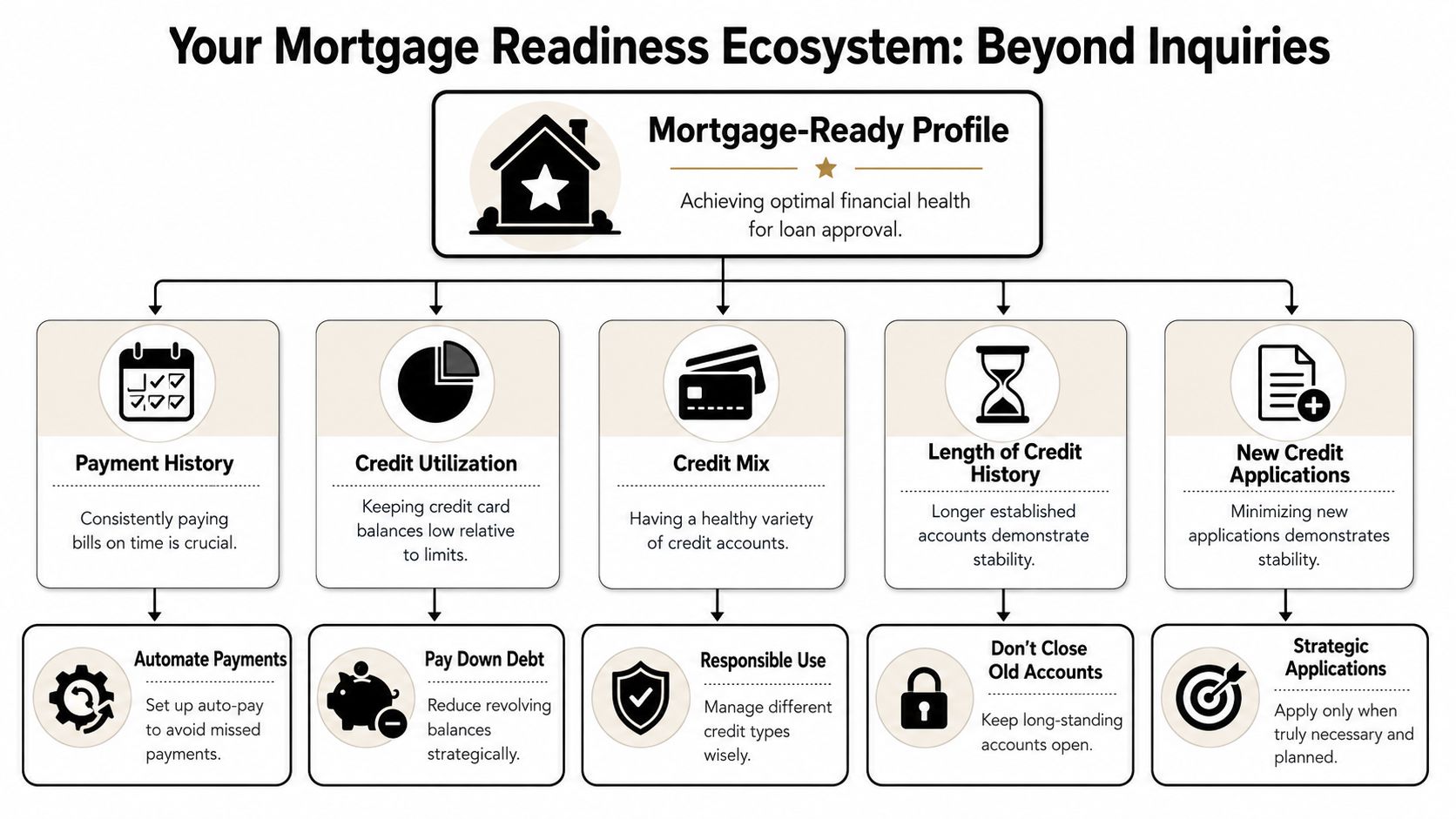
A homebuyer can improve the rest of the application while an inquiry question is unresolved. Prevent new late payments, manage card balances, retain the documents showing the source of large bank deposits, and address genuine collections separately. Even successful inquiry removal cannot override those underwriting requirements.
Keep the relative weights in mind. Late payments, collections and high balances on the credit report move a score far more than a hard inquiry does. One recent 30-day late payment can cost more points than a year of applications, and late payments stay for seven years while a hard inquiry leaves after two.
Hard inquiries, credit utilization and payment history all feed the same score, but only the first fades on its own within a year. When the budget is tight, preventing late payments by putting money toward a past-due account does more than any inquiry dispute.
If the credit report also contains collections or charge offs, address those as separate account issues, since collections and charge offs are scored far more heavily than inquiries. Late payments or a collection caused by a hardship such as a layoff or medical emergency may be worth a goodwill request to the creditor, which may also offer a hardship program, while an inaccurate one calls for a dispute.
A final credit report review should confirm which inquiries remain and whether any unrecognized application led to another account. If you get credit repair help, a credit report repair service should identify genuine inaccuracies rather than manufacture them, and it needs real knowledge of permissible purpose law under the Fair Credit Reporting Act.
Credit restoration depends on accurate records and sustainable payment habits, not the deletion of one item. If a credit restoration service offers ongoing planning, keep it separate from the investigation of permissible purpose. A reader asking, “Can you repair credit near me before I shop for a mortgage?” still needs to know why the company accessed the credit report. Credit repair does not make a lawful inquiry unlawful.
Where hard inquiries fit in the bigger picture
To understand the difference between an inquiry being visible and affecting a score, read the hard inquiry credit impact overview. The lawfulness of report access is a separate question from the scoring impact.
Financing an investment property may involve a different underwriting file than a primary-home purchase. The investment-property financing guide provides general context; Superior Credit Repair explains credit repair services and the separate work of reviewing a report.
Before hiring a service, compare when paid credit repair help is worthwhile with the steps for correcting a report yourself. Paid credit repair is a service decision, not a way to make an accurate inquiry unlawful.
The explanation of scoring factors shows how inquiries, credit mix and payment history are weighed in the credit report analysis. Compare that impact with the cost of paid credit repair before deciding where to spend time or money.
For correspondence, the dispute-letter guide identifies records to include and how to state the issue clearly. Once the credit report is accurate, the step-by-step score plan addresses ongoing payment habits.
An issuer’s explanation of credit inquiries is another perspective, but the Fair Credit Reporting Act controls the lawful reasons a report may be accessed.
For an initial orientation, this general explanation of inquiry removal distinguishes unauthorized inquiries from applications the borrower actually submitted. Check those distinctions against a credit bureau’s published dispute instructions before sending a letter.
Other borrowers’ reports of their inquiry experiences may point to questions worth asking. An anecdote cannot establish a violation of permissible purpose on your own file, so keep your decision grounded in application dates and records.
A better approach starts with validation first. Before you try to remove anything, you need to confirm what each inquiry is, whether you authorized it, whether it’s duplicated, and whether it matters for your mortgage timeline. That process protects you from wasting time on legitimate inquiries that will stay, while helping you act quickly on inquiries that may be inaccurate, unauthorized, outdated, unverifiable, or misleading.
Table of Contents
- Understanding Hard Inquiries and Their Role in Mortgages
- Your Step-by-Step Guide to Auditing Credit Report Inquiries
- Crafting and Submitting a Formal Inquiry Dispute
- Advanced Strategies When Disputes Are Unsuccessful
- Building a Lender-Ready Profile Beyond Hard Inquiries
- When to Partner with a Professional for Credit Restoration
- Frequently Asked Questions
Understanding Hard Inquiries and Their Role in Mortgages
A hard inquiry happens when a lender checks your credit report because you applied for credit. That can happen with a mortgage, auto loan, credit card, personal loan, or private student loan. A soft inquiry is different. Soft inquiries usually happen when you check your own credit, receive a prequalification offer, or go through certain non-lending screenings, and they don’t carry the same weight in lending decisions.
Think of a hard inquiry as a lender taking a snapshot of your recent credit-seeking activity. The lender isn’t just looking at your score. They’re also looking at behavior. Have you been applying for several new accounts at once? Are you opening new debt right before trying to qualify for a mortgage? Those patterns can raise questions, even if the score change itself is small.
What a hard inquiry actually means
The core rule is straightforward. Legitimate hard inquiries remain on a consumer’s credit report for exactly 24 months and are automatically removed by the credit bureaus. However, their impact on credit scores typically fades much sooner, usually within 12 months for most scoring models like FICO® according to Credit Karma’s explanation of hard inquiries.
That rule helps calm a lot of unnecessary panic. If you authorized the application, the inquiry usually isn’t something you can remove with a phone call. It has a set reporting life. What matters more is whether it’s accurate and whether it’s recent enough to affect a lender’s review of your file.
If you want a refresher on how inquiries fit into the larger score formula, Superior Credit Repair explains credit scores in plain English.
Why mortgage lenders pay attention
Mortgage underwriting is about stability. A lender wants to see that your credit profile supports the payment you’re about to take on. Hard inquiries can matter because they suggest recent borrowing activity, but they are only one piece of the file.
Practical rule: A legitimate inquiry is usually a temporary issue, not a permanent obstacle.
For homebuyers, context matters. One mortgage-related inquiry during normal preparation doesn’t carry the same meaning as several scattered applications for credit cards, personal loans, and retail financing while you’re trying to qualify for a home loan. That’s why a hard inquiry review should never happen in isolation from the rest of your mortgage preparation.
If part of your plan includes future real estate goals beyond your primary home, a financing overview like the LendingXpress investment property guide can help you understand how lenders think about risk across different property types.
Your Step-by-Step Guide to Auditing Credit Report Inquiries
The most effective hard inquiry removal strategy starts long before a dispute letter. It starts with an audit. That means slowing down, reviewing every inquiry line by line, and deciding what belongs, what needs explanation, and what may need to be challenged.
Start with all three credit reports
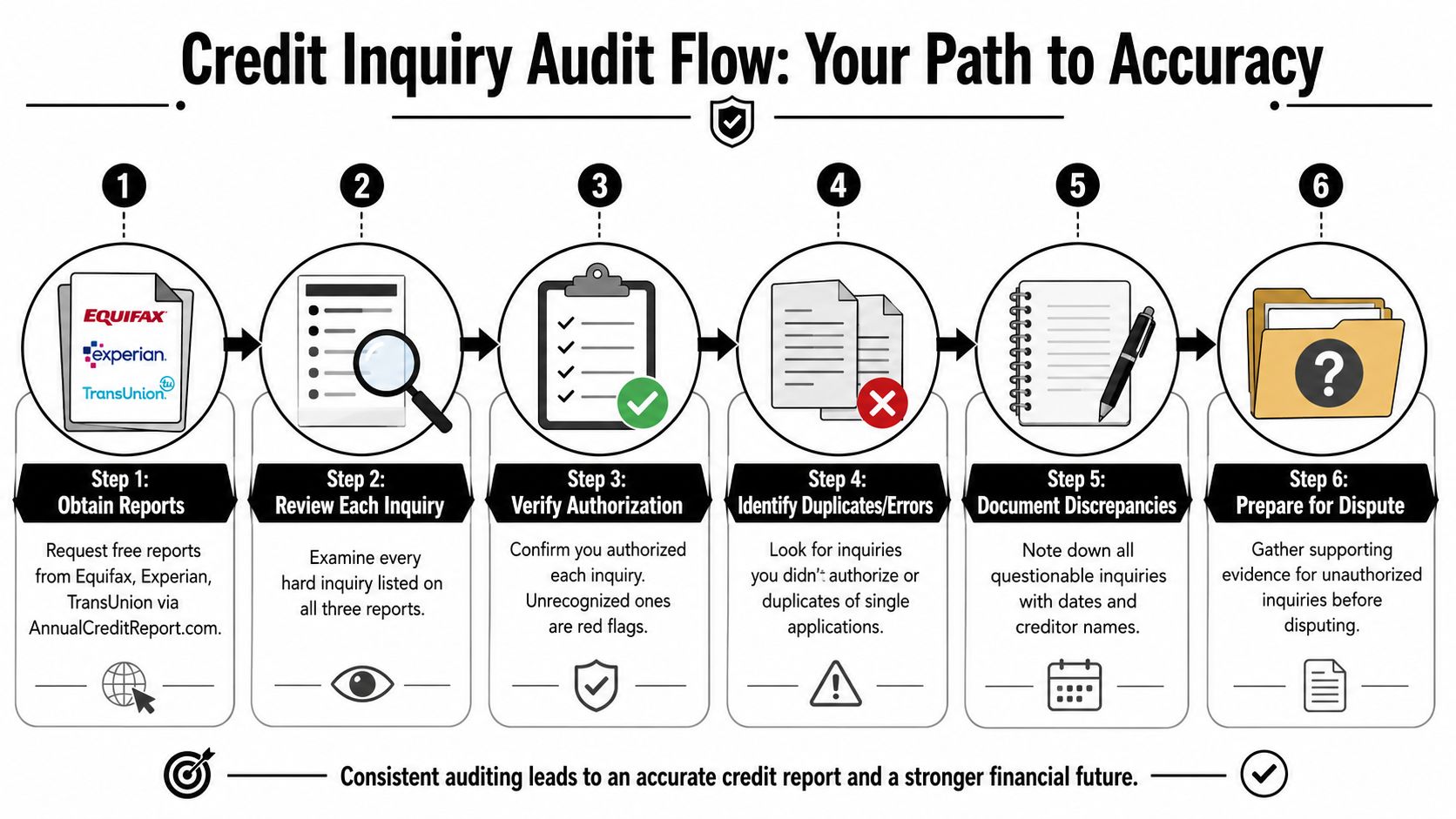
Pull reports from Equifax, Experian, and TransUnion. Don’t rely on only one bureau because an inquiry may appear on one report and not another. Place them side by side if possible.
Then create a basic tracking sheet in a notebook, spreadsheet, or notes app. You don’t need anything fancy. A simple layout works:
| Bureau | Creditor Name | Date Listed | Do I Recognize It | Category | Notes |
|---|---|---|---|---|---|
| Experian | Example Lender | Month/Day/Year | Yes/No | Authorized / Duplicate / Unfamiliar | Add details |
This process gives you something many consumers don't have when they start disputing. A clean record of facts.
Use a simple inquiry audit system
Sort each inquiry into one of three categories:
- Authorized and correct. You remember applying, the date makes sense, and the company name matches the lender or partner bank involved.
- Unfamiliar or questionable. You don't recognize the company, the date seems wrong, or the inquiry doesn't match your credit activity.
- Possible duplicate or error. You made one application, but the reporting looks inconsistent or repeated.
It's important to recognize that not every inquiry that looks unfamiliar is unauthorized. Store cards, fintech lenders, and partner banks often report under a legal or servicing name that looks different from the brand you remember.
The score impact also needs perspective. The impact of a single hard inquiry on a FICO Score is typically less than five points. The primary concern for mortgage lenders is not the small score dip but the pattern of multiple recent inquiries, which may signal risk, as noted in this hard inquiry credit impact overview.
Questions to ask for every inquiry
Use the same checklist for each entry so you don't make rushed assumptions.
- Did I apply for credit around this date? Think mortgage preapproval, auto financing, a new credit card, or a personal loan.
- Could the lender name be different from the brand I saw? This happens often with retail cards and financing platforms.
- Was this tied to identity theft, fraud, or a mistaken pull?
- Does this look duplicated compared with another bureau entry or another lender line?
- Is this inquiry the problem, or am I overlooking bigger issues like collections, utilization, late payments, or charge-offs?
A careful audit prevents emotional disputes. Facts win more often than frustration.
If your review turns up broader report problems, not just inquiries, it helps to learn how to dispute inaccurate credit items in a more organized way.
By the end of the audit, your goal is simple. You should know which inquiries are fine, which need more research, and which may justify a formal dispute.
Crafting and Submitting a Formal Inquiry Dispute
If an inquiry appears unauthorized, inaccurate, or tied to identity theft, a formal dispute is the right next step. Hard inquiry removal then transitions from general advice to a documentation-based legal process.
A good dispute is calm, specific, and supported by records. It does not rely on anger, long personal stories, or broad claims that everything on the report is wrong. Credit bureaus and furnishers respond better when the issue is narrow and clearly documented.
What to include in the dispute letter
Your dispute should identify you and identify the inquiry with precision. Include:
- Your identifying information. Full name, current address, date of birth, and the file details the bureau requires.
- The exact inquiry being disputed. Name of the creditor as shown, bureau where it appears, and date listed.
- A clear reason for the dispute. State whether the inquiry was unauthorized, fraudulent, duplicated, or otherwise inaccurate.
- Supporting documents. Identity theft records, account statements, proof of address, and copies of report pages with the inquiry highlighted if relevant.
Short works better than dramatic. For example, “I am disputing the hard inquiry from [creditor name] dated [date] because I did not authorize this credit application. Please investigate and remove the inquiry if it cannot be verified as authorized.”
If you need help organizing a compliant letter, this guide on how to dispute inaccurate credit report items can help you structure it properly.
How to send the dispute and track the response
You can usually dispute through an online portal or by mail. Online is convenient. Certified mail creates a stronger paper trail. For serious cases, especially identity theft or repeated reporting errors, a paper trail can be valuable because it documents what you sent and when the bureau received it.
A simple tracking log can include:
| Item | Example entry |
|---|---|
| Bureau | TransUnion |
| Date sent | Month/Day/Year |
| Delivery method | Certified mail or online portal |
| Inquiry disputed | Creditor name and date |
| Documents enclosed | ID, proof of address, report copy, FTC report |
| Response deadline | Note based on receipt date |
| Result | Deleted, verified, corrected, pending |
Under the Fair Credit Reporting Act, there is an important enforcement path when the issue is unauthorized activity. Under the FCRA, consumers can sue creditors for failing to remove unauthorized hard pulls. To strengthen a dispute, you can also file an identity theft report with the FTC and a formal complaint with the CFPB, according to American Express's credit inquiry guidance.
Keep copies of every letter, every upload, every response, and every mailing receipt. If the issue escalates, your records matter.
If the bureau verifies the inquiry as authorized, that doesn't always mean the matter is over. It means the bureau believes the furnisher confirmed it. At that point, the quality of your evidence determines whether escalation makes sense.
Advanced Strategies When Disputes Are Unsuccessful
Sometimes a bureau comes back with a verification result and the inquiry stays. That can happen even when the consumer still believes something is wrong. When that happens, you need a more strategic response, not a louder one.
When a CFPB complaint makes sense
A complaint with the Consumer Financial Protection Bureau can be useful when you have already disputed the inquiry, preserved your records, and still haven't received a meaningful response. This isn't a shortcut. It's an escalation path.
A strong CFPB complaint includes a timeline. State when you found the inquiry, when you disputed it, what documents you submitted, what the bureau or creditor said, and why the response remains inadequate. Attach the same evidence you used in your dispute package.
This approach works best when the issue is concrete. Unauthorized inquiry. Mismatched identity data. Clear documentation of fraud. Inconsistent reporting between bureaus. It is less effective when the inquiry is legitimate and the request is to remove it because you no longer want it there.
How to contact the creditor directly
Direct contact with the creditor is a separate path from a bureau dispute. It isn't a legal demand in the same way. It's a customer-service or file-accuracy request.
While most content states legitimate inquiries cannot be removed, a nuanced strategy involves contacting the creditor's fraud or customer service department directly to request a "goodwill deletion for file accuracy," which may succeed in specific cases where a formal dispute would fail, as described in this discussion of creditor-side inquiry deletion requests.
That approach is worth considering in narrow situations:
- The lender name is confusing and you need clarification before disputing further.
- The inquiry came from a mistaken application flow or incomplete process.
- The pull followed a fraud alert or identity mix-up and the creditor can see the issue internally.
- You need documentation quickly because you're preparing for mortgage underwriting and want the creditor's written position.
Keep your request factual. Ask whether the creditor can confirm authorization, explain the inquiry, or review a deletion request for file accuracy. Don't present it as a guaranteed method, because it isn't. Some creditors will decline. Some may respond only in writing. Others may point you back to the bureau process.
If a formal dispute fails, switch from arguing to documenting. The stronger your records, the better your next move.
Building a Lender-Ready Profile Beyond Hard Inquiries
Hard inquiry removal gets a lot of attention because it feels concrete. You can see the entries, count them, and focus on them. Mortgage approval, though, usually turns on broader signs of financial stability.
A helpful mindset shift is this. Cleaning up inaccurate inquiries is good credit hygiene. Building a lender-ready file is what moves most homebuyers closer to FHA, VA, USDA, or conventional mortgage preparation.
What lenders usually care about more
If you're putting your time somewhere, start with the areas that shape underwriting decisions most heavily.
- Payment history. Lenders want to see that bills are paid on time, especially recent obligations.
- Credit utilization. High revolving balances can make a file look stretched, even when payments are current.
- Collections and charge-offs. These often create more underwriting friction than a few inquiries.
- Account stability. Older, well-managed accounts can help show consistency.
- Debt-to-income concerns. A mortgage lender looks at the relationship between your income and your monthly obligations, not just your score.
Experian notes that legitimate hard inquiries automatically fall off a credit report after 24 months, and their impact on credit scores typically diminishes or becomes unscoreable after just 12 months, making them a low-priority factor for long-term credit health in this Experian explanation of hard inquiry timing.
That's why a person with a few old inquiries but solid payment history may be in better mortgage shape than someone with no recent inquiries and several active delinquencies.
Practical moves that strengthen mortgage readiness
Here's where many borrowers see better long-term progress.
| Focus area | What to do |
|---|---|
| Payment history | Bring every open account current and protect on-time payments going forward |
| Revolving balances | Pay down credit cards strategically and avoid running balances back up |
| Collections | Review for accuracy and understand how unresolved collections may affect loan preparation |
| Account age | Keep seasoned accounts open when appropriate |
| New applications | Pause unnecessary credit activity while preparing for underwriting |
If you're working on the bigger picture, this resource on nationwide credit score improvement offers practical rebuilding ideas that go beyond inquiry cleanup.
Mortgage credit repair works best when it's tied to the full profile. That includes late payment dispute help when reporting is inaccurate, collections dispute help when balances or ownership are questionable, charge-off dispute help when information is misleading, and smarter utilization management when cards are near their limits. For many first-time homebuyers, those steps matter more than chasing every legitimate inquiry on the report.
When to Partner with a Professional for Credit Restoration
Some people can manage inquiry disputes on their own with a clean audit trail and a little patience. Others are dealing with a file that's much more layered. That's where professional credit restoration can make sense.
Signs the do-it-yourself route may not be enough
The do-it-yourself process tends to get harder when the issue isn't just one inquiry. A file may also contain collections, medical collection credit repair issues, charge-offs, late payments, repossessions, identity theft concerns, or mixed reporting across bureaus. Add a home purchase timeline, and the risk of missed details goes up.
It can also become inefficient when you're trying to prepare for FHA loan preparation, VA loan preparation, USDA loan preparation, or conventional mortgage approval while juggling lender conditions, apartment approval concerns, and debt-to-income cleanup at the same time.
Why professional support can help
A compliance-focused credit repair company should approach the file as a structured review process, not a promise machine. The value is in identifying inaccurate, outdated, unverifiable, or misleading items, organizing documentation, handling dispute workflow, and helping you rebuild stronger habits while results develop over time.
If you've wondered whether it makes sense to pay someone to fix your credit, the better question is whether your situation calls for guidance, documentation support, and a lender-readiness strategy. For many homebuyers, especially those working through several issues at once, that can be a practical decision.
Frequently Asked Questions
Can legitimate hard inquiries be removed?
Usually, no. If you authorized the credit application, the inquiry generally stays for its normal reporting period. The main exception is when the inquiry was unauthorized, fraudulent, duplicated, or otherwise inaccurate.
Will removing a hard inquiry guarantee mortgage approval?
No. Mortgage approval depends on the full credit profile, income, debts, documentation, loan program rules, and lender standards. Hard inquiries are only one piece of the decision.
Should I dispute every inquiry I don't recognize right away?
Not immediately. Audit it first. Some lender names appear differently on the report than they did during the application process. Confirm the facts before filing a dispute.
Do hard inquiries matter more for first-time homebuyers?
They can matter if they show a pattern of recent credit-seeking activity close to mortgage application time. Still, first-time homebuyers usually benefit more from improving payment history, reducing utilization, and addressing report errors across the file.
Can hard inquiry removal improve credit score?
It can, but the effect is often modest and depends on the file. The stronger reason to pursue removal is accuracy. If an inquiry is unauthorized or incorrect, it should be challenged because your report should reflect only legitimate activity.
Superior Credit Repair can review your credit report, help identify inaccurate or questionable items, and explain a step-by-step plan for improving your credit profile. If you're preparing for a home purchase, trying to rebuild after credit challenges, or dealing with credit report errors that affect financing, you can request a free credit analysis or consultation through Superior Credit Repair to better understand your options. Results vary based on your credit file, documentation, creditor responses, account history, and current credit behavior.
Was this guide helpful?
Superior Credit Repair Online provides educational credit guidance for individuals and families preparing for major financial goals like buying a home, applying for a mortgage, refinancing, or rebuilding after credit challenges.
If this information helped you better understand your credit report or your next steps, we would appreciate your honest feedback. You are welcome to share your experience with Superior Credit Repair on our Google Business Profile. Share your experience with Superior Credit Repair