


A typical mortgage loan approval time is 30 to 60 days, and the average full timeline sits at about 51 days. If you're trying to plan a move, lock in a rate, or decide whether your credit is ready, that range is the realistic starting point.
For many first-time buyers, this waiting period feels confusing because the process doesn't move at one steady speed. One week may feel quiet, then suddenly your lender asks for more bank statements, an explanation for a credit report item, or proof that a collection account is inaccurate. That doesn't always mean something is wrong. It often means underwriting is doing exactly what underwriting is supposed to do.
Buyers become frustrated when they hear that pre-approval can happen quickly, then assume the rest of the loan should move just as fast. In reality, the longer part of the journey usually comes after the excitement of getting pre-approved. Processing, underwriting, appraisal work, title review, and final closing steps take time, and credit-related issues can slow those steps down even more.
If you're dealing with collections, charge-offs, late payments, high utilization, or credit report errors, the mortgage timeline becomes more than a calendar question. It becomes a documentation question. Can the lender verify your file clearly and confidently? If the answer is yes, the path is usually smoother. If the answer is unclear, the loan can stall while conditions are reviewed.
That's why mortgage readiness isn't just about trying to improve credit score in general. It's about making sure your credit file is accurate, stable, and understandable before you apply. For buyers working toward FHA, VA, USDA, or conventional mortgage approval, that preparation can make the process feel far less chaotic.
Table of Contents
- Understanding the Mortgage Loan Approval Time
- The 5 Stages of the Mortgage Approval Process
- How Different Loan Types Affect Your Timeline
- Credit Related Delays That Extend Your Approval Time
- The Pre-Approval Pitfall What Not to Do While You Wait
- Your Lender-Ready Action Plan Before You Apply
- Frequently Asked Questions About Mortgage Timelines
Understanding the Mortgage Loan Approval Time
A first-time buyer often starts with a simple question. “If I apply now, when could I get the keys?” The honest answer is that most buyers should plan around a 30 to 60-day mortgage timeline, with an average of about 51 days for the full pre-approval and approval cycle, based on Waterstone Mortgage's mortgage approval timeline overview.
That range matters because it helps set realistic expectations. If you're trying to line up a lease ending, school timing, or moving truck, it helps to understand that mortgage lending isn't just one approval event. It's a sequence of reviews, and each one depends on documents, credit clarity, and how quickly questions get answered.
Some buyers can move faster. Others can't. A borrower with stable income, low debt pressure, and clean documentation usually has fewer interruptions. A borrower with disputed accounts, high balances, recent late payments, or inconsistent paperwork may face more lender conditions before the file can move ahead.
Practical rule: A mortgage isn't delayed just because a lender is slow. It often slows down because the file needs more verification than the buyer expected.
A broader planning view can help too. If you're trying to see how financing fits into the entire home search, inspections, and closing process, this resource on understanding the 18-week buying process gives useful context around the full homebuying timeline.
Buyers who are still early in the process may also benefit from this guide for first-time homebuyers, especially if you're trying to understand how lenders evaluate payment history, utilization, and account stability before final approval.
Why the timeline feels longer than expected
The confusion usually comes from mixing up pre-approval with final loan approval. Pre-approval can happen fairly quickly. Final approval depends on deeper review. That's where people discover that credit report errors, collections dispute help, medical collection credit repair questions, or unresolved charge-off dispute help may affect the pace of underwriting.
For a homebuyer, the key idea is simple. The more organized and accurate your file is before you apply, the easier it is for the lender to say yes without repeated follow-up.
The 5 Stages of the Mortgage Approval Process
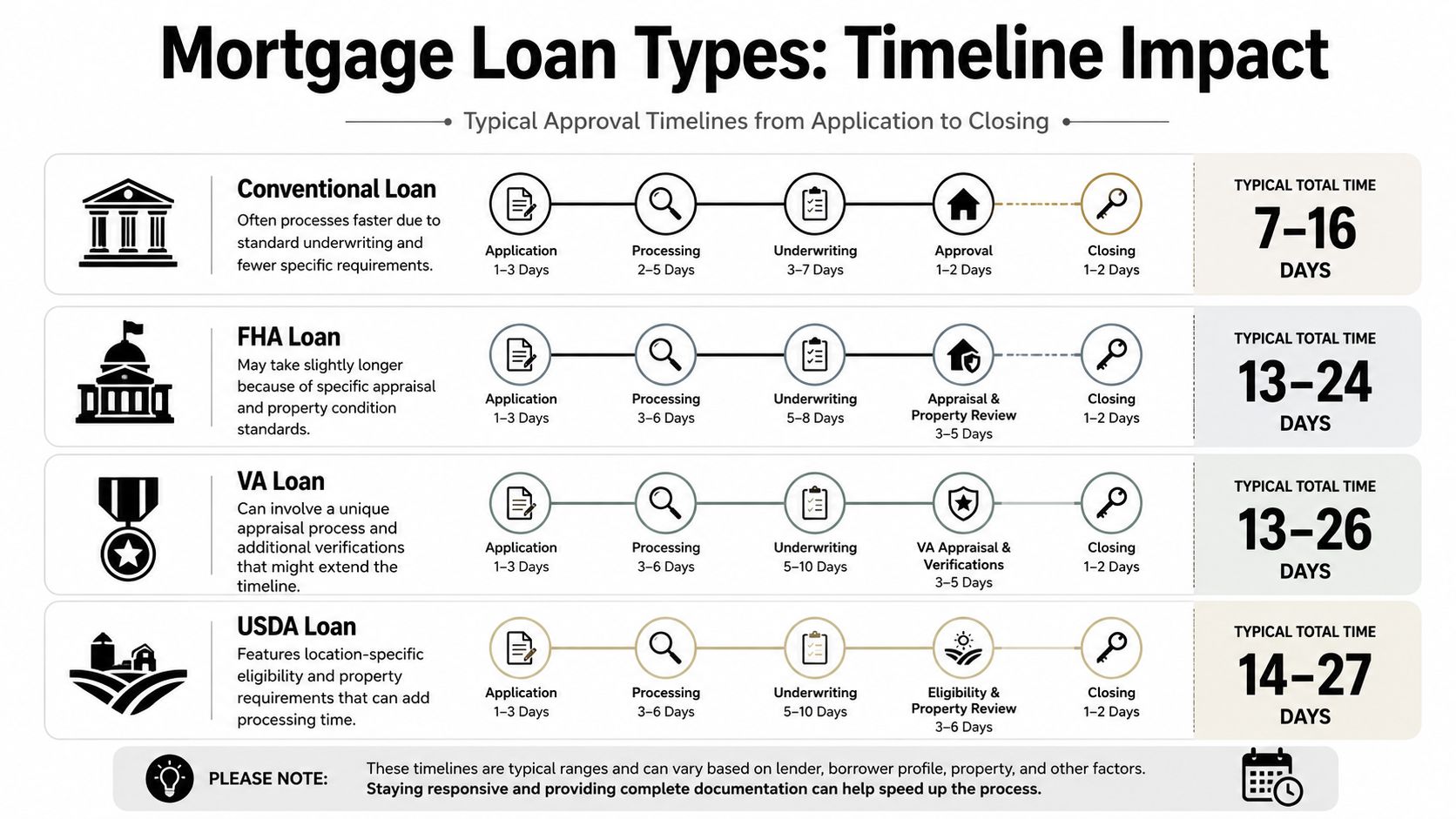
The mortgage process feels less stressful when you break it into stages. Each stage has a different purpose, and delays usually make more sense once you know who is reviewing what.
Pre-approval starts the process
Pre-approval is the lender's early review of your income, debts, assets, and credit profile. It typically takes 1 to 3 business days once documents are submitted, according to Navy Federal's mortgage approval process guide.
This step helps you understand your price range and shows sellers that you've already spoken with a lender. But it isn't the final green light. It is a conditional step based on the information available at that moment.
Typical pre-approval documents include:
- Income records: Pay stubs, W-2s, tax returns, or other proof of income
- Asset statements: Bank statements and documentation for funds used for down payment and reserves
- Debt details: Minimum payments, loan balances, and revolving credit obligations
- Identity documents: Standard identification and other lender-requested verification items
Application and processing move the file forward
Once you're under contract on a home, the formal loan application begins. The lender then matches your financial file to a specific property and loan program.
Processing follows. The processor gathers missing paperwork, orders third-party items like appraisal and title work, and organizes the file for underwriting review. This stage often reveals issues buyers didn't know were important, such as old address mismatches, account status questions, or a recent deposit the lender wants explained.
A credit issue doesn't always stop the loan here, but it can create back-and-forth. Buyers facing older collections often find this stage easier to understand after reading about navigating mortgage approval with debt collections.
Underwriting and closing finish the job
Underwriting is the stage buyers worry about most, because the lender determines if the file meets program guidelines. The underwriter reviews risk, checks for inconsistencies, and issues conditions if anything needs clarification.
Common underwriting conditions include:
- Credit explanations: A letter about a late payment, collection, dispute, or inquiry
- Banking documentation: Proof for large deposits or transfers
- Employment verification: Confirmation that income is stable and likely to continue
- Debt review: Questions about balances, payment obligations, or account ownership
When underwriters ask for more paperwork, they're not necessarily signaling denial. They're often trying to document the file well enough to approve it.
Closing is the final phase. Once conditions are cleared, the lender can issue final approval and prepare documents for signing. By this stage, the goal is no surprises. The smoother the earlier stages went, the calmer closing usually feels.
How Different Loan Types Affect Your Timeline
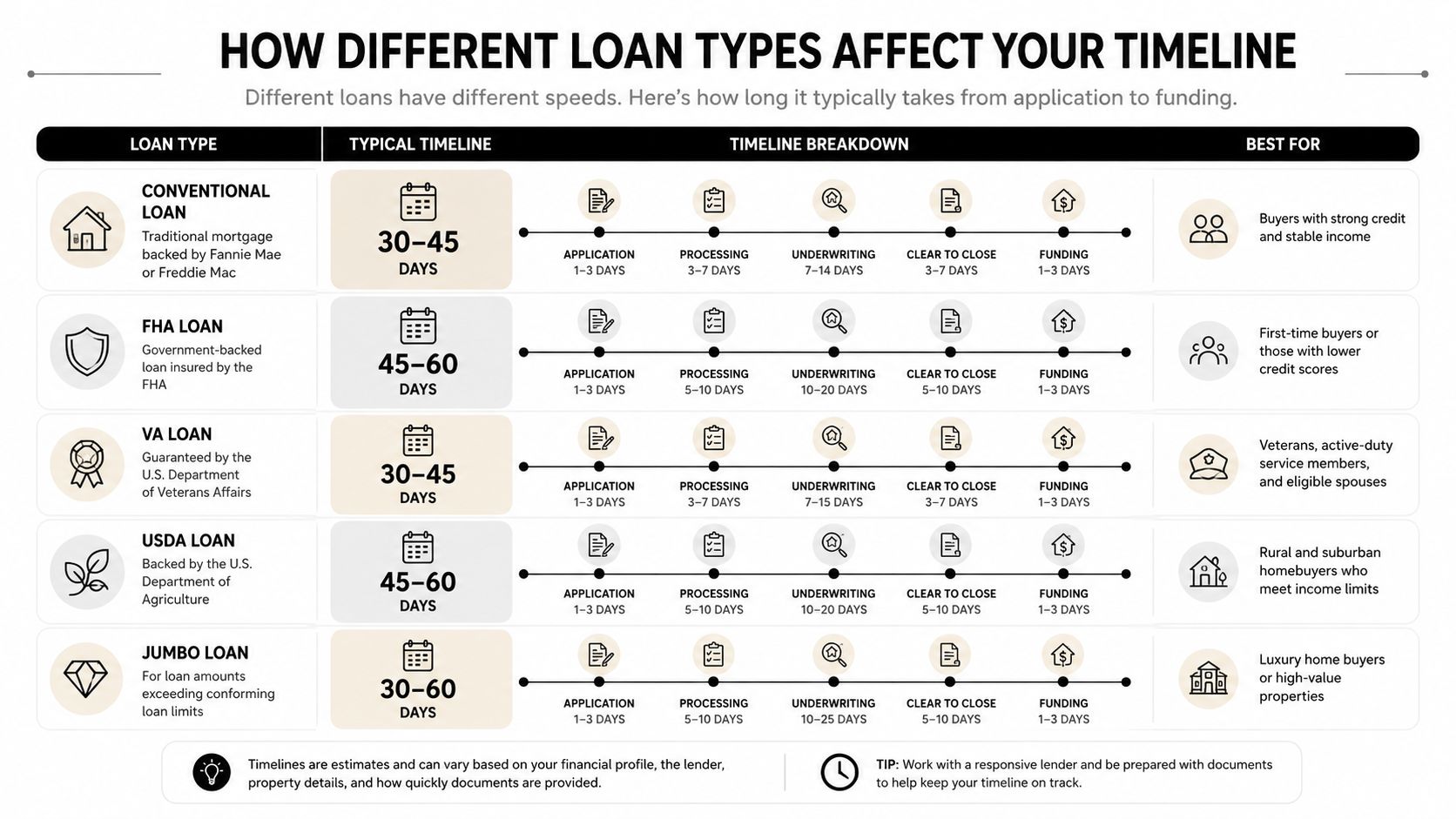
Not all mortgages move at the same pace. The basic sequence is similar, but the loan program you choose affects how much documentation, property review, and guideline testing happens along the way.
Conventional loans
Conventional loans often feel more straightforward when the borrower has strong documentation and a stable credit profile. They still require full underwriting, but they generally don't include some of the extra property-specific requirements tied to government-backed programs.
For buyers preparing for conventional mortgage approval, the file often rises or falls on credit cleanliness, debt-to-income balance, and reserve strength. Collections, utilization, and account stability still matter. They just show up in a different guideline environment.
FHA loans
FHA loans are popular with many first-time buyers because they can be more flexible in some borrower situations. But they can also take longer in certain cases. FHA loan processing typically falls between 30 and 60 days, and a required appraisal by an FHA-approved appraiser can take one to three weeks, as explained in FHA.com's timeline article.
That matters because FHA appraisals don't just focus on value. They also look at required property standards. If the appraiser flags repairs, the mortgage clock can slow while those issues are addressed.
If FHA is your likely path, a strong starting point is this guide to FHA loan approval, especially if you're working on credit repair for FHA approval or trying to understand how collections and utilization fit into that loan program.
VA and USDA loans
VA and USDA loans can each bring their own timing variables. VA loans may involve unique documentation and appraisal workflows. USDA loans can include location eligibility and property-related review points that make the file more detailed.
Here's the easiest way to understand it:
| Loan type | Timeline effect | Common reason |
|---|---|---|
| Conventional | Often more predictable | Standard underwriting flow |
| FHA | May run longer | Required appraisal and property standards |
| VA | Can vary | Program-specific documentation and appraisal path |
| USDA | Can vary | Eligibility and property-specific review |
If you're choosing between programs, don't assume the fastest option on paper will be the fastest for your file. The better question is which loan matches your credit profile, debt picture, property type, and documentation readiness.
Credit Related Delays That Extend Your Approval Time
A lot of buyers think mortgage delays happen because lenders are overloaded. That can happen, but many delays come from the file itself. Underwriters slow down when something on the credit report doesn't line up cleanly with the rest of the application.

Why underwriters slow down
Underwriters are looking for consistency. If your application says one thing and your credit report suggests another, they have to stop and verify. That pause can feel frustrating, but it is part of responsible lending.
For example, an account marked as disputed, a balance that appears unexpectedly high, or a collection that doesn't match your explanation can trigger conditions. When those conditions aren't easy to answer, the file may move into manual review.
Recent lender data noted by Pennymac's mortgage underwriting explanation indicates that files involving self-employment or Buy Now Pay Later debt such as Affirm or Klarna can require extended review, adding 15 to 20 days to underwriting because of manual verification requirements.
That added time matters for buyers with nontraditional income, side businesses, or fintech debt that doesn't fit neatly into automated review.
The credit issues that commonly create conditions
Some problems delay approval because they raise questions about accuracy. Others delay approval because they raise questions about risk.
Here are a few common examples:
- Collections accounts: The lender may want documentation showing ownership, status, payoff details, or whether the account is being disputed.
- Recent late payments: These can lead to requests for a written explanation and proof that the issue has been resolved.
- High credit utilization: Large revolving balances can change debt ratios and suggest financial strain.
- Charge-offs or repossessions: These often require careful review of dates, balances, and reporting accuracy.
- Multiple recent inquiries: The lender may ask whether new debt was opened after the credit pull.
A structured file review can help buyers identify these issues before a lender does. If you're trying to understand how credit inquiries fit into lender review, this hard inquiry removal guide can help you think through accuracy questions and documentation.
Good underwriting files are not perfect files. They're files where the lender can verify what happened, what is accurate, and what is no longer a concern.
For a broader view of all the moving parts around contracts, paperwork, and transaction follow-through, this comprehensive real estate transaction guide is a useful companion resource.
Buyers exploring credit repair before buying a home should keep one point in mind. Credit restoration isn't a last-minute trick to force approval. It's a documentation-based process to review credit report errors, dispute negative accounts when appropriate, and rebuild credit profile stability over time. Results vary based on the file, the records available, and how creditors or bureaus respond.
The Pre-Approval Pitfall What Not to Do While You Wait
Many buyers relax after pre-approval. That's understandable, but it's also where avoidable problems begin.
Why pre-approval is not final approval
A pre-approval tells you the lender is willing to consider your loan based on the information reviewed so far. It doesn't freeze your credit profile. It doesn't lock your debt behavior in place. And it doesn't stop the lender from checking again before closing.
That last part surprises people. They assume the credit review is over once the letter arrives. It isn't. Lenders may review your file again before closing, especially if there are signs that something changed.
The risk is real. Movement Mortgage's explanation of preventable denials notes that over 20% of pre-approved mortgages are denied because of post-pre-approval financial changes such as taking on new debt or making large unexplained deposits.
Actions that can reset the approval clock
A few decisions can quickly turn a calm file into a stressed one:
- Opening new credit: A new car loan, credit card, or financing offer can change your debt picture immediately.
- Making large unexplained deposits: If money appears in your account without a clear paper trail, the lender may pause to verify the source.
- Closing old credit cards: This can affect utilization and alter the profile the lender originally reviewed.
- Changing jobs or pay structure: Even positive changes can create extra documentation requests.
- Using BNPL services heavily: These obligations may require further review depending on how they affect your overall file.
Treat the period after pre-approval like a holding pattern. Keep your money movement simple, your credit stable, and your paperwork easy to explain.
This is especially important for first-time buyers who are also trying to rebuild credit profile strength before closing. If you're already working through collections dispute help, late payment dispute help, or medical collection credit repair questions, stability matters just as much as cleanup.
The best habit during this waiting period is boring financial behavior. Pay on time. Don't add fresh debt. Save records for any unusual transaction. If your lender asks a question, answer it quickly and clearly.
Your Lender-Ready Action Plan Before You Apply
If you want a smoother mortgage process, the best time to prepare is before the lender pulls your file for a real property.
Gather the file before the lender asks
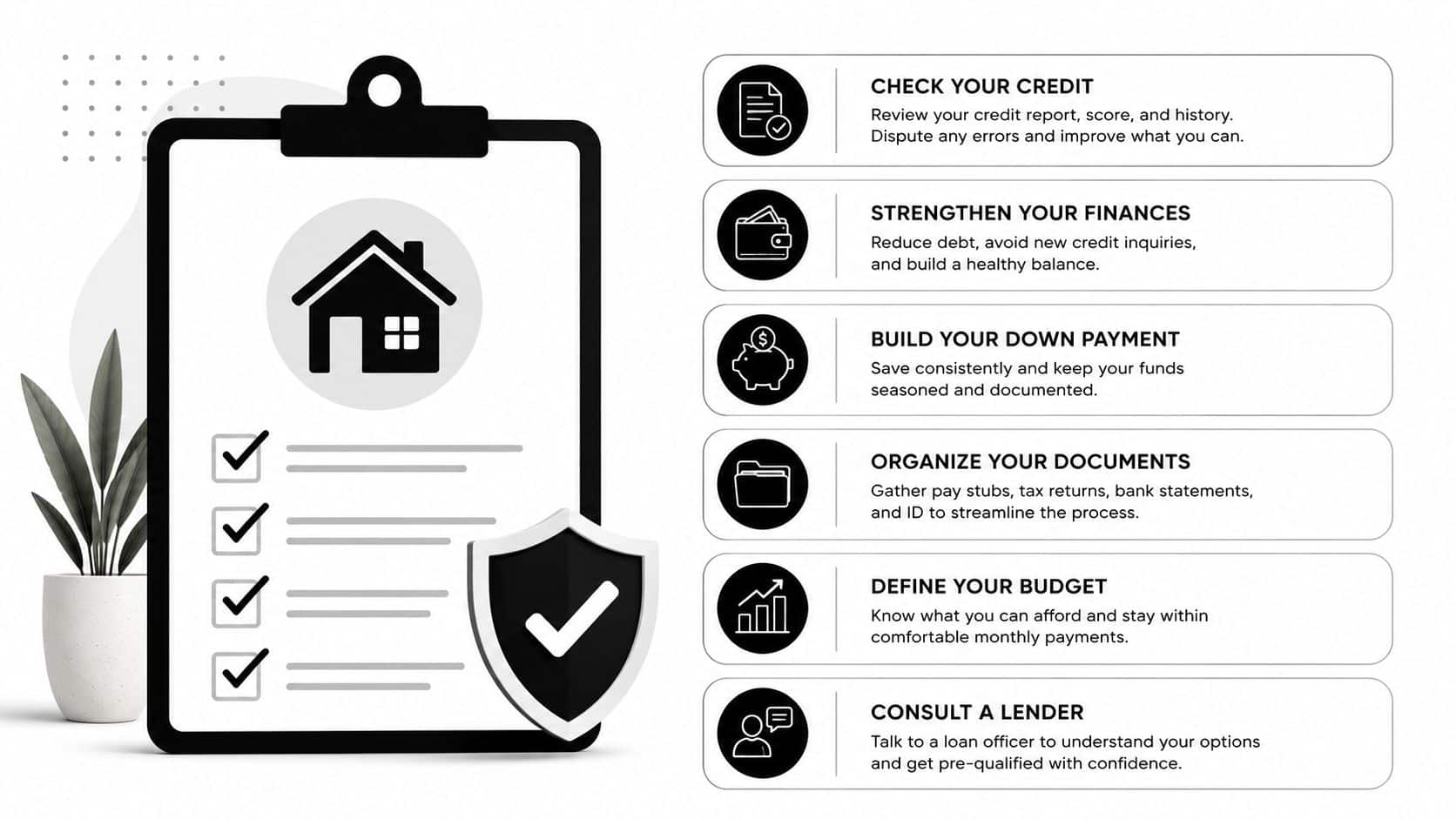
The buyers who move through approval more smoothly are usually the ones who already have their paperwork organized.
Start with:
- Income documents: Recent pay stubs, W-2s, tax returns, and any self-employment records that explain how you earn money
- Asset records: Bank statements and documentation for any funds you'll use at closing
- Identity and housing records: Identification, rental history where relevant, and other standard verification items
- Debt information: A clear list of recurring obligations, including installment loans, credit cards, and any BNPL activity
If you're comparing total homeownership costs, it can also help to understand related planning items like mortgage protection insurance, especially when you're building a realistic monthly budget.
Review your credit profile carefully
Before you apply, read your credit reports line by line. Look for anything inaccurate, outdated, unverifiable, or misleading. Mortgage underwriters don't like uncertainty, and small reporting problems can create outsized delays.
Focus on:
- Account accuracy: Are balances, statuses, and payment histories reporting correctly?
- Collections and charge-offs: Do they reflect the right dates, owners, and amounts?
- Late payments: Are there errors, duplicates, or reporting inconsistencies?
- Utilization pressure: Are revolving balances unusually high compared with your available credit?
If your ratios are tight, learning how to manage DTI for mortgage approval can help you understand the connection between monthly obligations and lender comfort.
Build habits that support approval
Credit repair works best as a structured review process, not as a rushed emergency step right before closing. If you need to remove inaccurate items, dispute negative accounts, or address questionable reporting, give yourself time. Results vary. The process depends on documentation, legal dispute procedures, creditor responses, and your current account behavior.
A lender-ready credit profile usually comes from a mix of actions:
- Check the reports early. Don't wait until you're under contract to find errors.
- Keep utilization under control. Large card balances can create pressure even if you're paying on time.
- Avoid unstable account behavior. Don't open and close accounts casually before a mortgage application.
- Document anything unusual. If a deposit, payoff, or account change has a good explanation, keep the paperwork.
- Stay current on every payment. A new late mark right before applying can change how the file is viewed.
The goal isn't a perfect credit file. The goal is a file that is accurate, documented, and stable enough for a lender to understand.
This approach also helps buyers preparing for apartment approval and rental screening, FHA loan preparation, VA loan preparation, USDA loan preparation, or future refinancing. Clean documentation and stable habits help in more than one kind of financing decision.
Frequently Asked Questions About Mortgage Timelines
Can credit repair affect my mortgage loan approval time
Yes, but mostly before you apply. If your credit reports contain inaccurate or questionable items, resolving those issues early can reduce confusion during underwriting. Credit repair is best understood as a structured review, dispute, and rebuilding process. It isn't a guarantee of mortgage approval, score improvement, or deletion. Results vary based on the information in your file, supporting documents, and how furnishers respond.
Can I speed up mortgage approval
You can improve the odds of a smoother process by being organized, submitting documents quickly, and keeping your finances stable while the loan is in review. Buyers who prepare documentation early and avoid last-minute financial changes usually create fewer underwriting conditions. Faster doesn't always mean easy, though. The lender still has to verify the file.
What if my loan is denied in underwriting
A denial doesn't always mean homeownership is out of reach. It often means the lender found an issue that needs to be addressed first, such as debt pressure, unstable documentation, credit report errors, or unresolved derogatory accounts. Ask for a clear explanation, review the file carefully, and build a plan around accuracy, repayment habits, and stronger documentation before reapplying.
Do collections always stop mortgage approval
Not always. The effect of collections depends on the loan program, the lender's guidelines, the status of the account, and whether the reporting is accurate. Some files move forward with conditions. Others need more cleanup or explanation first. This is one reason mortgage credit repair and collections dispute help are often part of homebuyer preparation.
How long does pre-approval stay valid
Most mortgage pre-approval letters remain valid for 60 to 90 days, though some lenders may use shorter windows such as 30 days, according to Zillow's pre-approval timing guide. If your home search runs longer, expect the lender to update documents and review whether your financial profile has changed.
Superior Credit Repair can review your credit report, help identify inaccurate or questionable items, and explain a step-by-step plan for improving your credit profile. If you're preparing for FHA, VA, USDA, or conventional mortgage approval, or you're trying to rebuild after collections, charge-offs, late payments, or high utilization, you can request a free credit analysis or consultation through Superior Credit Repair. The process is designed to support long-term credit restoration and mortgage readiness, not make promises. Results vary based on your credit history, documentation, creditor responses, and current financial behavior.
Was this guide helpful?
Superior Credit Repair Online provides educational credit guidance for individuals and families preparing for major financial goals like buying a home, applying for a mortgage, refinancing, or rebuilding after credit challenges.
If this information helped you better understand your credit report or your next steps, we would appreciate your honest feedback. You are welcome to share your experience with Superior Credit Repair on our Google Business Profile. Share your experience on Google