

Facing a Tough Choice With Your Auto Loan? What to Know First
When you're working hard to prepare for mortgage approval, falling behind on an auto loan can feel like a devastating setback. A missed car payment doesn't just affect transportation. It can also affect debt-to-income planning, lender confidence, and the overall stability of your credit profile when you're trying to qualify for FHA, VA, USDA, or conventional financing.
You might hear about voluntary repossession as a way to resolve the situation. It can sound more manageable than waiting for a lender to send a recovery company to your home or job. In some cases, it does give you more control over timing, paperwork, and the return process. But it doesn't erase the debt, and it doesn't protect your credit from serious harm.
That matters if you're trying to become a first-time homebuyer, clean up collections before mortgage approval, or rebuild after a financial setback. The pros and cons of voluntary repossession are bigger than one car. They often affect how underwriters view your recent credit behavior, whether you can show stable payment history, and how long it may take to rebuild a lender-ready credit profile.
This guide gives you a clear, practical look at what voluntary repossession can and can't do. It also connects each issue to mortgage readiness so you can think beyond the immediate problem. For readers comparing debt solutions more broadly, Allied Tax Advisors' debt relief insights may also help frame the bigger picture.
Table of Contents
- 1. Pro Potentially Avoiding a Deficiency Judgment
- 2. Con Severe Damage to Your Credit Report and Score
- 3. Pro Lower Immediate Costs Than Forced Repossession
- 4. Pro Avoiding the Stress of an Involuntary Confrontation
- 5. Con You Are Still Responsible for the Deficiency Balance
- 6. Con A Long and Difficult Path to Mortgage Readiness
- 7. Pro Creates a Potential Negotiation Opportunity
- 8. Con Collection Activity and Legal Action Are Still Possible
- Voluntary Repossession: 8-Point Pros & Cons
- Your Next Steps Toward Credit Recovery and Homeownership
- Frequently Asked Questions
1. Pro Potentially Avoiding a Deficiency Judgment
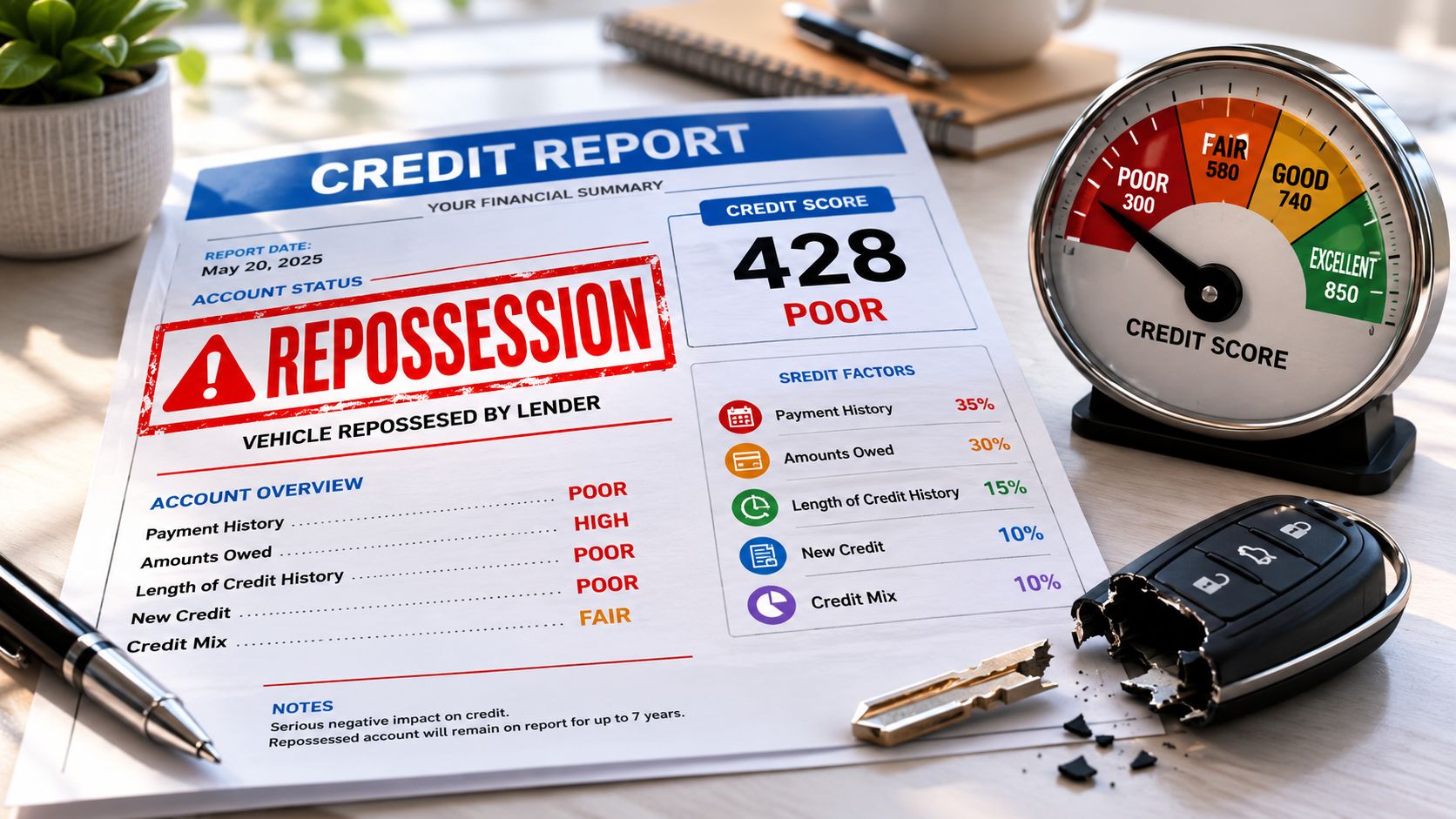
A voluntary surrender may improve your chances of resolving the account without a court judgment, but it doesn't guarantee that outcome. In plain English, a deficiency judgment can happen when the lender sells the vehicle for less than the remaining loan balance and then decides to pursue the unpaid difference through legal action. Some lenders are more willing to work with borrowers who communicate early and return the vehicle cooperatively.
For a homebuyer, avoiding a judgment matters because judgments can create a much larger obstacle than the repossession itself. Mortgage underwriters already look closely at major derogatory events. If a repossession turns into a separate legal debt problem, the file can become even harder to stabilize.
Why cooperation can matter
A borrower who calls the lender, confirms the surrender terms, documents the vehicle condition, and asks for the account history in writing may appear more organized and more serious about resolution. That doesn't erase the balance, but it can create a better starting point for discussion than ignoring the lender's calls.
Practical rule: Before surrendering a vehicle, ask the lender how they handle remaining balances, post-sale notices, and legal collection activity. Get every answer in writing if possible.
State law also matters. Some states give lenders broader collection rights than others, and some borrowers have defenses tied to notice rules, sale procedures, or account documentation. If you want a plain-language overview of navigating deficiency judgments, review the legal concept before making a final decision.
A realistic example is a renter preparing to buy a home next year who knows the car is unaffordable. If that borrower surrenders the vehicle in an orderly way and keeps detailed records, they may reduce the chance of the situation escalating into a judgment. That's still not a clean outcome, but it can be less damaging than silence, default, and later litigation.
2. Con Severe Damage to Your Credit Report and Score

This is the hardest part of the pros and cons of voluntary repossession for most future homebuyers. A voluntary repossession still reflects a serious default on a major installment account. To a lender, the key issue isn't whether you handed over the keys politely. The issue is that the loan wasn't repaid as agreed.
The credit damage usually starts before the surrender because late payments often appear first. Then the repossession status adds another major negative event. That combination can make it harder to qualify for favorable mortgage terms, apartment approval, or even another vehicle loan on reasonable terms.
Why mortgage lenders care so much
Mortgage underwriting is built around patterns. Lenders want to see on-time payments, stable account management, manageable utilization, and fewer unresolved derogatory items. A repossession cuts against all of that, especially if it happened recently.
If you're trying to prepare for FHA loan approval, VA loan preparation, or conventional mortgage readiness, a repossession can signal higher risk. It can also raise follow-up questions about whether the account balance is fully resolved, whether there are related collections, and whether your current credit behavior has improved since the event.
Voluntary and involuntary repossession may feel different operationally, but they can look very similar on a credit report.
That's why it's smart to focus on what happens next. Reviewing account dates, balances, payment history, and reporting accuracy is part of navigating credit after repossession. If the account is reported inaccurately, outdated, unverifiable, or misleading, it may be appropriate to dispute negative accounts through a documentation-based process.
A common example is a borrower who gave the vehicle back, then later finds conflicting balances reported across credit bureaus. That kind of inconsistency can affect mortgage credit repair strategy because underwriters often want clarity before approval decisions move forward.
3. Pro Lower Immediate Costs Than Forced Repossession

One practical advantage of voluntary surrender is that it may reduce some of the extra charges tied to a forced repossession. When a lender has to locate the vehicle, arrange towing, store it, and process the recovery, those costs often get added to what you owe. Returning the vehicle yourself can sometimes limit part of that expense.
The auto loan problem doesn't stop at the surrender. Any additional fee can increase the remaining deficiency balance, which may later affect collections, settlement options, or your monthly budget while preparing for homeownership.
Where the savings may happen
The exact savings depend on the lender's policies and how the return is coordinated, but borrowers often ask about these categories:
- Recovery charges: Costs tied to locating and picking up the vehicle may be lower when you arrange the return directly.
- Storage issues: If the car is sitting in an impound or holding lot, fees can build quickly. A scheduled return may reduce that risk.
- Administrative handling: Some lenders still charge post-surrender fees, but an organized handoff may reduce avoidable complications.
For a future homebuyer, lower immediate costs can preserve cash flow. That's important if you're also trying to pay down credit card balances, keep current accounts open, or save reserves for a future housing payment. Mortgage readiness isn't only about your credit report. It's also about showing that your finances are becoming more stable.
A real-world scenario might involve a family with one unreliable income source and two competing goals: stop the auto loan from getting worse and keep enough breathing room to stay current on everything else. If voluntary surrender trims some immediate repo-related expense, that can help protect other parts of the credit file. It won't undo the repossession, but it may prevent the damage from spreading further.
4. Pro Avoiding the Stress of an Involuntary Confrontation
A forced repossession can be disruptive in ways that don't always show up on a credit report. The lender or recovery company may take the vehicle with little warning, often at the worst possible time. That can create problems with work, childcare, school transportation, medical appointments, and your ability to keep other financial commitments on track.
Voluntary surrender gives you more control over the logistics. You can remove personal property, gather documents, plan another ride, and avoid the shock of finding an empty parking space before work.
Control matters when life is already unstable
For many borrowers, the emotional side matters because financial stress often spills into everything else. A public repossession at your apartment complex or workplace can add embarrassment and confusion during an already difficult period. Choosing the time and place of surrender can make a painful process less chaotic.
That level of control can also help with future planning. Someone applying for a mortgage doesn't need more surprises. They need a stable routine, cleaner documentation, and a clear plan for rebuilding.
A controlled surrender doesn't reduce the seriousness of the default, but it can reduce disruption to the rest of your life.
If you're trying to understand the issue through a homebuyer lens, this discussion of voluntary repossession for mortgage applicants can help connect the event to lender expectations. The key point is simple. Less chaos now may help you keep other obligations current, and that can matter when rebuilding a credit profile for FHA, VA, or conventional financing later.
Think of a borrower who is already juggling rent, utilities, and a starter secured card to rebuild credit. A forced repo could derail all of that in one bad week. A scheduled surrender won't solve the debt, but it may give that borrower enough stability to protect the accounts that still matter.
5. Con You Are Still Responsible for the Deficiency Balance
Voluntary repossession does not cancel the loan. After the vehicle is sold, the lender may still claim that you owe the remaining balance, plus any allowed fees and charges. This is one of the biggest misunderstandings borrowers have. Returning the car ends possession of the vehicle. It doesn't automatically end legal responsibility for the unpaid debt.
That remaining amount can become a second wave of credit trouble. If it isn't resolved, it may be assigned or sold for collection, and then you may be dealing with both a repossession and a collection account.
Why the remaining balance can become a bigger credit problem
Mortgage lenders often review whether past debt problems are settled, unpaid, disputed, or still actively collecting. An unresolved deficiency can complicate underwriting because it raises questions about monthly obligations, outstanding liabilities, and recent account management.
Here are the practical risks:
- Collection reporting: The unpaid balance may later show up as a collection item, which can create additional mortgage approval concerns.
- Balance confusion: Different reporting across bureaus can make your file harder to explain to an underwriter.
- Budget pressure: If you're trying to save for closing costs or reduce utilization, a new collection demand can throw off the entire plan.
For borrowers dealing with lender-specific reporting problems, articles like How to fix a Santander charge-off can be useful examples of how account status issues may need to be reviewed carefully. The broader lesson applies even if your lender is different. Always confirm how the balance is being reported after surrender.
A common example is someone who thinks the matter is over once the car is dropped off, only to receive later notices demanding payment. That's why documentation matters so much. Keep surrender paperwork, sale notices, account statements, and every letter the lender sends.
6. Con A Long and Difficult Path to Mortgage Readiness
For homebuyers, this may be the most important consequence of all. A voluntary repossession can delay mortgage readiness because lenders don't just look at the event itself. They look at what happened after it. Did you rebuild responsibly, or did the file continue to decline with collections, high utilization, and new late payments?
That means the issue isn't only damage. It's recovery time, documentation, and consistency. Mortgage credit repair after repossession usually requires patience and disciplined follow-through.
What rebuilding usually involves
A stronger file after repossession often includes several moving parts working together:
- Payment stability: Every current account needs to stay on time. Fresh late payments can undercut your rebuilding effort.
- Utilization control: Credit cards that are maxed out or close to the limit can make recovery harder.
- Account review: Repossession balances, collection entries, and charge-offs should be reviewed for accuracy and disputed when inaccurate, outdated, unverifiable, or misleading.
- Positive rebuilding: Secured cards, starter tradelines, and other responsible tools may help rebuild credit profile strength over time.
Someone preparing for FHA loan preparation may wonder if a lower down payment program makes the repossession less important. Usually, it doesn't work that way. Flexible loan programs can still require a clean recent pattern, better account stability, and explanations for prior derogatory events. The same is true for VA loan preparation, USDA loan preparation, and conventional mortgage preparation.
If you're already facing a deficiency collection after surrender, Guidance for mortgage applicants with collections can help you think about how unresolved balances affect underwriter concerns. A lender-ready credit profile is built step by step. There usually isn't a shortcut.
7. Pro Creates a Potential Negotiation Opportunity
Not every lender will negotiate, but voluntary surrender can create a better setting for discussion than a forced recovery. When you communicate early, return the vehicle responsibly, and keep records, you may have more room to ask for a settlement review, a payment arrangement, or written clarification of the post-sale process.
This is one of the more practical benefits in the pros and cons of voluntary repossession. The opportunity exists because cooperation can save the lender time and hassle, and lenders sometimes prefer a managed resolution over a messy one.
What to try before you surrender the vehicle
If you're considering voluntary return, don't hand over the keys before asking a few direct questions.
- Ask about hardship options: Some lenders may discuss short-term payment changes, due date adjustments, or other internal options.
- Ask about deficiency handling: Find out whether they will consider a settlement or payment plan if a balance remains after sale.
- Ask for written terms: Verbal statements are not enough when you're dealing with a major credit event.
- Ask how the account will be reported: Clear reporting details matter if you're trying to improve credit score conditions before a future mortgage application.
Get any settlement terms in writing before surrendering the vehicle. If it isn't documented, treat it as unresolved.
A useful example is a veteran preparing for a future VA loan who knows the car payment is no longer affordable but wants to avoid a drawn-out collections problem. If that borrower can negotiate a clear plan for the remaining balance, it may be easier to rebuild afterward than if everything is left open-ended. Results vary, of course, based on the lender, documentation, account history, and current financial condition.
8. Con Collection Activity and Legal Action Are Still Possible
Cooperating with a voluntary repossession does not protect you from collection activity. If a deficiency balance remains, the lender may try to collect it directly, assign it to a third party, or take legal action if the balance isn't resolved. As a result, many borrowers feel blindsided. They expected the surrender to close the matter, but the collection phase begins afterward.
That can create pressure at exactly the wrong time for someone trying to become mortgage-ready. Ongoing collection letters, disputed balances, or legal notices can complicate your effort to present a stable file to an underwriter.
Why this matters for homebuyers
Mortgage lenders often want clarity. If a debt is still unresolved, the underwriter may ask for documentation, proof of payment, a letter of explanation, or additional conditions before moving forward. If legal action has started, the file can become even more difficult to manage.
A borrower in this situation may face several layers of trouble at once:
- Collection account pressure: Calls and letters can continue even after the car is gone.
- Legal exposure: Depending on state law, the lender may sue for the remaining balance.
- Mortgage timing problems: Open collections and legal disputes can slow down approval planning.
- Reporting errors: Collection tradelines sometimes contain balance, date, or status problems that need review.
For consumers who are already trying to clean up unpaid accounts before a home loan application, resources that help you find nationwide collection removal can provide context on how collections dispute help works when reporting is inaccurate or unverifiable. The key point is that surrendering the car doesn't make collection risk disappear. It only changes the form of the problem.
A realistic example is a first-time homebuyer who resolves the transportation issue but then gets delayed because the deficiency becomes a collection account right before preapproval. That's why post-repo planning matters as much as the surrender decision itself.
Voluntary Repossession: 8-Point Pros & Cons
| Option | Implementation Complexity 🔄 | Resource Requirements ⚡ | Expected Outcomes ⭐📊 | Ideal Use Cases & Tips 💡 | Key Advantage(s) |
|---|---|---|---|---|---|
| Pro: Potentially Avoiding a Deficiency Judgment | Moderate 🔄, requires lender communication and understanding of state law | Low–Moderate ⚡, time, documentation, possible legal advice | Possible avoidance of deficiency; outcome not guaranteed ⭐📊 | When lender is cooperative and state law offers protections 💡 | May prevent a deficiency judgment and protect future mortgage eligibility |
| Con: Severe Damage to Your Credit Report and Score | Low to incur 🔄, damage occurs once reported; mitigation is complex | High ⚡, long-term credit repair, time, possible services | Large score drop (often 100+ pts); stay on report ~7 years ⭐📊 | Important risk to factor into mortgage planning; prioritize prevention 💡 | Significant negative credit impact (no direct advantage) |
| Pro: Lower Immediate Costs Than Forced Repossession | Low 🔄, coordinate return logistics | Low ⚡, transportation and time; possible minimal fees | Reduces towing/storage/admin charges; may lower deficiency amount ⭐📊 | Use when you can deliver the vehicle promptly to limit fees 💡 | Lowers near-term expenses compared with forced repossession |
| Pro: Avoiding the Stress of an Involuntary Confrontation | Low 🔄, scheduling and orderly return | Low ⚡, time to arrange alternative transport | Greater emotional stability and fewer disruptions ⭐📊 | Best for those needing to protect employment/family routine 💡 | Preserves dignity and reduces day-to-day disruption |
| Con: You Are Still Responsible for the Deficiency Balance | Moderate–High 🔄, may require negotiation or collections defense | High ⚡, potential settlement funds, legal or counseling costs | Deficiency remains; may become a collection account and harm credit ⭐📊 | Prepare repayment/settlement plan and document agreements 💡 | Clarifies outstanding obligation but does not remove debt |
| Con: A Long and Difficult Path to Mortgage Readiness | High 🔄, requires disciplined, multi-year credit rebuilding | High ⚡, time, reliable payments, possibly credit-building products | Multi-year delay to mortgage eligibility; strict underwriting hurdles ⭐📊 | Pursue structured credit-repair plan and monitor reporting closely 💡 | Establishes a clear timeline for recovery (no short-term benefit) |
| Pro: Creates a Potential Negotiation Opportunity | Moderate 🔄, proactive negotiation and written agreements needed | Moderate ⚡, time, documentation, possible legal review | Possible reduced payoff, payment plan, or deficiency waiver ⭐📊 | Engage lender early and insist on written settlement terms 💡 | Can resolve or reduce deficiency and improve mortgage prospects |
| Con: Collection Activity and Legal Action Are Still Possible | High 🔄, risk of lawsuits and enforcement actions | High ⚡, legal defense, settlements, wage/asset risk | Potential judgments, garnishment, severe credit damage ⭐📊 | Act quickly to dispute/report errors and seek legal counsel if sued 💡 | Alerts borrower to ongoing legal/collection risk (no positive outcome) |
Your Next Steps Toward Credit Recovery and Homeownership
Deciding on a voluntary repossession is difficult, and the consequences can follow you into your homebuying timeline. The biggest lesson is that voluntary surrender may offer more control, but it usually doesn't offer a clean escape from the debt or the credit damage. If mortgage readiness is your goal, every decision should be weighed not only against today's payment stress but also against tomorrow's underwriting questions.
Start by exploring every alternative before surrendering the vehicle. Ask the lender about hardship options, payment adjustments, refinancing possibilities, or whether a private sale could reduce the balance more effectively. If repossession still appears unavoidable, slow down long enough to understand your rights, your state's rules, and what the lender expects after the vehicle is sold.
Then focus on documentation. Keep copies of surrender papers, notices of sale, account statements, collection letters, and your communication log. If the account later appears on your credit reports with inaccurate balances, misleading dates, duplicate reporting, or unverifiable details, those issues should be reviewed carefully. Credit repair works best when it's treated as a structured review process, a legal dispute and verification process, and a long-term rebuilding plan.
For future homebuyers, the rebuilding phase matters just as much as the repossession event. Protect current accounts. Avoid new late payments. Work on lower utilization where possible. Review collections, charge-offs, and negative tradelines for accuracy. Build positive recent history so lenders can see that the financial problem was serious, but temporary.
Superior Credit Repair can review your credit report, help identify inaccurate or questionable items, and explain a step-by-step plan for improving your credit profile. You can request a free credit analysis or consultation to better understand your options.
If you're also working on broader habits to improve your credit score, remember that results vary based on your credit file, documentation, creditor responses, account history, and current credit behavior. No ethical credit restoration company should promise guaranteed deletions, guaranteed approval, or immediate score increases.
Frequently Asked Questions
Is voluntary repossession better for your credit than forced repossession
Usually, no. It may be better for logistics and stress, but the credit impact can still be severe because the core issue is the loan default. The account should still be reviewed for reporting accuracy after the surrender.
Can you still buy a home after a voluntary repossession
Yes, some borrowers do eventually qualify for a mortgage after rebuilding. The timeline and loan options vary based on the rest of your credit profile, whether related balances are resolved, your recent payment history, utilization, and overall lender readiness. FHA, VA, USDA, and conventional loan preparation each require careful review.
Should you dispute a repossession on your credit report
You should dispute it if the reporting is inaccurate, outdated, unverifiable, or misleading. Examples can include wrong balances, incorrect dates, duplicate account entries, or inconsistent status reporting across bureaus. Disputes should be documentation-based and handled carefully.
What should you do before agreeing to a voluntary surrender
Talk to the lender first. Ask about hardship options, deficiency handling, sale notices, and how the account will be reported. Keep written records, remove personal items from the vehicle, and review how the decision could affect mortgage readiness if you're planning to buy a home.
Can Superior Credit Repair help after a repossession
Superior Credit Repair helps consumers review credit report errors, dispute negative accounts when they are inaccurate or unverifiable, and build stronger long-term credit habits. That can include support related to collections dispute help, late payment dispute help, charge-off dispute help, mortgage credit repair, and lender-ready rebuilding strategies. Results vary by file, documentation, creditor response, and current credit behavior.
Was this guide helpful?
Superior Credit Repair Online provides educational credit guidance for individuals and families preparing for major financial goals like buying a home, applying for a mortgage, refinancing, or rebuilding after credit challenges.
If this information helped you better understand your credit report or your next steps, we would appreciate your honest feedback. You are welcome to share your experience with Superior Credit Repair on our Google Business Profile. Leave feedback for Superior Credit Repair on Google
Superior Credit Repair helps families, renters preparing to buy, first-time homebuyers, and borrowers recovering from collections, charge-offs, late payments, and repossessions build a stronger credit profile before applying for financing. If you want a compliance-focused review of your reports and a realistic plan for credit restoration, visit Superior Credit Repair.