
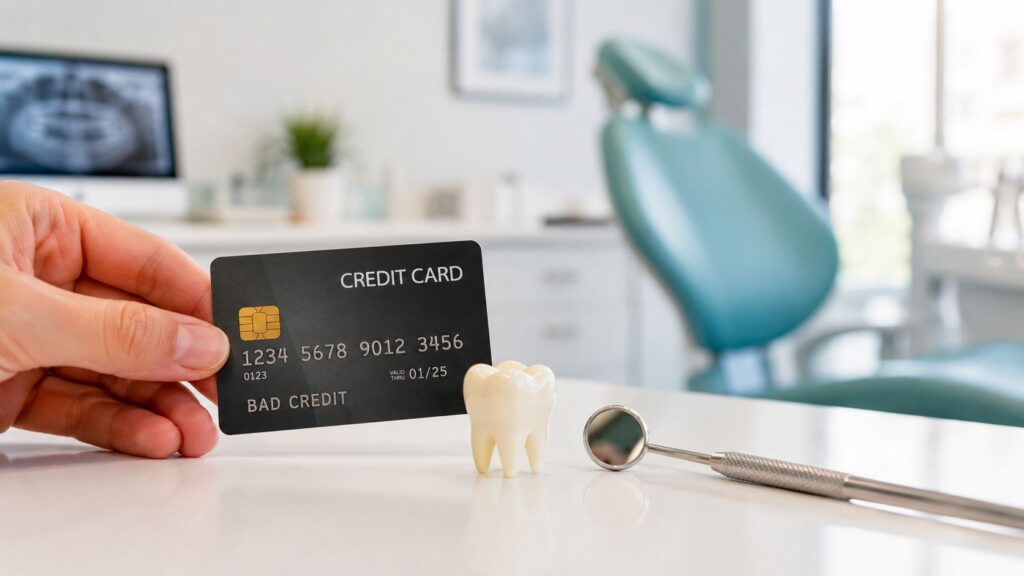
A lot of families land in the same spot. A tooth breaks, an infection flares up, or a dentist says the work can't wait. Then the next question hits just as hard as the diagnosis. How are you supposed to pay for it when your credit already feels fragile?
That's where searches for dental credit cards bad credit usually begin. The offer can sound simple. Apply fast, get approved, start treatment now. But when your score is already under pressure, the wrong financing choice can create a second problem after the dental one.
This guide is written for people who need straight answers. If you're trying to handle urgent dental care and also protect your future borrowing power, especially if you hope to buy a home later, you need more than a list of payment options. You need to understand which choices might solve today's problem without making next year harder.
Table of Contents
- The Challenge of Needing Dental Work with Bad Credit
- How Dental Credit Cards Work and Their Risks
- A Strategic Plan to Improve Your Financing Approval Odds
- Evaluating Safer Alternatives to Dental Credit Cards
- How Professional Credit Repair Can Support Your Goals
- Frequently Asked Questions About Dental Financing
- Your Next Steps Toward Financial Readiness
The Challenge of Needing Dental Work with Bad Credit

When the bill and your credit history collide
A family might be doing everything they can to stay afloat, then one dental emergency changes the month. The dentist says the treatment shouldn't wait. Rent is due. Groceries still matter. And somewhere in the background sits an old late payment, a charged-off card, or a credit score that already makes every application feel risky.
That's why dental financing can feel emotionally loaded. It isn't just a money decision. It's a decision made while someone is in pain, stressed, and trying to avoid embarrassment at the front desk.
For many readers, the bigger fear isn't only getting denied. It's getting approved for something that looks helpful at first and then creates another credit problem. If you're already trying to clean up credit history, taking on the wrong revolving account can work against the progress you're trying to make.
Practical rule: Urgent treatment and urgent financing are not the same thing. You may need care quickly, but you still need to understand the terms before signing.
Why the decision feels so urgent
Traditional borrowing often isn't realistic when credit is weak. A bank may say no. A regular credit card may come with an unhelpful limit. A friend or relative may not be able to help. That's why people often end up looking at financing offered right inside the dental office.
Some practices present dental credit cards as a routine option, and in some situations they can help people start treatment sooner. But families with damaged credit need a more cautious lens. The fastest option at checkout isn't always the safest option for long-term financial health.
If you're still gathering information, a practical outside resource is this guide to dental financing for Houston families, which walks through common ways people approach treatment costs when credit is less than ideal. Reading broadly can help you slow down and compare choices before making a commitment.
How Dental Credit Cards Work and Their Risks
What a dental credit card usually looks like
A family agrees to treatment, reaches the payment desk, and hears a familiar offer. Apply now, use the card today, and pay over time. In a stressful moment, that can sound like relief.
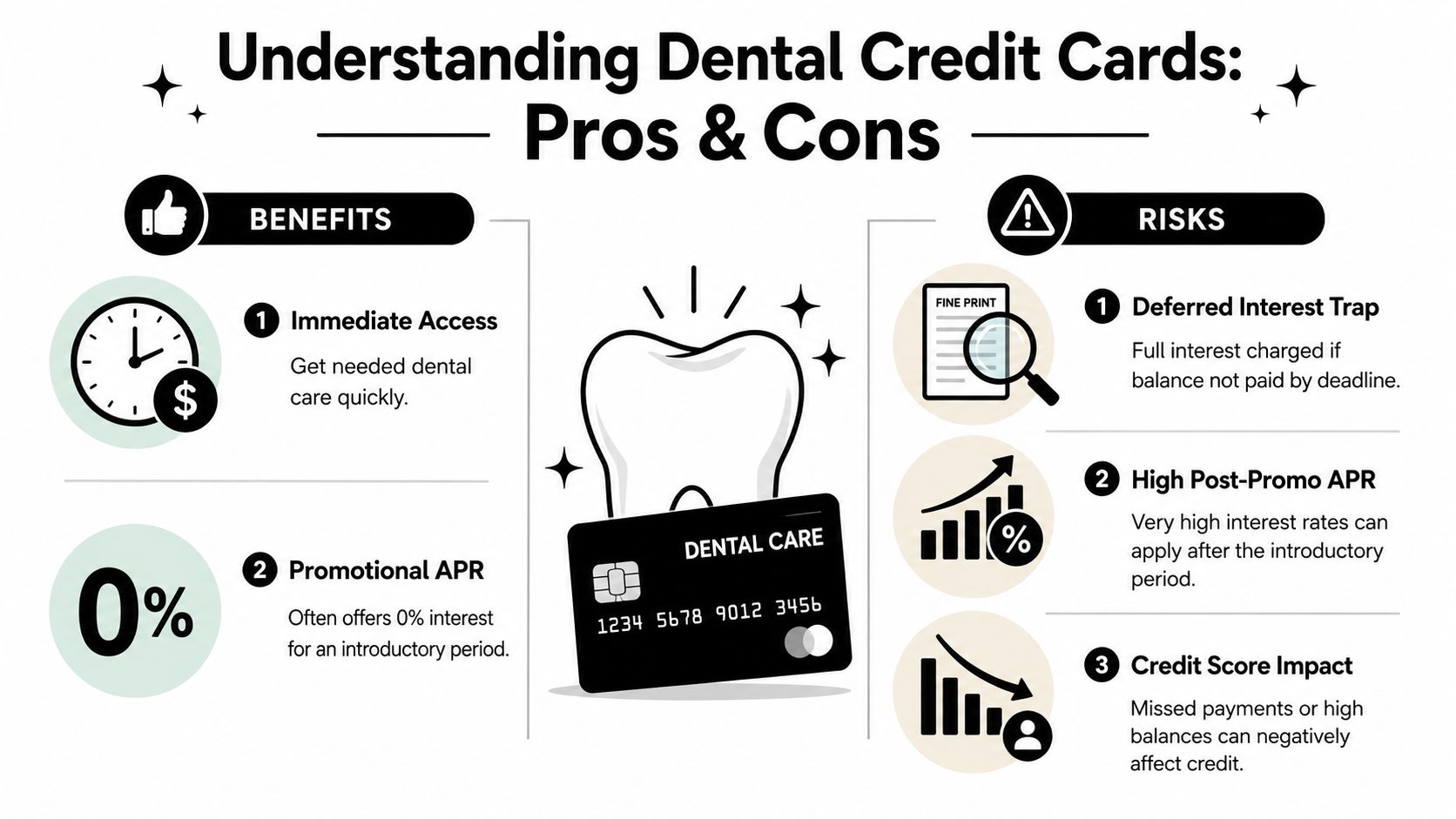
A dental credit card is usually a revolving account for healthcare costs. It works much more like a store credit card than a simple payment plan. You are approved for a credit line, you charge the dental bill to that account, and then you repay under the card's terms.
That distinction matters because revolving debt behaves differently from a fixed installment loan. With an installment loan, the payment schedule and payoff date are usually set at the start. With a dental credit card, the balance, interest exposure, and effect on your credit can shift if the terms are not followed exactly.
People with damaged credit are often offered promotional financing instead of straightforward low-cost borrowing. The offer may sound manageable at first. The true risk is often hidden in the fine print.
How deferred interest becomes the trap
Deferred interest is the part families need to understand before signing.
A promotion may say "no interest if paid in full" for a set period. That does not always mean the account is interest-free during that time. In many cases, interest is being tracked in the background. If the balance is not fully paid by the deadline, the lender can add that accumulated interest to the account.
A simple comparison helps. It works like a timer running in another room. You may make each monthly payment and still lose the benefit if even a small amount is left when the timer ends.
That is why deferred interest can be so dangerous for borrowers with tight budgets. The problem is not just the monthly payment. The problem is the all-or-nothing deadline.
A dental credit card is safest only when you already know you can clear the full promotional balance on time.
If your income is uneven, your emergency savings are thin, or other bills already compete for attention, this type of offer can turn a dental bill into expensive revolving debt very quickly. That can raise credit utilization, add payment pressure, and make it harder to stay ready for a future mortgage review.
Who is most exposed to the risk
Families dealing with bad credit often have the least room for error. A car repair, reduced work hours, or a higher grocery bill can throw off the payoff plan. Then the promotional offer stops being a short bridge and starts acting like a costly long-term balance.
Here is a practical way to judge the risk:
| Situation | What it may mean |
|---|---|
| You can repay the full balance well before the promo deadline | The card may function as a short-term tool |
| You would need the full promo period and have little room in the budget | A small setback could trigger deferred interest |
| You are trying to improve credit before buying a home | New revolving debt may hurt utilization and complicate underwriting |
The better question is whether this account helps your overall financial position six to twelve months from now. If a financing choice solves today's dental problem but leaves you with higher balances, added interest, and weaker mortgage readiness, the cost is larger than it first appears.
For some households, a safer path is to pause and strengthen credit first. Building positive history with lower-risk tools, including learning the benefits of secured credit cards, may protect your budget better than accepting a deferred-interest offer under pressure.
It also helps to compare office financing with other options for uninsured dental patients before you commit. The goal is not only to get treatment started. The goal is to avoid turning a health expense into a credit setback that follows you into your next major financial milestone.
A Strategic Plan to Improve Your Financing Approval Odds
Start with your credit reports, not the application
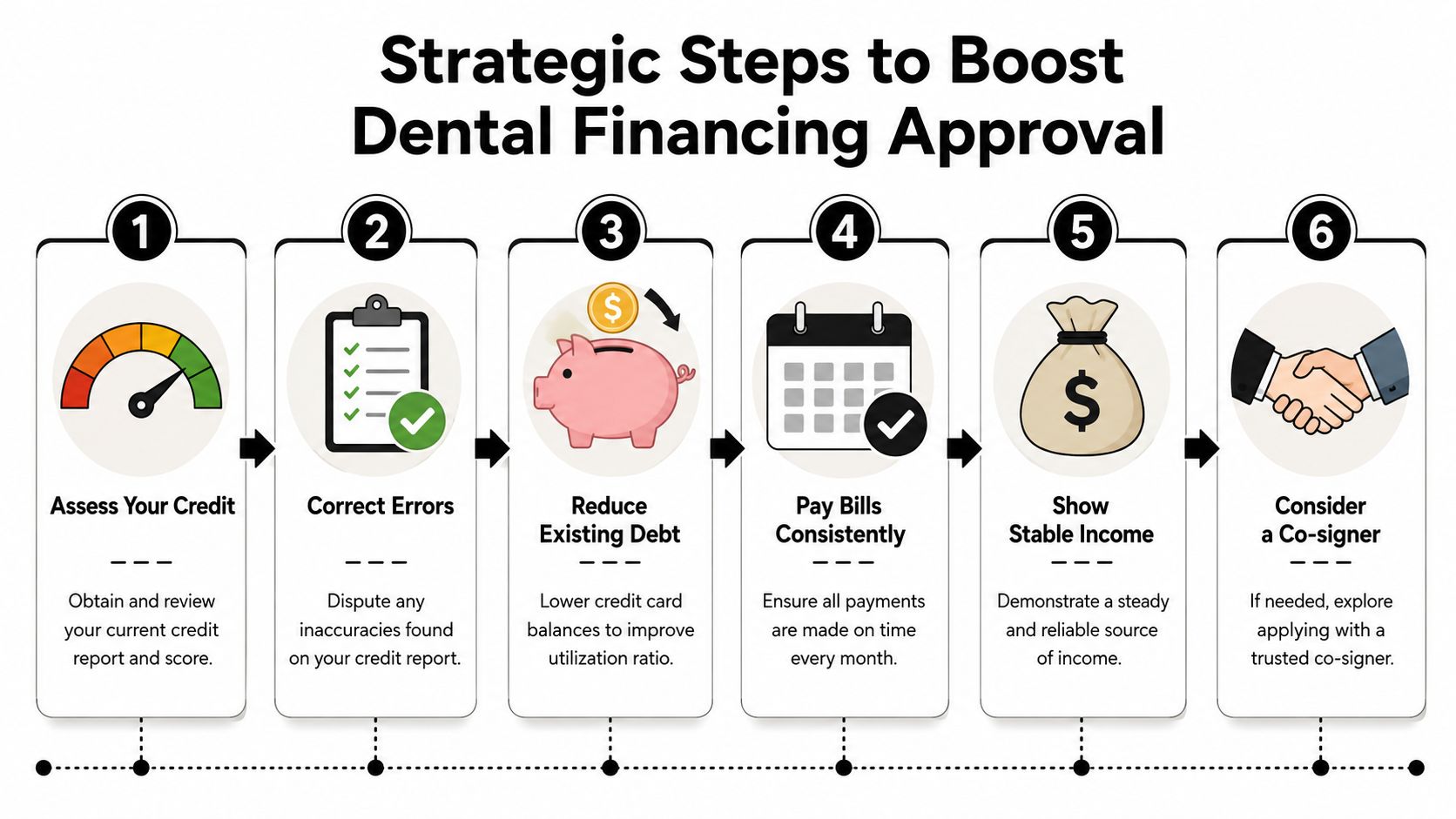
A dental financing application only shows the lender a snapshot. Your credit reports explain the story behind that snapshot.
If you apply before reviewing your reports, you can end up reacting after a denial, instead of fixing problems before a lender sees them. That matters even more if you are trying to avoid a high-cost dental credit card and keep your credit profile strong enough for a future mortgage.
Read each report line by line. Look for accounts that are inaccurate, outdated, duplicated, or difficult to verify. A wrong balance, a late payment that should not be there, or an old collection still reporting incorrectly can make your file look riskier than it should.
Use this checklist:
- Account accuracy: Confirm balances, dates, limits, and payment history.
- Negative items: Flag collections, charge-offs, and late payments for closer review.
- Open revolving accounts: Check whether any card is reporting close to its limit.
- Recent inquiries: Multiple recent applications can suggest financial pressure.
One error may not seem like a big deal. To an underwriter, it can be the difference between a manageable approval and a deferred-interest offer with little room for error.
Focus on utilization before anything else
If you can make only one change before applying, lower your revolving card balances first.
Utilization works like a stress gauge. Even if you have paid on time for years, a card that reports near its limit can suggest that your budget is already stretched. That can reduce approval odds, lower the limit you are offered, or push you toward financing terms that become expensive if anything goes wrong.
A practical order helps:
- Pay down the card closest to its limit first. This often improves your credit profile faster than spreading the same dollars across every card.
- Keep all other accounts current. One late payment can undermine the progress you are making. Late payments can stay on credit reports for up to seven years, according to the Consumer Financial Protection Bureau at https://www.consumerfinance.gov/ask-cfpb/how-long-do-negative-information-remain-on-my-credit-report-en-323/
- Avoid new applications unless they are necessary. Each hard inquiry and new account can add pressure at the wrong time.
- Wait for the next reporting cycle. Your score and lender view usually improve only after the lower balance appears on your reports.
Timing matters here.
If your dental office offers a promotional card today, but your balances are still reporting high this month, applying right away may lock you into weaker terms. Waiting a short period for updated reporting can be the difference between using financing as a temporary bridge and falling into deferred interest later.
Protect the progress you make
Improving approval odds is only part of the goal. The bigger goal is to avoid solving a dental problem with debt that creates a second problem six months later.
That is why this step is about restraint. If you are trying to repair your credit before major borrowing, pause nonessential applications for furniture, electronics, or store cards. Keep your debt picture as clean and predictable as possible. Mortgage lenders look closely at new revolving debt, and a dental card balance that lingers can affect both utilization and debt-to-income ratios.
A few habits can help:
- Document steady income: Some financing programs pay close attention to reliable income and employment history.
- Be cautious with co-signers: A co-signer can improve approval chances, but it also puts another person at risk if payments become hard to manage.
- Address credit problems early: If errors or negative items are holding you back, learning how Superior Credit Repair may help can give you a clearer plan before you add new debt.
This approach takes patience. But patience is often cheaper than a promotional card that turns into retroactive interest because one deadline was missed or the full balance was not cleared in time.
Evaluating Safer Alternatives to Dental Credit Cards
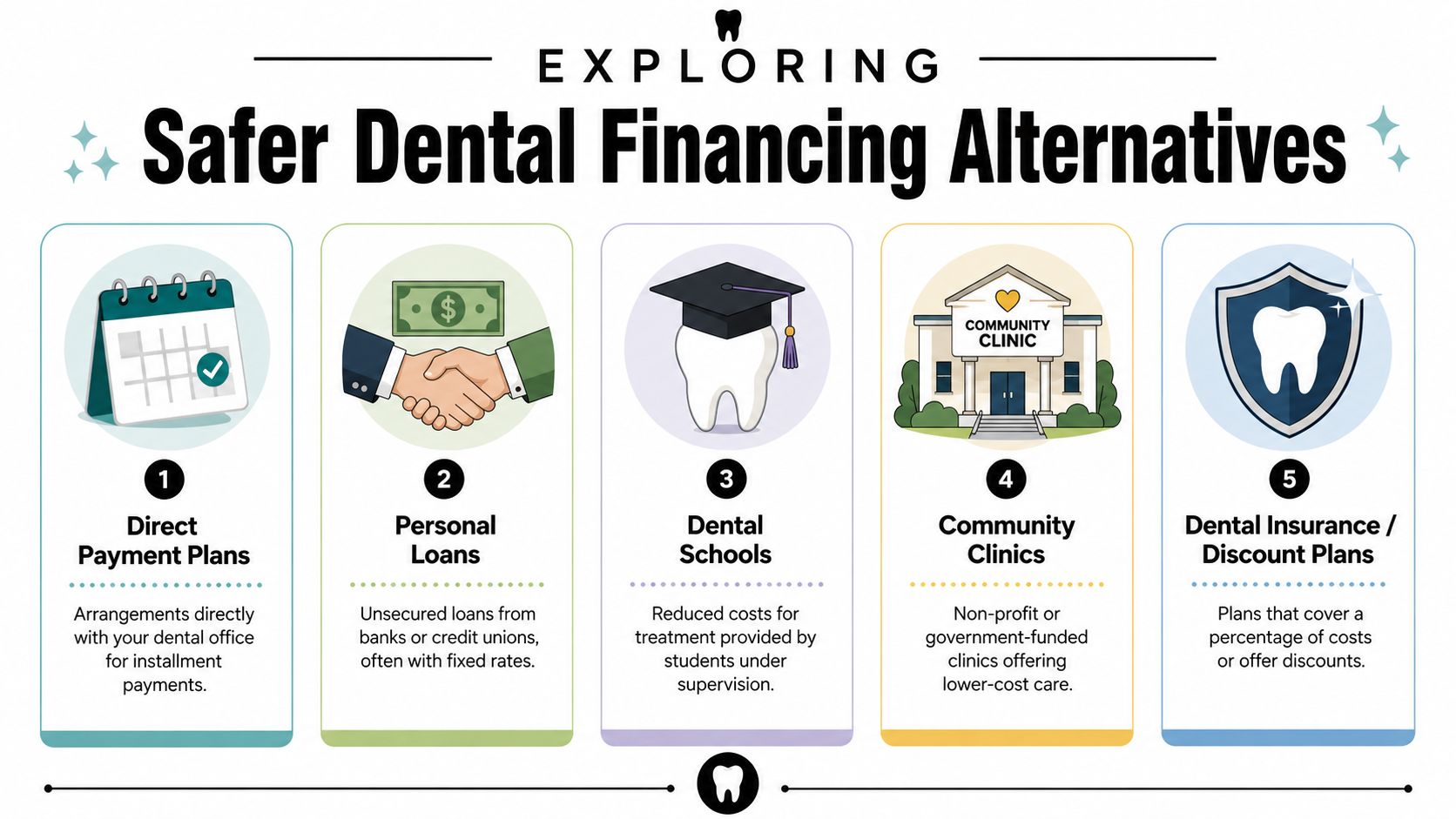
A side by side way to compare your options
A family agrees to urgent dental work because the monthly payment looks manageable. Then the promotional window ends, the balance is still there, and interest gets added back to the original charge. That is the trap many borrowers miss.
The safest option is often the one that reduces the chance of that outcome, even if it looks less convenient at the start. If your credit is already under pressure, or you want to stay ready for a mortgage, the question is not just, “Can we get approved?” It is, “Which choice solves the dental problem without creating a bigger credit problem afterward?”
General consumer guidance notes that dental credit cards can be convenient, but alternatives such as in-house payment plans and broader-eligibility financing may be safer for people who need more flexibility and want to avoid deferred interest, as noted in Cherry's discussion of dental credit card tradeoffs.
Here is a practical way to compare the common options:
| Option | Main advantage | Main concern | Credit impact consideration |
|---|---|---|---|
| In-house payment plan | Payments are often easier to understand | Not every office offers one, and terms vary | May avoid opening a new revolving account |
| Personal loan | Fixed payment and fixed payoff date | Approval and rate still depend on credit and income | Installment debt usually affects your profile differently than a maxed revolving line |
| Broader-eligibility medical financing | Some programs look beyond score alone | Terms still need careful review, especially fees and repayment deadlines | Can be less restrictive than a dental card, but it still adds new debt |
| Dental school or clinic options | Lower treatment cost can shrink how much you need to borrow | Wait times and availability may be limited | Smaller balances usually put less pressure on utilization and future loan readiness |
| Insurance or discount plans | Can reduce what you have to finance in the first place | May not cover urgent or major work fully | Lower out-of-pocket costs can help protect your debt-to-income picture |
Which choices may fit better for mortgage focused families
Families planning for a home purchase need to look past the checkout payment and study the full effect on their credit file. Mortgage lenders review recent debt, monthly obligations, payment history, and how close accounts are to their limits. A dental balance that lingers can make your profile look tighter than it was before treatment began.
Clarity matters more than speed here.
A few options are often safer to examine first:
- Direct office payment plans: Some dental offices offer simple installment arrangements with clear end dates, which can be easier to budget than a revolving account with a promotional catch.
- Community and reduced-cost care: If you do not have insurance, this overview of options for uninsured dental patients may help you reduce the amount you need to borrow at all.
- Rebuild before taking on new debt: If your report needs work, a short delay can cost far less than months of high-interest debt. For some borrowers, learning about the benefits of secured credit cards is part of a gradual plan to strengthen credit before applying for larger financing.
The cheapest-looking monthly payment can be the most expensive choice if one missed deadline turns a temporary balance into long-term debt.
Before you sign anything, ask three plain-language questions. Is the interest waived or only postponed? What happens if the balance is not fully paid by the deadline? Will this account make it harder to qualify for a mortgage or other major loan in the next year or two?
If the answers are hard to explain, the financing is probably too risky.
How Professional Credit Repair Can Support Your Goals
What credit repair actually does
A lot of people hear “credit repair” and think of shortcuts. Real credit repair isn't that. It's a structured review and dispute process built around accuracy, documentation, and consumer rights.
That matters here because dental and medical financing mistakes can leave a long tail. Historically, these accounts have caused significant credit damage for consumers with weak credit. Short six-month promotional periods have been common for years, and when borrowers miss the deadline, the interest clawback can raise utilization sharply. The historical pattern also shows that consumers with scores below 600 are 40% more likely to carry a balance beyond the promotional period, and the resulting high-interest debt can remain on a credit report for seven years.
When a report contains inaccurate, outdated, unverifiable, or misleading negative information, a compliant credit repair process may help a consumer challenge those entries. That can include reviewing reported late payments, collections, balances, account status details, and other items that deserve closer verification.
Why this matters beyond the dental bill
The reason to care about report accuracy isn't only today's financing choice. It's tomorrow's opportunities.
A cleaner and more accurate report may help you present a stronger file when you later prepare for:
- FHA loan preparation
- VA loan preparation
- USDA loan preparation
- Conventional mortgage review
- Apartment approval and rental screening
- Auto or personal financing
That doesn't mean any result is guaranteed. It means your report should be as accurate and defensible as possible before a lender reviews it.
If you're trying to understand whether professional help makes sense, this page from Superior Credit Repair explains the role of paid credit assistance in plain English. The value isn't magic. The value is organized review, documentation, and a strategy that supports stronger credit habits while disputed items go through the proper process.
A financing decision should protect your future options, not just solve today's bill.
Frequently Asked Questions About Dental Financing
Can I get dental financing with a very low credit score
It may be possible, but traditional dental credit card approval becomes much harder as scores fall. Some lenders are stricter than borrowers expect, and people with weak scores are often denied or offered terms that carry more risk. In many cases, alternatives that consider income and employment stability may be more realistic than a standard dental credit card.
Does an in-house dental payment plan show up on my credit report
Sometimes yes, sometimes no. It depends on how the dental office structures the arrangement and whether a third-party financing company is involved. Ask the office directly whether the plan is reported to the credit bureaus, whether a credit check is required, and what happens if a payment is missed.
How long does it take to improve credit enough to apply again
There isn't one timeline for everyone. A common planning window for utilization improvement is a few billing cycles, and some guidance suggests allowing 3 to 6 months for score positioning after balances come down. If your file also includes late payments, collections, or reporting errors, the process may take longer and results will vary.
Should I use a dental credit card if I want to buy a home soon
Be careful. If the account raises your revolving balances, creates payment pressure, or leaves you close to your limits, it may work against mortgage readiness. Homebuyers usually benefit from keeping their credit profile stable, understandable, and as low-stress as possible in the months before applying.
How much does professional credit repair usually cost
Costs vary by company, state, service model, and the condition of your credit file. If you want a plain-English overview of pricing structures, setup concerns, and what to compare, this review of Superior Credit Repair's cost guide is a useful starting point.
Your Next Steps Toward Financial Readiness
If you're facing dental work with weak credit, don't assume the first financing offer is your best option. The most important move is to understand the full terms, especially if the account uses deferred interest and short payoff deadlines.
A smarter approach usually looks like this. Review your reports. Fix accuracy issues where appropriate. Lower revolving balances if you can. Compare safer alternatives before accepting new revolving debt. If homeownership is part of your future, treat every financing decision as part of your mortgage preparation, not as a separate event.
Progress doesn't happen all at once. It happens through informed choices that protect both your health and your credit profile. If you want a realistic sense of what this process can look like over time, the Superior Credit Repair timeline guide can help you set expectations.
Superior Credit Repair can review your credit report, help identify inaccurate or questionable items, and explain a step-by-step plan for improving your credit profile. If you're trying to avoid high-cost debt while preparing for bigger goals like a home loan, you can request a free credit analysis or consultation through Superior Credit Repair to better understand your options. Results vary based on your credit file, documentation, account history, creditor responses, and current credit behavior.
Was this guide helpful?
Superior Credit Repair Online provides educational credit guidance for individuals and families preparing for major financial goals like buying a home, applying for a mortgage, refinancing, or rebuilding after credit challenges.
If this information helped you better understand your credit report or your next steps, we would appreciate your honest feedback. You are welcome to share your experience with Superior Credit Repair on our Google Business Profile.