


You're saving for a home, paying your bills on time, and your overall card balance looks manageable. Then a lender, landlord, or dealer flags your credit utilization ratio, and you're left wondering what changed. Often the issue isn't the total you owe. It's one card sitting near its limit, a balance reported on the wrong date for your plans, or a payment obligation that doesn't show up clearly on your reports. Once you learn to read utilization card by card, you can make calmer, better timed decisions.
Table of Contents
- Calculate Your Ratio Card by Card and in Total
- Why Lenders Watch Utilization and What 30 Percent Means
- Lowering Reported Balances Before You Apply
- Mortgage Readiness for FHA, VA, Conventional and USDA Loans
- Buy Now, Pay Later and Other Hidden Obligations
- Rebuilding Utilization in Thin or Recently Repaired Files
- Common Questions About Utilization Before Applying
- Confirm Your Next Step Before Speaking With a Lender
Calculate Your Ratio Card by Card and in Total
Say you check your cards and see what looks like a comfortable total. One card has a small balance, another has none, but the card you use most is almost full. That single card can change the picture, even when your combined percentage looks low.
Your credit utilization ratio is your reported revolving balances divided by your revolving credit limits, multiplied by 100. Revolving accounts are accounts you can use, repay, and use again, such as credit cards. Mortgages, auto loans, and student loans are installment loans, so they sit outside this revolving calculation.
Work the Dollar Examples First
A $1,000 balance on a $5,000 limit gives you 20% utilization for that card. The math is $1,000 divided by $5,000, multiplied by 100.
Now look at a second card with a $900 balance and a $1,000 limit. That card is at 90% utilization, even if your other cards bring the combined ratio down. FICO's explanation of what's in a credit score places utilization in the amounts owed category, which represents approximately 30% of a typical FICO Score, and notes that both aggregate utilization and utilization on specific revolving accounts are evaluated.
Uneven use is where people get surprised. If Card A carries $1,500 on a $2,000 limit and Card B carries $0 on an $8,000 limit, your total is $1,500 divided by $10,000, or 15% overall. Card A, though, is at 75% on its own.
| Scenario | Balance | Limit | Utilization |
|---|---|---|---|
| One card, single use | $1,000 | $5,000 | 20% |
| One card near its limit | $900 | $1,000 | 90% for that card |
| Two cards combined | $2,000 | $10,000 | 20% overall |
| Uneven use across two cards | $1,500 on card A and $0 on card B | $2,000 and $8,000 | 15% overall, 75% on card A, 0% on card B |
| Moderate combined use | $3,000 | $10,000 | 30% |
| Higher combined use | $3,500 | $10,000 | 35% |
Follow Five Calculation Steps
- Pull all three reports: List every revolving account on your Experian, Equifax, and TransUnion reports, because the same account may show different balances, statuses, dates, limits, payment months, or collection ownership across the bureaus.
- Record each limit as reported: Use the limit the bureau shows, not what you think the limit should be.
- Record the statement balance: Utilization planning starts with each card's limit, current balance, statement closing date, and reporting pattern, not an estimate from an app balance alone.
- Calculate each card: Divide each reported balance by its own limit and multiply by 100.
- Calculate the total: Add all reported balances, add all limits, then divide and multiply by 100 again.
Start with two numbers: your total ratio and your highest single card ratio. The card with the highest percentage is usually the clearest place to focus first.
You now have a practical map. You can name the card that needs attention, spot a limit or balance that looks wrong on one bureau, and avoid trusting a single combined percentage that hides a stressed account.
Why Lenders Watch Utilization and What 30 Percent Means
A credit limit works like a container, and the balance is the water level inside it. Filled near the top, it does not prove you cannot pay. It tells a lender there is less room if an unexpected expense arrives, and less room reads as more risk.
Utilization sits inside the amounts owed part of scoring. It is not the whole story. Payment history, account age, recent inquiries, collections, and other debts still carry weight, which is why the same percentage can sit comfortably in one file and look strained in another.
Use 30 Percent as a Ceiling, Not a Verdict
With a fixed $10,000 total limit, a $3,500 balance produces 35% utilization, whereas a $2,000 balance produces 20%, and paying down $1,500 lowers the ratio by 15 percentage points without changing income, account age, or payment history, according to MyCreditUnion.gov credit guidance. Balance changes move this one measure quickly. They leave the rest of the file exactly as it was.
The 30% figure is best treated as a planning ceiling. It helps you decide whether reported balances deserve attention before a financing application. It does not guarantee approval below that line or denial above it, because lenders weigh the full report and apply their own standards on top.
| Reference point | What it says | How to use it |
|---|---|---|
| Common planning benchmark | 30% of total revolving limits | A ceiling for deciding whether balances need attention, not a pass or fail line |
| FICO | No single percentage produces optimal points for every profile | Watch the trend, per-card balances, and payment history together |
| Per-card view | One card near its limit can signal strain even when the total stays low | Check each card before trusting the combined number |
Read the Pattern Behind the Percentage
Distribution matters. Balances spread modestly across several cards tell a different story from one card pressed close to its limit, because a nearly maxed account can signal strain on that account even when unused limits elsewhere pull the total down. A review looks at each card, not only the combined result.
Two files can both read 25% and deserve different conversations. In the first, three cards sitting between 20% and 30% look steady. In the second, one card at 75% with the others at zero looks concentrated, and a single new charge could push that account into visible strain. Superior Credit Repair offers high credit utilization guidance that starts with each card's limit, balance, and reporting pattern rather than a single percentage.
If you are preparing for a conversation with a lender or advisor, keep written notes of what was discussed: which balances were reviewed, which questions you asked, and what follow-up was promised. Some people keep financial advisor call summaries for exactly that record. Pair those notes with your own statements and an understanding of how payment history affects credit scores, so utilization never gets treated as the only factor in the file.
A benchmark is useful when it prompts a check, not when it replaces one. Compare the range with your per-card numbers, payment record, and application timing.
Circle any card above your chosen planning range, keep every payment on time, and hold account behavior steady while you work out how much balance reduction fits your budget.
Lowering Reported Balances Before You Apply
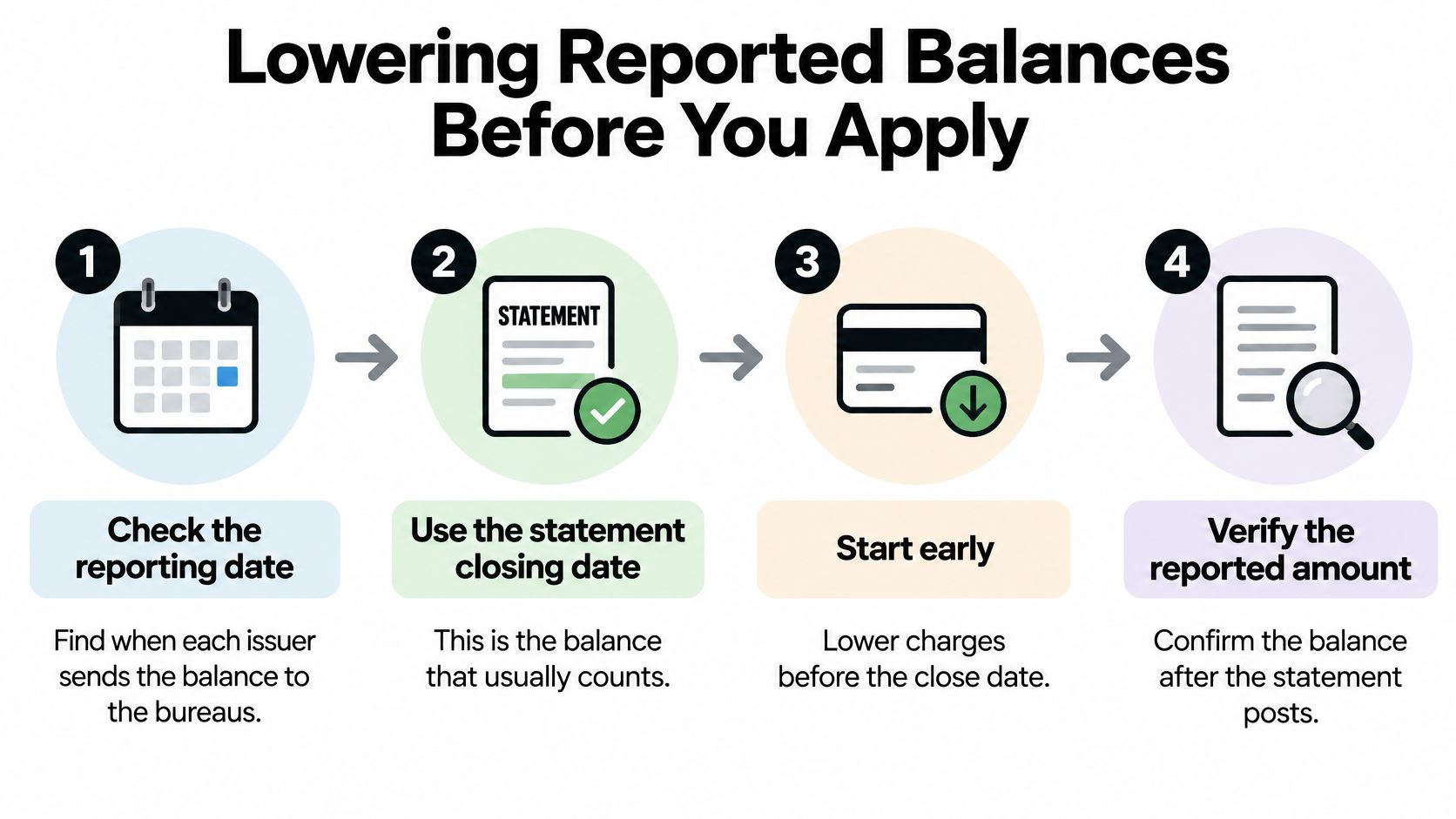
Paying a card down helps your budget right away, but a lender sees the balance your issuer reports. That distinction turns utilization into a reporting date problem. The balance that usually counts is the one sent to the bureaus around the statement closing date, not necessarily the amount showing in your app today.
Time Payments Around Reporting
- Find the reported balance: Check the statement for every card carrying a balance and note the amount and closing date shown.
- Start with the highest use card: Pay that card first, or split payments so no single card stays near its limit while others sit low.
- Pay before the closing date: Schedule the payment to post before closing, not only by the due date. The due date protects you from a late payment. The closing date shapes the balance reported for that cycle.
- Pause large new charges: Avoid adding a major purchase or opening new credit while you're preparing an application, because new balances and inquiries complicate the file you're trying to stabilize.
Leave a buffer for pending transactions, interest, and payment posting time. A payment made too close to closing may not reduce that cycle's reported balance, even if it posts before the due date.
Handle Credit Limits Carefully
A higher limit can lower a ratio if the balance stays the same, but don't request one automatically. Ask the issuer whether the request uses a soft inquiry or a hard inquiry, and ask how the request will be recorded. Near a mortgage or auto application, an avoidable hard inquiry may create questions you didn't need.
Also consider the spending risk. More available credit only helps the ratio if you don't fill the new space. If a higher limit makes overspending more likely, balance reduction is the safer tactic.
Payment order matters: make at least the required payment on every account by its due date first. A late payment can create a bigger problem than the balance you were trying to improve.
After you pay, verify. Issuer reporting and bureau update cycles vary, so check a later report to confirm the new balance and limit appear. Keep the statement and payment confirmation with your application records.
Choose one card today, set one payment to post before its closing date, and track the next reported balance. Results vary by credit file, documentation, creditor responses, account history, and current behavior, and no payment step guarantees a specific score or approval.
Mortgage Readiness for FHA, VA, Conventional and USDA Loans
A first-time buyer can have strong income and still feel unprepared after a recent card balance spike. Moving costs, furniture, repairs, or a temporary emergency can raise reported balances at the exact moment a mortgage file needs stability. Preparation gives you time to lower that pressure and correct reporting problems before underwriting.
FHA, VA, conventional, and USDA programs each set their own guidelines, and individual lenders may add overlays, which are extra requirements beyond the program rules. Confirm the current standards with your loan officer rather than relying on a general online threshold. Program fit also depends on income, property, down payment, reserves, and the full credit profile.
What an Underwriter Reviews
Underwriters look beyond a score. They review payment history, collections, charge-offs, late payments, revolving utilization, debt-to-income concerns, and account comments that may affect the file. Our mortgage readiness review also covers inaccurate personal information, repossessions, medical collections, student loan reporting, bankruptcy or foreclosure history, and those account comments, because any one item can prompt documentation requests.
Timing matters for a practical reason. Updated bureau data must reach the lender's credit pull. If you pay a balance after the issuer has already reported for that cycle, the lender may still see the older, higher balance until a later update appears.
| Timing before application | Action | Purpose |
|---|---|---|
| 3 to 6 months | Pull all three reports and compare each account | Find bureau differences in balances, status and dates |
| 2 to 3 months | Map statement closing dates and limits for every card | Know which balance the bureaus will receive |
| 1 to 2 months | Reduce revolving balances before each closing date | Lower the reported ratio on each card and in total |
| 30 days before | Stop new credit applications and avoid large new charges | Keep the file stable through underwriting |
| Application window | Gather statements, collection letters and any denial notice | Answer lender questions with documentation |
Questions to Confirm With Your Lender
Ask whether the lender reviews utilization from the statement balance on the pulled report, whether any account comment needs a documented explanation, and whether a mid-process balance change or new inquiry is likely to trigger a fresh review. Ask, too, how your monthly card payments will be counted in the debt-to-income review.
You can compare those answers with the first-time buyer mortgage credit requirements that apply to your situation. The goal is a lender-ready credit profile built on accurate reports, manageable reported balances, on-time payments, and clear documentation.
No preparation timeline guarantees mortgage approval. Approval depends on the lender, the loan program, and your complete financial and credit picture at the time of review.
Buy Now, Pay Later and Other Hidden Obligations
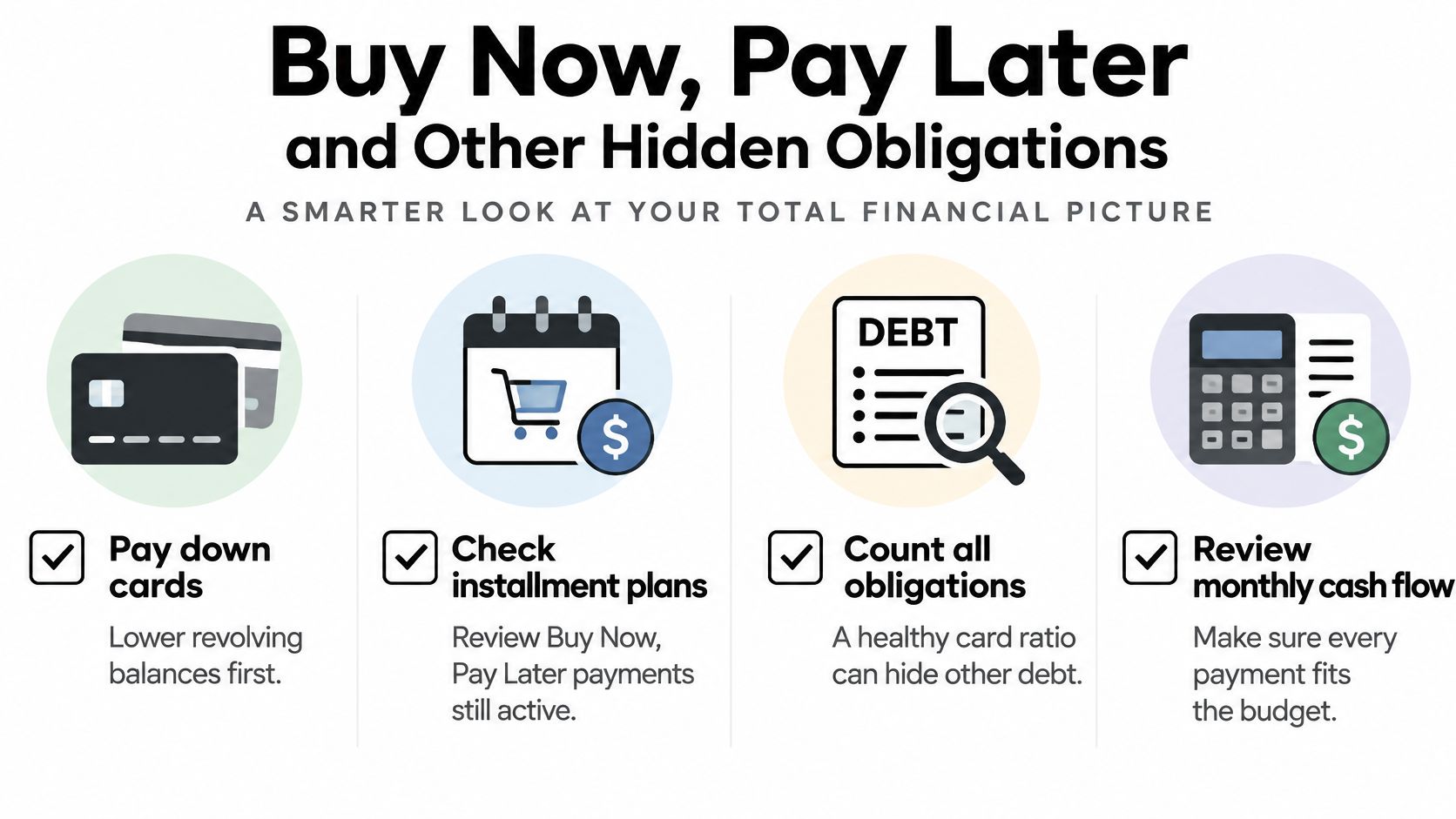
You pay down your cards, your total ratio looks healthy, and you feel ready to apply. Then you remember three checkout plans still drafting from your bank account. Those payments may not raise your card utilization, but they still claim cash each month.
Buy Now, Pay Later, often shortened to BNPL, lets you split a purchase into installments through services such as Affirm, Afterpay, Klarna, PayPal, and Sezzle. The Consumer Financial Protection Bureau report on BNPL and other unsecured debt found that major BNPL providers generally did not report pay-in-four loans to nationwide credit bureaus. That limited visibility can hide loan stacking, recurring obligations, and total unsecured debt.
Build a Complete Obligation Inventory
- List every provider: Record the original purchase amount and the remaining balance for each plan, so nothing is estimated from memory.
- Record payment dates and amounts: Put them on payment calendars for all open accounts, alongside cards, loans, rent, and utilities.
- Count remaining installments: Knowing when each plan ends helps you judge whether the pressure is temporary or ongoing.
- Total the monthly obligations: Compare the combined amount with your income and the housing payment you're considering.
- Keep and disclose documentation: Save each plan record and disclose obligations when a lender or application asks for them.
This worksheet belongs beside your statement dates for credit card utilization planning, recent inquiry notes, and any lender, landlord, or dealer feedback about credit concerns. Together, those records show reported utilization and real monthly commitments at the same time.
For a fuller explanation of reporting differences, read Superior Credit Repair on BNPL and compare it with your own provider terms. The aim isn't to hide a balance or guess how a lender will treat it. It's to present an accurate, complete picture and decide, with clear numbers, which obligations to finish before you apply.
Rebuilding Utilization in Thin or Recently Repaired Files
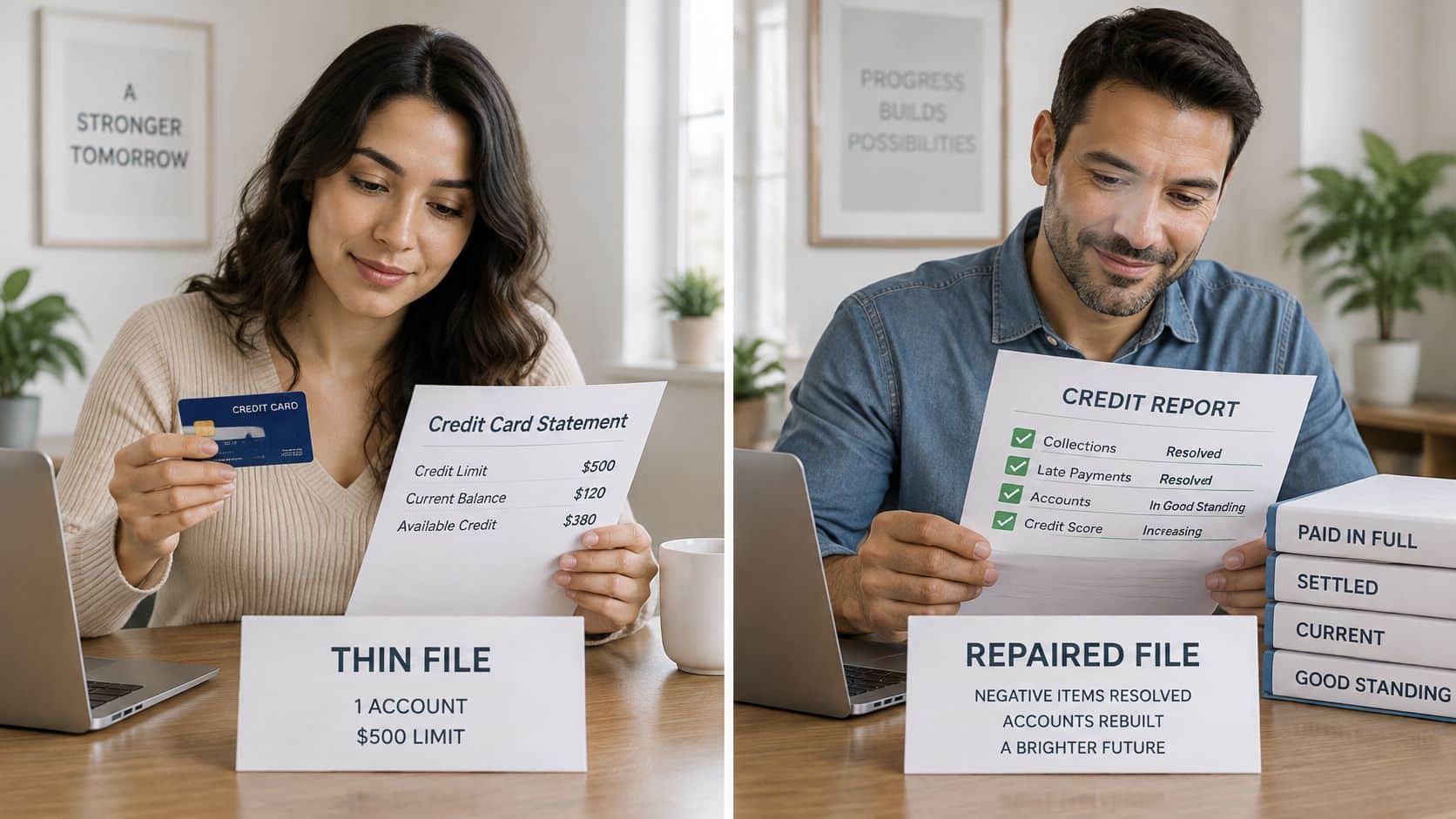
One reader has a single starter card with a small limit. Another has worked through collections and late payments and now has a cleaner file, but very little available credit. Both can see a high percentage after an ordinary purchase, even when the dollar amount feels small.
A thin file means few reported accounts. With a $300 limit and a $150 balance, utilization is 50%. The purchase didn't have to be large. The limit was small, so every dollar carries more weight in the percentage.
Keep Small Limits From Looking Strained
If you use a low-limit card for gas or groceries, consider paying part of the balance before the statement closes rather than waiting for the due date. Keep the reported amount low relative to that small limit, pay on time, and avoid using the card for a purchase that consumes most of its room right before a financing review.
Building more depth takes patience. New accounts can affect inquiries and account age, so don't open several cards at once just to chase a lower denominator. If you're comparing starter options, review fees, reporting practices, and fit among credit cards for thin credit files before applying.
Organize a Recently Repaired File
- Gather three current reports: Compare balances, limits, statuses, and dates bureau by bureau.
- Collect creditor statements: Keep records showing balances, limits, dates, and payment history for each account in question.
- Save collection records: Retain collection letters, settlement records, student loan records, debt buyer notices, and payment confirmations.
- Check late payment months: Pull statements or payment confirmations for the months in question and compare them with the payment history each bureau shows.
- Identify account comments: Flag comments that may affect underwriting, especially dispute or account status language a lender may ask you to explain.
Our review checkpoints cover collections, late payments, utilization, charge-offs, identity issues, and thin file depth. That structured review helps separate a balance you need to manage from information that may be inaccurate, outdated, unverifiable, or misleading.
Credit restoration should stay documentation based. A dispute needs support, a clear account trail, and the applicable legal dispute and verification process.
Results vary based on your credit file, documentation, creditor responses, account history, and current credit behavior. Organize your documents by account, then identify the one item affecting utilization or payment history most. That single priority gives your rebuilding plan a clear starting point.
Common Questions About Utilization Before Applying
Does 0% utilization always help?
Not necessarily. In some cases, a small amount of reported revolving use can be more favorable than no reported activity at all. The practical goal is manageable balances, on-time payments, and stable account behavior, not forcing every card to report zero every month.
Can a credit repair company guarantee a higher score or approval?
No. A provider can't guarantee deletion of an item, a specific score change, or approval for a mortgage, auto loan, rental, or personal loan. Results vary by credit file, documentation, creditor responses, account history, and current credit behavior, so be cautious with anyone who promises a certain outcome.
How long after I pay will the new balance show?
It depends on when your issuer reports, when each bureau updates, and when the lender pulls your report. Pay before the statement closing date when timing matters, then verify the reported balance on a later report. Keep your payment confirmation and statement in case the lender asks for documentation.
Should I close a card I no longer use?
Closing a card can reduce your total available credit, which may raise your combined credit utilization ratio if other balances remain. Before deciding, weigh any annual fee, the limit you'd lose, the account's age, and whether keeping it open creates spending or security concerns. Don't close a useful no-fee account right before an application without running the new total first.
Confirm Your Next Step Before Speaking With a Lender
Before a mortgage review, the lender will pull your credit reports. The useful move is to arrive with the same documents the review will examine: current reports, statements, and any lender feedback that shows which account drew concern. That turns the conversation from a guess about your score into a line-by-line look at what each bureau reports. A buy now, pay later plan that never lands on a card statement is the blind spot: it can change your monthly obligation without changing the utilization number you calculated.
Document Checklist for a First Conversation
- Three current credit reports: Bring the Experian, Equifax, and TransUnion versions so the same account can be compared for balance, status, date, limit, and collection ownership.
- Identification and address records: Include photo identification and current address information.
- Recent statements: Bring statements for the cards and loans to be reviewed, including limits, balances, statement closing dates, and payment history.
- Debt and payment records: Include collection notices, payment confirmations, settlement records, and any buy now, pay later plan details you have, since those obligations can affect what a lender sees.
- Application feedback: Bring any denial or adverse-action notice tied to the application that prompted your search.
Providing accurate information remains your responsibility, as does reading responses and deciding when to apply. For high credit utilization, Superior Credit Repair creates a balance-reduction and reporting-date plan. The plan starts with each card's limit, current balance, statement closing date, and reporting pattern, not an app balance alone. That work supports credit repair for homebuyers and connects with practical steps for how to improve loan approval chances without treating utilization as the only approval factor.
Superior Credit Repair can review your credit report, explain bureau differences, and outline a step-by-step plan that covers barriers such as collections, late payments, utilization, charge-offs, identity issues, or limited credit history. You can request a credit analysis to discuss your approval goal. Timing depends on the account, the documentation, bureau response cycles, furnisher updates, and your current credit behavior. Credit repair cannot guarantee approval for a mortgage, auto, or rental review.
If your reported card balances, statement dates, or bureau differences are standing between you and a mortgage, auto, or personal financing application, Superior Credit Repair can review your reports, explain your utilization card by card, and outline a documented plan to rebuild your credit profile. Visit the site to request a credit analysis and discuss your approval goal before you speak with a lender.