


You're watching rates and thinking the same thing many homeowners think. “If I refinance now, could I lower my payment, shorten my loan term, or pull cash out for another goal?” Then the worry shows up right behind it. “What if my credit score isn't good enough?”
That anxiety is normal. A refinance application can feel personal because your credit report, mortgage history, income, balances, and overall financial habits all come under review at once. Many people assume the answer comes down to one number, but that's only part of the picture.
A credit score for refinance matters. It affects whether a lender is willing to move forward and what terms they may offer if they do. But lenders also look at your recent payment history, your debt levels, the type of refinance you want, and whether your overall file looks stable and well documented.
If you've had late payments, collections, high credit card balances, a recent hardship, or even just confusion about what lenders will see, you're not alone. Some homeowners are closer to refinance-ready than they think. Others need a short period of cleanup and preparation before applying. Both situations are common.
This guide is built to help you think clearly, not react emotionally. You'll see the usual credit score ranges for common refinance loans, why the same score can lead to different outcomes with different lenders, and how to build a more lender-ready credit profile before you apply.
Table of Contents
- Is Your Credit Score Ready for a Refinance
- Minimum Credit Scores for Common Refinance Loans
- How Your Score Impacts Interest Rates and Costs
- Beyond the Score Lender Overlays and Other Underwriting Factors
- A Practical Plan to Strengthen Your Credit for a Refinance
- Your Refinance Readiness Checklist
- Frequently Asked Questions About Credit and Refinancing
- Prepare Your Credit for Your Financial Goals
- Footer
Is Your Credit Score Ready for a Refinance
A homeowner I've spoken with many times in one form or another usually starts here. The mortgage payment feels heavier than it used to. Credit card balances may have crept up after a move, medical expense, divorce, or job disruption. Rates look worth exploring, but there's uncertainty about what the lender will see.
Sometimes the credit score itself isn't terrible. The issue is that the file has rough edges. One report may show an old collection that should've aged off. Another may list a balance that's no longer correct. A credit card might be nearly maxed out even though payments have stayed on time. Those details can shape refinance results just as much as the score.
What refinance readiness usually looks like
Refinance readiness often comes down to whether your credit profile tells a clean, stable story.
- Accurate reporting: Your accounts should report correctly across all three bureaus.
- Recent payment stability: Lenders pay close attention to whether you've stayed current, especially on housing-related obligations.
- Controlled revolving balances: High utilization can make an otherwise decent file look strained.
- Limited surprises: New accounts, fresh late payments, and unresolved collections can complicate underwriting.
A refinance file doesn't have to be perfect. It does need to look explainable, stable, and consistent.
Why anxious homeowners often focus on the wrong thing
Many people ask only one question. “What score do I need?” That's understandable, but it can lead you in the wrong direction. A homeowner with a slightly lower score and cleaner documentation may have a smoother path than someone with a somewhat higher score and unresolved reporting issues.
That's why mortgage credit repair and credit restoration before refinancing should focus on more than chasing points. The strongest approach is to review the whole file, correct what's inaccurate, reduce what looks risky, and avoid changes that make a lender pause.
Minimum Credit Scores for Common Refinance Loans
Different refinance programs tend to have different credit expectations. That said, the score you hear about online is usually a baseline, not a promise. A lender may ask for more than the program itself appears to allow.

Why minimums are only a starting point
A refinance program can have general score guidelines, but lenders still apply their own internal rules. They look at overall risk, not just the score itself. That's one reason two borrowers with similar numbers can get very different answers.
If you've been trying to understand how credit scores affect mortgages, it helps to think in layers. There's the program guideline, then the lender's policy, then your individual file.
Typical score guidelines by loan type
Here's a plain-English comparison of common refinance categories. These ranges are best understood as typical guidelines, not guarantees of approval.
| Loan Type | Typical Minimum Credit Score | Key Consideration |
|---|---|---|
| Conventional Refinance | Generally 620-640 | Lenders often look closely at overall file strength, reserves, and recent payment history |
| FHA Refinance | Often lower, around 580-620 | Can be more flexible, but lender overlays may still apply |
| VA Refinance | No strict minimum, but lenders prefer 620+ | VA rules may be flexible, yet individual lenders often set their own floors |
| USDA Refinance | Typically 640+ | Property and eligibility rules still matter alongside credit |
| Jumbo Refinance | Higher, 700+ | Larger loan amounts usually bring stricter underwriting |
Conventional refinance usually comes with tighter expectations because the lender wants a stronger overall risk profile. If your score is near the lower end of what a conventional lender accepts, the rest of your file often has to work harder. Lower balances, cleaner history, and steady income matter more.
FHA refinance can be more forgiving for some borrowers, especially if the file shows recent stability after past problems. This is one reason credit repair for FHA approval often focuses heavily on dispute accuracy, current payment behavior, and collections review rather than score alone.
VA refinance options may offer flexibility for eligible borrowers, but many homeowners get confused here. They hear that there's no strict minimum and assume any score will work. In practice, many lenders still set a preferred floor. That's the lender's rule, not necessarily the program's broadest guideline.
USDA refinance tends to require a solid, clean file, even if the borrower has been stable for some time. The same is true for many first-time homebuyer credit concerns that continue into later mortgage decisions such as refinance.
Jumbo refinance usually asks for the strongest profile of all. Larger balances often bring more scrutiny around reserves, documentation, and recent credit behavior.
Practical rule: Treat posted score minimums as entry points. The more your score sits near the lower end, the more important every other part of your file becomes.
How Your Score Impacts Interest Rates and Costs
Approval is only part of the refinance decision. The more important question is often whether the new loan saves enough money, creates enough flexibility, or improves your long-term position in a meaningful way.

Why lenders price loans differently
Lenders use risk-based pricing. In simple terms, they usually reserve better rates and lower costs for borrowers whose credit files suggest a lower chance of missed payments or future financial strain. A stronger score can signal that pattern, but lenders also look at how that score was earned.
Two borrowers can both qualify for refinancing and still receive different offers. One may get a cleaner rate because the file shows lower utilization, fewer recent derogatory items, and more stable account history. Another may qualify with less favorable pricing because the lender sees more risk.
That difference matters even if the refinance is approved.
What a lower score can cost over time
A lower credit score for refinance can affect several parts of the loan experience:
- Interest rate: A lender may offer a higher rate if the file appears riskier.
- Monthly payment: Even a modest rate difference can raise the payment.
- Private mortgage insurance: If PMI applies, lower scores can make that coverage more expensive.
- Cash-out options: Some lenders may be more conservative on cash-out refinance requests when the file is weaker.
- Closing structure: You may see less flexibility in lender credits or pricing options.
Here's where many homeowners get stuck. They focus on whether they can refinance today, not whether it makes sense to wait briefly, improve the file, and apply from a stronger position. That doesn't mean everyone should delay. It means the best refinance strategy often starts with comparing the cost of acting now against the benefit of preparing first.
A refinance should improve your financial position, not just change your loan paperwork.
If your score is being held back by credit report errors, high revolving balances, outdated collection reporting, or recent instability, a short period of mortgage credit repair may produce a more favorable lending conversation. Results vary, and no one can promise a particular score outcome. Still, the underlying logic is straightforward. Cleaner files usually lead to cleaner options.
Beyond the Score Lender Overlays and Other Underwriting Factors
Some homeowners meet what appears to be the minimum score for a refinance program and still get declined, delayed, or approved with terms they didn't expect. This is often due to lender overlays.
What lender overlays really mean
An overlay is an extra rule a lender adds on top of a broad program guideline. It's one reason online score charts can feel confusing. A borrower may technically fit a program's baseline, yet a specific lender may require stronger credit, fewer recent derogatory items, more reserve funds, or stricter documentation.
This isn't unique to mortgages. In other lending contexts, decision-makers often look past the headline number and study the whole risk picture. A useful example appears in Sims Ventures' approach to deal potential, which discusses how lenders can evaluate the broader strength of a deal, not just a single credit metric. Mortgage underwriters do something similar, though with their own rules and compliance standards.
What underwriters review besides your score
If you want to understand mortgage lender criteria, focus on the full file.
| Underwriting Factor | Why It Matters for Refinance |
|---|---|
| Payment history | Recent late payments can signal current risk, especially on housing obligations |
| Debt-to-income ratio | Higher monthly obligations can reduce affordability |
| Credit utilization | High card balances may suggest financial pressure |
| Cash reserves | Savings can reassure the lender that you can handle disruptions |
| Collections and charge-offs | Unresolved derogatory items can trigger added review |
| Employment and income stability | Consistent income helps support repayment confidence |
A borrower with a fair score but low balances, stable employment, and strong recent mortgage history may look safer than a borrower with a better score and multiple unresolved issues. That's why credit repair for homebuyers and refinance applicants should include both dispute work and rebuilding habits.
Here are a few areas that commonly create underwriting friction:
- Recent late payments: Even one late payment can raise concerns if it happened recently.
- Large balance swings: If cards recently jumped upward, the lender may question current cash flow stability.
- Unverified collections: A collection that's inaccurate, outdated, or poorly documented can drag a file down unfairly.
- Frequent new credit activity: New accounts can make it look like you're taking on fresh obligations before refinancing.
Clean underwriting isn't about perfection. It's about reducing unanswered questions in your file.
A Practical Plan to Strengthen Your Credit for a Refinance
The best refinance preparation is organized, documented, and mortgage-focused. General credit advice can help, but refinance planning works better when you prioritize the items lenders tend to notice first.

Start with report accuracy
Pull and review all three credit reports carefully. Don't assume they match. One bureau may show a collection the others don't. Another may list the wrong balance, payment status, or account date.
Check for:
- Identity details: Wrong addresses, mixed files, name variations, or accounts that don't belong to you
- Account status errors: Paid accounts shown as unpaid, duplicate listings, or incorrect late payment coding
- Aging issues: Outdated negatives or re-aged accounts that appear newer than they should
- Verification gaps: Accounts reported without clear, consistent supporting information
If you find inaccurate, outdated, unverifiable, or misleading information, dispute it with documentation. That process should be specific and records-based. Broad, unsupported challenges usually don't work as well as clear disputes tied to account statements, letters, payment records, identity documents, or creditor communications.
Lower balances with mortgage timing in mind
Revolving utilization can weigh down a refinance file even when you've never missed a payment. Mortgage underwriters often react more favorably when credit card balances look controlled rather than stretched.
Try these free credit improvement strategies if high balances are part of the issue:
- Pay before statement dates: This can help lower the balance that gets reported.
- Target the most heavily used cards first: A single maxed-out card can hurt more than many people expect.
- Avoid closing old revolving accounts: Shutting accounts can sometimes make utilization look worse.
- Pause unnecessary charges: Refinance prep is not the time to load furniture, travel, or renovation costs onto cards unless that spending is essential.
Handle negative items carefully
Collections, charge-offs, and late payments need a plan. That plan depends on whether the information is accurate, how recent it is, and how mortgage underwriting may view it. Some items need a dispute. Some need documentation. Some need strategic timing. Some need no action beyond preventing further damage.
If your credit was affected by a major life event, legal and rebuilding guidance can help. For readers recovering after severe hardship, this overview on how to rebuild credit after bankruptcy adds useful context about the long-term rebuilding process.
A practical refinance improvement plan often looks like this:
- Review all reports line by line.
- Identify inaccurate or questionable items.
- Gather documents before disputing.
- Reduce high utilization on revolving accounts.
- Protect every payment going forward.
- Avoid new debt unless it's necessary.
- Recheck reports before lender application.
Strong credit restoration is a process of documentation, verification, and better financial habits. It isn't an overnight fix.
Your Refinance Readiness Checklist
Some homeowners don't need a long improvement timeline. They just need a reliable pre-application check so they don't walk into underwriting with preventable problems.
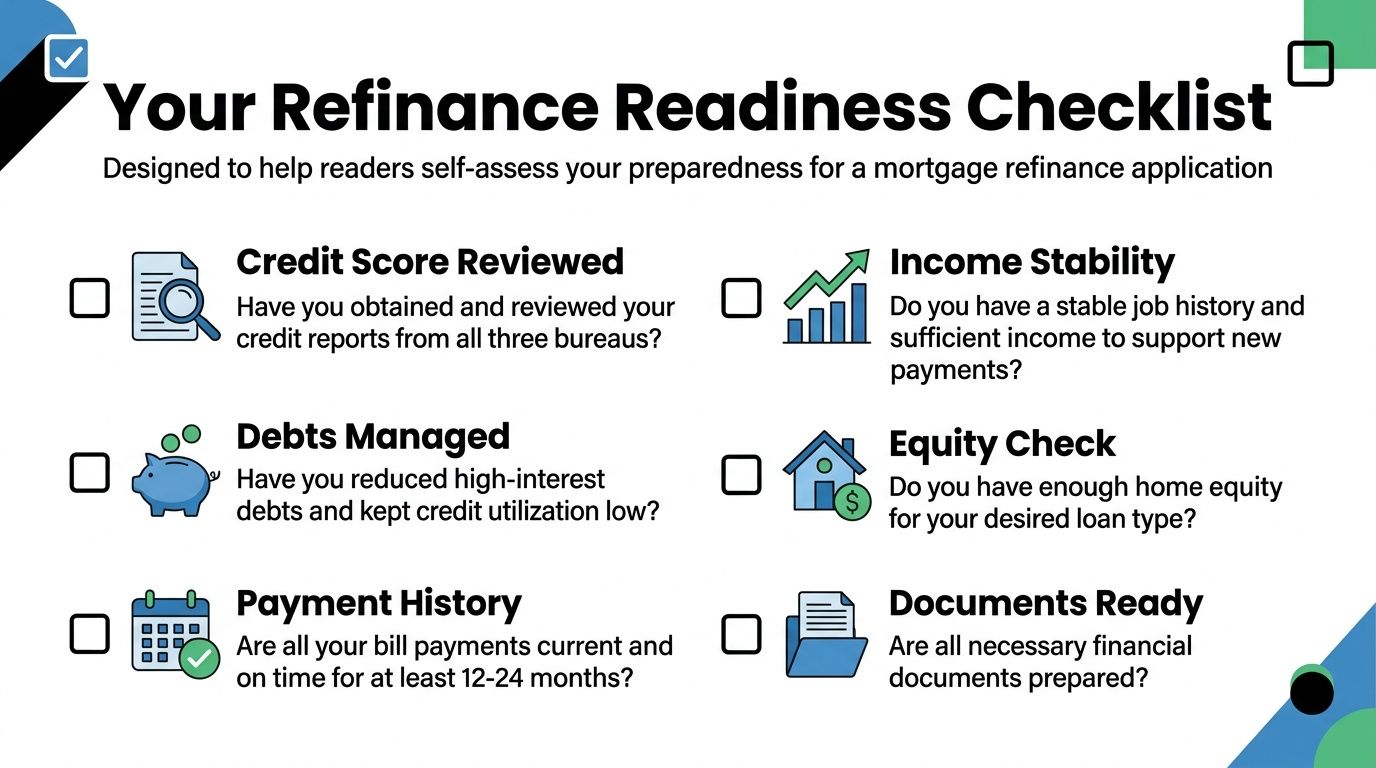
A simple self-check before you apply
Use this checklist before you allow a lender to review your file through a soft vs hard credit pull mortgage process discussion.
- Credit reports reviewed: Have you checked all three bureaus for errors, duplicates, outdated negatives, and reporting mismatches?
- Balances reduced: Are your card balances low enough to avoid the appearance of financial strain?
- Payment history protected: Have you stayed current on your mortgage, auto loans, cards, and other obligations consistently?
- Debt-to-income reviewed: Do your monthly obligations leave enough room for the new housing payment?
- Income documented: Are pay stubs, tax records, bank statements, and other required documents easy to access?
- Equity understood: Do you have enough home equity for the type of refinance you want?
- Recent applications limited: Have you avoided opening new credit that could complicate underwriting?
This kind of financial review often fits into broader household planning. For families updating coverage, debt protection, and long-term goals at the same time, it may also help to get a life insurance consultation so major obligations are considered together rather than in isolation.
If several boxes are still unchecked, that doesn't mean you should give up. It usually means your next step is preparation, not application.
Frequently Asked Questions About Credit and Refinancing
Can I refinance if my credit isn't great
Possibly. Some refinance programs are more flexible than others, and some lenders are more conservative than others. The main issue isn't just whether your score crosses a line. It's whether your whole file supports the loan request.
Does refinancing hurt your credit
It can affect your credit temporarily because lender applications may involve hard inquiries and your old mortgage account may be replaced by a new loan account. For many borrowers, the larger question is whether the refinance improves affordability and long-term payment stability.
Do all lenders use the same mortgage credit score
No. Mortgage lending often uses specific score versions and bureau data that may differ from the score you see in a banking app or credit card dashboard. That's why homeowners are sometimes surprised when a lender's score doesn't match what they expected.
Should I pay off collections before refinancing
Sometimes yes, sometimes no. It depends on whether the collection is accurate, how it's reporting, how recent it is, and how the lender views it. Paying a collection without a plan can occasionally create timing or underwriting issues, so it's smart to review the details first.
How long does credit repair take before a refinance
There isn't one timeline that fits everyone. Credit repair and credit rebuilding depend on the condition of your reports, the quality of your documentation, creditor responses, and how quickly you can change current behaviors like utilization and payment consistency. Results vary from file to file.
Prepare Your Credit for Your Financial Goals
A strong credit score for refinance can open more options, but the full story is bigger than a score alone. Lenders look for a credit profile that appears accurate, stable, and manageable. That includes payment history, utilization, documentation, debt levels, and the absence of unresolved reporting problems.
If refinancing is part of a larger homeownership strategy, debt management matters too. This DTI guide for homebuyers can help you think through how monthly obligations may affect mortgage decisions.
If you're not fully refinance-ready today, that doesn't mean the goal is out of reach. It usually means the file needs a careful review, a dispute strategy where appropriate, and stronger current habits. Mortgage credit repair works best when it's realistic, documented, and tied to a specific financing goal.
Superior Credit Repair can review your credit report, help identify inaccurate or questionable items, and explain a step-by-step plan for improving your credit profile. You can request a free credit analysis or consultation to better understand your options.
Footer
Was this guide helpful?
Superior Credit Repair Online provides educational credit guidance for individuals and families preparing for major financial goals like buying a home, applying for a mortgage, refinancing, or rebuilding after credit challenges.
If this information helped you better understand your credit report or your next steps, we would appreciate your honest feedback. You are welcome to share your experience with Superior Credit Repair on our Google Business Profile. Share your feedback with Superior Credit Repair
Superior Credit Repair helps individuals and families review credit reports, dispute inaccurate, outdated, unverifiable, or misleading items, and build stronger habits for future financing goals. If you want calm, compliance-focused guidance before applying for a refinance, mortgage, auto loan, or other financing, visit Superior Credit Repair to learn more or request a free credit analysis.