


You pull your credit, see a 700, and immediately wonder two things. Can I get approved for a mortgage, and will the rate be good enough? That's a common place to be, especially if you're a first-time buyer trying to decide whether to apply now or wait.
A 700 score usually means you're in a solid position to start the mortgage conversation. It often clears the basic credit hurdle for several loan programs, and it generally places you in a good range rather than a marginal one. But a credit score 700 mortgage search can also be misleading if it makes you think the score alone settles everything.
It doesn't.
Two borrowers can both have a 700 score and still get very different mortgage offers. One may qualify comfortably. The other may face a higher rate, stricter conditions, or extra questions from underwriting. That difference often comes down to the rest of the file, including payment history, credit card balances, collections, account stability, and debt-to-income.
That's why it helps to treat 700 as a pricing tier, not a guarantee.
Some people reach this score after a long rebuild. Others get there with a thin file that still needs work. Some are dealing with old collections, recent late payments, or balances that climbed while saving for a down payment. If that sounds familiar, learning how to speed up credit score improvement can help you understand what supports mortgage readiness and what still needs attention.
Table of Contents
- Introduction What a 700 Credit Score Means for Your Mortgage Journey
- Understanding Where 700 Sits on the Mortgage Credit Spectrum
- How Different Loan Types View a 700 Credit Score
- What Rates and Costs Look Like With a 700 Credit Score
- Why a 700 Score Alone Does Not Guarantee the Best Approval or Rate
- How to Strengthen Your Credit Profile Before You Apply for a Mortgage
- Your Lender Ready Checklist and Next Steps With Superior Credit Repair
Introduction What a 700 Credit Score Means for Your Mortgage Journey
A 700 credit score usually means you're no longer asking, “Can I buy a home at all?” Instead, you're asking better questions. “Which loan fits me?” “How much will the rate cost over time?” “What on my report could still cause trouble?”
Those are the right questions.
A familiar first-time buyer situation
A typical first-time buyer at 700 may have done a lot right already. Bills are mostly on time. A credit card balance may still be higher than ideal. There could be one old collection, a paid charge-off, or a student loan payment affecting debt ratios. On paper, the score looks encouraging. In practice, the lender will still review the whole file.
That's where many people get confused. They hear that 700 is “good,” then assume approval and top pricing come with it automatically. Mortgage lending doesn't work that way. Lenders use the score as one signal, then check the rest of the picture for stability and risk.
Practical rule: A 700 score can open the door. Your full credit profile determines how widely that door opens.
Why this matters before you apply
If you're preparing for FHA loan preparation, VA loan preparation, conventional mortgage preparation, or USDA loan preparation, it helps to know where 700 is strong and where it still leaves room for improvement. That matters for first-time homebuyer credit concerns, credit repair before buying a home, and even apartment approval or rental screening if homeownership is still a few steps away.
It also matters if you're trying to remove inaccurate items, dispute negative accounts, or get collections dispute help before a lender pulls your report. A score can be adequate while the underlying report still contains outdated, unverifiable, or misleading information that deserves a closer review.
Calm, structured credit education matters most. Mortgage readiness isn't just about chasing a higher number. It's about building a lender-ready file that supports the application when the underwriter looks deeper.
Understanding Where 700 Sits on the Mortgage Credit Spectrum
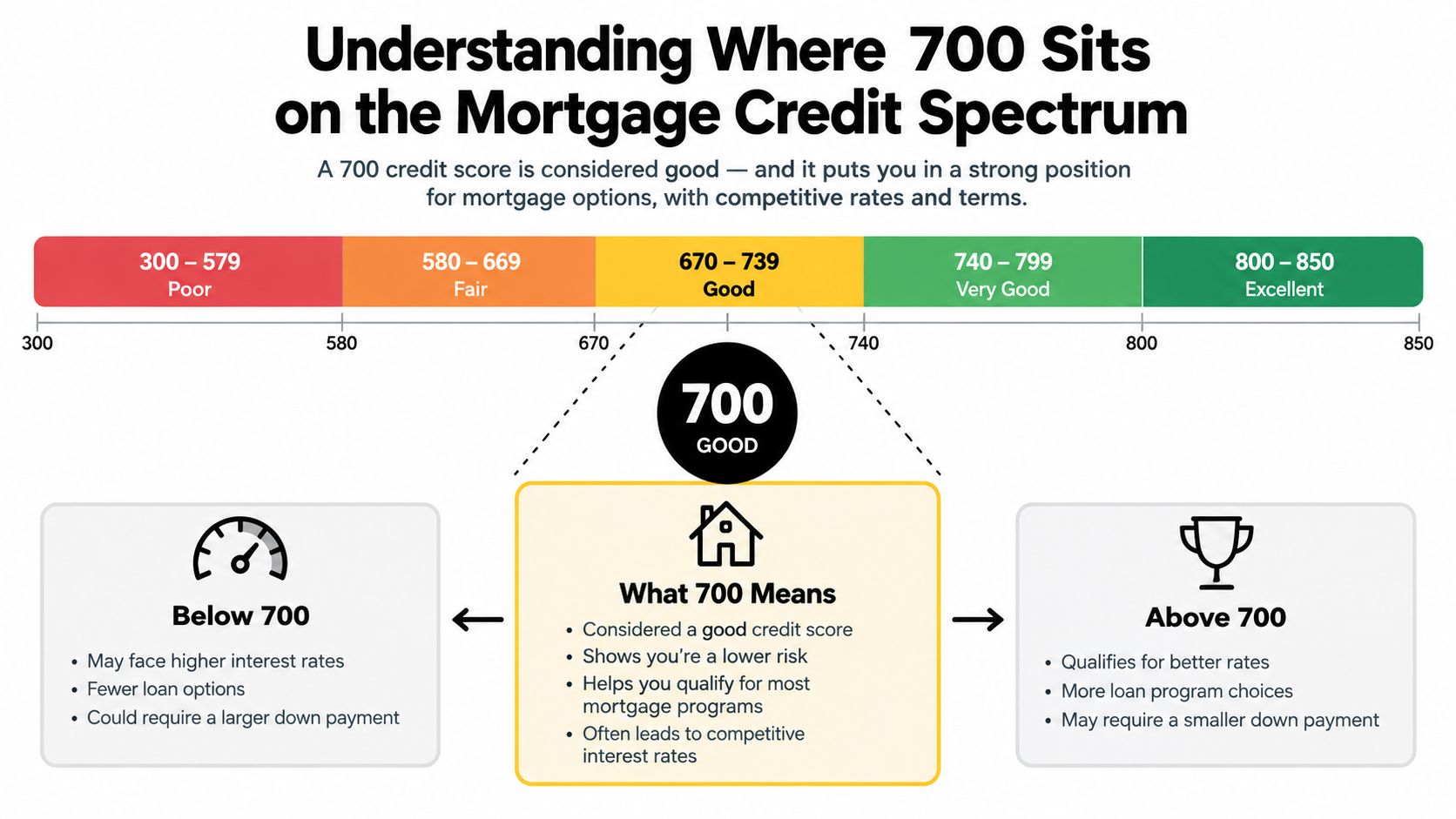
A 700 score sits in an important middle ground. It's usually strong enough to qualify for mainstream mortgage options, but it's not always the level that gets the best available pricing.
Good is not the same as top tier
Think of mortgage credit like airline boarding groups. A 700 score often gets you on the plane. It doesn't always put you in the first row.
Lenders commonly sort borrowers into broad risk bands. A 700 score usually signals that you're in a good band, not a distressed one. That's helpful because you're generally above minimum credit requirements for many home loans. Still, better pricing often appears when the score moves higher, especially once a borrower reaches the range lenders often view more favorably for premium pricing.
If you've ever wondered which credit score matters, that question matters even more with mortgages because lenders may not rely on the same score version you see in a consumer app.
Why two borrowers with 700 can get different offers
Mortgage pricing is based on risk-based pricing. In plain English, that means lenders don't give one universal rate to everyone with the same score. They look at the score alongside other facts in the file.
That includes things like:
- Loan type: Conventional, FHA, VA, USDA, and jumbo don't weigh risk the same way.
- Down payment: More money down can improve how the lender views the file.
- Debt profile: High monthly obligations can change approval or pricing.
- Recent credit behavior: New inquiries, high utilization, or recent late payments may affect the offer.
A lender may also apply its own overlay, which is an extra rule beyond the baseline program guideline. For example, a loan program may allow one thing on paper, but the lender may still require a cleaner file before approval.
A 700 score is strong enough to be taken seriously. It isn't strong enough to make the rest of the file irrelevant.
The plain-English takeaway
If your score is around 700, you're not starting from scratch. That's a meaningful position for mortgage credit repair, credit restoration, and homebuyer planning. But it's smarter to view 700 as a workable platform rather than a finish line.
That mindset helps when you're comparing loans, improving utilization, reviewing credit report errors, or getting late payment dispute help. It also keeps expectations realistic, which is exactly what you want before a lender review.
How Different Loan Types View a 700 Credit Score
A 700 score doesn't carry the same weight across every mortgage product. On some loans, it puts you comfortably above the minimum. On others, it's closer to a practical benchmark than a standout advantage.
The simplest way to compare your options
According to Bankrate's mortgage credit score guide, conventional mortgages commonly require 620, FHA loans allow scores as low as 500 with a 10% down payment or 580 with a 3.5% down payment, VA loans don't have a formal program minimum although many lenders use overlays in the 580 to 620 range, and USDA loans are commonly cited at 640 for smoother underwriting.
That means a 700 score is above the typical entry point for several major programs.
| Loan Type | Typical Minimum Score | Down Payment at 700 |
|---|---|---|
| Conventional | 620 | Often available with 3% down |
| FHA | 500 with 10% down, or 580 with 3.5% down | Standard 3.5% minimum down payment may be available |
| VA | No formal program minimum, though many lenders use overlays | 0% down for eligible borrowers |
| USDA | Commonly cited at 640 for smoother underwriting | Program rules vary, often low down payment structure |
| Jumbo | Often 700 to 720+ | Commonly 10% to 20%+ down |
What this means by loan type
Conventional loans
A 700 score is comfortably above the common 620 minimum. CNBC's September 2026 mortgage coverage stated that conventional loans generally require 620, and noted that a borrower with a 700 score may have access to conventional financing with 3% down if the rest of the file is strong, while stronger pricing can still improve if the score moves into the 740+ range in some cases of lender pricing as summarized in CNBC's mortgage coverage.
For many buyers, this is the lane where 700 feels most useful. You're not barely qualifying. You're entering as a credible applicant.
FHA loans
FHA is more forgiving on credit score minimums, but the score still affects cash needed at closing. The FHA down payment rule is tied directly to score. Borrowers from 500 to 579 generally need at least 10% down, while borrowers with 580 or higher can qualify for the standard 3.5% minimum down payment, according to The Lenders Network's FHA score guide.
At 700, you're well past that threshold. The bigger questions become debt-to-income, report accuracy, and whether any collections or late payments need attention.
VA, USDA, and jumbo
VA loans can be excellent for eligible borrowers because the program itself has no published minimum score, though lenders often add overlays. USDA often works more smoothly when the file clears the score level commonly cited for automated review.
Jumbo is different. A 700 score is often where jumbo conversations start to become realistic. According to Uqual's mortgage score overview, jumbo programs are commonly described as requiring 700 to 720+ scores, 10% to 20%+ down payments, and stricter debt-to-income review. So 700 can be enough to enter the discussion, but it usually won't overcome weak reserves or a shaky file.
What Rates and Costs Look Like With a 700 Credit Score
A buyer with a 700 score can get two very different loan quotes on the same week and wonder what went wrong. In many cases, nothing went wrong. A 700 score often places you in a pricing tier, not in a single fixed-rate bucket.
Source-based pricing examples at 700
Experian's September 2026 mortgage-rate table showed that a 700 FICO score was priced at 7.14% on a 30-year conventional fixed mortgage, 6.31% on a 15-year conventional mortgage, and 6.36% on a 5/6 ARM, using Curinos data, according to Experian's mortgage rate by credit score breakdown.
Those examples help frame the lesson. The score stayed the same, but the cost changed because the loan type changed.
The Consumer Financial Protection Bureau's mortgage-rate explorer has also shown that borrowers with the same general credit profile can receive a wide spread of offers, including examples in the 5.875% to 8.125% range and sharply different long-term interest costs, according to the CFPB's Explore Interest Rates tool.
A 700 score can get you into a solid part of the market. It does not give every borrower the same price.
Why the spread can be wide
Mortgage pricing works like airfare. Two travelers can leave on the same day and pay different amounts because the route, timing, and seat class are different. Mortgage rates work in a similar way. Lenders are pricing the loan product, the risk profile, and the details inside the file.
That is why a 15-year loan may price differently from a 30-year fixed, and why an ARM may come in lower than a fixed-rate option at the start. Down payment size, property type, loan amount, cash reserves, and debt-to-income ratio can also change the quote, even when the score is 700.
Lender overlays matter too.
One lender may view a file as clean and straightforward. Another may charge more because of recent balance spikes, limited reserves, or a condo project that adds risk. For a first-time buyer, that can feel confusing unless you treat the score as one piece of the pricing formula instead of the whole formula.
How to compare offers without missing hidden costs
Rate matters, but it is only part of the quote. Ask for the APR, lender fees, discount points, and whether the rate is locked. A lower headline rate can come with higher upfront charges, which changes the cost.
It also helps to compare the same structure each time. If one quote is a 30-year fixed with one point and another is a 5/6 ARM with no points, the numbers are not answering the same question.
If you want a clearer benchmark for mortgage interest with great credit, use 700 as a reference point, then ask what would need to improve for better pricing. Sometimes the answer is a lower card balance before application. Sometimes it is more cash reserves, a different loan type, or a stronger overall file.
Why a 700 Score Alone Does Not Guarantee the Best Approval or Rate
A 700 score can look strong on the surface while the rest of the report still raises underwriting questions. That's one reason many buyers feel confused after seeing prequalification results that don't match their expectations.
The hidden issues lenders still care about
A lender may view a 700 score very differently depending on what created it.
A file with long-standing accounts, low balances, and clean recent history tends to read differently than a file with one active card near the limit, a recent late payment, and several disputed collection accounts. The score might be similar, but the file strength is not.
Here are common problem areas that still matter:
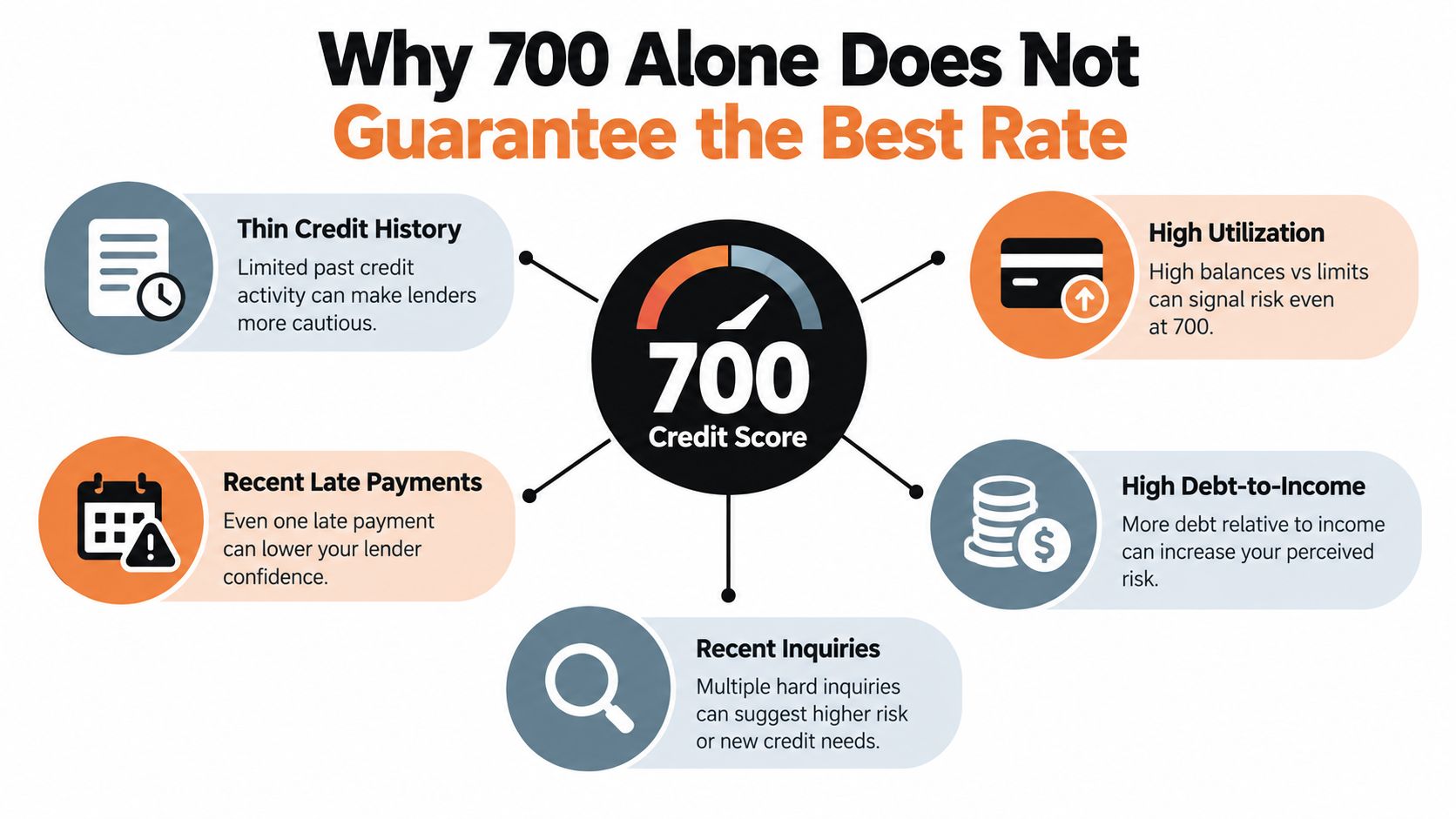
- Thin credit history: A score can be adequate while the file itself is still too limited to show stability.
- High utilization: Large balances compared with limits can make the file look stretched.
- Recent late payments: One recent missed payment can weigh heavily in mortgage review.
- Collections and charge-offs: Even when older, they may affect underwriting or lender comfort.
- Debt-to-income concerns: Strong credit doesn't erase high monthly obligations.
- Report accuracy issues: Inaccurate, outdated, unverifiable, or misleading items can distort the full picture.
Mortgage reality: Lenders review the score, but they underwrite the file.
Why this matters more in tighter lending periods
Another point many borrowers miss is that a 700 score does not carry equal power across all products. Some mainstream mortgage guides still note that conventional loans generally start around 620, FHA can go as low as 580, and jumbo often requires 700 or higher. That means 700 can be comfortably above the line in one category and only just at the benchmark in another.
The same mortgage education summary also notes that tighter lending standards have favored cleaner files, while the share of loans going to 600 to 699 borrowers declined and the 700+ share increased, according to this mortgage lending standards discussion. For borrowers, the practical lesson is simple. A score that looks fine online may still need file cleanup before underwriting.
If you want a closer look at how lenders evaluate your credit, focus on stability, accuracy, and recent behavior, not just the number at the top of the report.
How to Strengthen Your Credit Profile Before You Apply for a Mortgage
Once your score is around 700, the goal usually shifts from “get eligible” to “get cleaner, steadier, and easier to underwrite.” That's a different kind of work. It's less about chasing every point and more about removing avoidable friction.
A practical pre-mortgage cleanup plan
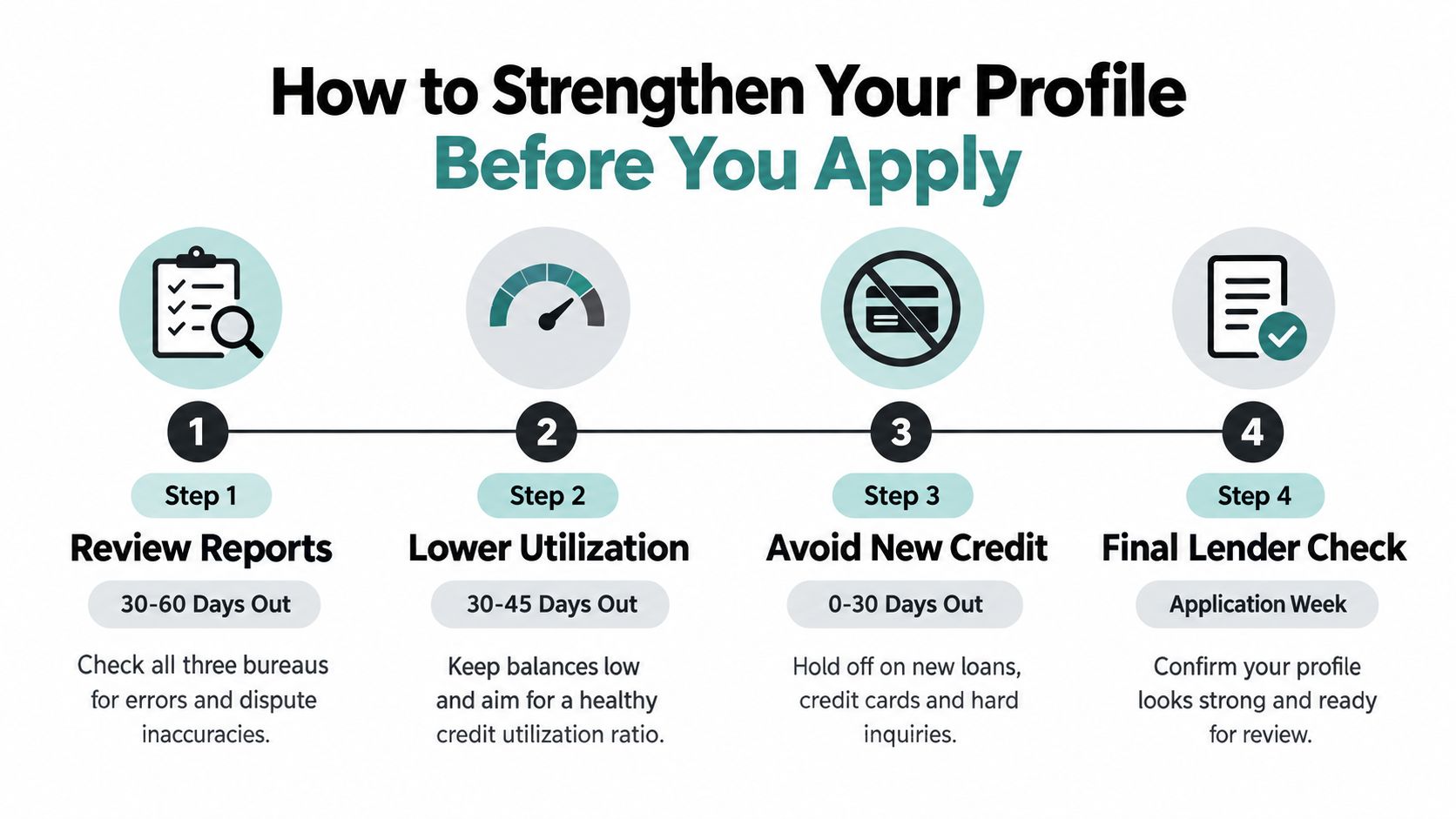
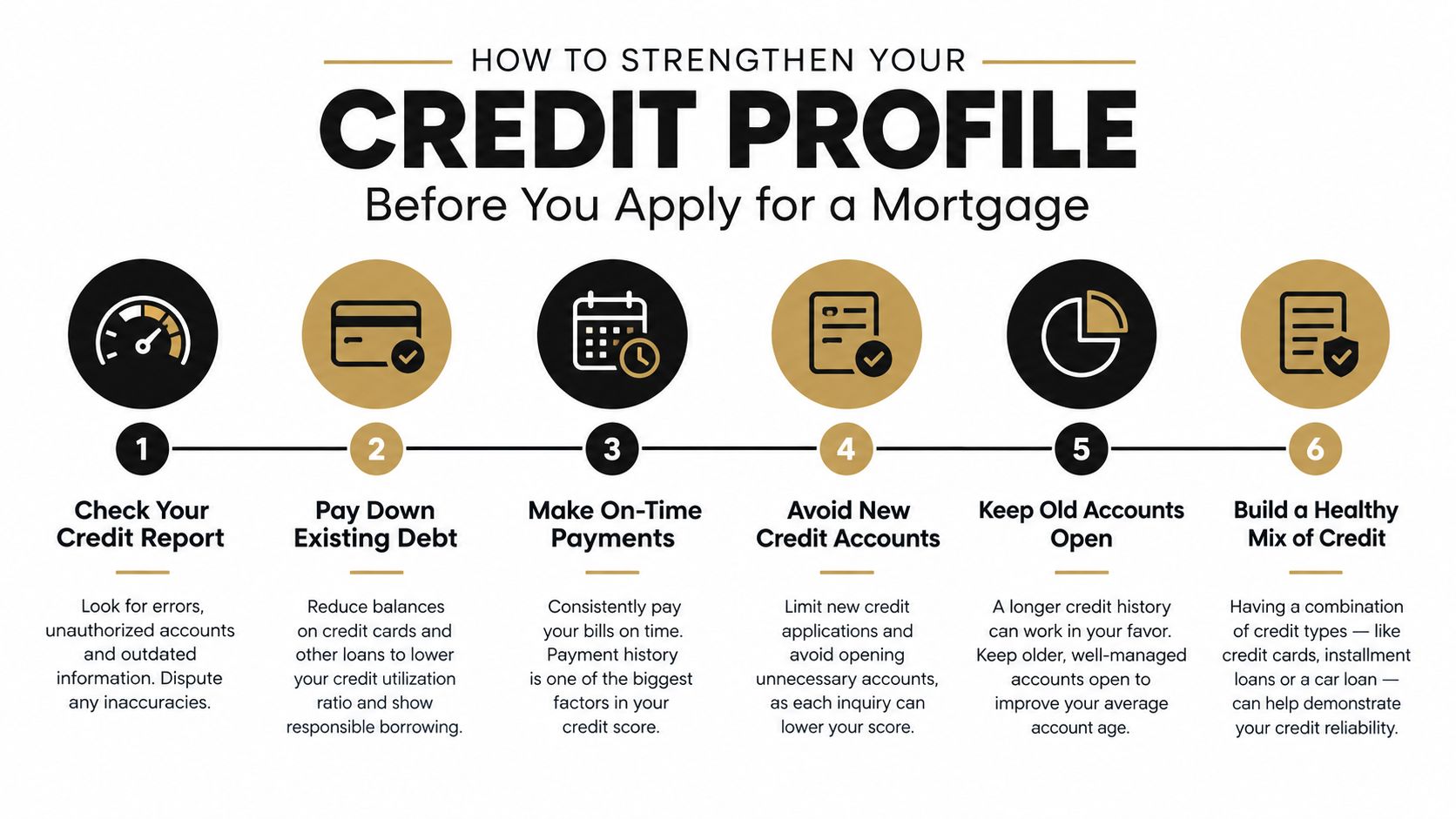
Start with your actual reports, not just a score app. Review each bureau carefully for account status errors, duplicate collections, dates that don't line up, or balances that don't look current. If something appears inaccurate, outdated, unverifiable, or misleading, address it through a documentation-based dispute process.
Then look at revolving balances. High utilization can hurt a lender-ready profile even when the score itself still looks decent. Paying down cards before the statement closes may help present lower reported balances, but results vary based on timing and account behavior.
A few habits matter more than people think in the final stretch before applying:
- Protect payment history: Keep every account current. Even one fresh late mark can create new problems.
- Avoid unnecessary new credit: Don't open accounts just to experiment right before underwriting.
- Keep documentation organized: Save payoff letters, settlement records, and account correspondence.
- Watch old negatives closely: Collections, medical collection credit repair issues, and charge-off dispute help questions often need a strategy before application.
What to do if your file is thin or recently rebuilt
Some borrowers reach 700 with only a few active tradelines. That can be enough for scoring, but lenders may still want to see stronger account depth and stability. In those cases, secured cards, starter accounts, or self-reporting accounts may support long-term rebuilding when used responsibly.
If you're buying with a spouse or planning shared housing costs, a budgeting conversation matters too. This guide on how to combine finances after marriage can help couples think through joint bills, debt visibility, and account structure before a mortgage application.
For people who want structured help reviewing credit report errors, dispute paperwork, utilization strategy, and mortgage-readiness habits, the Superior Credit Repair credit guide is one educational resource that explains the process in plain English. Credit repair works best as a review and verification process, not a shortcut, and results always vary based on the file, the documentation, and creditor responses.
Cleaning up your report before you apply is often less about dramatic change and more about preventing avoidable underwriting questions.
Your Lender Ready Checklist and Next Steps With Superior Credit Repair
Before you apply, it helps to pause and look at your file the way a lender will. A 700 score can be a solid foundation. The strongest applications usually pair that score with clean reporting, low friction, and stable financial behavior.
A lender-ready checklist
Use this short checklist before preapproval:
- Check report accuracy: Review for credit report errors, duplicate collections, wrong balances, or outdated statuses.
- Review recent payment history: Late payments close to application can cause trouble even when the score looks acceptable.
- Lower card balances where possible: Utilization can shape how the file reads to underwriting.
- Stabilize accounts: Avoid account closures or new applications unless there's a clear reason.
- Prepare explanations and records: If you've settled an account or disputed an item, keep the paperwork.
- Look beyond the score: Consider debt-to-income, file depth, and whether old negatives still need attention.
For buyers getting ready to talk with a lender, these Mortgage pre qualification tips from Upchurch Inspection can also help you think through the broader process before the first application.
Common questions buyers still ask
Can a 700 score work for a jumbo loan
Sometimes, yes. A 700 score is often described as a practical starting point for jumbo lending, but lenders usually apply stricter review of down payment, reserves, and debt profile. Approval isn't based on score alone.
Should I pay collections before applying
It depends on the collection, the loan type, and the lender's rules. Paying a collection without a plan doesn't always improve the file the way borrowers expect. Review the account details first, especially if there may be reporting errors or documentation issues.
Will a thin file hurt me if my score is 700
It can. A thin file may produce a workable score while still leaving the lender with limited evidence of long-term payment behavior.
Is credit repair the same as deleting negative items
No. Credit repair is a structured review, dispute, verification, and rebuilding process. It may involve disputing inaccurate, outdated, unverifiable, or misleading information and improving ongoing habits, but no lawful company should promise guaranteed deletions or guaranteed mortgage approval.
Was this guide helpful?
Superior Credit Repair Online provides educational credit guidance for individuals and families preparing for major financial goals like buying a home, applying for a mortgage, refinancing, or rebuilding after credit challenges.
If this information helped you better understand your credit report or your next steps, we would appreciate your honest feedback. You are welcome to share your experience with Superior Credit Repair on our Google Business Profile. Share your experience on Google
Superior Credit Repair can review your credit report, help identify inaccurate or questionable items, and explain a step-by-step plan for improving your credit profile before you apply for a mortgage. If you want help understanding how a 700 score fits into FHA, VA, USDA, conventional, or jumbo planning, you can request a free credit analysis or consultation through Superior Credit Repair.