


You pulled your credit report because you're getting serious about buying a home. Maybe you've already spoken with a lender. Maybe you're trying to qualify for FHA, VA, USDA, or conventional financing and want to clean things up first. Then you see it. A collection account you forgot about, never knew about, or thought was already handled.
That moment can feel bigger than it is. Collections on a credit report are serious, but they aren't always the dead end people fear. What matters most is understanding what the account is, whether it's accurate, how mortgage lenders may view it, and what steps can help you become more lender-ready.
For first-time homebuyers, confusion typically arises. People hear that paying a collection won't remove it, that leaving it alone might be smarter, or that one old account ruins any chance of mortgage approval. Some of that advice is outdated. Some of it leaves out important details about modern scoring models, lender policies, and the difference between a valid collection and an inaccurate one.
Table of Contents
- What Are Collections on a Credit Report
- The Real Impact on Your Score and Mortgage Approval
- Your Rights When Dealing with Collection Agencies
- A Step-by-Step Process for Handling Collections
- Rebuilding Your Credit for Mortgage Readiness
- Common Questions About Collections and Mortgages
- Can I get a mortgage if I have collections on my credit report
- Should I pay a collection if I'm trying to buy a home soon
- Can an inaccurate collection be removed before the reporting period ends
- What is a goodwill letter and does it work for collections
- What if my tax debt is part of the homebuying problem too
What Are Collections on a Credit Report
A collection account usually means a debt went unpaid long enough that the original creditor stopped trying to collect it in the normal way and sent it to a third-party collector or sold the right to collect it. In plain language, the file got forwarded.
That can happen with old credit card balances, utility bills, medical bills, personal accounts, and other unpaid obligations. For a homebuyer, the surprise is often not the balance itself. It's the fact that a small account from years ago is still showing up during mortgage preparation.
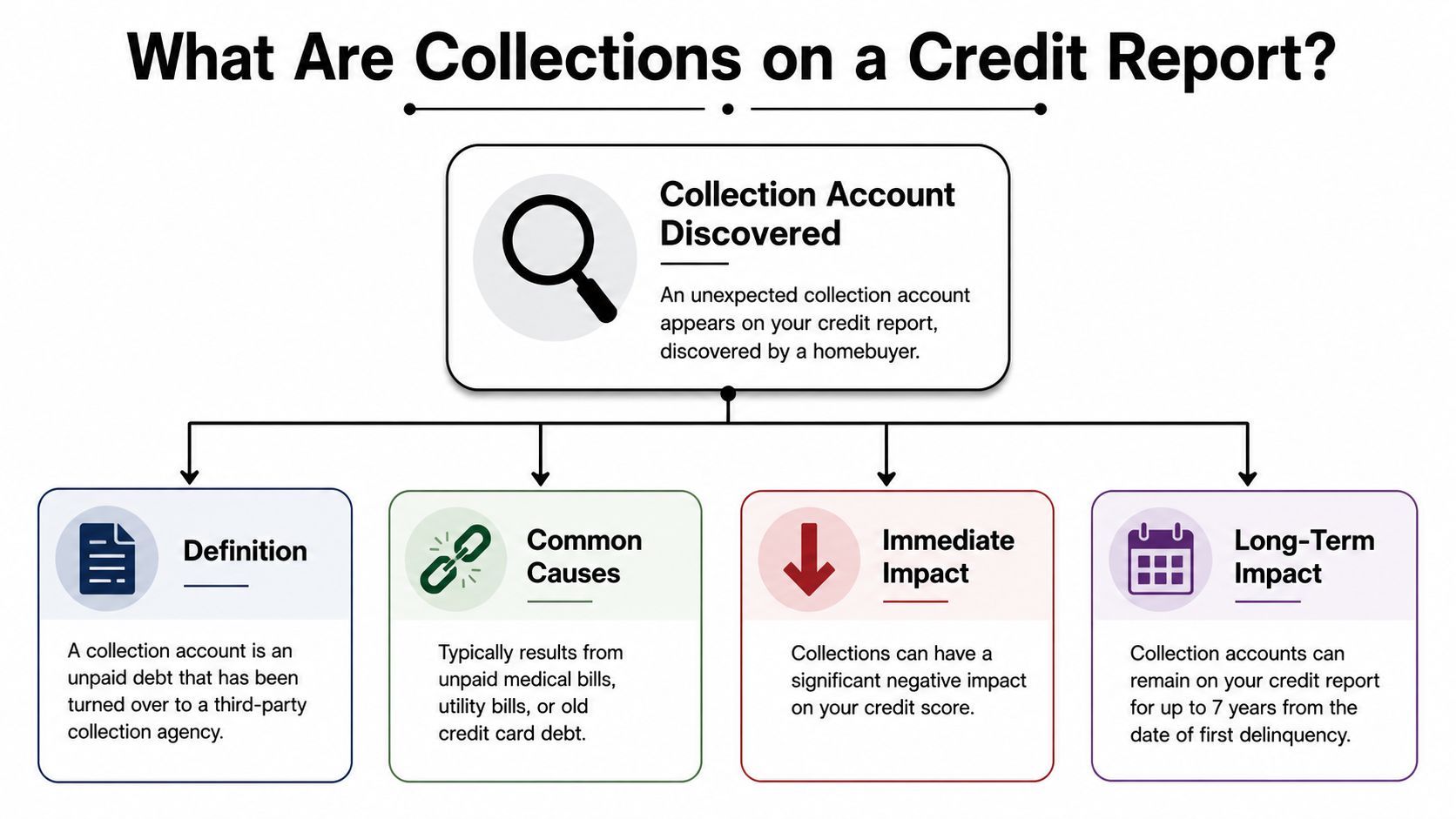
How a debt turns into a collection
Most collections start with a missed payment that doesn't get brought current. If the account stays unpaid, the creditor may eventually treat it as a defaulted debt and move it out of its active receivables. At that point, a collection agency may begin reporting its own tradeline.
A lot of readers get confused because they may see two entries tied to the same problem. One can be the original creditor account, often marked as late or charged off. The second can be the third-party collection account. That doesn't always mean the debt is duplicated incorrectly, but it does mean the reporting should be reviewed carefully for accuracy.
Practical rule: A collection is not just a late payment. It signals that the account reached a much more serious stage of nonpayment.
Collections also aren't all treated the same way in practice. Medical collections can create a different underwriting conversation than non-medical collections. Utility debt may be viewed differently from old revolving debt. The key point is that the type of debt, the balance status, the age of the account, and the lender's process can all shape your next step.
Why the timeline matters
People often ask how long collections on a credit report can stay. One important reference point is that charged-off accounts and third-party collection accounts can remain on a credit report for up to seven and a half years, which is calculated as seven years plus a 180-day grace period from the original delinquency date, according to the NFCC explanation of obsolete debt reporting timelines.
That timeline matters because paying a collection doesn't usually make it disappear right away if the account is valid. It may still remain visible for the reporting period. What changes is how some scoring systems and lenders may treat it once the balance is resolved.
A simple way to think about it is this:
| Stage | What it means |
|---|---|
| Current account | You're paying as agreed |
| Delinquent account | Payments were missed |
| Charged-off account | The creditor treats it as a loss |
| Collection account | A third party is trying to collect or owns the debt |
For mortgage credit repair, understanding the lifecycle matters more than reacting emotionally to the label. Once you know whether the account is valid, outdated, misleading, or inaccurate, you can choose a response that fits your timeline and your loan goal.
The Real Impact on Your Score and Mortgage Approval
You pull your credit a few months before applying for a mortgage and see a collection account. The first reaction is often panic. For many homebuyers, the better question is more specific: how will this item affect the credit score your lender uses, and will underwriting treat it as a current problem or an older issue that has already been resolved?
A collection can lower a score because it signals a past default. It does not work the same way as high credit card balances. Card balances affect utilization. A collection is scored as a derogatory event, which is a separate risk signal.

Why collections can matter differently in mortgage lending
This distinction matters because homebuyers often try to fix every problem at once. In practice, a lender may view maxed-out cards, a recent 30-day late payment, and an old paid collection very differently. One issue points to current strain. Another points to past trouble that may no longer be active.
Newer FICO models add an important layer for 2026 planning. As noted earlier, FICO 9 and FICO 10 ignore collection accounts with a zero balance. That means paying or settling a valid collection may help if a lender uses one of those models, even though the account can still remain on the report during the reporting period.
Mortgage lending is not uniform, though.
Many mortgage decisions still rely on older scoring versions for conventional loans, and underwriters for FHA and VA loans may also review the full file instead of relying only on the score. A zero-balance collection can be less concerning than an unpaid one, but it may still lead to follow-up questions about whether the debt is resolved, whether more unpaid accounts exist, and whether the borrower has re-established stable payment habits.
A simple way to view it is this:
| Situation | What a lender may see |
|---|---|
| Open unpaid collection | Unresolved debt that may need to be addressed before closing or manual approval |
| Paid or settled collection with zero balance | Past problem that is now resolved, though still visible |
| Inaccurate collection | A reporting issue that can affect both score and documentation review until corrected |
The Consumer Financial Protection Bureau reported a decline in collection tradelines in its news release on collections items on consumer credit reports. That shift helps explain why older advice can miss the mark. Credit reporting practices have changed, scoring treatment has changed, and mortgage preparation now requires a closer look at which model and which loan program are in play.
What underwriters may focus on beyond the score
Mortgage approval works like two screens instead of one. First, the automated system looks at the score and other application data. Then the lender often reviews the report itself for unresolved risk. A collection can matter at either stage.
For FHA, VA, conventional, and manual underwriting reviews, lenders may look at:
- Whether the collection is still unpaid: An open balance can create more concern than a resolved account.
- The type of debt: Medical collections may be treated differently from non-medical collections, depending on the score model and lender review.
- How recent the problem is: A newer collection often raises more concern than an older one near the end of reporting.
- The rest of the file: Strong recent payment history can help show recovery. Fresh late payments can do the opposite.
- Cash-to-close and reserve strength: If a borrower is already tight on funds, unpaid collections can raise questions about competing obligations.
- Program rules and lender overlays: FHA and VA guidelines can differ from a lender's own internal standards, so approval depends on more than one rulebook.
For a first-time homebuyer, this is often the part that clears up the confusion. A collection does not automatically mean "mortgage denied." It means the file needs closer review, and the next step depends on whether the account is accurate, unpaid, resolved, recent, or old.
The goal is not a perfect report. The goal is a report and paper trail that make sense to a mortgage lender reviewing your file in 2026.
Your Rights When Dealing with Collection Agencies
A collection call can feel urgent, especially if you plan to apply for a mortgage soon. Slow the process down. You have legal rights, and using them helps you avoid mistakes that can create more cleanup work for underwriting later.
Under the Fair Debt Collection Practices Act, a collector generally has to give you a written notice soon after first contact. That notice should identify the debt, state the amount claimed, and explain how to dispute it. If you dispute the debt within the allowed window, the collector must pause collection activity until it provides verification.
For a homebuyer, that written notice works like a label on a file folder. It tells you what account the collector says it has, who they say is owed, and what details need to be checked before you decide whether to dispute, settle, or document the account for a lender.
What to review before you respond
Read the notice with your credit reports and any old statements in front of you. You are checking for consistency, not just deciding whether you remember the debt.
Focus on a few basics:
- Who is named: Confirm the original creditor and the collector both make sense.
- What account is involved: Match the account number or reference details to your records.
- How much is being claimed: Look for balances, fees, or interest that seem off.
- When the account went bad: Dates should fit the history you had.
- Why the collector has the account: The notice should make clear whether the agency owns the debt or is collecting for someone else.
Collectors also have rules about how they contact you. They cannot call at prohibited hours, and they generally cannot keep contacting you at work if you tell them your employer does not allow those calls.
Keep every document.
Save letters, emails, screenshots, payment records, and notes from phone calls with dates and names. In mortgage underwriting, a clear paper trail often matters as much as the account status itself, because the lender may want to see that the collection was verified, disputed, resolved, or corrected in an orderly way.
When to dispute the credit reporting
A collector can pursue a debt and still report it inaccurately. Those are two separate issues.
That distinction trips up many first-time buyers. You might owe a debt, but the balance shown on the credit report could still be wrong. The account might be listed under the wrong collector, tied to the wrong dates, duplicated, or mixed up with someone else's file. In those cases, a credit reporting dispute may be appropriate even if you recognize the original account.
This matters more in 2026 mortgage prep than many buyers expect. Modern underwriting reviews often look past the score alone and ask whether the credit file is consistent and documented. If you plan to qualify under FICO 9 or 10 based lender review, or under FHA or VA guidelines that still involve human review of unresolved issues, inaccurate collection reporting can slow approval even when the debt itself is small.
Stay factual in every dispute. Ask for correction of specific errors, send copies instead of originals, and keep proof of what you mailed or uploaded. A calm, organized record gives your loan officer and underwriter something they can use.
A Step-by-Step Process for Handling Collections
First, don't panic.
A collection account can often be addressed through a structured review process. The right path depends on whether the debt is yours, whether the reporting is accurate, whether the account is still collectible, and whether you're trying to become lender-ready for a mortgage in the near term.
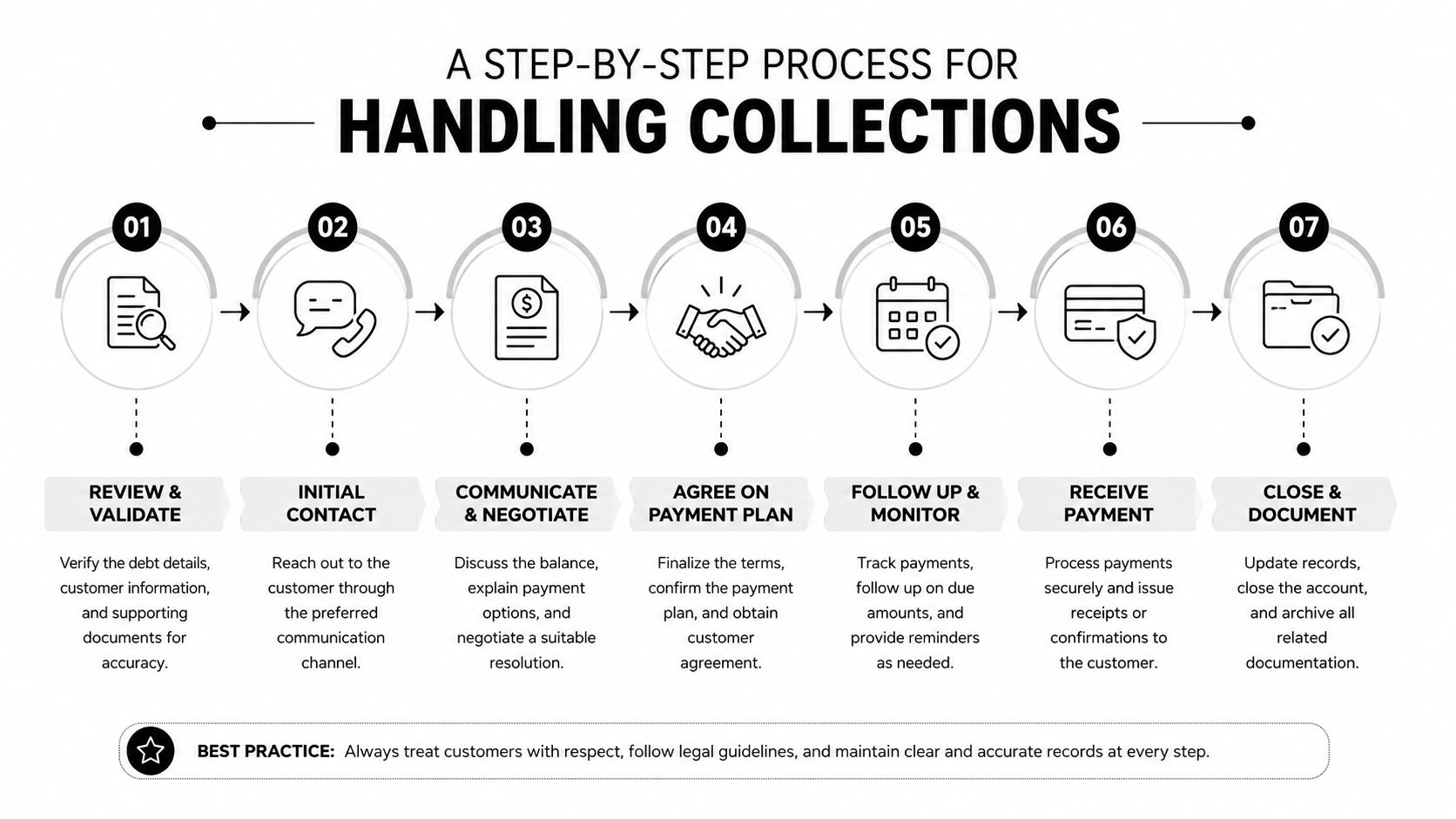
Start with verification
Before you pay anything, verify what you're looking at. Pull your credit reports, compare the collection account to your own records, and identify whether the tradeline appears complete and consistent.
Ask basic questions first:
Is the debt yours?
If you don't recognize it, don't assume it's valid just because it appears on your report.Does the balance look accurate?
The amount should make sense based on the original account history.Do the dates line up?
The reporting timeline should reflect the actual delinquency history, not a later date that makes the account seem newer.Is the same debt being reported in a misleading way?
You may see the original creditor and the collection agency. That isn't automatically wrong, but the reporting should still be reviewed carefully.
For many consumers, a credit repair company, housing counselor, or mortgage-focused credit consultant can assist in organizing the file. Superior Credit Repair can review credit reports for inaccurate, outdated, unverifiable, or misleading collection reporting and help explain what documentation may support a dispute or correction request.
Dispute what is inaccurate outdated or unverifiable
If the account information is wrong, dispute it in writing with the credit bureaus and keep copies of everything you send. Be specific. General complaints are less useful than a focused dispute identifying what is inaccurate and why.
Under the Fair Credit Reporting Act, debt collection agencies are legally required to report accurate information, and credit bureaus must investigate disputes within 30 days. If the debt collector fails to verify the debt or update the information during that window, the error must be removed from the credit report, according to this FCRA discussion of dispute investigation timelines and verification requirements.
A useful dispute packet often includes:
- A clear explanation: State exactly what is inaccurate, outdated, unverifiable, or misleading.
- Supporting documents: Include statements, payment records, identity documents, or correspondence that supports your position.
- Requested correction: Ask for deletion or correction based on the specific reporting problem.
- Delivery records: Keep proof of mailing or submission.
Mortgage-focused reminder: If you're on a deadline to buy a home, start the review early. Disputes, responses, and lender rechecks take time.
Resolve valid collections strategically
If the collection is valid and accurately reported, the next question is usually whether to pay, settle, or leave it alone while it ages.
Online guidance tends to be inconsistent on this matter. Some people say paying doesn't help because the account won't vanish. Others push for a pay-for-delete arrangement as if it's standard. Neither view captures the full picture.
A balanced approach looks like this:
| If the collection is valid | What to consider |
|---|---|
| You need mortgage readiness soon | A zero balance may help with lenders and scoring models that treat paid collections more favorably |
| The item is inaccurate | Dispute accuracy first, not payment first |
| The account is very old | Review the reporting timeline and your lender's requirements before taking action |
| You're considering pay-for-delete | Understand that it isn't guaranteed and accurate reporting rules still apply |
Pay-for-delete gets a lot of attention because consumers understandably want the tradeline gone. In reality, it often isn't guaranteed, and many agencies won't agree to it. Even when a consumer asks, the collector still has a duty to report accurately. That's why many homebuyers get better results focusing on documentation, valid disputes, and strategic resolution of balances rather than chasing promises that may never materialize.
Written agreements matter here. If you settle a debt, get the terms in writing before sending funds. Save proof of payment. Confirm that the balance updates correctly afterward.
A methodical process usually works better than a rushed one:
- Check ownership first: Make sure the collector has the right account.
- Choose the path based on facts: Dispute errors. Resolve valid accounts deliberately.
- Document everything: Keep letters, confirmations, and proof of payment.
- Think about the mortgage file: Your lender may care about more than score movement alone.
That approach supports both credit restoration and practical mortgage preparation.
Rebuilding Your Credit for Mortgage Readiness
Handling the collection is one step. A lender-ready credit profile usually requires more than that.
Mortgage underwriters want to see stability. They want a report that shows current obligations are being managed well, that recent behavior is stronger than past problems, and that the borrower isn't stretched too thin. That's why rebuilding after collections on a credit report should focus on positive habits, not only negative-item cleanup.
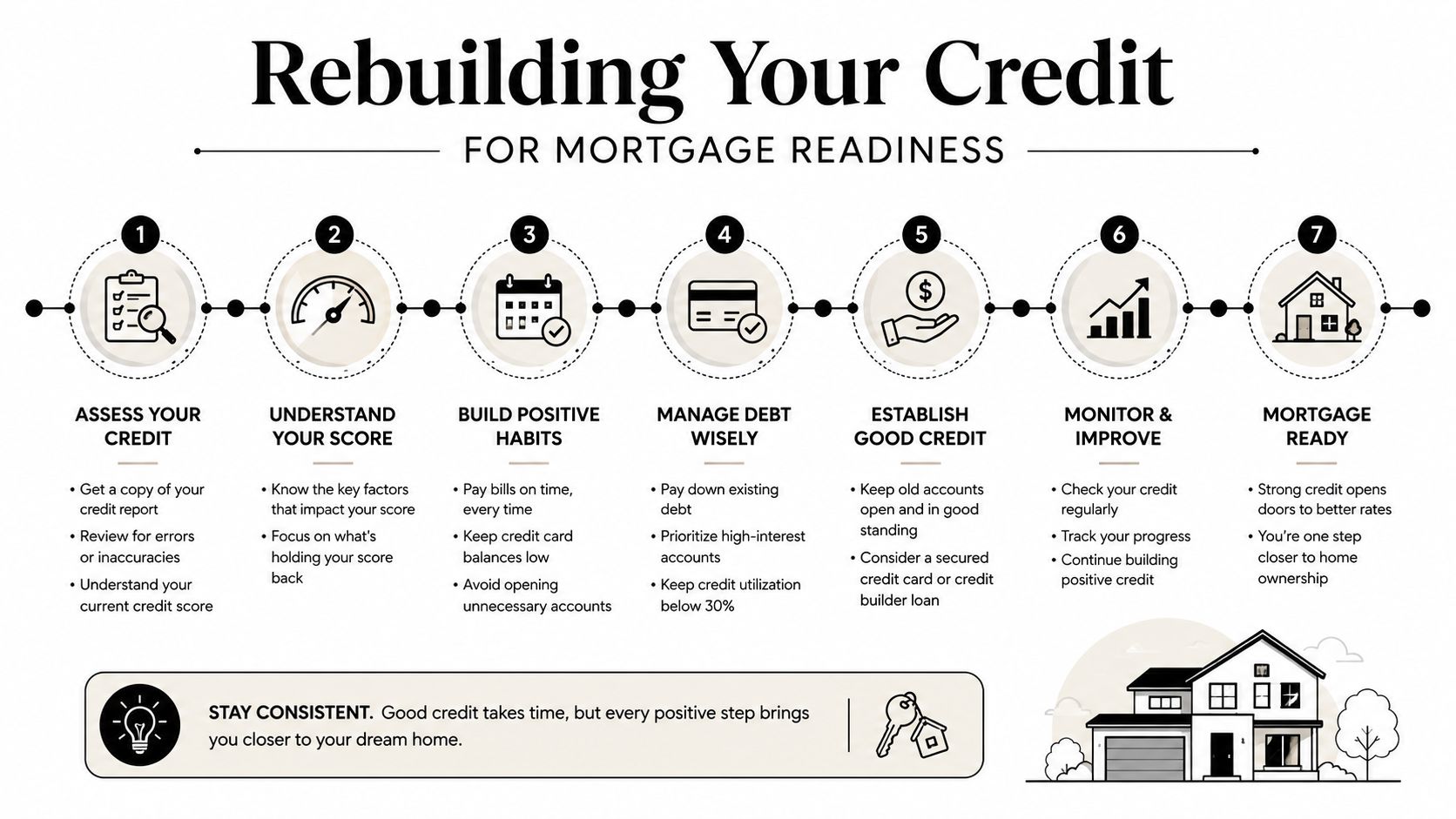
Build positive history after the collection issue
If a collection has already been addressed, your next moves should support consistency.
Focus on these areas:
- On-time payments: Current accounts need to stay current. One new late payment can undercut progress quickly.
- Credit utilization: Keep revolving balances manageable so your active accounts show control, not strain.
- Account stability: Avoid unnecessary account disruption if you're close to a mortgage application.
- Starter rebuilding tools: Some consumers use secured credit cards or other entry-level accounts to add fresh positive history when the file is thin.
The point isn't to do everything at once. It's to show a cleaner pattern over time.
Per the Fair Credit Reporting Act, a collection account remains on the report for exactly seven years from the original delinquency date, but modern scoring models such as FICO 9, FICO 10, and VantageScore 3.0/4.0 exclude paid collections from score calculations, according to Experian's explanation of how and when collections are removed from a credit report. For a homebuyer, that means a resolved collection may still be visible while becoming less important in certain scoring environments.
Think like a lender not just a score tracker
Many people improve credit score results without improving mortgage readiness. They focus on one number and ignore the broader file.
A stronger mortgage profile often includes:
- Fewer unresolved derogatory items
- Reasonable card balances
- No fresh missed payments
- Documented resolution of older issues
- A stable pattern across several accounts
A lender may review your report and ask practical questions. Are there open collections? Are balances increasing? Are accounts being paid as agreed now? Does the file look calmer than it did a year ago?
Homebuyers usually make the most progress when they stop asking, "How do I hide this?" and start asking, "How do I make this report accurate, stable, and easier for an underwriter to approve?"
That mindset helps with more than conventional mortgages. It also matters for apartment approval, rental screening, refinancing, auto financing, and business or personal lending.
Results vary, of course. Every file is different. Documentation, account age, creditor responses, and current habits all shape the outcome. Still, the big picture is steady. When you combine accurate reporting, resolved collection issues, on-time payments, and lower revolving pressure, you create a stronger credit profile for mortgage conversations.
Common Questions About Collections and Mortgages
Can I get a mortgage if I have collections on my credit report
Yes, in many cases.
A collection account does not automatically block a mortgage. Underwriters usually look at the full file, not just one negative item. They may ask different questions depending on the loan program, the size of the collection, whether it is still unpaid, and how recent the problem is.
For a first-time homebuyer, it helps to picture this like a file review rather than a pass or fail test. A lender may see an old medical collection very differently from a recent unpaid utility bill or a large unresolved debt. In 2026, that distinction matters even more because some lenders are using newer scoring models such as FICO 9 or FICO 10, while others still rely heavily on manual underwriting standards and program rules for FHA or VA loans.
Should I pay a collection if I'm trying to buy a home soon
Sometimes yes, sometimes no.
Start with three questions. Is the debt valid? Does your loan program require it to be resolved? Will paying it improve your approval profile enough to matter for your timeline?
Paying a collection can help if a lender wants proof that the balance is resolved or if an unpaid account is creating underwriting concerns. But payment does not guarantee the account will be deleted from your reports, and it does not guarantee mortgage approval. For many homebuyers, the better approach is to confirm the account first, then make a decision based on lender guidance and your expected application date.
Can an inaccurate collection be removed before the reporting period ends
Yes.
If a collection is inaccurate, too old to report, mixed with someone else's information, or cannot be verified, it can be corrected or removed through the dispute process. The key is documentation. Credit bureaus and furnishers do not remove a valid account early just because it is inconvenient for a mortgage application.
That is why timing matters. If you are planning to apply for a mortgage soon, gather account statements, letters, payment records, and any identity details that support your dispute before you start the process.
What is a goodwill letter and does it work for collections
A goodwill letter is a polite request for a reporting change based on your history or circumstances.
It is not the same as a formal dispute, and it usually works best with original creditors, not collection agencies reporting a valid debt. Some consumers try it after resolving an account, but it is not a dependable mortgage-prep strategy. If your goal is to become lender-ready, accuracy, written proof, and clear resolution steps usually carry more weight than an informal request for mercy.
What if my tax debt is part of the homebuying problem too
Tax debt can affect mortgage approval separately from collections.
If you are dealing with both issues, treat them as two tracks in the same application file. A lender may want to see whether the tax debt is resolved, whether a payment plan is in place, and whether your recent payment history shows stability. This guide on buying a house with IRS debt explains that side of the process.
Collections can feel bigger than they are, especially when you are preparing to buy your first home. The practical path is usually straightforward. Confirm what is accurate, dispute what is not, resolve valid accounts with a mortgage timeline in mind, and keep your current credit behavior steady.
Superior Credit Repair can review your credit report, help identify inaccurate or questionable items, and explain a step-by-step plan for improving your credit profile. You can request a free credit analysis or consultation through Superior Credit Repair to better understand your options.
Was this guide helpful?
Superior Credit Repair Online provides educational credit guidance for individuals and families preparing for major financial goals like buying a home, applying for a mortgage, refinancing, or rebuilding after credit challenges.
If this information helped you better understand your credit report or your next steps, we would appreciate your honest feedback. You are welcome to share your experience with Superior Credit Repair on our Google Business Profile. Leave feedback for Superior Credit Repair on Google