

You may be renting, paying your bills on time now, and still worrying that an old collection or a low score has put homeownership out of reach. Then you see an ad promising a no-down-payment mortgage and wonder whether that solves the problem. It might reduce the upfront cost of buying, but it doesn't erase credit requirements, lender review, or the other money needed to complete a purchase.
For a first-time home buyer with bad credit and no down payment saved, the more useful question is “What do I need to become lender-ready?” A lender looks beyond one score: income, monthly debts, payment history, assets, and the property all matter. A realistic plan addresses credit accuracy, debt-to-income, and cash to close together.
Table of Contents
- What No Down Payment Really Means for Buyers With Bad Credit
- Quick Credit Repairs That Move the Lender Decision Score
- Loan Programs That Accept Low or No Down Payment
- Down Payment Assistance Grants and Local Programs Explained
- Debt-to-Income and Cash to Close Realities Lenders Check
- Co-Signers, Alternative Paths, and What to Watch Out For
- A Realistic Timeline and Next Steps to Become Lender-Ready
What No Down Payment Really Means for Buyers With Bad Credit
The down payment is only one line on the closing statement. A buyer who finds a home with an affordable monthly payment can still owe inspection and appraisal fees, earnest money, prepaid taxes and insurance, closing costs, and in some cases reserves the lender wants to see remaining in the account after closing. A zero-down loan removes one expense from that list. The rest remain.
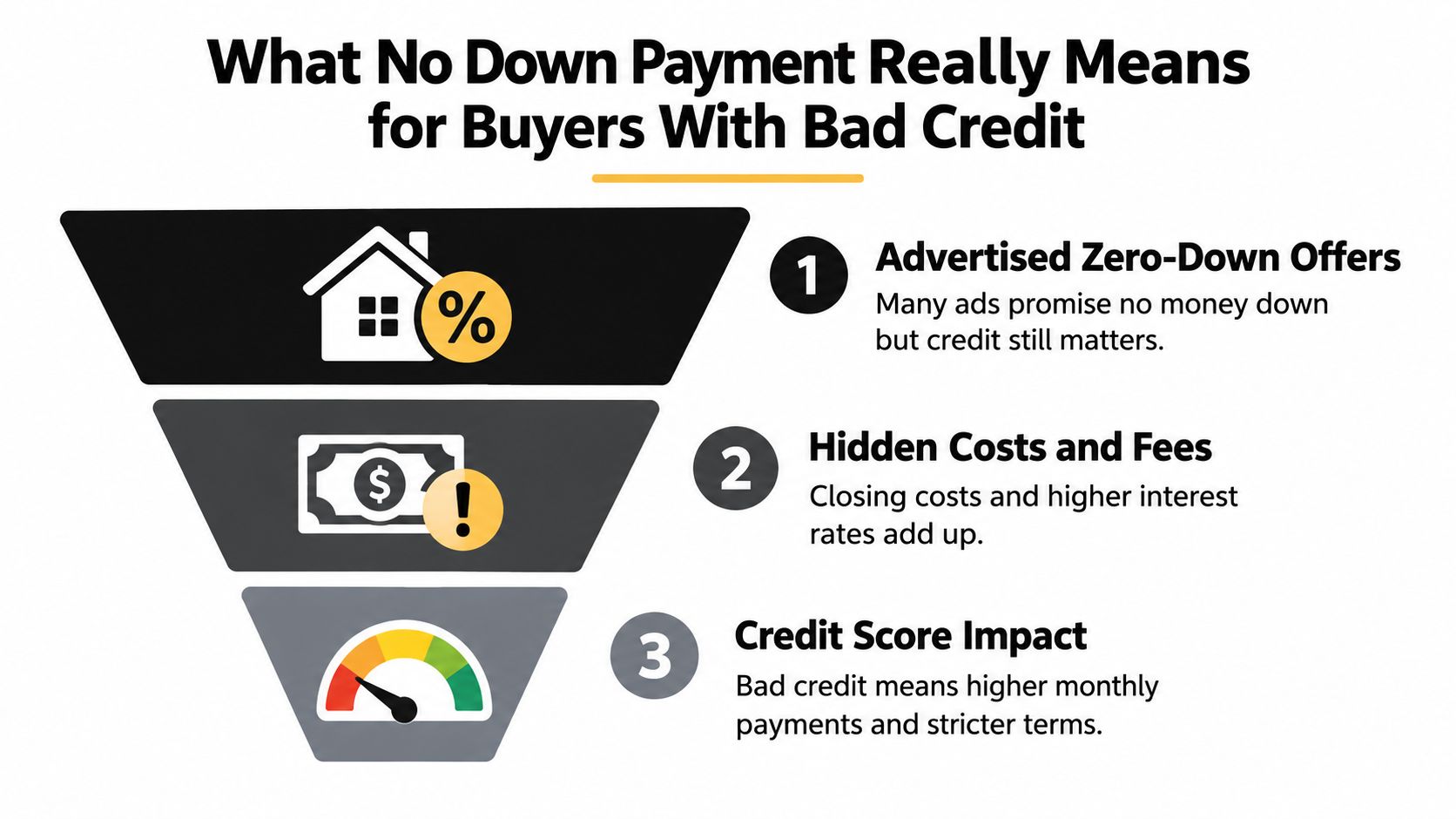
A lender's review works like three separate gates, and an approval requires clearing each one on its own terms:
- Credit: Does the report and score meet the program and lender's requirements? Are the account details accurate, and does the payment history support the application?
- Repayment capacity: Does documented income support the proposed housing payment alongside existing monthly debts?
- Cash and documentation: Can the buyer show where the funds came from and cover the costs that sit outside the down payment?
Clearing one gate says nothing about the other two. One buyer might qualify for a specific loan program yet come up short on documented money for closing. Another might have savings ready but still need to correct inaccurate late payments or pay down high revolving balances before applying.
The phrase "no down payment" usually refers to the purchase-price down payment, not zero transaction costs. The VA says a VA-backed purchase loan often requires no down payment when the sales price doesn't exceed the appraised value, but the borrower must still meet VA and lender requirements for credit, income, and eligibility (see the VA purchase-loan guidance linked in the loan-programs section below). VA financing is also limited to eligible borrowers, so it isn't a universal option for every first-time buyer.
Keep the categories separate: Credit readiness, mortgage affordability, and cash to close are related, but they aren't interchangeable.
A calm first move is to ask a lender for a written estimate of the funds required for the particular loan and property, then compare that with your documented savings and any assistance you may qualify for. That gives you a more useful plan than relying on an advertisement's headline.
Quick Credit Repairs That Move the Lender Decision Score
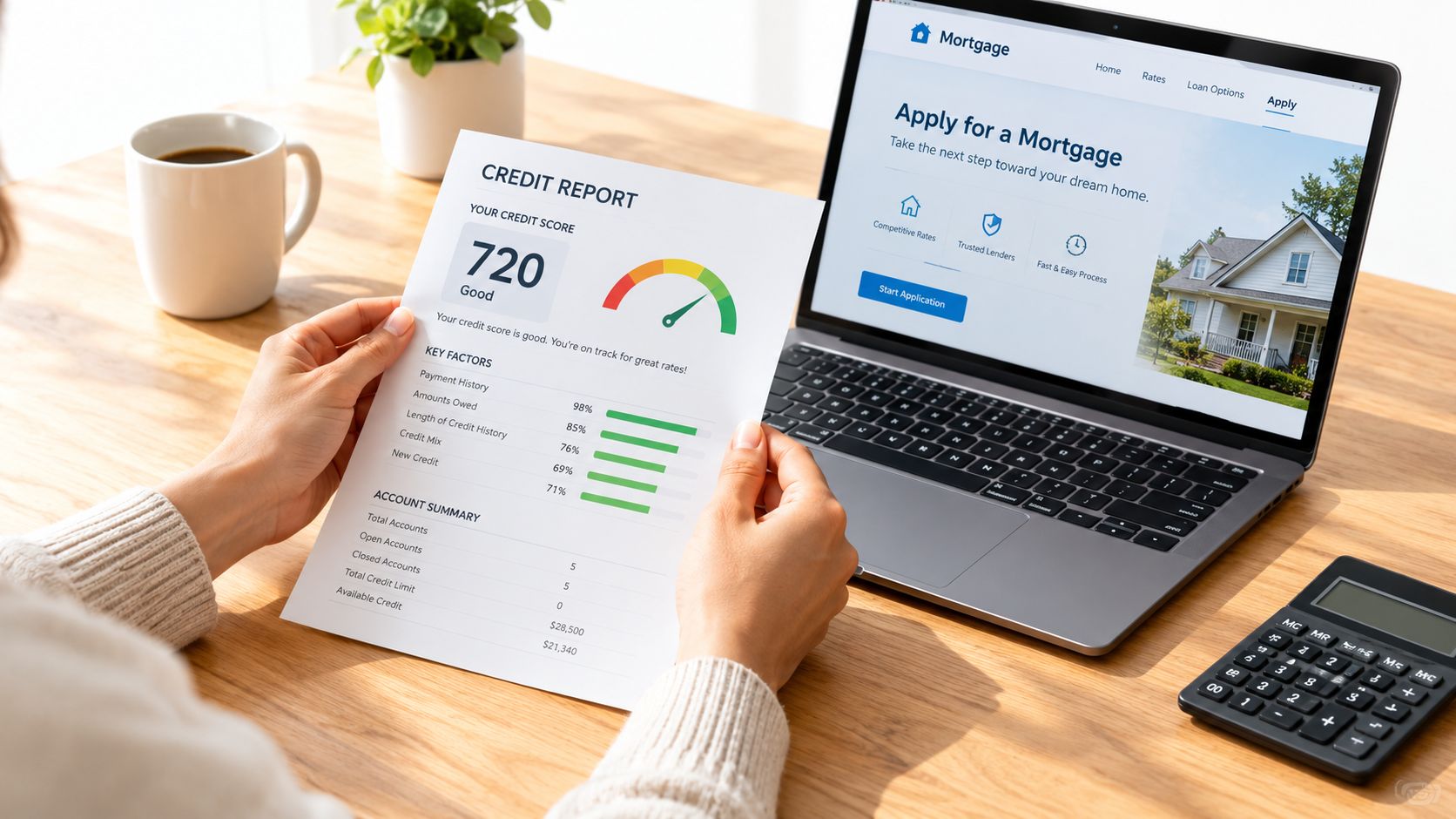
A lender does not read your credit reports the way you do. Where you see a record of your financial life, an underwriter sees inputs for a formula, and for FHA loans one input outweighs the rest: the Minimum Decision Credit Score. When three bureau scores are available, the middle one is used. When only two exist, the lower one counts. So a buyer with scores of 545, 560, and 575 is evaluated at 560, not the best number on the page.
That single score sets your FHA lane. HUD says borrowers below 500 aren't eligible for FHA-insured financing, scores from 500 through 579 are capped at a maximum 90% loan-to-value ratio (which generally means at least 10% down), and a score of 580 or higher may allow maximum FHA financing, commonly associated with 3.5% down (HUD's FHA credit-score guidance).
Start with what's actually on your reports
Before paying for any service or firing off disputes, pull your reports from all three bureaus and compare them line by line against your own records. Look for a late payment attached to the wrong account, a balance that doesn't match your statements, a collection you don't recognize, a charge-off showing incorrect status, or an account that belongs to someone else entirely.
Accurate negative information stays. A dispute works like a correction to a record, and filing one against a true late payment wastes the weeks you could spend fixing real problems.
A supported dispute is specific. The CFPB advises consumers to explain in writing what is wrong and why, identify the account or item, include a copy of the report with the error highlighted, and provide copies of supporting documents (see the CFPB dispute guidance linked in the timeline section). You should generally contact both the credit reporting company and the business that supplied the information, since each plays a role in correcting the file.
Improve the parts you can control
Errors are only half the picture. High balances on revolving accounts shape the profile lenders see even when every payment is on time, so paying those balances down while keeping current payments consistent can strengthen your file in ways a dispute never will.
Hold off on opening new accounts or taking on new financing until you've discussed the timing with a mortgage professional. New obligations complicate both the debt calculations and the document review that come later.
If a planned purchase like furniture could affect your credit or monthly obligations, compare its financing terms against your broader budget first. A practical overview of how to finance a sofa with poor credit can help you understand the questions to ask before adding another account to your file.
A focused preparation list beats a vague goal to "fix your credit":
- Check accuracy: Compare names, balances, account status, and payment dates with your own records.
- Document errors: Keep copies of reports, statements, correspondence, and proof of payment.
- Protect current history: Pay bills on time and limit new credit activity while preparing to apply.
- Review mortgage factors together: Use Superior Credit Repair mortgage planning as an educational resource when thinking about utilization and mortgage preparation.
Credit repair is a documentation-based process, never a promise of deletion or approval. Results vary with the file, the evidence, creditor responses, account history, and your current credit behavior.
Loan Programs That Accept Low or No Down Payment
Each loan program publishes its own baseline, and then each lender stacks extra requirements on top. That second layer surprises many first-time buyers. A program minimum works like the posted admission requirement at a college: meeting it gets your application read, not accepted. The lender's own standards, often called overlays, decide the final answer.
Before planning around a phrase like "zero down," check four things for any program you consider: your eligibility, the property rules, the income requirements, and the specific lender's standards.
| Program | Minimum Credit Score | Down Payment | Key Requirement |
|---|---|---|---|
| FHA | Below 500 is ineligible; 500–579 caps the loan at 90% of the home's value; 580 or higher may qualify for maximum FHA financing | Generally at least 10% for scores from 500–579; commonly 3.5% at 580 or higher | FHA and lender underwriting, with income, debts, assets, and property also reviewed |
| VA | No universal program minimum; each VA-approved lender sets its own floor | Often no down payment if the price doesn't exceed the appraised value | Borrower must meet VA and lender eligibility and underwriting standards |
| USDA | Set by the approved lender, so confirm before counting on the program | Generally structured for no down payment when eligibility is met | Program and lender requirements must be confirmed for the borrower and property |
| Conventional | Varies by lender and product | Varies by lender and product | Separate lender and program qualification rules apply |
The FHA thresholds in the table come from HUD's credit-score guidance cited in the credit-repairs section above. The VA down-payment condition comes from the VA purchase-loan guidance referenced earlier. For USDA and conventional loans, ask an approved lender to confirm the current requirements for your specific product rather than trusting a general number found online.
FHA deserves a careful read. It can work for buyers with low scores, but it isn't a zero-down loan. A score between 500 and 579 may leave you eligible while requiring a contribution closer to 10% than the 3.5% minimum tied to maximum financing. Underwriters also weigh your full file, so the score alone never decides the outcome.
VA loans come closest to true zero down for eligible service members and veterans. Zero down still doesn't mean zero cash at closing, since funding fees and closing costs can apply. Buyers weighing this path can review the minimum credit score for VA loans as part of their research, then confirm the actual requirement with a VA-approved lender.
Home purchases bring spending decisions with them. If you're furnishing a place while protecting your mortgage budget, Guynn Furniture financing plans can help you weigh financing terms separately from your loan application. Adding new debt before closing can shift your file, so raise it with your mortgage professional first.
Down Payment Assistance Grants and Local Programs Explained
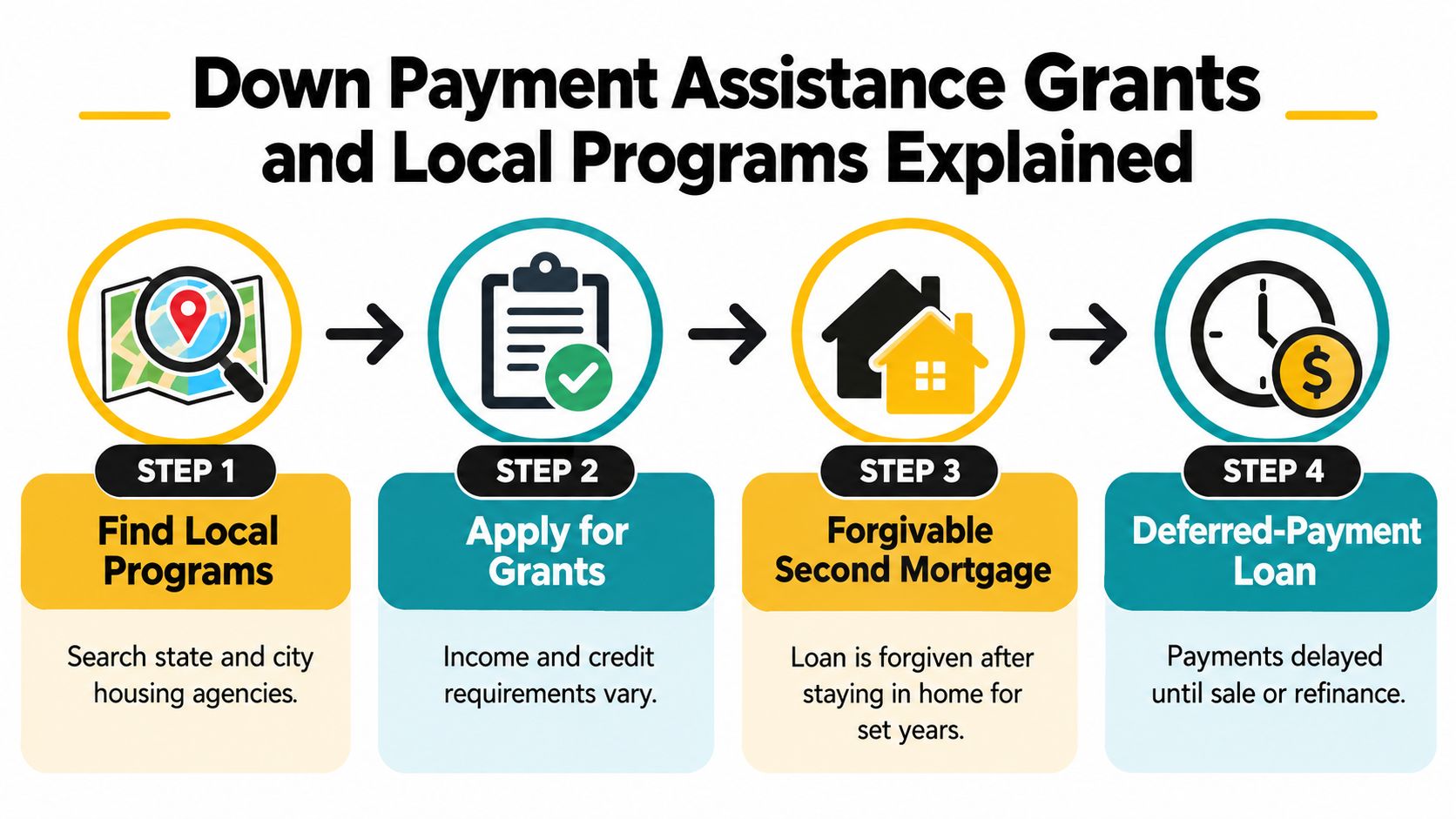
Down-payment assistance can help eligible buyers bridge a cash gap, but it isn't automatically free money or a substitute for underwriting. Programs may provide a grant, a forgivable second mortgage, a deferred-payment loan, matched savings, or another form of support. The terms determine whether repayment is required and when.
Check the rules before counting on assistance
Start with a state housing finance agency, local housing office, nonprofit housing organization, or employer program. Ask the program administrator and lender:
- Who qualifies? Eligibility may depend on income, location, first-time-buyer definitions, occupancy, credit, or the mortgage product.
- What does the money cover? A program may be restricted to down payment, closing costs, or specified expenses.
- Is repayment required? A forgivable loan may depend on remaining in the home for a defined period. A deferred loan may become payable when the home is sold or refinanced.
- How must funds be documented? The lender may need evidence of the award, account records, and acceptable source-of-funds documentation.
Gift funds and seller contributions may also help with eligible costs, subject to program and lender rules. Buyers should ask whether a gift letter, transfer records, or other paperwork is required. Seller concessions and lender credits have their own limits and can affect the overall loan terms, so don't assume they can cover every expense.
A buyer's plan should show each source separately: personal savings, assistance, gifts, and any permitted seller or lender contribution. Then confirm which closing expenses each source can pay. This prevents the common mistake of treating an assistance award as unrestricted cash.
For local research, find down payment help in Birmingham through relevant housing resources and confirm current eligibility with the program administrator. Program availability and rules can change, so get the terms in writing before making an offer.
The right assistance can make a purchase more feasible, but it doesn't correct inaccurate credit information, reduce monthly debt, or prove income stability. It works best as one part of a complete mortgage-readiness plan.
Debt-to-Income and Cash to Close Realities Lenders Check
A mortgage file can meet a credit guideline and still fail because monthly obligations leave too little room for a housing payment. Debt-to-income ratio, often shortened to DTI, compares recurring monthly debts with qualifying income. Lenders review the proposed mortgage alongside obligations such as car payments, credit-card minimums, and other reported debts.
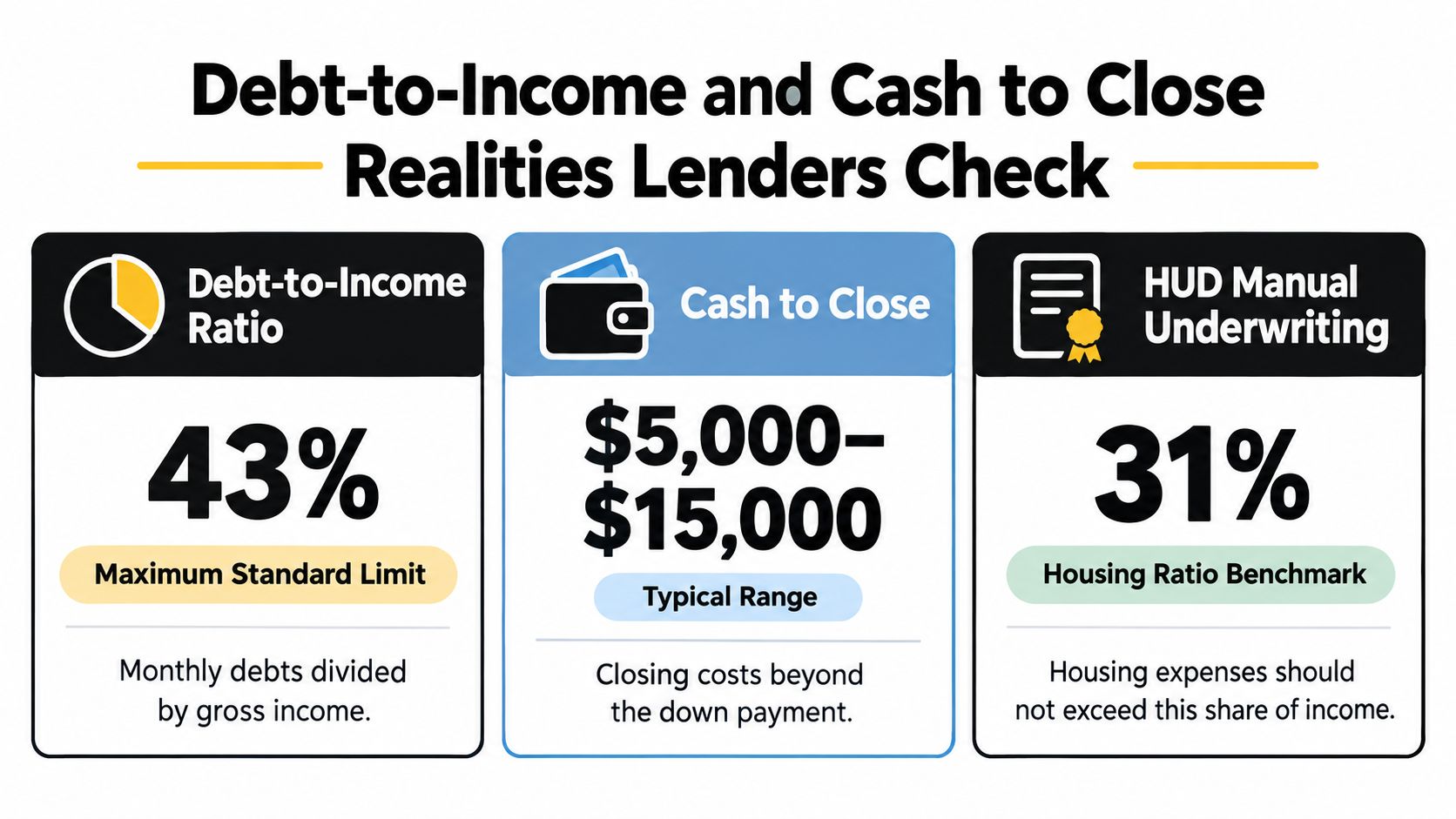
HUD identifies manual-underwriting benchmarks of 31% for housing expenses and 43% for total debt for borrowers with a score from 500 through 579 or without a usable score, absent applicable compensating factors (HUD's manual-underwriting ratio guidance). These are not a universal approval formula. Lender overlays, automated findings, compensating factors, and documentation can change how a specific file is evaluated.
Read the ratio in plain English
The housing ratio compares the proposed housing expense with effective income. The total-debt ratio adds other recurring monthly debt obligations. A buyer with a lower score might need to show a manageable debt load, consistent recent payment behavior, and well-documented income for the file to make sense to an underwriter.
Cash to close is a separate review
Even when a loan permits no purchase-price down payment, the lender may still verify funds for closing charges, prepaid expenses, earnest money, inspection or appraisal costs, and required reserves. Bank statements help document where funds came from. If assistance or a gift is involved, ask the lender how to document it before moving money between accounts.
A proposed home's property expenses matter too. Taxes, insurance, and any applicable assessments may affect both the monthly budget and the lender's housing-payment calculation. For a plain-English overview of Texas special assessment charges explained, review how property-related charges can fit into the cost picture, then ask the local lender or housing professional about the specific property.
If monthly obligations are putting pressure on the application, the first-time homebuyer DTI help resource can help you frame questions for a lender. Don't take out a consolidation loan or close accounts just to change the ratio without first understanding how the move could affect your credit and underwriting.
Co-Signers, Alternative Paths, and What to Watch Out For
A co-signer or co-borrower may help when that person has income and credit that strengthen the overall application, but adding someone doesn't erase the primary buyer's history. The lender reviews the people on the application, their obligations, and the mortgage's combined repayment picture. If a co-borrower has significant debts or credit issues, the application may not improve as expected.
A co-signer also takes on legal responsibility for the debt. Before asking someone to join the mortgage, both people should understand who will make payments, what happens if the primary buyer can't pay, and how the mortgage could affect the co-signer's own future borrowing.
A co-signer is not a substitute for a clear repayment plan.
A thin credit file is a different challenge from a damaged one. Someone with little reported borrowing may have limited information for an underwriter to assess, even if they have paid rent reliably. Ask a lender whether documented rental or installment-payment history can be considered and what records are acceptable. Rent reporting or a credit-builder product may help some consumers establish reported activity, but neither guarantees that a mortgage lender will use the information or that a score will change in a particular way.
Non-qualified mortgage products can have different documentation and pricing structures from standard loans. A buyer should review the payment, fees, repayment terms, and consequences of refinancing before deciding that an alternative product is suitable. Avoid anyone who promises approval regardless of income, debt, or credit history.
If a report contains a genuine error, pursue a specific, documented dispute. If the information is accurate, focus on current payments, balances, and a sustainable budget rather than looking for a shortcut. A stable primary application is often easier to understand and document than an application built around a co-signer whose finances introduce new questions.
A Realistic Timeline and Next Steps to Become Lender-Ready
One buyer has a single inaccurate collection and two years of steady pay stubs. Another carries high card balances, a thin file, and a recent late payment. The first may be lender-ready in a few months. The second may need most of a year.
There is no universal countdown, only a sequence of steps that runs faster or slower depending on what your file shows. Use the months before applying to gather evidence, correct what you can control, and get lender guidance before making changes that could affect the application.
Build a file the lender can understand
Start by obtaining and reviewing reports from all three credit bureaus. Mark the accounts that look inaccurate, the balances that need attention, and any late payments, collections, or charge-offs that will require explanation. Keep copies of reports and supporting documents together so nothing has to be tracked down later.
Then write down your monthly income, recurring debts, and the housing payment you believe you can manage. Gather pay records, tax documents, bank statements, and account records. A lender may weigh some of these documents differently than you expect, and organizing them early makes gaps easier to spot.
If you find a factual reporting error, dispute it with supporting evidence and keep a record of what you sent and when. A credit reporting company generally has 30 calendar days to investigate, with an additional 15 days in some circumstances, and must notify you of the results within five business days after completing the investigation, per the CFPB dispute guidance cited earlier in this article. For concerns about escalating an unresolved issue, complete the direct dispute with the credit reporting company first. The CFPB may discontinue a complaint if that step hasn't happened (CFPB complaint notice for credit reporting issues).
Prepare in practical stages
Readiness tends to move in phases rather than in a straight line:
- Review: Identify report errors, accounts, balances, and payment obligations.
- Document: Organize evidence for disputes and records for income and funds.
- Stabilize: Keep current bills paid and reduce revolving balances where feasible.
- Plan cash: Check assistance eligibility and ask the lender how gifts or other funds must be documented.
- Consult: Ask lenders about program fit and written prequalification before making an offer.
- Apply when ready: Keep finances consistent through underwriting and respond promptly to document requests.
Filing a dispute starts an investigation into a specific claim of inaccuracy, and the outcome depends on the evidence and the investigation. For a plain-English overview of the 30 to 45 day dispute process, use it to calibrate your timing while keeping expectations tied to your documentation.
Answers to common first-time-buyer questions
Will paying a collection help or hurt? Avoid making that decision based only on a hope of improving a score. The effect depends on the account, its accuracy, the lender's requirements, and the terms of any agreement. Ask the mortgage lender how the account must be handled, and get terms in writing before paying or agreeing to a settlement.
Does medical debt count? A lender may consider reported obligations and the overall file, though treatment depends on the loan program, account details, and lender rules. Review the report for accuracy and ask the lender how a specific medical collection affects underwriting.
What if a mortgage application was recently denied? Request the lender's explanation, then identify which factor was involved: score, payment history, income documentation, DTI, assets, or another underwriting issue. Correct verifiable reporting errors and ask what evidence or financial changes could make a future application stronger.
Superior Credit Repair offers a structured review of credit reports, assistance organizing documentation for disputes involving inaccurate or questionable information, and education about credit habits that affect mortgage readiness. Results vary based on each person's credit file, documentation, creditor responses, account history, and current credit behavior; no credit repair service can guarantee deletions, a particular score, or mortgage approval.
If this information helped you better understand your credit report or your next steps, we would appreciate your honest feedback. You are welcome to share your experience with Superior Credit Repair on our Google Business Profile. Share feedback with Superior Credit Repair
Superior Credit Repair Online provides educational credit guidance for individuals and families preparing for major financial goals like buying a home, applying for a mortgage, refinancing, or rebuilding after credit challenges. If you're preparing to buy with damaged credit, Superior Credit Repair can help you review your report, organize questions, and understand a documentation-based plan for mortgage readiness. You can request a free credit analysis or consultation to discuss your options without a promise of a particular outcome.