

You're finally getting serious about buying a home, refinancing, or signing a lease on a new apartment, and then an unexpected envelope shows up in your mailbox. Inside is a collection letter for an old medical bill, a closed credit card, or a balance you don't even recognize. Your first instinct might be to panic, call the number on the page, or pay it just to make it disappear before a mortgage lender sees your file.
Pausing before you react is the smartest move you can make. Federal debt collectors laws exist to give you breathing room, clear rules of engagement, and a paper trail you can verify before a dollar leaves your bank account. According to the Consumer Financial Protection Bureau's 2025 FDCPA annual report, the agency received approximately 207,800 debt-collection complaints in 2024, representing 7% of all consumer complaints submitted that year, and forwarded about 159,700 complaints (77%) directly to companies for review and response.
Most guides treat collection law as a list of rules about annoying phone calls. If you're preparing for an FHA loan, VA loan, conventional mortgage, or rental screening, you need a bigger view. Handling a collection account well is an evidence-and-credit-report strategy because disputing a collector's demand and disputing a credit bureau entry are two separate tracks, and both shape how an underwriter reads your financial profile.
Table of Contents
- Core Debt Collection Rights at a Glance
- How Federal Debt Collection Law Works
- What Collectors Can and Cannot Do
- How to Use the 30-Day Validation Window
- Debts You Do Not Recognize or Have Already Paid
- Time-Barred Debts and Payments Before a Mortgage
- Disputing Medical, Late Payment and Charge-Off Entries
- How Disputes Fit Your Credit Report and Mortgage Plans
- Gather Your Records and Choose Your Next Step
Core Debt Collection Rights at a Glance
Picture yourself opening your mail after work and spotting a letter from a collection agency you've never heard of, claiming you owe hundreds of dollars on an account from years ago. Maybe your phone rang twice earlier in the week from an unfamiliar area code. In that moment, the hardest part isn't just the balance on the page, it's not knowing what the caller is legally allowed to do next.
Two federal frameworks set the baseline for third-party debt collectors nationwide: the Fair Debt Collection Practices Act (FDCPA) and the Consumer Financial Protection Bureau's Regulation F. State laws can add extra consumer protections on top of that federal floor, including stricter contact rules or shorter collection deadlines. Together, these rules give you six core protections you can use right away.
Core Federal Debt Collection Rights
| Right | What the Law Requires | Why It Matters |
|---|---|---|
| Validation notice | Collector provides the debt amount, creditor name and dispute rights in the first communication or within five days | Starts a documented review of the debt |
| Dispute window | 30 days after you receive, or are presumed to receive, the notice | Sets the deadline for a written dispute |
| Pause on disputed amount | Collection activity on the disputed amount pauses until verification is sent | Stops demand cycles while the debt is checked |
| Contact time and place limits | No contact at unusual or inconvenient times or places the collector knows are inconvenient; no calls to a workplace that prohibits personal calls | Keeps contact within reasonable limits |
| Third-party privacy | Collectors generally may not disclose the debt to relatives, coworkers or neighbors | Protects your privacy |
| Accuracy in reporting | Information reported about the debt must not be false or misleading | Gives you grounds to challenge inaccurate entries |
Each protection plays a specific role once a collector reaches out. The validation notice requires the agency to put the claimed balance, creditor identity, and your dispute rights on paper so you aren't guessing from a hurried phone call. Your dispute window gives you a defined calendar period to challenge the claim in writing rather than feeling pressured into an on-the-spot payment.
Once you submit a timely written dispute, the pause on the disputed amount shifts the burden back onto the collector to verify the account before resuming demands. Contact time and place limits keep collection calls out of late-night hours or off-limits workplaces once the collector knows those settings are off-limits. Third-party privacy stops collectors from broadcasting your financial business to neighbors, family members, or colleagues, while accuracy in reporting gives you solid footing to dispute negative accounts when data sent to credit bureaus is wrong or misleading.
Your first action today is simple: write down which right applies to the letter or call in front of you, and mark the exact date it arrived on the envelope or in a notebook. Keep in mind what these protections do and don't do. Federal debt collectors laws regulate how a collector must behave and how a claimed balance must be verified, yet they don't erase a debt that is accurate, current, and legitimately owed.
How Federal Debt Collection Law Works
Think of federal collection law like traffic signals at a busy intersection. A debt collector is still legally allowed to drive through the intersection and ask for payment on a valid account, yet the collector must stop at red lights, stay in the right lane, and follow posted signs. When a collector runs a red light, federal and state agencies have rules to hold them accountable.
That national system began when Congress enacted the Fair Debt Collection Practices Act as Public Law 95-109 on September 20, 1977, as documented in the Federal Trade Commission's FDCPA statute text. Before 1977, consumer safeguards depended almost entirely on a patchwork of state rules. The statute created nationwide restrictions against abusive, deceptive, and unfair conduct by third-party collectors, and today the Consumer Financial Protection Bureau (CFPB) administers major federal oversight responsibilities alongside the Federal Trade Commission (FTC), with Regulation F supplying detailed rules for notices, disclosures, and communication conduct.
Key Players and Everyday Terms You Need to Know
Confusion often starts with the vocabulary on a collection letter or credit report. Knowing who holds which job helps you direct your paperwork to the right company instead of sending letters into a black hole.
- Debt collector: A third-party agency hired to collect a past-due account, or a debt buyer that purchased the account from someone else.
- Original creditor: The bank, medical provider, utility company, or lender that first extended credit or provided the service.
- Validation: Written proof from the collector showing the claimed balance, the creditor's name, and information verifying that the obligation belongs to you.
- Furnisher: Any lender, servicer, or collection agency that sends account data to consumer reporting agencies.
- Credit bureau: One of the nationwide consumer reporting agencies, Equifax, Experian, or TransUnion, that compiles your credit report from furnisher updates.
One detail catches many homebuyers off guard: the debt collector calling you and the furnisher reporting on your credit file can be two different companies. You might receive a letter from an assigned collection agency while the original creditor or a separate debt buyer still reports the balance to the bureaus. Because of that split, reviewing your credit file accuracy and privacy protections alongside collection rules ensures you check every party touching your credit profile.
Practical rule: A collection notice in your mailbox isn't automatic proof that the balance, the dates, or even the named creditor are accurate. Treat every notice as a claim that deserves verification against your own records.
Beyond federal rules, state statutes frequently add stronger protections, cover original creditors in certain cases, or set shorter legal deadlines for collection lawsuits. If a collector crosses a line, you can submit a formal complaint to the CFPB, the FTC, or your state attorney general's office. Remember that submitting a complaint creates an official record for regulatory review, not automatic legal proof of a violation. Federal law provides a reliable baseline of procedural rights, never a promise that an account will be forgiven, settled, or deleted from your report.
What Collectors Can and Cannot Do
A collector may contact you about a debt, but the contact works like a gate, not a blank check. Federal conduct rules group misconduct into three buckets: harassment or abuse, false or misleading representations, and unfair practices. Under the CFPB's Regulation F overview and FDCPA framework, covered collectors must follow boundaries across calls, letters, emails, and credit-reporting steps. That matters for homebuyers because collector conduct and credit-report accuracy are separate tracks. One affects how you are treated during collection. The other affects how a mortgage underwriter reads the file.

Use the three buckets as a quick way to spot red flags:
- Harassment or abuse: A collector calls repeatedly throughout the day to wear you down, uses profanity, or threatens violence or arrest to force payment.
- False or misleading representations: An agent misstates how much you owe, claims to be an attorney or government official when they are not, or threatens a lawsuit the company has no plan or legal right to bring. The Federal Trade Commission reported sending more than $540,000 in refunds to consumers harmed by a phantom and abusive debt-collection scheme in 2024.
- Unfair practices: A collector adds unauthorized interest, collection fees, or surcharges that neither your original contract nor state law permits, or deposits a post-dated check ahead of schedule.
Communication boundaries also cover when, where, and with whom an agency may speak. A collector who knows a certain time or place is inconvenient for you should not keep calling during those hours. A collector also cannot contact you at work once they know or have reason to know your employer bans personal calls. Privacy protections generally keep collectors from discussing your debt with coworkers, relatives, or neighbors, apart from narrow exceptions such as confirming your contact location.
Automated texts and mobile outreach raise a related but separate question. Federal messaging consent rules may apply to automated texts from debt collectors, while collection law still governs how the collector communicates and what the collector may say. Reading text message spam laws explained can help you understand the general messaging topic, but it should not replace the collection-specific rules that control the debt conversation itself.
Stopping Contact in Writing and Separating Conduct From Accuracy
If calls are disrupting your workday or adding stress while you gather paperwork, federal law lets you ask a third-party collector in writing to stop contacting you. Once the agency receives your letter, it generally must stop communication, except to confirm it is ending contact or to notify you of a specific legal action, such as filing a lawsuit.
A cease-contact letter has limits. Stopping calls does not cancel the underlying debt, stop accurate reporting after the required pre-reporting steps, or prevent a creditor from pursuing a lawsuit within the state deadline.
Keep collector conduct separate from account accuracy. A polite, compliant collector may still contact you about an account that contains an error until you use your written dispute and communication rights. Treat the two tracks like two locks on the same door. One controls the calls. The other controls what the report says. Save call logs, voicemails, emails, dated letters, and credit-report snapshots instead of relying on memory.
How to Use the 30-Day Validation Window
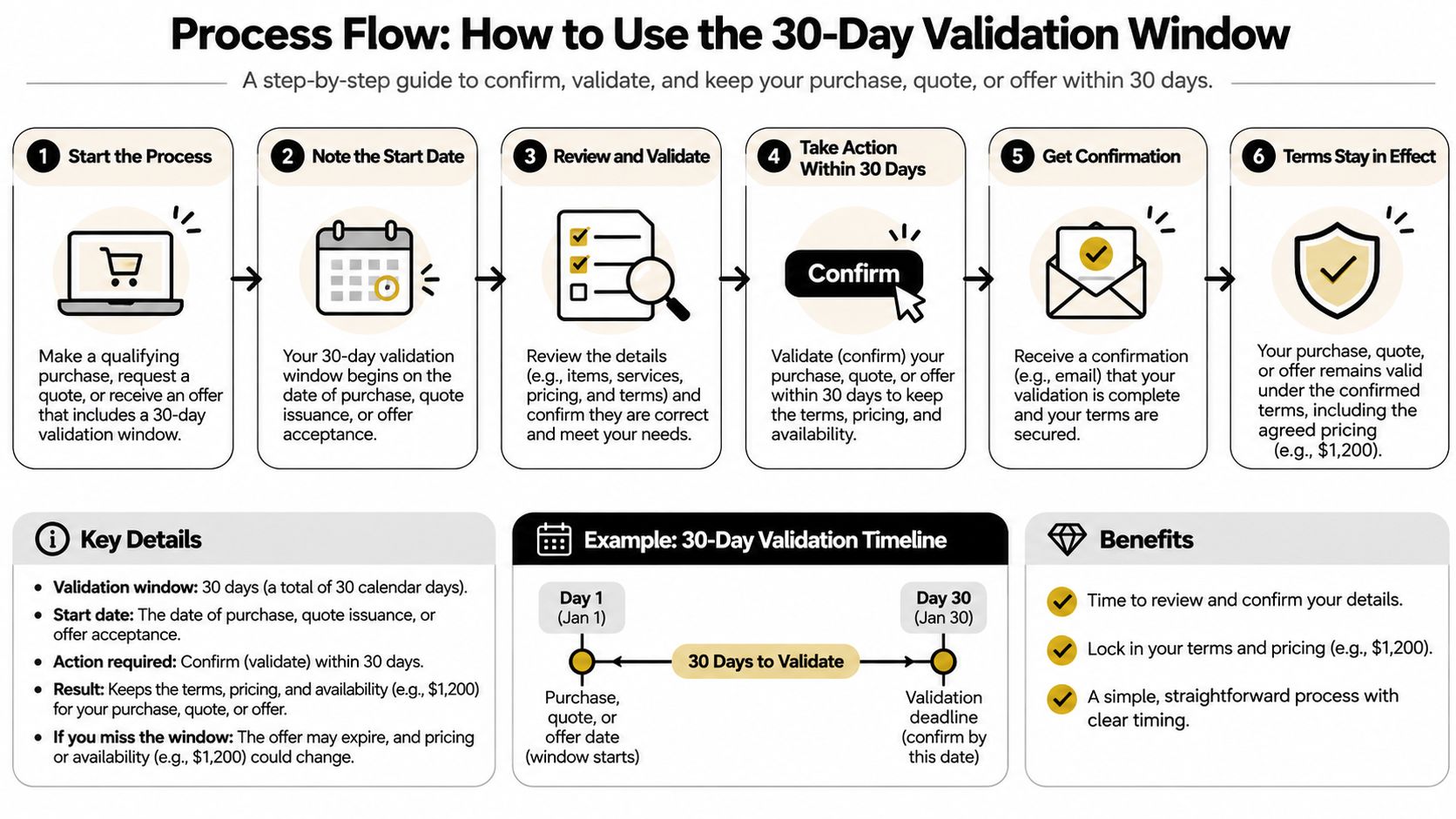
A validation notice works like the inspection period in a home purchase: you get a defined stretch of time to check the paperwork before deciding how to respond. Under the CFPB's Regulation F validation rule (12 CFR 1006.34), a covered debt collector generally must provide validation information in its initial communication or within five days afterward, listing the claimed debt amount, the creditor's name, and your dispute rights. From there, you have 30 calendar days after receiving, or being legally presumed to have received, that notice to dispute the obligation in writing or request original-creditor details.
Working through this stage methodically converts an ordinary demand cycle into a documented verification process. Keep one distinction straight as you go: a written dispute sent to the collector and a dispute of the tradeline filed with the credit bureaus run on separate tracks. The evidence file you build during this window feeds both, and both shape how a mortgage underwriter reads your application during collection verification before mortgage approval.
- Mark the exact delivery date right away. According to the CFPB's Regulation F executive summary, a collector is permitted to presume you received a mailed notice five days after sending it, excluding Saturdays, Sundays, and federal legal public holidays. Recording the actual arrival date tells you exactly when your validation window closes.
- Preserve the envelope, email headers, and timestamps. Don't toss the mailing envelope or delete the initial email after reading the balance. Postmarks and email metadata prove when the collector sent the notice and when it landed in your hands.
- Audit the notice against your personal records. Place the validation letter beside your bank statements, old billing statements, and current credit reports. Confirm that the claimed amount matches what your own records show and that the creditor named and the dates listed line up with your history.
- Decide whether to dispute the balance, request original-creditor details, or both. If you don't recognize the agency or the original company has changed hands, asking for the original creditor's name and address helps you trace the account's history before accepting any balance.
- Write a short, dated dispute letter and keep a copy. Include your name, mailing address, the collector's account reference number, and a clear statement of what you dispute or what verification you're requesting. Keep your wording factual and avoid promising payment or admitting liability while the account is under review.
- Send your letter through a trackable delivery method before the deadline. Mailing your dispute via USPS Certified Mail with Return Receipt creates proof that you acted inside the 30-day period. Staple the mailing receipt to your copy of the letter.
- Log the pause and review any verification sent back. Once you send a timely written dispute or original-creditor request, the collector must pause collection activity on the disputed amount until it mails verification or the requested information. Compare whatever comes back line by line against your folder before deciding on your next move.
Common Validation Mistakes to Avoid
Three everyday slips undermine an otherwise solid response. The first is waiting until the final week to mail a letter, leaving no room for postal delays. The second is disputing only over the phone, since a call rarely creates the written paper trail needed to enforce a mandatory collection pause. The third involves money moving before the paperwork is checked.
Sending a small "good faith" payment before verifying the paperwork can backfire. In several states, a partial payment or a written acknowledgment of the debt can affect state legal deadlines, so check your state's rules before transferring funds or signing any payment agreement.
Debts You Do Not Recognize or Have Already Paid
Knowing your communication rights helps calm down the phone calls, yet most borrowers trying to qualify for a mortgage need a concrete evidence strategy. In fact, CFPB 2025 consumer complaint data show that "attempts to collect debt not owed" ranked as the single largest debt-collection issue category, with 115,682 complaints. Inside that category alone, 65,482 complaints involved a debt that wasn't the consumer's and 38,388 involved identity theft.
Those numbers explain why jumping straight to settlement can cost you money and stall loan underwriting. At Superior Credit Repair, collection entries are checked by comparing the collector name, original creditor, balance, account status, and dates against the notice received. A careful comparison often exposes clerical mix-ups, duplicate tradelines, or already-settled balances before you ever talk to a loan officer.
Situations, Checks, and Records to Keep
| Situation | What to Check | Records to Keep |
|---|---|---|
| Debt is not yours | Name, account number, original creditor and balance | Collector letters, validation notice and your own statements |
| Identity theft suspected | Accounts you never opened and their open dates | Identity theft report, agency records and current credit reports |
| Duplicate reporting | Same debt listed by the original creditor and by a collector | Credit reports from all three bureaus and account statements |
| Already paid or settled | Payoff date, zero or reduced balance and reported status | Payment confirmations and settlement or payoff letters |
| Balance or date looks wrong | Balance, charge-off date and status against the notice | Statements, payment history and dated notices |
Notice the difference between requesting validation and admitting you owe a balance. Asking a collector to prove ownership, itemize fees, and name the original creditor is a neutral verification request, not an agreement to pay. Keeping your letters strictly focused on verification protects your position while you investigate.
Handling Identity Theft, Duplicate Tradelines, and Paid Accounts
When an unfamiliar account points to identity theft, your documentation needs to go beyond a standard dispute letter. Filing an official identity theft report through IdentityTheft.gov, gathering any related police or agency records, and pulling current reports from Equifax, Experian, and TransUnion establishes clear evidence that you never opened the account.
Duplicate reporting creates a different headache for homebuyers. Sometimes an original creditor sells or transfers a charged-off balance, yet both the original lender and the new collection agency continue reporting active balances simultaneously, making your total unpaid debt look larger than reality. Pulling all three credit reports side by side reveals whether the original account should reflect a zero transferred balance rather than an active amount due.
For accounts you've already paid or settled, check the reported payoff date, remaining balance, and status code. A bank statement, canceled check, or written settlement confirmation showing a zero balance gives you concrete evidence to correct lingering errors. Remember that challenging a collector under federal debt collectors laws doesn't automatically fix your credit reports; you'll often need to dispute inaccurate details separately with both the furnisher and each credit bureau displaying the error. Whenever identity rights, disputed contracts, or potential litigation come into play, consult a qualified attorney familiar with your state's laws before making formal commitments.
Time-Barred Debts and Payments Before a Mortgage
Every state sets a legal filing deadline called a statute of limitations that governs how long a creditor or collector can sue you in court to collect an unpaid debt. That time limit varies from state to state and depends on the type of contract involved, such as a written loan agreement, an oral agreement, a promissory note, or an open-ended credit card account. Once that legal deadline passes, the obligation becomes a time-barred debt.
Regulation F restricts covered collectors from suing or threatening to sue you over a time-barred debt. Even so, an expired lawsuit deadline doesn't automatically erase the account from your credit history. An old collection can remain on your credit reports under federal credit reporting limits for years after the date the account first fell delinquent, meaning a mortgage underwriter reviewing your file for FHA, VA, conventional, or USDA loan approval will still see its age, balance, and status.
That overlap creates a tricky trap for homebuyers trying to clean up their file quickly. In several states, sending even a small partial payment or signing a written promise to pay can restart the state statute of limitations, putting a previously expired lawsuit risk right back on the table.
Four Steps to Take Before Paying or Signing Anything
Before you agree to a settlement or send money on an older collection while preparing for mortgage underwriting, walk through these four checks and review how expired debt affects credit reports:
- Pin down two anchor dates. Check your personal records and credit reports for the date of your last actual payment and the original date of first delinquency when the account fell behind and never caught up.
- Look up your state's limitations period for that contract type. Don't assume credit card debt follows the same timeline as a written installment loan or medical contract, and check whether your original contract names another state's law.
- Ask the collector in writing about the debt's legal status. Request written confirmation of whether the collector believes the debt is time-barred and how your state treats partial payments or written acknowledgments.
- Pause all payments and signatures until you review the facts. Hold off on paying, setting up autopay, or acknowledging the balance in writing until you've confirmed the timeline and disclosed any open underwriting questions to your loan officer.
Planning a documented challenge protects you from accidentally reviving an old legal clock while keeping your mortgage timeline transparent with your lender.
If a collector files a court summons or threatens to sue on an aging balance, seek jurisdiction-specific legal advice right away rather than trying to negotiate over the phone.
Disputing Medical, Late Payment and Charge-Off Entries
Many borrowers assume every medical collection on a credit report is automatically unlawful or guaranteed to vanish as soon as they send a dispute letter. That assumption can derail a mortgage timeline fast because federal medical-debt rules have gone through major legal shifts.
On January 7, 2025, the CFPB announced a Regulation V final rule that would have removed a regulatory exception, generally prohibited creditors from considering medical-debt information in credit-eligibility decisions, and restricted consumer reporting agencies from furnishing prohibited medical-debt data. However, as the CFPB's Regulation V medical-information rule notice explains, on July 11, 2025, the U.S. District Court for the Eastern District of Texas vacated that rule after concluding it exceeded the Bureau's statutory authority and conflicted with the Fair Credit Reporting Act.
Because that federal rule was vacated, medical collection credit repair works best as a thorough accuracy audit rather than a blanket demand for removal. Each medical tradeline should be checked for patient ownership, insurance adjustments, duplicate billing, accurate dates, identity mix-ups, and compliance with current federal and state statutes. Always verify the current rule status in your state before sending disputes, since several states maintain their own medical-debt reporting limits.
Matching Your Evidence to the Account Type
Different negative marks require completely different proof sets. A collection account may need ownership and balance review, and a late payment may need payment-history proof. Treating all three categories with the same generic form letter rarely produces clear corrections, which is why following structured evidence-backed credit dispute steps matters so much.
- Medical collections: Compare the hospital or clinic invoice against your insurer's Explanation of Benefits (EOB) to confirm whether insurance paid its share, applied a contracted write-off, or left a coding error unpaid.
- Late payments: Effective late payment dispute help centers on dated proof that your payment arrived on time, such as bank clearing statements, canceled checks, electronic payment confirmations, or servicer billing histories showing a processing error.
- Charge-offs and sold collections: Solid charge-off dispute help focuses on the chain of ownership when an account is sold to a debt buyer, verifying that the balance reflects prior payments, interest caps, and accurate status codes across all three bureaus.
Your Evidence Checklist Before Filing
Before challenging any medical bill, late mark, or charge-off, assemble a clean folder containing these core records:
- Provider bills: Itemized medical statements showing service dates, billing codes, and adjustments.
- Insurer Explanation of Benefits statements: Official EOB summaries confirming what your health plan covered and what portion remained patient responsibility.
- Payment confirmations: Bank statements, receipts, or electronic confirmation numbers proving when payments cleared.
- Collection letters: Initial validation notices, follow-up dunning letters, and any settlement or payoff offers.
- Original account statements: Monthly statements from the original lender showing credit limits, balances, payment history, and charge-off dates.
A compliant credit restoration process challenges entries that are inaccurate, outdated, misleading, or unverifiable. It cannot remove an accurate, properly documented, and verifiable account, so building your dispute around concrete paperwork saves time and keeps your expectations realistic.
How Disputes Fit Your Credit Report and Mortgage Plans
One of the biggest surprises for first-time homebuyers is discovering that a dispute with a debt collector and a dispute with a credit bureau run on two separate tracks. Sending a validation letter to a collection agency under federal debt collectors laws pauses that agency's collection calls, yet it doesn't automatically update your Equifax, Experian, or TransUnion credit file. Correcting credit report errors requires submitting documented disputes directly through the credit bureaus or the furnisher reporting the inaccurate data.
Timing expectations also trip up borrowers working toward a closing date. Bureau investigation timelines are determined by bureau and creditor processing cycles, and the selected payment plan does not change them. Planning your credit review months ahead of loan application gives bureaus and furnishers time to finish investigations without delaying an active real estate contract.
Mortgage underwriters look well beyond a single score number. Whether you're preparing for an FHA loan, VA loan, conventional mortgage, USDA loan, or even competitive apartment approval, reviewers evaluate open collections, recent late payments, charge-offs, credit card utilization, debt-to-income ratio, and overall account stability. Each loan program applies its own guidelines for unpaid collections and disputed account comments, so understanding how removing collections before applying for a mortgage interacts with underwriting helps you avoid last-minute surprises.
Dispute Outcomes and What They Mean
| Outcome | What It Usually Means | Your Next Step |
|---|---|---|
| Verified and accurate | The information matches the records and stays on the report | Keep your records and review your budget and payment plan |
| Corrected | The entry was changed to match the records | Pull an updated report to confirm the change |
| Removed | The information could not be verified or was inaccurate | Check the new report and review other bureaus |
| Still disputed | The response from the furnisher or bureau is not fully resolved | Send a follow-up with documents and consider qualified legal advice |
Turning Outcomes Into Long-Term Credit Habits
Every outcome gives you actionable information. If an entry comes back corrected or removed, pull fresh reports across all three bureaus to verify that the update carried over accurately and didn't leave a stray duplicate behind. Accuracy documents include current three-bureau credit reports, creditor statements showing balances, limits, dates, and payment history, and collection letters, settlement records, student loan records, or debt-buyer notices.
When an item returns verified and accurate, shift your energy toward strengthening the rest of your file. Keeping credit card balances low relative to limits, making every current payment on time, and maintaining steady account ages all help you rebuild your credit profile over time. If an account remains still disputed with conflicting documentation, send a concise follow-up attaching your supporting proof and consider consulting a consumer law attorney if the error persists.
No company can legally remove accurate, current, or verifiable information, and results vary by consumer file and bureau or creditor responses.
Gather Your Records and Choose Your Next Step
Rushing to send dispute letters before organizing your paperwork almost always leads to stalled investigations and repeated back-and-forth with bureaus. Start by pulling your complete documentation together in one dedicated folder, either printed in a binder or saved as clearly labeled PDFs.
For a first conversation or a self-guided audit, gather these core items before taking action:
- Three current credit reports: Full reports from Equifax, Experian, and TransUnion so you can spot bureau differences and duplicate listings.
- Photo identification and current address information: Clear copies confirming your identity and residence for bureau verification.
- Recent account statements: Billing records for every open or closed account you plan to review.
- Collection notices and validation letters: Every envelope, initial notice, and follow-up letter received from third-party collectors or debt buyers.
- Payment confirmations: Bank statements, receipts, or payoff letters verifying settled, reduced, or paid-in-full balances.
- Identity-theft reports: Official federal reports or police records whenever unauthorized accounts appear on your file.
- Denial or adverse-action notices: Any lender or landlord notice tied to the mortgage, auto, or rental application that prompted your review.
Knowing when to call in legal counsel is just as important as organizing your folder. Qualified legal advice is recommended when collection litigation, repossession, title, or identity rights are involved. A licensed consumer attorney in your state can advise you on court deadlines, statutory defenses, and formal legal filings.
If you'd like structured collections dispute help or credit repair before buying a home, Superior Credit Repair can review your credit report, help identify inaccurate or questionable items, and explain a step-by-step plan for improving your credit profile. You can request a free credit analysis or consultation, or call (888) 715-2400 to discuss the records you have before sending disputes.
Does Disputing a Collection Improve a Credit Score Right Away
Disputing a collection doesn't produce an automatic or immediate score change, and no ethical credit restoration process can promise a specific point increase or timeline. How your score responds depends on your full credit file, the documentation you provide, how creditors and credit bureaus respond to investigations, and your ongoing credit habits such as payment history and card utilization.
Can Accurate Debts Be Removed Through a Dispute
No. Federal credit reporting standards don't allow any consumer or credit repair company to delete accurate, current, and verifiable information. Legal credit restoration is a structured, documentation-based verification process focused strictly on correcting or challenging entries that are inaccurate, incomplete, outdated, misleading, or unverifiable.
Do You Need a Lawyer to Handle a Debt Collector
Not for every situation. Many consumers handle routine validation requests, billing audits, and bureau accuracy disputes using organized personal records or compliance-focused credit review guidance. However, qualified legal advice is recommended whenever you're served with a lawsuit, facing a threat of collection litigation, or navigating repossession, title, or identity-theft rights.
Was this guide helpful? Superior Credit Repair Online provides educational credit guidance for individuals and families preparing for major financial goals like buying a home, applying for a mortgage, refinancing, or rebuilding after credit challenges. Results vary based on each person's credit file, documentation, creditor responses, account history, and current credit behavior. If this information helped you better understand your credit report or your next steps, we would appreciate your honest feedback. You are welcome to share your experience with Superior Credit Repair on our Google Business Profile.
Preparing for a home loan or rebuilding after past collection challenges works best when you pair clear legal knowledge with organized records and a realistic, compliance-focused strategy. Our team reviews credit reports across all three bureaus to help identify inaccurate, outdated, or unverifiable collection entries while guiding you through practical habits that support long-term lender readiness. Visit Superior Credit Repair to explore educational resources or request a free credit analysis at your own pace.