


You've found a home you like, your credit work is finally moving in the right direction, and a lender has given you encouraging news about an FHA loan. Then someone mentions the appraisal, and you're not sure whether it's a simple price check, a home inspection, or something else entirely.
That confusion is normal. For first-time buyers, the FHA loan requirements appraisal is often the step that feels least familiar, even after months spent on credit repair for homebuyers and saving for a down payment. Understanding it early can help you choose properties wisely, negotiate calmly, and keep your closing on track.
Table of Contents
- Why an FHA Appraisal Can Change Your Closing Timeline
- How FHA Appraisals Differ from Standard Home Appraisals
- Property Conditions Appraisers Check for FHA Eligibility
- Common Appraisal Issues That Stall FHA Approval
- How Appraisal Findings Shape Underwriting and Repairs
- Challenging a Low Value or Appraisal Error
- Timelines and Resale Rules to Plan Around
- Preparing Your Credit and Property for FHA Approval
Why an FHA Appraisal Can Change Your Closing Timeline
A first-time buyer has a signed contract, a strong pre-approval, and a closing date circled on the calendar. A week before closing, the appraisal report arrives with a list of repair items the buyer didn't expect. The lender pauses the file while everyone asks who will fix the items and how long it will take.
That moment surprises buyers because they've focused on the price. An FHA appraisal answers two questions at once. It estimates market value, and it checks whether the property meets basic FHA eligibility standards.
A home can be worth enough to support the loan and still raise a property condition. That issue is separate from your payment history, credit utilization, or debt-to-income ratio. Credit readiness supports you as a borrower, while property eligibility supports the home as collateral.
Two Readiness Checks Working Side by Side
Think of your file as having two tracks running together:
- Borrower track: Your lender reviews income, debts, documentation, and your credit profile, including any work you've done to rebuild credit profile strength before applying.
- Property track: The appraiser and underwriter review value and condition to decide whether the home qualifies for FHA-insured financing.
Either track can affect your mortgage loan approval timeline, and one doesn't cancel out the other. A clean credit report won't fix an unsafe stairway, and a freshly repaired home won't fix a credit report error that needs a documented dispute.
Results vary by property, lender, and your individual file. When you understand both tracks before you make an offer, you're less likely to face a repair list as a last-minute emergency and more likely to treat it as a clear set of next steps.
How FHA Appraisals Differ from Standard Home Appraisals
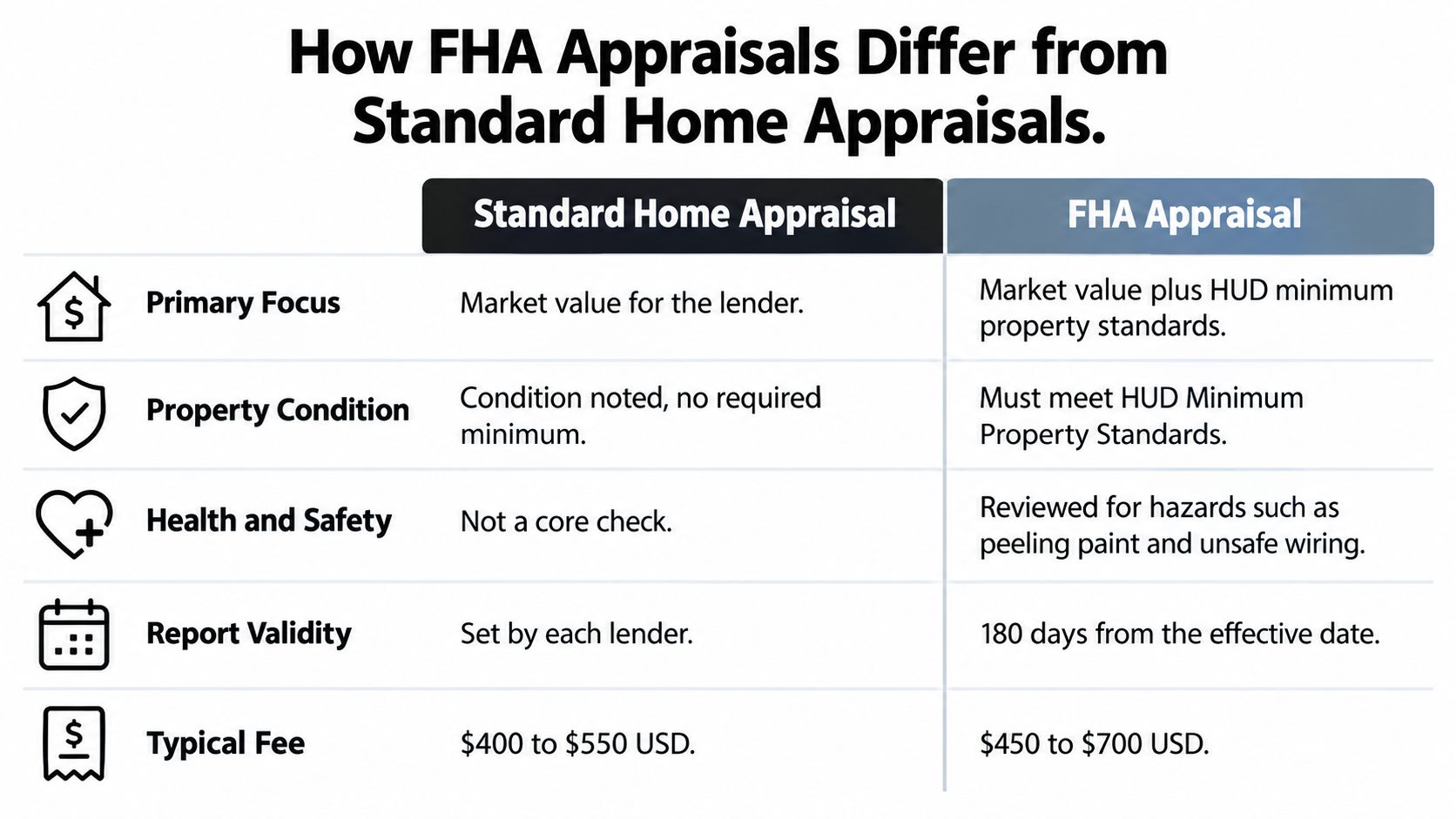
A standard appraisal for a conventional loan focuses mainly on market value. The appraiser studies comparable sales, makes adjustments, and gives the lender a supported opinion of what the home is worth.
An FHA appraisal does that valuation work and adds a property acceptability review. HUD requires an appraisal for essentially all FHA-financed properties, except certain streamline refinance transactions, completed by an FHA-approved appraiser evaluating market value and basic property eligibility.
What the Appraiser Actually Does
The FHA-approved appraiser performs a visual inspection of the home's interior and exterior. They analyze comparable sales, document the property's condition, and report deficiencies affecting safety, soundness, or security.
That's different from a general home inspection you hire for yourself. A home inspection is your detailed checkup, helping you decide whether you want the house at all. The FHA appraisal is closer to a licensing check on the collateral, confirming the home is suitable to secure a long-term mortgage.
MPRs and MPS in Plain English
HUD uses two related terms you'll see in reports:
- Minimum Property Requirements: These generally apply to existing homes and set the basic condition floor for eligibility.
- Minimum Property Standards: These primarily govern new construction.
Neither term means the home must be perfect or newly renovated. Dated cabinets, older carpet, or a style you plan to change later don't make a home ineligible by themselves. The home must provide adequate basic living conditions and be suitable collateral.
A home doesn't need to be new to qualify for FHA financing. It needs to be safe, functional, and sound enough for everyday living over the life of the loan.
Once you see the appraisal as both a value opinion and an eligibility review, the rest of the report is easier to read. You'll know why a cosmetic flaw may be noted without becoming a condition, while a small safety defect can matter a great deal.
Property Conditions Appraisers Check for FHA Eligibility
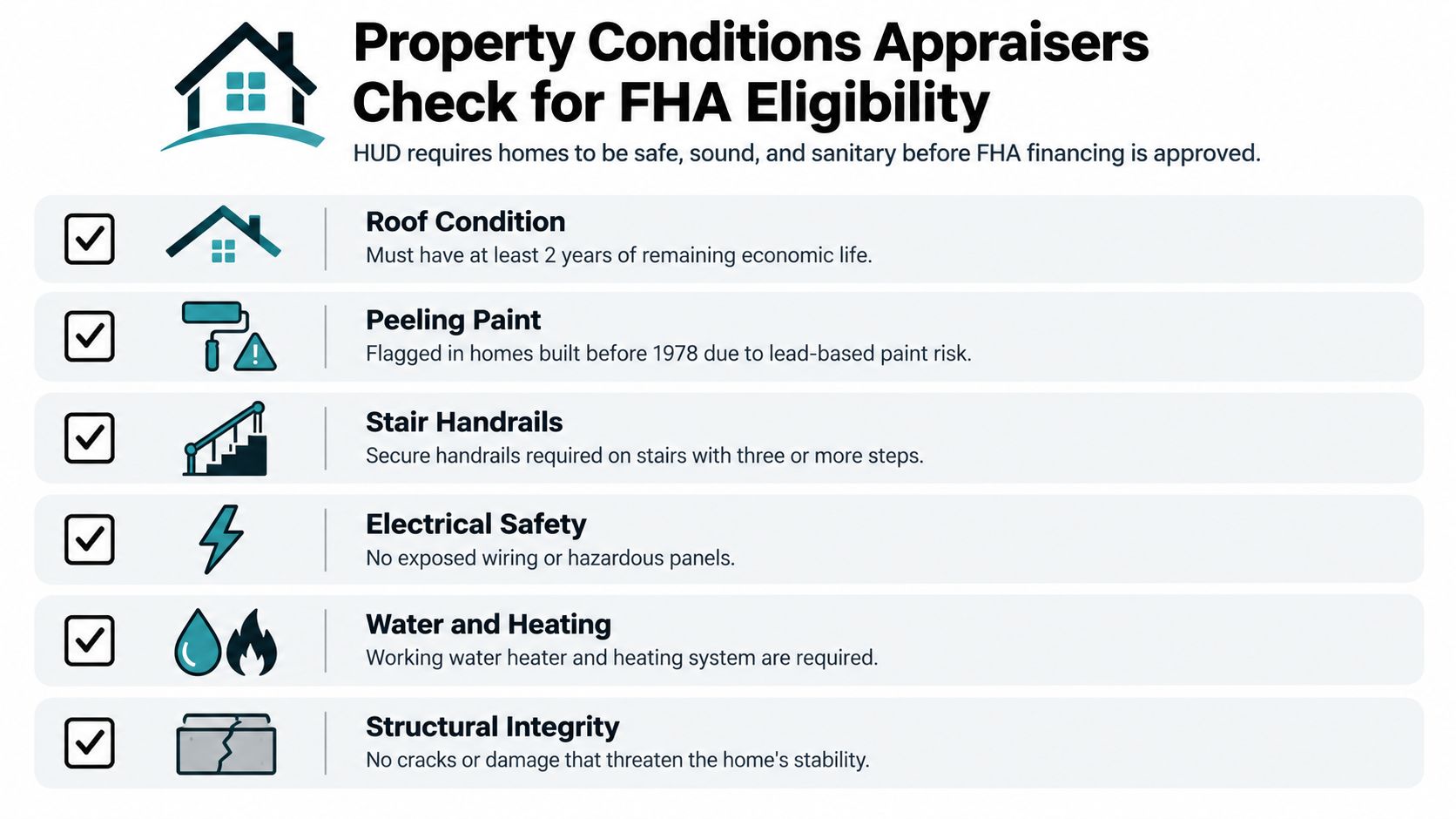
HUD's core objective is simple to remember when you're walking through a house. FHA-insured homes should be safe, sound, and secure.
FHA appraisal standards require homes to be safe, sound, and secure, with essentials such as safe potable water, sanitary sewage disposal, adequate heating, and freedom from health and safety hazards. You can review many of those basics during a showing, before an appraiser ever visits.
A Showing Checklist You Can Use
Bring simple questions to each showing and note what you see:
- Roof and foundation: Look for obvious damage, active leaks, sagging, or cracks that suggest structural movement rather than minor settling.
- Water and sewage: Run taps if permitted, look under sinks for active leaks, and ask how the home disposes of sewage.
- Heating: Confirm there's an adequate heating system for living areas, not just a space heater in one room.
- Electrical and plumbing: Watch for exposed wiring, missing fixture covers, or plumbing that doesn't function.
- Access and egress: Check that you can enter and exit safely, and that stairways feel secure.
- Health hazards: Note peeling paint in an older home, visible mold-like growth, or strong signs of pest problems.
Your review should happen before you make an offer, and it connects directly to the FHA appraisal repair requirements your lender may later apply. Spotting an issue early gives you time to ask questions or choose a different home.
Cosmetic Wear Versus an Eligibility Concern
A dated kitchen is usually a matter of taste. A missing handrail on a stairway is a safety concern. A faint ceiling stain might reflect an old, repaired leak, while dripping water or a soft, damaged ceiling suggests an active problem.
Showing rule: Ask whether a flaw affects health, safety, structure, or basic function. If it only affects style, it's usually a budgeting decision rather than an eligibility problem.
The appraiser isn't your general home inspector, and a brief appraisal visit doesn't replace an independent inspection. Hire your own inspector early when you can. The inspector helps you understand the home in depth, while the appraiser reports whether observed conditions meet FHA property acceptability criteria.
Common Appraisal Issues That Stall FHA Approval
Most delays don't come from one dramatic defect. They come from ordinary maintenance problems that cross the line into safety, soundness, or habitability.
A seller may receive a request to repair a damaged stair railing and feel frustrated because the home has been lived in that way for years. A buyer touring the same property may worry about a dated but functional bathroom. The railing is more likely to become an FHA condition because eligibility is judged against safety standards, not personal taste.
How to Read Common Problem Categories
| Issue Category | Why It Matters for FHA Eligibility | Typical Next Step |
|---|---|---|
| Safety hazards | Exposed wiring, broken access, or missing railings can create a risk to occupants | Seller repair, then reinspection if the lender requires it |
| Roof and structural concerns | Damage can affect the home's integrity and suitability as long-term collateral | Repair, licensed evaluation, or further inspection |
| Water and sewage problems | Unsafe water or unsanitary disposal affects basic habitability | Plumbing repair or specialist documentation |
| Heating and electrical deficiencies | Occupants need adequate heat and electrical systems that function safely | Repair by a qualified professional |
| Access and egress issues | Occupants must be able to enter, exit, and move through the home safely | Correction of the unsafe condition |
| Deferred maintenance affecting health | Long-ignored leaks or deteriorated surfaces can become health concerns | Repair and cleanup before endorsement, unless an eligible escrow applies |
The table shows a pattern. The lender cares about whether the home can be occupied safely and whether a problem threatens the structure or basic systems. Minor scuffs usually sit in a different category.
Why Value Alone Doesn't Clear the Property
An appraisal can support the requested loan amount and still leave your file open. If a material deficiency remains unresolved, closing can wait while the seller completes work, a contractor provides documentation, or the underwriter decides whether another approach is acceptable.
That doesn't mean every flagged item ends a purchase. It means timing and negotiation matter. If you and the seller identify likely problems before the appraisal order, you can discuss price, repairs, or deadlines with clearer information.
Buyers sometimes hope strong credit will outweigh property findings. It won't, because the findings concern the collateral. A lender-ready credit profile helps your side of the file, but the home must independently qualify under the FHA loan requirements appraisal standards.
How Appraisal Findings Shape Underwriting and Repairs
A repair list can feel final when it arrives, but the decision path has more than one step. The appraiser observes and reports. The lender decides what must be completed for FHA-insured financing.
When an FHA appraiser observes noncompliance, the report must identify repairs needed for compliance and estimate the cost to cure, and the lender determines which repairs must be completed. HUD limits required repairs to conditions that protect health and safety, preserve structural integrity, or address other eligibility deficiencies.
The Chain From Defect to Closing Delay
The sequence usually looks like this:
- Observed defect: The appraiser photographs and describes a condition that appears not to meet acceptability criteria.
- Cost to cure: The report estimates what correcting the condition may cost, giving the lender context for the repair.
- Underwriting condition: The mortgagee reviews the item and decides whether correction is required.
- Repair or documentation: The seller, buyer, or a contractor provides the work or evidence the lender requests.
- Clearance: Material deficiencies are resolved before loan endorsement, unless an eligible repair escrow applies.
A repair escrow can sometimes allow certain work to be completed after closing when the home remains habitable and the lender's program permits it. Terms vary by lender and property, so don't assume an escrow is available for a major safety or structural problem.
Questions to Ask Your Lender
When an item appears, ask for the category in plain language:
- HUD-required: Is this tied directly to Minimum Property Requirements or another FHA eligibility rule?
- Lender-required: Is this an overlay or lender condition beyond HUD's minimum?
- Recommended only: Is this maintenance advice that doesn't block the loan?
- Escrow possible: Could this repair qualify for an escrow, and what documentation would you need?
Those answers can change your negotiation. They also help you budget alongside other readiness work, such as reviewing debts with an FHA affordability guide for first-time buyers. Keep contractor invoices, photos, and inspection records organized so the underwriter can review them without extra requests.
Challenging a Low Value or Appraisal Error
A low value creates a different kind of stress from a repair condition. Your first instinct may be to order another appraisal and hope for a better number, but FHA doesn't treat a second appraisal as an automatic remedy.
Three Situations That Aren't the Same
Before you respond, identify which problem you're facing:
- Factual error: The report lists the wrong bedroom count, living area, or another verifiable property detail.
- Overlooked evidence: A relevant comparable sale or documented upgrade existed by the effective date but wasn't considered.
- Value disagreement or changed market: You believe the home is worth more, or prices moved after the appraisal date.
The first two can support a Reconsideration of Value, often called an ROV. The third is harder because an opinion by itself isn't new evidence, and later market changes may not qualify because an ROV concerns information available on the effective date.
Who Handles Each Step
You and your agent can gather comparable sales, permits, receipts, or corrections. Your lender reviews that material, and the underwriter decides whether to send an ROV request. The lender must provide the appraiser with the relevant supporting data, and the appraiser then responds through the lender's process.
Stay specific and documented. A short list of truly comparable sales with closing details is more useful than a long list of asking prices. If you believe there's a fair-housing or professional-standard concern, write down the facts and give them to the lender promptly.
An ROV doesn't guarantee a higher value. It gives the appraiser a defined chance to review qualifying evidence. While you wait, protect the rest of your file by avoiding new payment obligations and carefully accounting for BNPL before buying a home, since added debts can affect affordability even when they feel small.
Timelines and Resale Rules to Plan Around
Time can become an appraisal issue even when the home and value are fine. A file slowed by income documents, disputed accounts, or repairs may outrun the report's validity window.
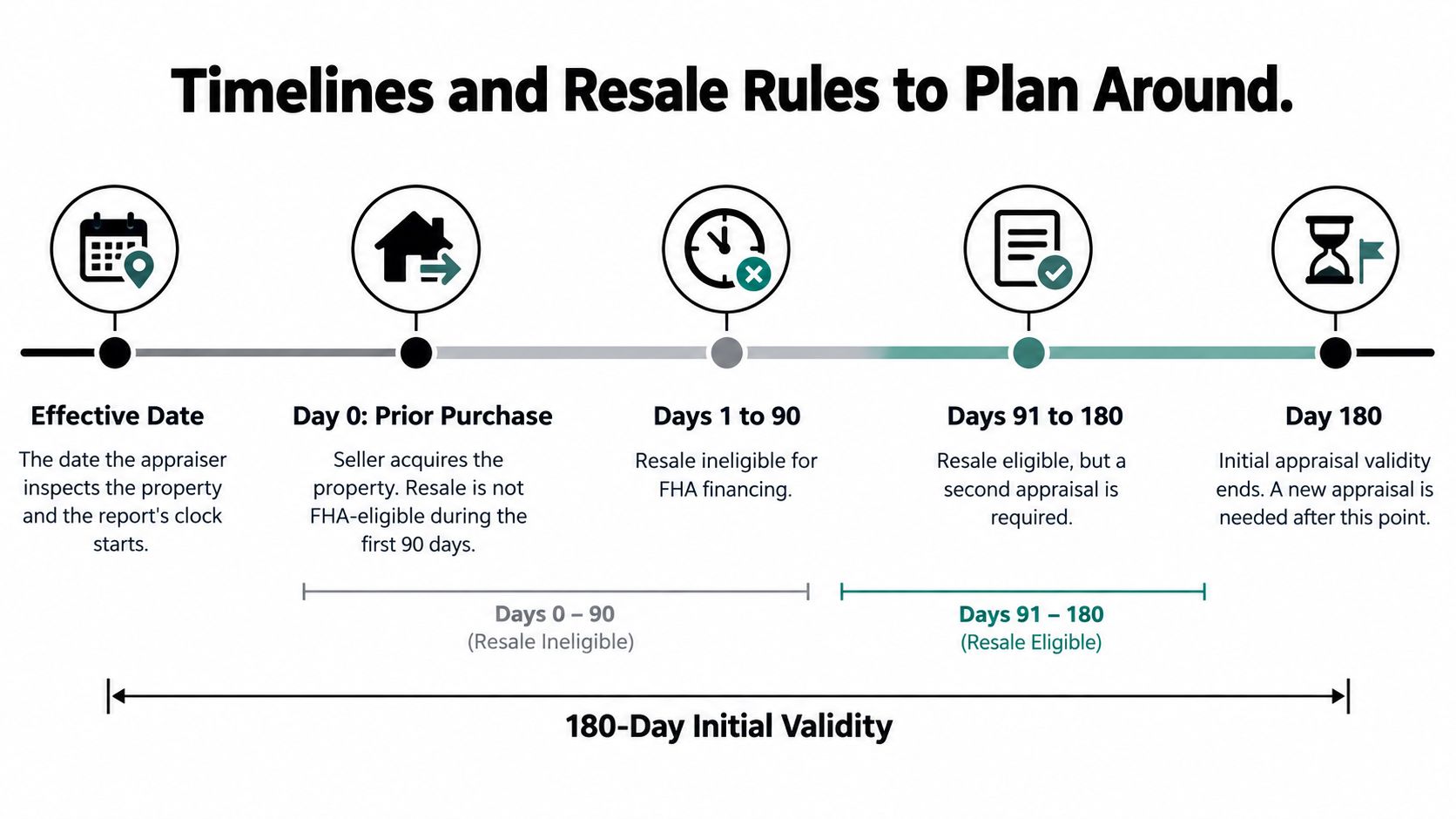
The initial FHA appraisal is valid for 180 days from its effective date, and an update is permitted only under specified conditions within one year of the original effective date. The effective date is the valuation date used in the report, so it's the date you should track.
When an Appraisal Update May Work
If the appraisal will be more than 180 days old on the disbursement date, an update must be completed before disbursement by an FHA appraiser in good standing. The property must not have declined in value, improvements contributing value must be observable from a street or public way, and the home must still meet the MPR and MPS conditions reflected in the original appraisal.
When properly updated, the appraisal is valid for one year from the original report's effective date. If those conditions aren't met, the lender may need another path, which can add time and cost.
Start credit documentation early. Delays from disputed accounts, income verification, or missing records can create appraisal-aging and reinspection problems that have nothing to do with your score itself.
The Rapid Resale Rule
FHA also requires a second appraisal by another appraiser when a property is resold between 91 and 180 days after the seller acquired it at a price 100 percent or more above the seller's purchase price, as explained in HUD guidance on FHA appraisal validity and resale timing.
That rule follows the transaction, not your credit score. Excellent payment history won't waive it. Ask early when the seller bought the home and how the current price compares, especially with a recently renovated resale.
Preparing Your Credit and Property for FHA Approval
Preparation works best when you separate what each side controls. Buyers control their credit file, documents, inspection decisions, and offer terms. Sellers control the property's condition, receipts, and willingness to complete work before closing.
A Side by Side Readiness Plan
Buyer steps can include reviewing each credit report for inaccurate, outdated, unverifiable, or misleading information, keeping utilization and new debts in check, and checking the minimum credit scores for FHA loans against your lender's current guidance. Hire an independent inspector when possible, budget for potential repair negotiations, and ask whether a visible defect could become an appraisal condition.
Seller steps can include correcting known safety items, confirming heat, water, and electrical systems work, and keeping invoices for roof, plumbing, or structural work. Clear access to mechanical areas helps the appraiser document the home without a return visit caused by something simple.
Credit readiness still matters. Payment history, collections, charge-offs, utilization, and account stability can affect how a lender views your file, and debt-to-income concerns can limit affordability. Credit repair before buying a home should be a structured, documentation-based review and dispute process, not a promise that accurate information will disappear or that a loan will be approved.
Results vary based on your credit file, documentation, creditor responses, account history, and current credit behavior. A stronger, more accurate profile can support credit repair for FHA approval readiness, but it doesn't replace property eligibility under the FHA loan requirements appraisal. Both sides need attention.
Your Next 30 Days and Common Questions
Use the next month to pull your reports, list possible credit report errors, gather dispute documents, avoid unnecessary new accounts, and build a property checklist for showings. When looking for a local credit repair company or searching credit repair near me, choose educational, compliance-focused help that explains each step clearly.
- Is an FHA appraisal the same as a home inspection? No. The appraisal supports value and FHA eligibility, while your inspection gives you a deeper condition review for your own decision.
- Can a home pass on value but still need repairs? Yes. Value and property acceptability are separate reviews, and either can create a condition.
- Does better credit waive an appraisal repair? No. Credit work helps borrower readiness, while repairs concern the home serving as collateral.
Superior Credit Repair Online provides educational credit guidance for individuals and families preparing for major financial goals like buying a home, applying for a mortgage, refinancing, or rebuilding after credit challenges. If this information helped you better understand your credit report or your next steps, we would appreciate your honest feedback. You are welcome to share your experience with Superior Credit Repair on our Google Business Profile.
Superior Credit Repair can review your credit report, help identify inaccurate or questionable items, and explain a step-by-step plan for improving your credit profile as you prepare for an FHA appraisal and mortgage underwriting. You can request a free credit analysis or consultation to better understand your options by visiting Superior Credit Repair.