

You're back at work, your rent is paid on time, and the bankruptcy that once felt overwhelming is behind you. A home listing catches your eye, and one question follows you through the day. Can you qualify for a mortgage now, or are you still waiting? Bankruptcy and mortgage approval aren't decided by a single countdown or a single credit score. They're decided by the exact date your lender uses, the documents that prove it, and what your finances look like today.
Table of Contents
- Where Most Buyers Stand After Bankruptcy
- The Three Bankruptcy Outcomes That Matter to Lenders
- How FHA, VA, USDA, and Conventional Loans Treat Bankruptcy
- What Lenders and Automated Underwriting Actually Check
- Documentation Lenders Want to See After Bankruptcy
- Rebuilding Credit the Realistic Way Before You Apply
- Common Pitfalls and Misconceptions to Avoid
- Your Lender-Readiness Checklist and 90-Day Action Plan
Where Most Buyers Stand After Bankruptcy
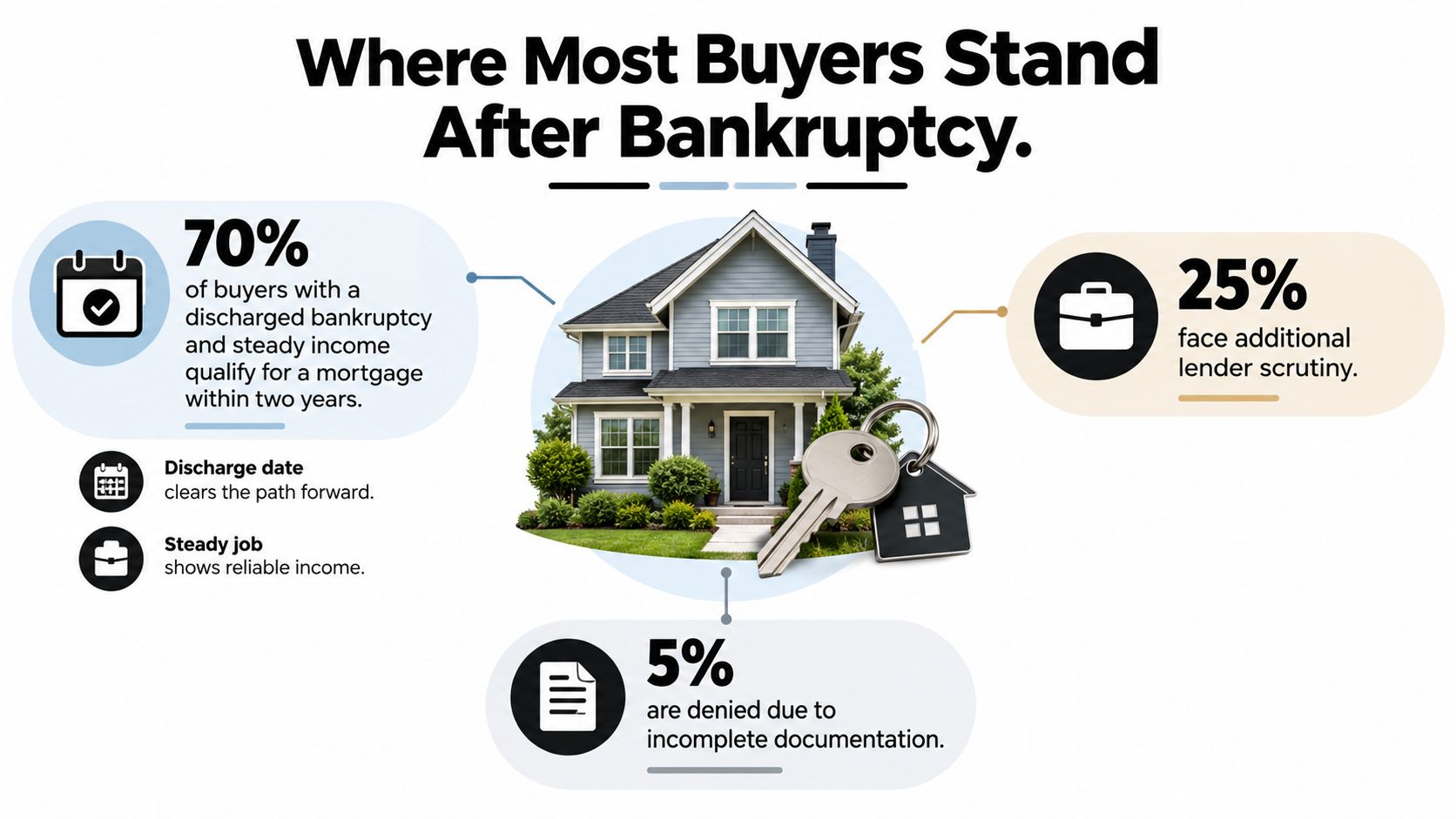
Maya has a discharged bankruptcy, a steady job, and a modest down payment saved. She's proud of how far she's come, but she doesn't know if she should count from the day she filed, the day her case closed, or some other date entirely. That uncertainty is where most buyers stand. You're not behind. You're missing a map.
Why the Answer Isn't a Single Number
Bankruptcy isn't rare in American household credit history. Filings rose from approximately 300,000 cases per year in 1980 to more than 1.5 million cases in each year from 2001 through 2005, according to National Bureau of Economic Research analysis of household bankruptcy history. Lenders have underwritten borrowers after bankruptcy for decades, so they have specific rules for it rather than a blanket refusal.
Those rules depend on your chapter, how your case ended, and how you've handled money since. A lender will also look at income stability, current debts, and whether the hardship that caused the bankruptcy has been resolved. If tax debt was part of your financial picture, it's worth understanding how that debt is treated separately, which is why resources on IRS tax debt bankruptcy can help you sort tax questions from mortgage questions before you apply.
Questions to Answer Before You Talk to a Lender
- Which chapter did you file: Chapter 7 and Chapter 13 follow different underwriting paths.
- How did the case end: A discharge and a dismissal start different clocks.
- What has happened since: On time payments and low balances matter, and Superior Credit Repair mortgage readiness advice covers how utilization fits into that picture.
Answer those three questions and you've already done the work many applicants skip. The rest of your preparation builds on that foundation, one documented step at a time.
The Three Bankruptcy Outcomes That Matter to Lenders
Think of bankruptcy outcomes like three different endings to the same difficult chapter. One ending wipes the slate clean for qualifying debts. Another sets up a supervised repayment plan. The third ends the case without either result. Lenders care about which ending is yours because each one tells a different story about risk.
Chapter 7 and the Discharge
Chapter 7 is often called liquidation bankruptcy. At discharge, the court releases you from personal responsibility for eligible debts, and those debts should stop being reported as currently due. For mortgage purposes, lenders focus on what happened after that discharge date. They want to see that you've re-established good credit or avoided piling up new obligations you can't support.
Chapter 13 and the Repayment Plan
Chapter 13 works differently. You follow a court approved repayment plan, making scheduled payments over time instead of receiving a quick discharge. Because you're actively repaying, some programs can consider you before the plan even ends. Lenders focus on whether plan payments have been made on time and whether the court permits a new mortgage during the case.
Plain English check: Discharge means the court released you from eligible debts. Dismissal means your case ended without that release, so lenders treat the two results very differently.
Dismissal and Why It Changes the Path
A dismissal means the case closed without a discharge. The debts generally weren't wiped out through that case, and the financial problem may look unresolved to an underwriter. That's why dismissal dates often carry longer waiting periods than discharge dates in program rules. If your case was dismissed, don't guess at your eligibility. Get the dismissal order, confirm the exact date, and ask any lender which guideline they're applying to that date before you authorize a credit pull.
How FHA, VA, USDA, and Conventional Loans Treat Bankruptcy
Each mortgage program sets its own seasoning period, which is the required waiting time after a major credit event. Consumer guidance describes typical timelines ranging from one to four years across FHA, VA, and conventional loans, with possible exceptions for documented extenuating circumstances, as summarized in Nolo guidance on mortgages after bankruptcy. The clock usually starts at discharge or dismissal, not at filing, and that single detail explains many surprise denials.
| Loan Type | Typical Minimum Period | Key Condition |
|---|---|---|
| FHA Chapter 7 | 2 years from discharge | Re-established credit or no new obligations |
| FHA Chapter 13 | Possible during plan after 12 months | On time plan payments and court permission |
| Conventional | 4 years from discharge or dismissal | May drop to 2 years with extenuating circumstances |
| VA and USDA | Program specific seasoning | Re-established credit and lender review |
FHA Rules in Plain English
For Chapter 7, at least 2 years must have passed since discharge when the FHA case number is assigned, and during the most recent 2 years you must have re-established good credit or avoided new credit obligations, per HUD answers on bankruptcy and FHA eligibility. An exception may be possible when at least 12 months have passed since discharge if you document extenuating circumstances beyond your control and show responsible financial management afterward. For Chapter 13, FHA can consider you during the plan if at least 12 months of the payout period have elapsed, recent payments were satisfactory and on time, and the court gives written permission.
Conventional, VA, and USDA Differences
For conventional loans sold to Fannie Mae, the standard waiting period is generally four years from discharge or dismissal to disbursement, potentially reduced to two years with documented extenuating circumstances, and Chapter 13 is measured at two years from discharge or four years from dismissal, according to Fannie Mae waiting period guidance for derogatory credit events. VA loans for eligible veterans and USDA loans for qualifying rural buyers apply their own seasoning and credit expectations, so ask a program approved lender which date they're using. Meeting a program minimum means a lender may review you. It doesn't mean approval, because payment history, debt-to-income ratio, assets, and income stability still decide the outcome.
What Lenders and Automated Underwriting Actually Check
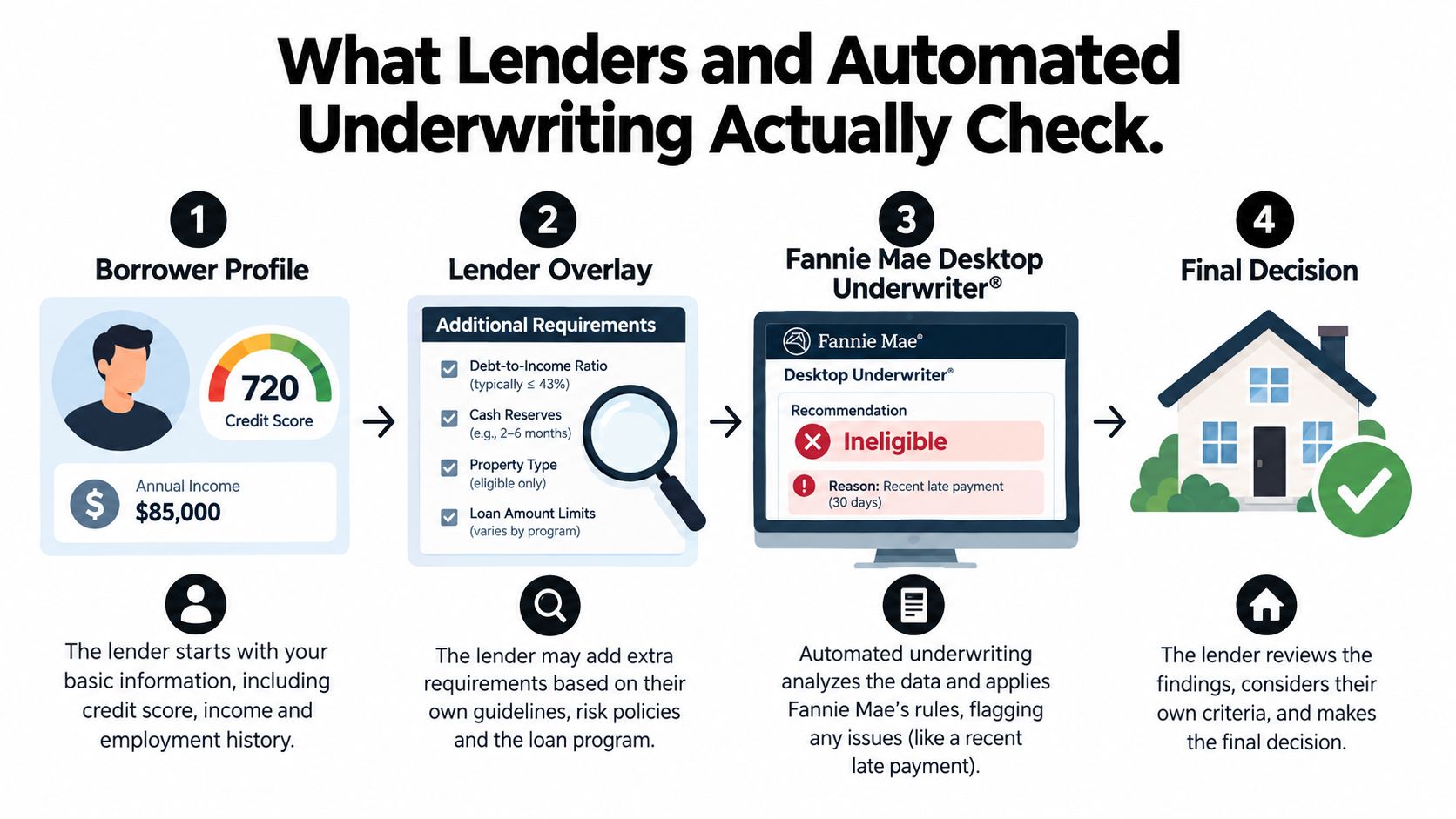
Most buyers imagine a person reading their file from top to bottom. In reality, your application usually passes through an automated underwriting system first, and that system compares dates before a human ever weighs your story. If the dates don't line up, the file can stop before it starts.
How Desktop Underwriter Reads Your Dates
Fannie Mae's Desktop Underwriter can return an Ineligible recommendation when a Chapter 13 was discharged within the previous two years, dismissed within the previous four years, or filed but neither discharged nor dismissed within the previous four years, and non Chapter 13 bankruptcies filed, discharged, or dismissed within the previous four years can also produce an ineligible result, under Fannie Mae Desktop Underwriter credit report analysis rules. The system relies on dates in your credit report. If a bureau shows the wrong discharge date, the system may judge you by that wrong date even when your court records are correct.
Lender Overlays Add Another Layer
Lender overlays are extra requirements a lender adds on top of program minimums, such as longer seasoning or additional documentation. One lender's decline doesn't always mean every lender will decline, but you shouldn't apply repeatedly hoping for a different answer. Ask upfront what the lender requires, and review credit help from Superior Credit Repair to understand what lenders examine beyond the score.
Affordability sits beside eligibility in this review. As you compare homes and payments, a resource like this western suburbs home buying guide can help you think through what payment fits your budget. A loan you can get isn't always a loan you should take.
Documentation Lenders Want to See After Bankruptcy
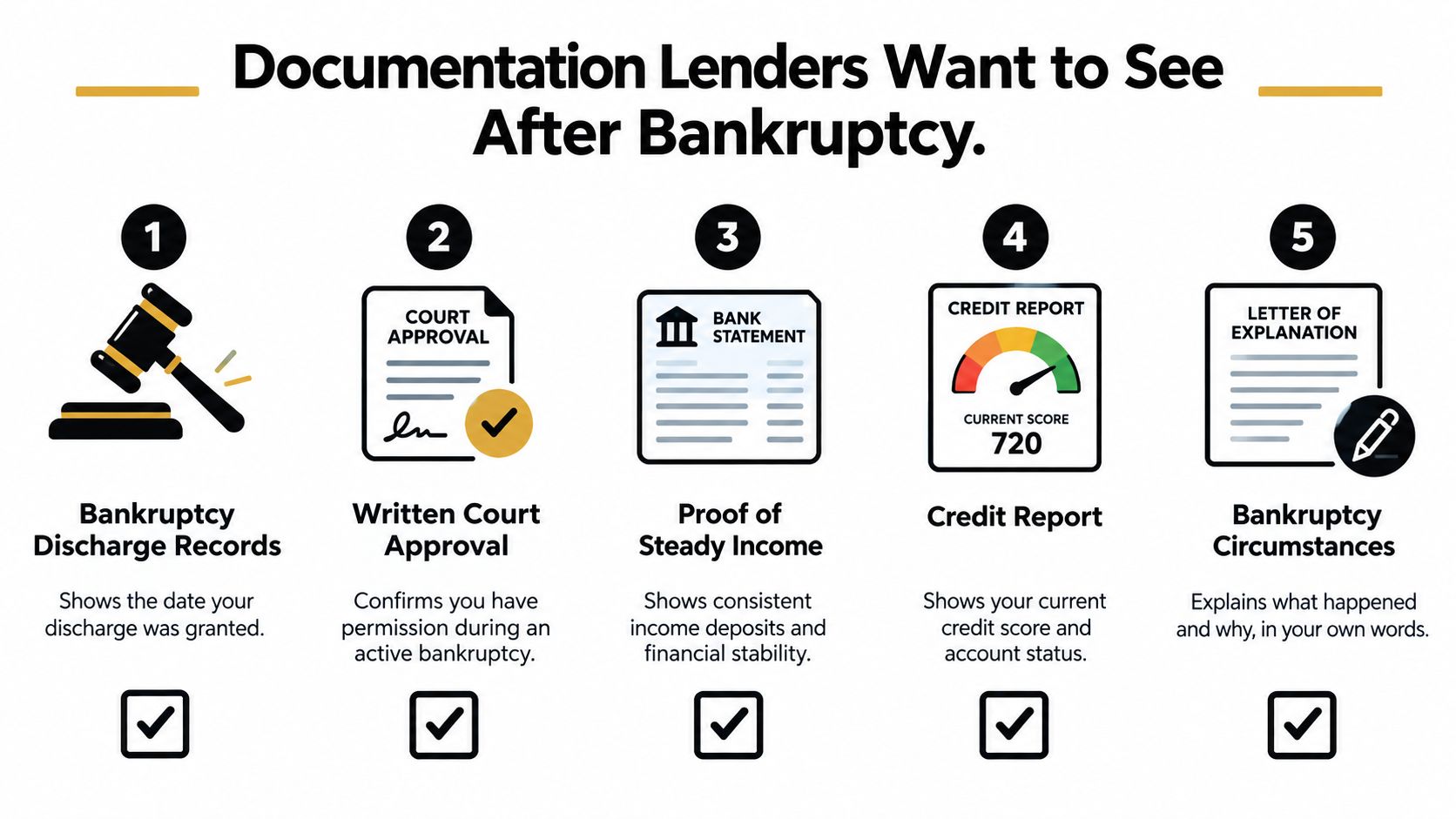
Underwriters don't approve stories. They approve documented files, and after bankruptcy your paper trail carries extra weight. Gathering records early turns a stressful scramble into a calm, organized review.
Court Records That Prove Your Dates
- Discharge or dismissal order: This document proves the exact date your waiting period starts from.
- Bankruptcy schedules: These list the debts included in your case, which helps the lender match accounts on your credit report.
- Written court permission: If you're in an active Chapter 13, the lender may need court approval for the mortgage transaction.
- Plan payment history: Records showing on time Chapter 13 payments support your case during an active plan.
Proving the Hardship Is Behind You
Lenders also want evidence that the circumstances causing the bankruptcy are unlikely to recur. A short, honest letter of explanation can describe what happened, what changed, and how you manage money now. Pair it with pay stubs, bank statements, and proof of steady income so the explanation is supported by records, not just words.
Build one folder, digital or paper, with your discharge order, schedules, income records, and explanation letter. You'll thank yourself every time an underwriter asks a question.
Compare every date and balance on your credit reports against your court records. Discharged debts still showing as past due, wrong balances, and incorrect discharge dates are credit report errors you can dispute through the legal verification process. A structured, documentation based credit restoration review focuses on inaccurate, outdated, or unverifiable entries. Valid bankruptcy information generally cannot be removed because you would prefer it gone, and no honest credit repair process promises otherwise. Results vary based on your file, documentation, and creditor responses.
Rebuilding Credit the Realistic Way Before You Apply
Rebuilding after bankruptcy isn't about tricks. It's about giving lenders a recent, boring, reliable record to read. Boring is good in underwriting. It means predictable payments and controlled balances month after month.
Start With Payment History and Utilization
Pay every current obligation by its due date, including rent, auto loans, and any cards you hold. Then look at credit utilization, which is how much of your available revolving credit you're using. Paying balances down well below your limits shows you aren't leaning on credit to get through the month. If you're researching starter or secured cards as rebuilding tools, guidance on how to fix bad credit with cards can help you compare options before you apply for anything.
Re-establish Credit Carefully
- Open one account at a time: A secured or starter card used lightly and paid on time can help you rebuild credit profile strength.
- Keep older accounts stable: Closing accounts in good standing rarely helps your presentation to a lender.
- Avoid new collections: A fresh collection after bankruptcy undermines your explanation that the hardship has passed.
- Follow a written sequence: A cleaner plan for credit recovery keeps rebuilding steps in order instead of reactive.
This is mortgage credit repair in its honest form, a long term improvement plan built on accurate reporting and steady habits. Whether you're pursuing credit repair for FHA approval, credit repair for VA loans, or credit repair for conventional mortgage approval, the foundation is the same. There's no overnight fix and no specific score jump anyone can promise you. What you can control is showing up, month after month, with payments made and balances managed. That's exactly the record lenders want to see, and it's how you improve credit score health in a way that lasts.
Common Pitfalls and Misconceptions to Avoid
The most common setback isn't the bankruptcy itself. It's a wrong assumption made with good intentions. Buyers count from their filing date, apply with confidence, and learn the lender is counting from a later discharge date. That gap can cost you an application fee and a hard inquiry for nothing.

Assumptions That Derail Applications
Eligibility isn't approval. Passing a waiting period only means a lender may consider you, and lenders can still require stricter standards than the program minimum. Another misconception is expecting a dispute to erase a valid bankruptcy. You can dispute negative accounts that are inaccurate or unverifiable, and a guide for mortgage applicants with bankruptcy explains what that process can and can't do. Accurate information generally stays for its reporting period, and anyone promising guaranteed deletions isn't being straight with you.
Quiet Problems That Offset Good Progress
High card balances, a new medical collection credit repair issue, or recent late payments can outweigh a clean bankruptcy timeline. Applying too early can also trigger an automated ineligible result that a few more months of patience would've avoided. Watch for collections dispute help, late payment dispute help, and charge-off dispute help needs early, while you still have time to verify accuracy properly.
Before any credit pull, ask the lender one question: What exact date are you using for my waiting period, and what document proves it?
If the answer is vague, slow down. A careful week of verification protects you better than a rushed application. Credit repair before buying a home works best when it's calm, documented, and finished before you're under contract pressure.
Your Lender-Readiness Checklist and 90-Day Action Plan
You don't need to do everything at once. You need the right things in the right order, and ninety days is enough time to organize a lender ready file if your waiting period is already satisfied or close. First time buyers, veterans, and FHA applicants can all follow the same sequence.
Days 1 to 30 Verify the Foundation
Pull your court records and confirm your chapter, discharge date, and dismissal date if one applies. Order your credit reports and compare every bankruptcy related date, balance, and account status against those records. List anything inaccurate, outdated, or unverifiable, and start the legal dispute process where documentation supports it.
Days 31 to 60 Stabilize the Profile
Bring every account current and keep it there. Pay revolving balances down, avoid opening several new accounts, and gather income, asset, and employment records into one folder. Draft your letter of explanation while the facts are fresh. A structured 90-day plan for mortgage-ready credit can help you sequence these tasks without guesswork.
Days 61 to 90 Prepare the Conversation
- Confirm your eligibility date: Match it to the program you want, whether FHA, VA, USDA, or conventional.
- Ask about overlays: Learn each lender's extra requirements before authorizing a credit pull.
- Check your budget: Approval amount and comfortable payment aren't the same thing.
Superior Credit Repair can review your credit report, help identify inaccurate or questionable items, and explain a step by step plan for improving your credit profile. You can request a free credit analysis or consultation to better understand your options. If this information helped you better understand your credit report or your next steps, we would appreciate your honest feedback. You are welcome to share your experience with Superior Credit Repair on our Google Business Profile. Results vary by credit file, and no review guarantees mortgage approval.
If you're preparing for bankruptcy and mortgage approval and want a calm, documented review of where your file stands, Superior Credit Repair can examine your reports for inaccurate or unverifiable items and outline realistic rebuilding steps toward lender readiness. Visit Superior Credit Repair to request a free credit analysis and understand your options before you apply.