


The most popular advice about old medical bills is also among the most dangerous: “If the bill is old, it's gone.” Age alone doesn't answer whether a creditor can sue, whether a collector may continue contacting you, or whether the account can affect a mortgage review. The medical bills statute of limitations and the credit-reporting timeline are separate systems, and confusing them can create avoidable problems for a first-time homebuyer.
A medical account might be too old for a lawsuit while still appearing inaccurately on a credit report. It might disappear from a report while the underlying obligation remains legally collectible through methods that don't involve a lawsuit. Before you pay, dispute, acknowledge, or ignore an old account, identify which timeline applies and gather the records that support your conclusion.
Table of Contents
- The Truth About Old Medical Debt
- How State Laws Define the Legal Deadline
- Actions That Restart the Collection Clock
- Credit Reporting Timelines and Bureau Rules
- Medical Collections and Mortgage Underwriting
- Auditing Your Medical Accounts for Errors
- The Formal Credit Dispute Process
- Building a Lender-Ready Credit Profile
The Truth About Old Medical Debt
An old medical bill doesn't automatically vanish from your financial life. The legal question is whether the creditor or debt collector still has time to file a lawsuit under applicable state law. The reporting question is whether the account may lawfully appear in your consumer report. Those questions can produce different answers for the same account.
The Congressional Research Service explanation of medical debt confirms that medical-bill statute-of-limitations rules are primarily state-specific, not controlled by one nationwide deadline. The limitations period generally determines how long a creditor or collector has to sue over an unpaid medical bill. It is separate from the period during which the debt may appear on a credit report.
Two clocks govern one account
Think of an account file as having two clocks:
- The lawsuit clock: State law determines whether a creditor can still bring a collection lawsuit.
- The reporting clock: Federal consumer-reporting rules, bureau policies, and state protections determine whether information may appear on a credit report.
The clocks don't necessarily start on the same event, and one clock can expire before the other. A debt can be beyond the period for filing a collection lawsuit yet remain visible on a report if the reporting period hasn't ended. A debt can also disappear from a report without the obligation itself being erased.
Mortgage applicants need this distinction because underwriting involves more than a score. A lender may review the account history, current balance, payment status, dispute notation, documentation, and applicable loan-program rules. An account that doesn't appear on one bureau may still appear on another, or a lender may request an explanation if records reveal an unresolved obligation.
Practical rule: Don't assume that an old medical collection is harmless, and don't assume that paying it is automatically the right first move.
Why internet shortcuts can hurt
Online advice often treats the age of a debt as if it supplies a universal answer. It doesn't. The relevant deadline can depend on the state, the legal classification of the account, and what happened after delinquency. A payment or written acknowledgment may affect the limitations analysis in some jurisdictions.
That matters before FHA, VA, USDA, or conventional mortgage preparation. A borrower who disputes an inaccurate item should preserve evidence. A borrower who receives court papers should respond appropriately, even if the bill appears old. A borrower considering payment or settlement should understand the possible legal effect before communicating about the account.
The first step toward a lender-ready profile isn't deleting every medical account. It's separating legal enforceability, credit-report accuracy, and underwriting treatment, then addressing each issue through the correct process.
How State Laws Define the Legal Deadline
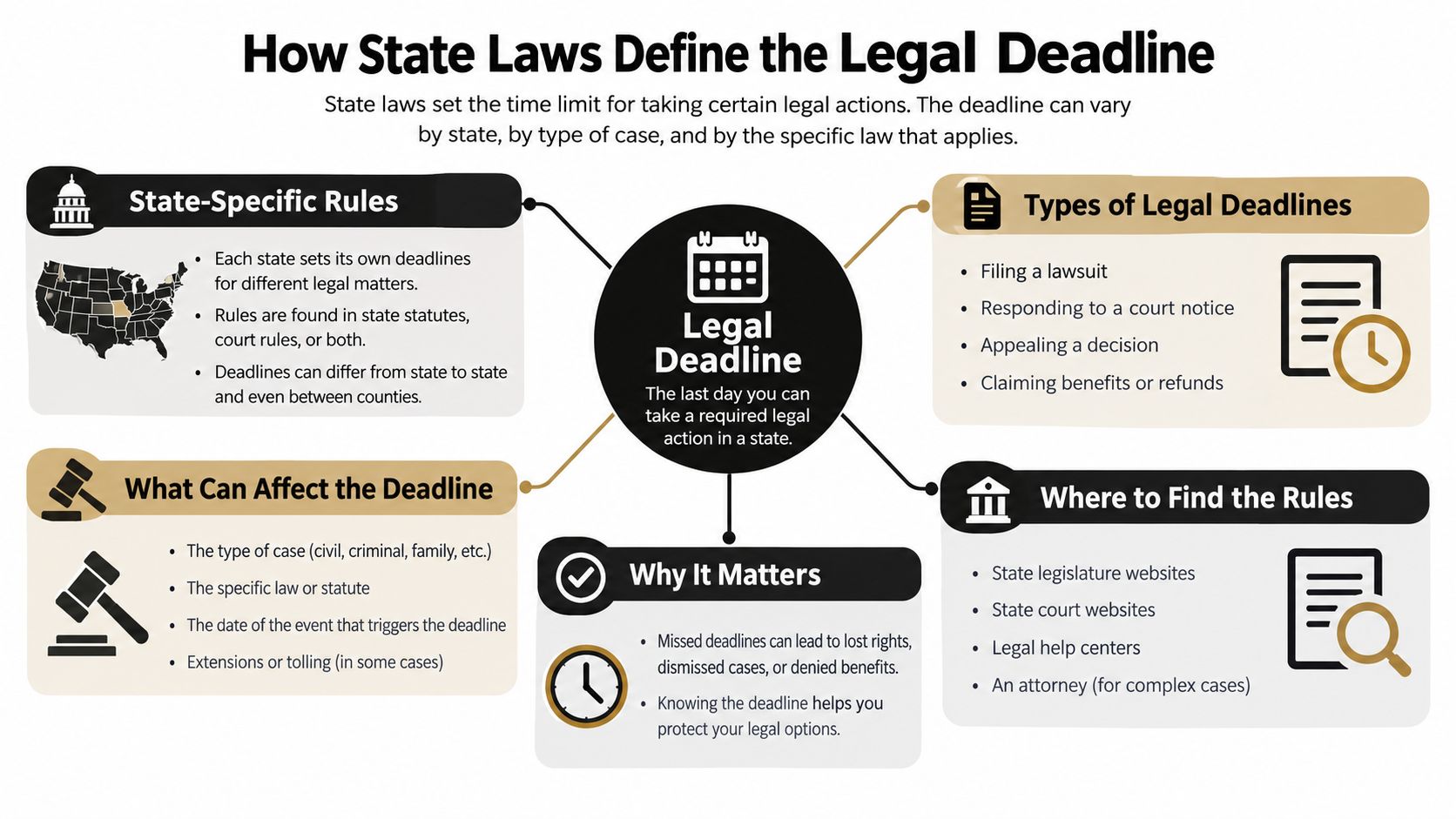
A medical bill can be too old for a lawsuit and still matter in a mortgage file. That tension starts with state law. There is no single federal deadline for suing over an unpaid medical account. The applicable rule depends on the debt's legal classification, the governing state law, and sometimes the state named in the underlying agreement, as explained by the Federal Trade Commission's debt-collection FAQ.
That is why the phrase statute of limitations needs precision. It refers to the legal deadline to file a lawsuit, not the separate timeline used for credit reporting. For borrowers preparing for FHA, VA, or conventional underwriting, that distinction matters because an underwriter may still review documentation tied to an account even if the lawsuit window is disputed or has expired.
A medical account may fall under rules for a written contract, an open account, or another category recognized by the state. The category can change the deadline. The starting date can also change. In some cases, the clock may run from a missed payment or first default. In others, the analysis turns on the account record, later activity, and the law of the state that controls the claim.
What to identify before calculating
Do not count from the date a collector first called or mailed you. Use the account record the way an auditor would and identify:
- The original creditor: the hospital, physician group, lab, ambulance company, or other provider that first billed you.
- The agreement or account type: the patient intake forms, financial responsibility language, statements, and any payment-plan papers.
- The first default: the point when a required payment was missed or the account became delinquent.
- Later activity: any payment, written acknowledgment, settlement discussion, new agreement, or transfer to collections.
- The governing state: where the services were provided, where you lived, where the agreement was formed, and whether any choice-of-law language appears in the documents.
The old medical collection debt rules for one state show why a nationwide shortcut can mislead borrowers. A mortgage applicant trying to clean up a file before underwriting should keep copies of bills, insurance explanations, payment records, and collection letters, because the legal deadline analysis depends on those details.
People who organize multiple legal deadlines sometimes use tools like track filing deadlines for PI cases. A personal-injury deadline tracker can help organize dates across matters, but it does not determine the limitations period for your medical account.
State law and the specific account history control that question. An expired limitations period may limit a lawsuit. It does not automatically erase the debt, stop all collection contact, or remove an existing judgment. If you are served with court papers, respond promptly, because a limitations defense often must be raised in the case.
Actions That Restart the Collection Clock
An old medical bill can sit for years, then become active again because of one small step by the consumer. In some states, a payment, a written acknowledgment, or a new promise to pay can change the limitations analysis. That is the trap. Borrowers often focus on whether the debt is old, while a collector and an underwriter may care more about what happened after it went old.
The safest approach is to treat any response as a legal event until you confirm otherwise under the law that applies to your account. A $25 good-faith payment, an email saying “I know I owe this,” or a signed hardship plan may look harmless. For limitations purposes, those details can matter more than the age of the original hospital visit.
This issue also creates confusion during mortgage prep. FHA, VA, and conventional underwriting do not use the statute of limitations as a shortcut for approval. An account can be too old for a lawsuit in one sense, yet still create underwriting questions if recent activity makes the file look unresolved, newly active, or poorly documented. Legal enforceability and lending risk are related, but they are not the same test.
Before you reply to a collector, slow the process down and build a paper trail.
Start with the documents in front of you. Save the letter, envelope, account number, stated balance, and the name of the collection company. Then compare that claim against your own records, including bills, insurance explanations of benefits, prior payment confirmations, and earlier collection notices. If the amounts or dates do not line up, you need that discrepancy documented before you say anything substantive.
Be careful with words as well as money. A casual written statement can matter. So can a token payment. So can a settlement form that sounds administrative but includes a fresh promise to pay. Read every proposed agreement closely, especially if it refers to a payment plan, resolution terms, or a reaffirmed balance.
Here is the practical rule: do not let urgency create a new timeline.
Paying may still be the right choice for a valid debt. It may help resolve an obligation that a lender wants addressed before closing. But payment does not automatically fix inaccurate reporting, erase prior collection history, or guarantee mortgage approval. On the other side, refusing to pay because you believe the statute has expired does not automatically end collection efforts, defeat a filed lawsuit, or neutralize an existing judgment.
Before communicating about an old medical account, get state-specific legal advice when limitations concerns are present. Credit-report review and legal advice solve different problems.
A lawyer or legal-aid provider can assess whether a claim appears time-barred and whether a recent action may have affected that defense. A credit professional can examine whether the account is reported accurately and documented well enough for mortgage underwriting. Keeping those lanes separate helps protect both your legal position and your loan file.
Credit Reporting Timelines and Bureau Rules
A medical debt can disappear from a credit report and still matter. It can also stay on a report after the deadline to sue has become a defense. For mortgage prep, that gap is the point to understand.
Federal credit reporting rules use a different clock from state lawsuit deadlines. For most collection accounts, adverse information can generally remain for up to seven years from the date of first delinquency that led to collection, according to the Federal Trade Commission's furnisher guidance. That start date matters because later events, such as a sale to another collector or a payment, do not automatically create a new reporting period.
Medical collections also follow bureau policy changes that affect whether borrowers and lenders even see the account. In March 2022, Equifax, Experian, and TransUnion announced that paid medical collections would no longer appear, unpaid medical collections would have a one-year waiting period before appearing, and medical collections with an original balance below $500 would be excluded, as summarized by the Congressional Research Service.
Reporting status doesn't settle legal status
Credit visibility and legal enforceability answer different questions. A report tells you what a bureau is displaying. A statute of limitations addresses whether a creditor can still win a lawsuit if the defense is raised properly under state law.
That distinction affects mortgage underwriting more than many borrowers expect. FHA, VA, and conventional lenders do not underwrite from a legal memo. They underwrite from the credit file, automated findings, and the documentation in your loan package. So a collection that no longer appears may still need explanation if it shows up elsewhere in records, and a collection that still appears is not proof that a lawsuit remains timely.
An account may be missing from a credit report because it was paid, falls below a reporting threshold, has not reached a reporting milestone, aged off, or is covered by a state restriction. None of those outcomes settles whether the debt is still enforceable.
State reporting rules add another layer. As of June 2025, 11 states had enacted laws restricting or banning the reporting of medical debt to consumer reporting agencies, according to the Congressional Research Service. Those protections vary by state, so a borrower should not treat one state's rule as if it controls a nationwide mortgage file.
Federal policy has shifted as well. The Consumer Financial Protection Bureau finalized a rule aimed at removing medical debt from most credit reports and limiting its use in underwriting, but a federal court vacated that rule on July 11, 2025, according to the same Congressional Research Service analysis.
| Question | Governing issue | What to review |
|---|---|---|
| Can the creditor sue? | State limitations law | Default, account classification, later activity, lawsuit or judgment |
| Can the account appear? | Federal reporting rules, bureau policies, and state protections | Date of first delinquency, reporting status, balance, medical classification |
| Should you dispute it? | Accuracy and completeness | Records that contradict the reported information |
| Will a lender react to it? | Loan program, automated underwriting, lender requirements, and file documentation | Findings, overlays, debt obligations, and explanations |
For a homebuyer, the practical takeaway is simple. Check both clocks, then document both. One clock affects legal risk. The other affects what an underwriter sees.
Medical Collections and Mortgage Underwriting
A medical collection doesn't automatically block every mortgage application. FHA, VA, USDA, and conventional programs may treat medical collections more leniently than other collection accounts, and available coverage indicates that Fannie Mae automated underwriting generally doesn't require medical collections to be paid before closing, as discussed by mortgage underwriting guidance on medical collections.
That doesn't make medical debt irrelevant. Underwriting can involve automated findings, lender overlays, disputed-account treatment, debt-to-income analysis, current payment obligations, and supporting documentation. The same credit report may produce different practical questions depending on the loan program and lender.
FHA and government-backed preparation
For FHA loan preparation, a borrower should ask the lender how medical collections will be treated under the current automated-underwriting findings and any lender-specific requirements. A medical collection may receive different treatment from a non-medical collection, but a lender can still request an explanation, proof of resolution, or documentation about a payment arrangement.
VA loan preparation follows the same principle. Veterans shouldn't assume that a medical collection automatically causes denial, and they shouldn't assume it has no effect. The lender reviews the complete credit profile, including payment history, other collections, current obligations, and the stability of the borrower's financial behavior.
USDA preparation also requires a complete file. A reporting dispute, a recent collection, or an account missing from one bureau may require clarification. The lender's requirements and automated findings control the practical outcome.
Conventional review and lender overlays
Conventional mortgage preparation can involve automated underwriting, including Fannie Mae findings, but lenders may apply overlays beyond the base program requirements. A lender may request records even when the program doesn't generally require payment of a medical collection before closing.
The most useful question is not, “Can I qualify with a medical collection?” Ask instead:
- Is the account accurate and current?
- Does it appear consistently across the credit reports?
- Is it disputed?
- Does it carry a payment obligation that affects debt-to-income analysis?
- Has the lender issued a condition requiring documentation?
- Are other negative accounts or high balances creating a larger concern?
For a practical discussion of lender questions, review Superior Credit Repair mortgage with collections advice. The objective is not to promise approval. It is to reduce avoidable uncertainty before the lender reviews the file.
Auditing Your Medical Accounts for Errors
Mortgage problems often start earlier than borrowers expect. The issue is not only whether a medical bill is old enough that a collector may have trouble suing on it. The issue is whether the account is being reported accurately right now, because underwriters review what appears in the file, not what you believe should have aged out.
Start with a paper trail. A medical account works like a chain of custody. One wrong handoff, an insurer adjustment posted late, a balance copied forward incorrectly, or a transferred account reported twice can turn an ordinary billing problem into a lending problem. Before you dispute anything, set up one file for each account and compare the credit report with records from the provider, insurer, and collector.
The National Consumer Law Center advises consumers to compare the reported date of first delinquency, balance, ownership, payment status, and medical-debt classification against account records and state protections in its state policy resources for consumer debt collection. That review matters because an underwriting condition may be triggered by an account that is inaccurately described, even if the legal deadline to sue is a separate question.
Build the file in a practical order. Start with the date of service and the original creditor, so you know which visit or provider the account came from. Then match each billing statement to the insurer's explanation of benefits. That comparison shows billed charges, allowed amounts, insurer payments, adjustments, and what the patient ultimately owed. Add proof of payments, including receipts, canceled checks, bank records, or portal confirmations. Last, record the credit reporting details: account number, balance, status, remarks, bureau, collection placement, current owner, and the reported date of first delinquency.
Some households use a virtual team for billing itemization tasks to sort large stacks of statements. That can make the records easier to review, but the borrower still needs to confirm the facts personally.
Then look for contradictions, not general unfairness.
A strong dispute points to a specific mismatch: a balance that failed to credit insurance, a paid account still shown as unpaid, duplicate collection entries tied to one bill, the wrong consumer, the wrong delinquency date, or a collector claiming ownership without support. Review insurance balance accuracy before you challenge the account. Accuracy is what matters. For FHA, VA, and conventional underwriting, that distinction can affect whether the lender sees a cleanly documented file or a credit report that raises preventable questions.
The Formal Credit Dispute Process
A credit dispute is a reinvestigation process, not an instant deletion request. Under the Fair Credit Reporting Act, a consumer reporting agency generally must conduct a reasonable reinvestigation and record the current status within 30 days when a consumer disputes the completeness or accuracy of information, according to the Federal Trade Commission's FCRA reference.
The period may extend by up to 15 additional days when the consumer provides relevant information during the original 30-day period. If the information is inaccurate, incomplete, or cannot be verified, the reporting agency must correct, delete, or permanently block the item from reporting.
Write a fact-based dispute
A strong dispute should identify the account and explain the exact problem. Include supporting records such as billing statements, insurance explanations of benefits, payment confirmations, identity-theft documentation, or correspondence.
Avoid broad accusations that don't identify a factual error. “This account hurts my score” doesn't establish inaccuracy. “The report shows a balance that the insurer's explanation of benefits and payment receipt contradict” gives the furnisher and bureau a specific issue to investigate.
Save a complete copy of the submission, attachments, delivery confirmation, and response. Record the date submitted and the outcome. This file becomes useful if the response is incomplete or the same inaccurate information returns.
Understand possible outcomes
The bureau or furnisher may verify the information, correct it, delete it, or permanently block it if it cannot be verified. The outcome depends on the evidence and what the data provider can substantiate. A dispute isn't a legal defense to a lawsuit, and it doesn't automatically reset or eliminate a state limitations period.
Superior Credit Repair's compliance-focused role is to help organize factual disputes involving inaccurate, outdated, incomplete, misleading, or unverifiable information. Consumers who want a practical guide to collection dispute evidence can use it to assemble records before submitting a challenge.
Accurate negative information generally can't be removed solely because it harms a credit score. Results vary based on the credit file, documentation, creditor response, account history, and current credit behavior.
Building a Lender-Ready Credit Profile
Correcting a medical collection is only one part of mortgage readiness. A lender-ready profile also reflects consistent payments, manageable revolving balances, stable accounts, and complete documentation. A dispute can address an error, but it can't replace the daily habits that build stronger credit.
Start with the account that creates the clearest factual problem. If insurance paid part of the bill but the report shows the original balance, organize the explanation of benefits and payment record. If a collection is duplicated, compare account numbers, original creditors, balances, and ownership. If the account is accurate, focus on lawful resolution choices and broader credit management rather than searching for an unsupported deletion.
Move from correction to stability
A practical homebuyer plan may include:
- Payment history: Keep every active account current and use reminders or automatic payments where appropriate.
- Credit utilization: Manage revolving balances before mortgage review, while avoiding new applications that could complicate the file.
- Collections and charge-offs: Separate valid obligations from reporting errors and obtain lender guidance before making major account changes.
- Debt-to-income awareness: Understand how required payments fit into the mortgage application, even when an account isn't affecting the score in the way you expect.
- Documentation: Keep statements, settlement records, insurance documents, dispute results, and correspondence in one accessible file.
A renter preparing for an FHA loan may need a different timeline from a veteran preparing for a VA loan or a buyer pursuing a conventional mortgage. A household recovering from hardship may need to address late payments, high utilization, thin credit, and medical collections together. The plan should reflect the actual file, not a generic promise.
If you need to overcome medical collection credit damage, begin by distinguishing an inaccurate account from a legitimate debt and a reporting issue from a legal limitations issue. Superior Credit Repair can help identify whether reported medical information appears inaccurate, incomplete, outdated, or unverifiable, but a legitimate and accurately reported debt isn't automatically removable merely because it is medical, as explained by the Consumer Financial Protection Bureau.
Mortgage readiness is a process of reducing uncertainty. You may not control every underwriting decision, but you can control whether your records are organized, whether disputes are factual, whether active accounts are managed responsibly, and whether you seek legal advice before taking an action that could affect an old debt.
Frequently asked questions
Does the medical bills statute of limitations have one nationwide deadline?
No. The deadline is primarily determined by state law, the classification of the account, the governing agreement, and the account history. A licensed attorney or qualified legal-aid provider should review the facts before you pay or acknowledge an old debt.
Does an old medical bill automatically disappear?
No. A debt may become too old for a lawsuit while remaining subject to nonjudicial collection contact or appearing on a credit report. A debt may also leave a credit report while the underlying obligation remains.
Can paying an old medical collection restart the legal deadline?
In some jurisdictions, payment or written acknowledgment can affect or restart the limitations period. Don't make a payment or sign a new agreement before understanding the law that applies to your account.
Will a medical collection automatically prevent FHA, VA, USDA, or conventional approval?
No automatic conclusion applies to every loan file. Medical collections may receive more lenient treatment than other collections, but automated findings, lender overlays, debt-to-income analysis, disputes, and documentation can affect the review.
What should I save before disputing a medical collection?
Save the date of service, original creditor details, billing statements, insurance explanation of benefits, payment history, date of first delinquency, collection-placement information, current ownership, and credit-report details. Your dispute should identify a specific factual error and include supporting records.
Superior Credit Repair can review your credit report, help identify inaccurate or questionable medical information, and explain a step-by-step plan for improving your mortgage readiness. Visit Superior Credit Repair to request a free credit analysis or consultation and better understand your options.
If this information helped you better understand your credit report or your next steps, we would appreciate your honest feedback. You are welcome to share your experience with Superior Credit Repair on our Google Business Profile. https://share.google/ePRpFvtCXwCjiJwOK