


Collection agency entries and transferred debts
A collection agency may report a transferred debt under its own name, so the original account and the collector entry need separate dates and balances. If the collection agency acknowledges a paid balance but still reports the old amount, retain that letter for the next investigation. If collection conduct is also disputed, the FDCPA involves different duties from the bureau accuracy process. A collection agency correction does not automatically change a lender’s chosen scoring version.
The credit repair industry offers products with very different levels of work, from a single documented dispute to ongoing monitoring and education. The credit repair industry cannot choose the score model a particular mortgage lender purchases. To identify the best credit repair company for a mistaken card closure, ask which issuer record it will review. Someone claiming to represent the best credit repair company should be willing to explain exactly which fees cover the resulting bureau follow-up.
Any credit repair company quoting a premium tier should name the bureau entry it will challenge and the creditor letter that contradicts it. A service tier might offer additional reporting reviews, ongoing communication or education. Whatever the tier, the credit repair work itself is limited to entries the consumer can show are wrong. Pulling all 3 credit reports on the same day shows whether one bureau carries a different balance, which is not the same as expecting three matching scores. Save the reports from all three bureaus with their pull dates so a later update can be checked against them. Following late payments that a creditor later corrects, compare the written confirmation with the next bureau disclosure to see whether the same payment month changed.
Credit monitoring in a premium package may flag a card that still shows as open, but only the issuer’s closure letter proves the status is wrong. The consumer should demand an itemized written scope before enrollment. A tiered credit repair plan should list which accounts it will check against statements before it bills for a second month.
Ask for the fee for each tier in writing before handing over full account records, because a credit repair firm that will not itemize is hard to hold to its promises. The package price does not establish that the company has greater power over bureau data. A top tier package sold in Alabama should disclose which services are included rather than promise an approval result.
Following charge offs, compare the owner and balance shown on the next report with the written creditor charge-off and assignment records before requesting a change. Collections listed with the correct creditor, balance and delinquency date cannot be erased simply because a premium package promises an improved score.
Check the premium service contract against the card statement closing date before paying to challenge an old displayed balance; some discrepancies reflect the next scheduled furnishing cycle. When comparing 3 credit reports, look at the same field on each one, since a bureau can lag a cycle behind the others. Before hiring a credit repair company for a premium tier, match each promised task to a specific account statement or creditor letter. A credit score improvement claim must be grounded in how the underlying account information changes.
When a card closure lowers the score
A USA credit repair package cannot reverse a card issuer’s legitimate decision to close an account. Before selecting a USA credit repair adviser, check whether the issuer’s closure date matches the bureau record. The fee for USA credit repair might purchase account review, but it does not change the card’s actual last reporting date.
Compare USA credit repair offers by asking whether the work addresses an erroneous balance or merely a lower score. Alerts bundled with USA credit repair do not reopen a canceled card.
USA credit repair advertising that promises a specific credit tier overlooks the effect of a genuinely closed credit line. If a USA credit repair provider proposes a new card as the solution, examine the interest and annual fee separately.
If a USA credit repair pitch includes unlimited letters, ask what new evidence will accompany a second investigation. Charging for a score prediction rather than document review is a warning sign in any USA credit repair plan.
If USA credit repair promotional materials suggest that accurate late history will disappear, request an explanation of the factual basis.
A USA credit repair specialist can help organize a closure letter, but the bureaus still evaluate whether a specific status is wrong. No USA credit repair company should describe an expensive package as a substitute for keeping balances manageable.
The best credit repair company for a closed-card question should explain whether the available credit limit was removed from the utilization calculation. When comparing the best credit repair company claims, insist on a clear distinction between disputing a false closure date and rebuilding credit through ordinary payment behavior. A borrower wondering “Can I fix my credit before applying?” needs the actual issuer statement and a realistic timing plan. “I want to fix my credit this month” is understandable, but a provider cannot promise a model-specific score change.
Expensive premium packages still depend on accurate account records and lawful dispute procedures. The tiers within credit repair services in Alabama need a meaningful explanation of the additional work, not inflated score claims.
A premium package may combine monitoring, document review and dispute preparation, but those are separate services with different costs. The consumer should examine the actual deliverables and whether any unnecessary borrowing product is being bundled into the offer. No subscription tier confers special authority over Equifax, Experian or TransUnion. A paid adviser can organize legitimate evidence, yet the credit bureau and furnisher retain their respective legal roles. Under FDCPA rules, a third-party collector’s calls and letters are judged separately from whether the bureau entry is accurate. The FCRA dispute process applies when the report itself conflicts with the issuer’s dated statement, not when a scoring model simply weighs an accurate entry heavily.
Credit repair companies offering premium score packages should itemize which account documents they will examine and which claimed reporting problems require a bureau dispute. An actual inaccuracy can be challenged with the relevant statement or creditor acknowledgment. A correction sent to the three bureaus may post weeks after the creditor’s online portal already shows it.
Fixing a real error can raise a credit score, but no package can say in advance by how many points. Truthful late payments and legitimate collections are not deleted merely because a higher fee was paid. Alabama consumers comparing premium packages need a clear description of what top tier dispute work actually covers. Before calling a difference across all 3 credit reports an error, confirm that each one lists the same account number. A collection agency may update its reported balance after payment, but that update does not authorize removal of a separate accurately recorded original-creditor delinquency.
A credit monitoring alert about a charge-off status is a prompt to pull the creditor’s records, not proof that the status is wrong. Results vary by file and cannot be sold as a fixed outcome. Credit repair assistance may be appropriate when the creditor confirms that a closed card was mistakenly marked open, provided the package includes a dated correction request rather than a score guarantee.
Laying the premium contract beside its itemized fees shows whether the credit repair work being billed matches a real error on the report.
A card’s charge-off history and its separate collection notice must be dated before disputing the card’s reported closure status; neither document alone proves the card remains open.
The credit repair contract should identify the work performed and the applicable consumer cancellation rights. In a credit report review, the corrected entry is the result to check, even if the score display has not moved yet.
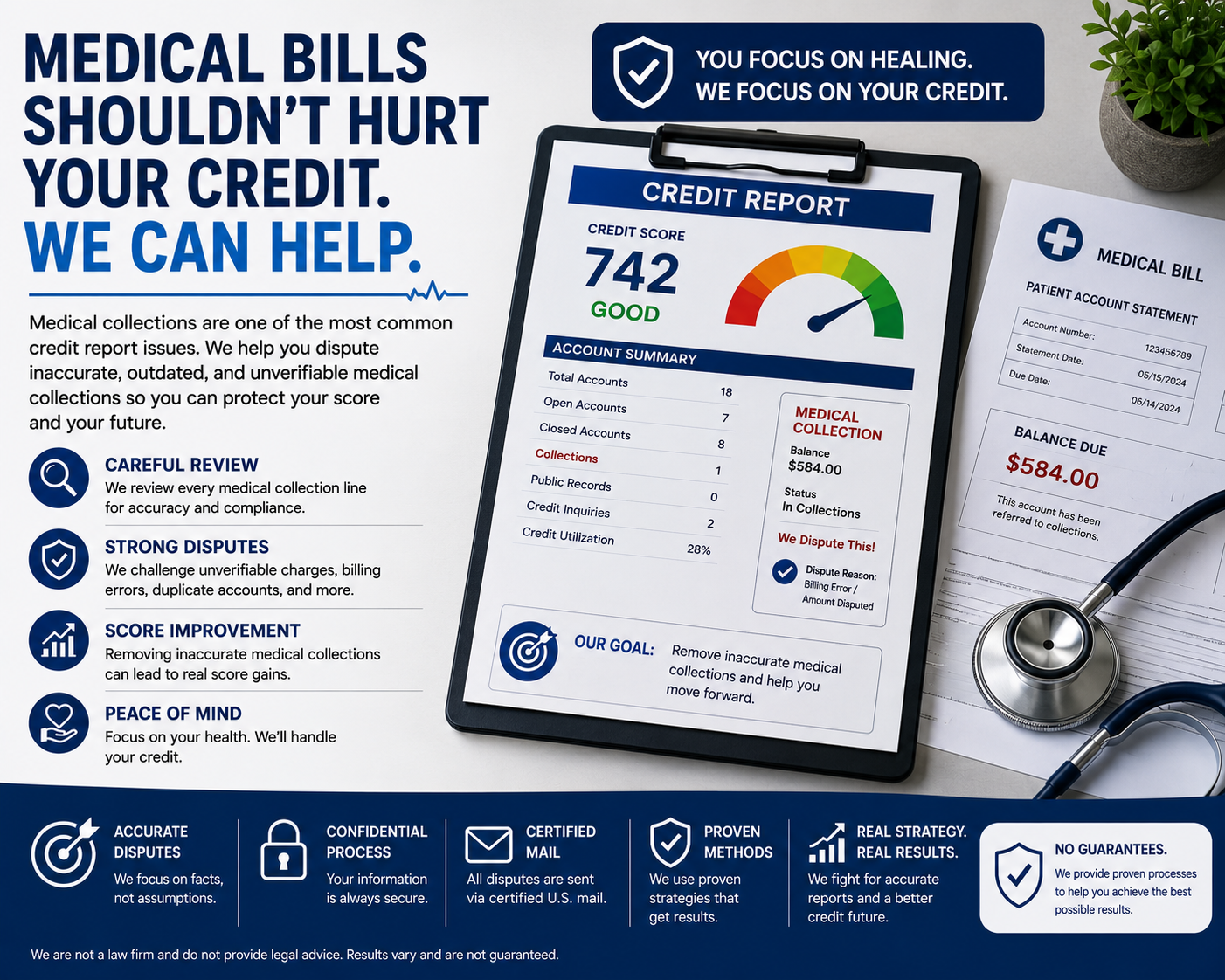
Evidence matters more than the fee tier
Legitimate accuracy work depends on evidence regardless of the fee tier.
Can I repair credit near me through a premium package without opening new borrowing products?
Account-review and dispute services should be separable from any suggested loan or monitoring purchase.
Bankruptcy records and data security in long engagements
Bankruptcies may affect underwriting even when the consumer has since opened and maintained a new card; the actual filing and discharge dates matter. A premium package cannot erase accurate bankruptcies merely to meet a mortgage application deadline. Under the FCRA, the accuracy and permissible reporting of particular accounts must be evaluated from the source facts, not a marketing claim.
A provider may request extensive financial files during a long engagement.
Premium branding is not evidence of adequate security.
Access controls, retention policies and secure transfer procedures should be explained.
Different credit scores may result from different models and report dates; compare the same card’s limit, balance and status before deciding that a premium score-repair package failed.
A credit restoration service selling a top tier still cannot change what the creditor’s records show about a payment.
A premium dispute contract should identify the exact account field, the creditor statement that contradicts it and who will send the supporting evidence to each bureau.
New accounts, late payments and creditor negotiation
Late payments on an established card can still matter after a new account reduces average account age; the two effects should be reviewed separately. New borrowing is not a remedy for accurately reported late payments, especially when another payment would stretch the monthly budget. An issuer’s correction letter is relevant to disputed late payments, while a promised score forecast is not.
Creditor negotiation may help someone seek a manageable repayment arrangement, but it does not compel a bureau to erase a correctly furnished delinquency. Keep any creditor negotiation terms in writing so a later payment-plan dispute can be distinguished from the original account history.
Account improvements and score changes do not occur in a fixed sequence for every consumer. Accurate data may remain unfavorable; an unsupported deletion demand should not be presented as expert work. A credible contract defines what the service will do and what happens when the underlying account is verified.
A credit score is a model-generated risk estimate; itemized premium-package fees cannot justify deleting an older delinquency that the creditor has documented accurately. Lawyers handle legal representation under their applicable duties.
The itemized fees should distinguish credit monitoring alerts from review of a card closure notice; only the closure notice and dated bureau entry can demonstrate an incorrect open status. A debt-collection lawsuit is not the same service as correcting a bureau balance.
A commercial report service should not imply that it can represent consumers in court without authorization.
Buying a top tier does not change lender priority
A lender does not give special priority to an Alabama applicant, or overlook unpaid collections, merely because a top tier service was purchased.
A package price cannot predict a bureau decision
Paid collections may still appear on an older credit file, so check the collector’s zero-balance update rather than assume the account must vanish. Unpaid collections should be matched with the original creditor’s account number before a consumer authorizes a costly package. Accurate credit reporting does not become inaccurate simply because a service claims to have a proprietary score formula.
A credit repair company serving different states should explain which services it actually provides and what rules govern its contracts. Credit monitoring alerts cannot guarantee a correction or a future lending decision.
A premium service may include more frequent communication, extensive document organization or optional monitoring, but none of those features gives the company authority to erase accurately reported negative history. Consumers should ask which records will be reviewed, who prepares the disputes and how the results will be communicated. The provider’s contract should explain the charges and relevant cancellation rights without relying on a promised point increase. A higher-priced package is not necessarily more appropriate for a straightforward payment-date correction.
A complicated case can justify specialized attention when multiple creditors furnish inconsistent information, identity records have been mixed or litigation is involved. The skills required for each issue are different. A credit report repair service can help prepare a factual reporting dispute; qualified legal counsel may be needed to interpret a court order or deadline. A lender determines the financing decision. Consumers should not pay for overlapping promises when the service’s actual scope does not address the problem shown by the documents. The bureau investigation result does not automatically determine which scoring model a lender will use.
Questions about the reporting decision
An advertised tier cannot establish what a lender will approve. Read the actual contract, reporting evidence and fees.
How do I choose help to repair credit near me when a service advertises a particular score tier?
The price of an enhanced package should correspond to identifiable services rather than implied authority over reporting outcomes. Discuss the score-repair package documentation
Cost should reflect completed work
A credit score can remain unchanged after a correct bureau update if other accurate accounts continue to influence the model. Any credit repair program that bills for a second review should identify the new document it analyzed and the date the bureau answered. When the collection agency already provided an accurate paid-in-full letter, a further dispute must address a real reporting discrepancy.
The borrower’s credit score may move only when the lender obtains an updated file, not when the adviser sends an invoice. A credit repair program should distinguish service-completion receipts from outcome guarantees. If the collection agency disputes the consumer’s claimed payoff, obtain the actual transaction confirmation before paying for another response.
The displayed credit score is not a substitute for an issuer’s dated card statement or the service provider’s written accounting of the work.
Credit repair advertising should describe the specific services and disclose cancellation rights. A credit repair company cannot assure an applicant that a particular score or mortgage approval will follow.
Credit monitoring helps consumers notice new account activity, whereas credit repair services concern potentially inaccurate reporting. Late payments that actually occurred cannot be erased merely because they affect financing.
Different top tier packages may combine monitoring and document review, but Alabama users should compare their actual costs. The consumer should be able to determine what was actually delivered. When premium credit-repair packages bundle legal referrals, check whether an actual attorney accepts representation; the bureau’s investigation period and a court response deadline are separate matters. Credit monitoring may flag an update but cannot establish independently that the reported account is inaccurate. The purpose of a credit report review is to verify the change shown on the actual bureau file, not to predict a particular score increase from an advertisement.
Recurring charges and renewal conditions should be understandable.
Covered credit-repair organizations face rules about disclosures and certain advance fees. Before signing up for a premium tier, get the task list and fees in writing and cross out anything that does not touch an account you actually dispute.
A credit report repair service cannot remove accurate charge offs merely because the consumer purchased the highest score-repair tier.
An itemized bill may show whether a credit report repair service completed a second review of the incorrect limit, but the bureau still decides how to report the supported correction.
Be cautious about nationwide claims
Compare the three bureaus by matching the actual card number and closing date on each disclosure, not by assuming that every model will display the same result. The three bureaus may receive a corrected balance at different times even if the issuer sent a single update.
The CROA imposes obligations on covered credit-repair organizations, including rules about required disclosures and certain advance payments. An Alabama consumer should ask how a nationwide seller complies with CROA before paying for a premium tier or signing up for recurring monitoring. A USA credit repair contract should say whether the account will be checked at all three bureaus or only where the disputed entry appears.
Credit repair companies that advertise nationwide premium tiers should disclose whether optional monitoring renews automatically and whether the dispute-preparation fee covers follow-up investigations. With USA credit repair subscriptions, determine when optional monitoring begins and how to cancel it. A firm may advertise service across states without having local staffed offices. For a USA credit repair engagement arranged remotely, review the secure-document and cancellation provisions before uploading bank statements.
No service provider can require the lender to approve a borrower. Accurate credit reporting requires the issuer’s actual closure and payment dates; a package invoice is not evidence that the bureau’s account date was wrong. Business registration and services should be checked rather than inferred from a city name. A search for USA credit repair can surface national firms, but the displayed city name alone does not establish a local office. Credit repair and debt repayment have different purposes when the statement balance and available limit are accurate.
An adviser’s summary of the account can help organize the facts, but it is not a loan approval from any lender.
Compare the alternatives
Credit scores can vary between a consumer dashboard and a lender’s mortgage model; comparing two numbers without the report dates can overstate the value of a premium service.
An Alabama top tier offer cannot lawfully override the accuracy requirements governing bureau reporting.
A complex mixed-file issue could justify professional assistance.
Consumers may file a straightforward bureau dispute themselves using official channels.
Credit restoration can address inaccurate reporting, while a costly but valid debt calls for a repayment plan instead.
Compare the alternatives by pricing a self-filed dispute against the premium contract’s actual document analysis, response tracking and optional monitoring charges. A USA credit repair comparison should separate the cost of obtaining reports from the charge for actually analyzing an incorrect account field.
A contract promising three monthly reviews is not equivalent to three completed bureau corrections; request dated work records before judging what the score-repair package delivered. If a higher fee covers a second investigation, its work log should identify the new creditor evidence submitted after the first bureau response. Keep the work log when a USA credit repair subscription ends so later changes can be compared with the original reports.
Package size does not prove specialist authority
Credit monitoring is useful for spotting an unfamiliar account, but the report and application records establish whether it belongs to the consumer. Credit monitoring bundled into a premium tier should carry its own cancelable price rather than an unexplained part of a flat fee.
A search result promoting credit repair Tampa services does not demonstrate professional authorization in Alabama. If a credit repair Tampa firm solicits an Alabama customer remotely, the customer should verify the actual business identity and written cancellation process. A credit restoration service must still explain why a particular card status is inaccurate.
A premium score repair package may include consultations, monitoring or document preparation, but none provides control over a scoring model. Product descriptions should distinguish the data they review from any legal representation or new loan referrals.
Before paying for a higher tier, ask which additional work is relevant to the identified account problem. The consumer can prepare a straightforward factual dispute without purchasing an expanded package.
- Improve Credit Score for Approval
- Remove Collections Legally
- Credit Repair Timeline
- Credit Repair Near Me
- Bad credit mortgage brokers near me
- Can i get a mortgage with a 550 credit score
- Can you get a joint mortgage if one person has bad credit
- FHA loan bad credit
- FHA loan minimum credit score requirements
- First time home buyer programs bad credit
- Hard money home loans for primary residence
- Home loans for 500 credit score
- How much down payment for a mortgage with bad credit
- How to buy a house with bad credit
- How to fix credit score quickly for a mortgage
- Minimum credit score for home loan
- No credit check mortgage lenders
- Portfolio lenders for bad credit
- Rent to own homes no credit check
- Subprime mortgage lenders
- Unconventional mortgage loans with bad credit
- USDA loan credit score requirements
- VA loan with poor credit
Related account reading: credit repair for mortgage approval · top verified credit restoration companies list · top rated credit report fixing service · fast track credit rebuilding program
What to check in the premium service contract
An itemized proposal can help the consumer decide whether advanced account research is needed at all. Review the score repair packages concern