


Preparing to buy in Floyd County
Rome’s housing runs from Victorian homes in the Between the Rivers district to newer brick ranches out toward Armuchee and Lindale. Plenty of local buyers work at the hospitals, at Berry College or Shorter University, or at the carpet and manufacturing plants that dot northwest Georgia. Few of them have great credit, and few need it. Many of them have steady paychecks and a few old accounts that went to collections during a layoff or a medical bill.
Those old accounts are what this preapproval cleanup plan is about. Most of the work happens in the four to six months before you apply, and nearly all of it is paperwork you can track on a single sheet of paper. Any credit repair plan you follow later starts from that page.
Stage one: write down where you stand
Before you send a letter or pay a dollar, make a credit snapshot. Put today’s date at the top, then list your three credit scores, every open card with its balance and limit, every collection with its agency and amount, and the month of your last late payment.
Update that credit snapshot on the same day each month. It keeps you honest about progress, and it gives a loan officer a clear picture if you sit down together before you’re ready to apply.
Getting the files
Download your free reports from AnnualCreditReport.com. Read the Experian, Equifax and TransUnion files in full, including the personal information section, and note every difference between them. A 3 bureau credit report from a lender merges all three, but reading them separately shows which bureau holds each problem. Equifax, Experian and TransUnion each sell lenders their own version of your history.
Stage two: sort the negatives
A careful credit report review sorts every negative item into three piles: items that are wrong, items that are right but old, and items that are right and recent. Each pile gets a different plan, and you can mark the piles right on your credit snapshot. A good credit repair service starts with exactly this sort.
Wrong items get disputes. Right-but-old items mostly get time, since their weight fades every year. Right-and-recent items are where your effort and money do the most good, because lenders read the last two years of credit history far more closely than anything before.
What counts as wrong
Wrong means more than a debt you don’t recognize. A late mark in a month you paid, a balance that should read zero, a debt listed under two agencies, an account past its seven-year limit, or a status of open on something you closed are all credit report mistakes worth challenging. Any of them on your credit report can drag down a score that should be higher.
Stage three: disputes that work
The Fair Credit Reporting Act gives you the right to dispute inaccurate credit reporting of any kind. Under the federal FCRA, the credit bureaus must investigate within about thirty days and correct or delete what can’t be verified. The federal FCRA also requires the credit bureaus to send you the results in writing, along with a free updated credit report if anything changed.
Write one letter per item, name the bureau and the account, say what’s wrong and what’s right, and attach proof. Certified mail gives you a dated receipt that starts the clock. Send a separate letter to each of Equifax, Experian and TransUnion if the error shows on more than one.
Disputes with the furnisher
The lender or agency that reported the item has its own duty under the FCRA rules to investigate when you dispute with it directly. A letter to both the bureau and the furnisher at once often gets faster results, especially for balance errors.
Keep a dispute log
List each credit dispute with the date sent, the bureau, the result, and the next step. If an answer comes back unchanged and you have more proof, send a second credit dispute with the new documents. Repeating the same letter with nothing new rarely works.
Stage four: collections
Collections are the most common negative in Floyd County files, and they’re the area where buyers have the most rights. Two federal laws apply: the FCRA covers what gets reported, and the Fair Debt Collection Practices Act, the FDCPA, covers how the collector behaves.
When a collection agency first contacts you, it must send a notice listing the amount, the original creditor, and your right to dispute. You then have thirty days to request validation in writing.
Using debt validation
A debt validation letter asks the collector to prove the debt is yours and the amount is right. Under the FDCPA, the collection agency must stop collecting until it answers. Many debts are sold in large batches with thin records, and a collector that can’t produce the original agreement or a statement from the original creditor may simply stop.
Debt validation and debt verification mean nearly the same thing in practice. Some people use validation for the request to the collector and verification for the proof the collector sends back. Either way, keep a copy of everything.
When validation fails
If the collector doesn’t validate but keeps reporting, dispute the item with the credit bureaus and include a copy of your validation letter and the mailing receipt. An unverified debt shouldn’t stay on your file.
Old debts and zombie debt
Georgia’s statute of limitations, the SOL, is six years for most written contracts and four for open accounts like some cards. After the SOL runs out, a collector can’t win a lawsuit on the debt, though it can still ask you to pay.
A time-barred debt that resurfaces years later is often called zombie debt. These accounts get sold and resold for pennies, and the newest buyer may call as though the debt were current. Be careful: making a payment or signing a promise to pay can complicate your rights.
Reporting limits are separate
The SOL and the reporting period aren’t the same clock. The credit bureaus keep negative items for seven years from the date of first delinquency, no matter how many times the debt is sold. If zombie debt shows up with a new, later date, that’s re-aging, and it’s a dispute worth sending.
Time-barred debt and lawsuits
If a collector sues on a time-barred debt, show up and raise the SOL as a defense. Courts don’t apply it automatically. Ignoring the suit can lead to a judgment even on a debt that was too old to collect.
Stage five: deciding what to pay
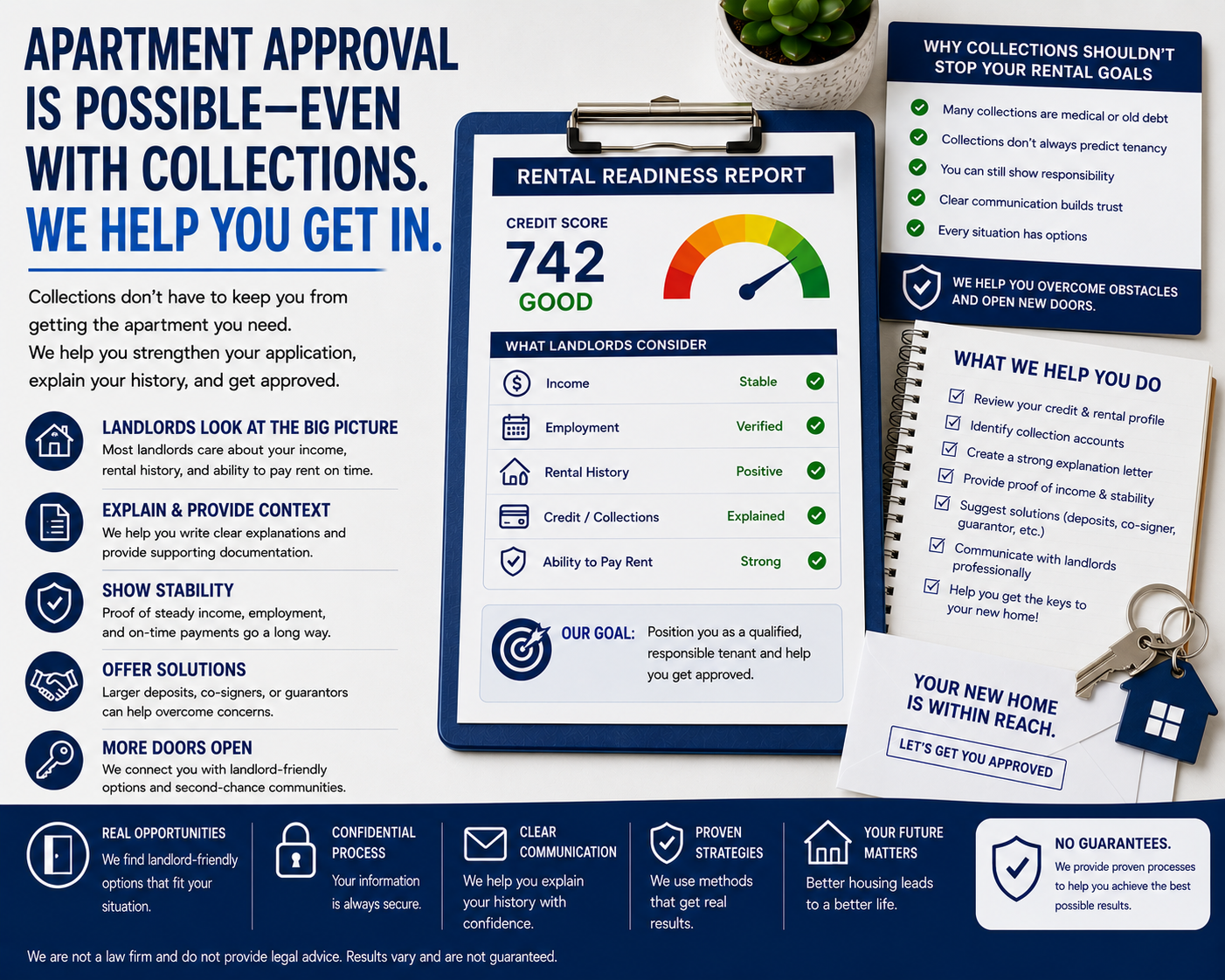
This is the stage of the cleanup plan where money changes hands. Not every collection has to be paid before a mortgage. FHA often ignores medical accounts and smaller balances; conventional lenders look at totals. Ask your loan officer which collections the lender requires you to resolve.
Paying a collection doesn’t delete it, but newer scoring models ignore paid collections entirely. If you pay, get the terms in writing first and keep the paid letter.
Settling for less
Debt settlement means paying less than the full balance to close an account. It can be a smart move on a legitimate debt, but the forgiven part may count as income at tax time, and the account will report as settled. Companies that run debt settlement programs often charge large fees and tell you to stop paying, which can trigger new charge-offs before anything is resolved.
Delinquent accounts that are still open
Delinquent accounts that haven’t gone to collections yet are worth fixing first. Bringing a card current stops new late marks from piling on, and lenders weigh the next twelve months of on-time payments heavily when they read your credit history.
Getting balances down
Card balances are the fastest lever. Credit card utilization is calculated from each statement, so paying before the statement date can lift your score within a month. Utilization is one of the fastest ways to raise low credit scores, so record each card’s new balance on your credit snapshot after it posts.
Keep each card under thirty percent of its limit, and under ten if you can. High credit card utilization on a single card can hurt even when your total is low.
Rebuilding with a deposit card
Buyers with low credit scores often have too few active accounts. Secured cards fix that cheaply. You deposit a few hundred dollars, which becomes your limit, and the card reports like any other.
A secured credit card used for one small bill a month and paid in full builds positive credit history quickly. After six months to a year, most issuers review the account and many return the deposit.
Choosing a secured card
Pick a secured card from a bank or credit union that reports to Equifax, Experian and TransUnion and has no annual fee. Store-branded deposit cards and prepaid debit cards don’t help, since prepaid cards don’t report at all.
How many secured cards?
One or two secured cards are plenty. Opening more adds inquiries and new accounts without much extra benefit. Many buyers with low credit scores pair a secured credit card with a small credit-builder loan from a credit union to show both kinds of history.
Reading your scores the lender’s way
Most mortgage lenders use older FICO models from each of Experian, Equifax and TransUnion and take the middle number. Free apps often show VantageScore, so your app’s credit scores may differ from what a lender sees.
Track the trend in your credit snapshot rather than any single number. When the lender pulls your credit report and score, the middle figure sets your price.
Score tiers and pricing
Lenders price in twenty-point bands. Moving from 659 to 660 or 699 to 700 can mean lower interest and smaller fees. If you’re a few points short of a cutoff, waiting one statement cycle can pay off.
Steering clear of bad actors
Most buyers who get burned in a cleanup lose money to credit repair scams rather than to collectors. The federal law that protects you is known as CROA. A credit repair company must give you a written contract and a three-day right to cancel, and it can’t charge before the work is done.
Common scams promise to delete accurate items, ask for payment upfront, or tell you to dispute everything on your report. Some even coach you to lie on applications.
The CPN pitch
Some sellers offer a CPN, a credit privacy number, as a fresh credit identity. It’s almost always a stolen Social Security number. Using one on a mortgage application is federal fraud, and lenders check numbers against government records. No legitimate firm sells a new credit identity.
What good help looks like
A real credit repair service tells you which items it will dispute and why, shows you every letter before it goes out, and is honest about what needs time. Credit restoration services that follow CROA don’t promise numbers. That’s the clearest line between honest firms and the scam outfits.
Doing it yourself
You can do everything a credit repair company does for the cost of stamps. Many buyers handle their own disputes and validation letters and do fine.
Help makes sense when the file is crowded: several collections, mixed files from a relative with a similar name, or identity theft. A credit repair company that knows FCRA rules can keep the timeline moving when you’re short on time.
A timeline that fits a move
Month one: pull your 3 bureau credit reports, run a credit report review, make your credit snapshot, and dispute errors. Month two: send debt validation letters and pay card balances down. Month three: follow up on unchanged disputes and update the snapshot, whether you’re working alone or with a credit repair firm.
By month four, many files that started with errors and high balances look different. A top-tier score isn’t required to buy in Rome. A middle score that clears your program’s minimum, with clean recent payments, is enough for many lenders.
The final sixty days
Don’t open accounts, finance furniture, or change jobs before closing. The lender re-checks your file before the loan funds.
What underwriters call strong
Great credit to an underwriter usually means a score above 740, no late payments in two years, low utilization, and a long credit history. You don’t need great credit to get approved; you need a file with no surprises, and lower interest follows as the score climbs.
Getting help locally
Weighing repair credit near me in Floyd County
A local office is handy for paperwork, but disputes run through the mail and online. Judge firms by the contract and fee terms, not the address. Ask a credit restoration service how it decides what to dispute, and ask a credit report repair service for a sample letter.
How Superior Credit Repair works with Rome buyers
We start by reading your 3 bureau credit report line by line and a dated credit snapshot. Then we flag items that look like inaccurate credit reporting, send disputes with your documents, and track every answer. Our credit restoration work is about accuracy, and we tell you plainly what needs time.
You leave with a plan built around your move, so your preapproval cleanup plan finishes when you’re ready to apply.
Want to see your file the way a lender will?
Get a Rome file check with a dated snapshot of every account.
Rome preapproval questions
What is zombie debt?
An old debt, often past the statute of limitations, that a new buyer tries to collect years later. Collections bought this way often lack paperwork, so ask for debt validation before paying anything.
How do I request debt validation?
Send a letter to the collection agency within thirty days of its first notice asking for proof of the debt and the original creditor. The collector’s reply is often called debt verification, and collections that can’t be validated should be disputed.
Does the FDCPA apply to original lenders?
No. It applies to outside agencies working collections and to debt buyers instead. Agencies that promise to erase collections for a fee are usually credit repair scams, not collectors.
How can I spot credit repair scams?
Upfront fees, promises to delete accurate items, and offers of a CPN are the clearest marks of credit repair scams. The Credit Repair Organizations Act bans all three.
Are secured cards worth it before a mortgage?
Yes. They help buyers with low credit scores add positive history on the way toward great credit, if opened at least six months before you apply and paid in full.
How do I make a credit snapshot?
A dated one-page summary of your credit scores, balances, and negative items used to measure progress until the lender pulls your credit report and score. It’s the starting point of any credit repair plan.
Is there repair credit near me that doesn’t charge upfront?
Pick a credit repair firm whose written contract bills only after work is completed.
What should a credit report review cover?
A full credit report review covers every account on your 3 bureau credit reports, checked for credit report mistakes such as duplicates and outdated items.
Is a credit restoration service the same as a credit report repair service?
Yes. Both are names for credit repair work that corrects inaccurate entries with Equifax, Experian and TransUnion. Credit restoration services that follow CROA work the same way.
Start your Rome cleanup plan
Book a Rome session and leave with a month-by-month schedule.