


Which records can lawfully change or disappear
A credit file can be corrected when information is inaccurate, incomplete, duplicated in a misleading way, the result of identity theft, or reported beyond the lawful period. Accurate current negative history is generally not removable simply because it is inconvenient. The nature of the item determines the route: an incorrect payment date belongs in a bureau accuracy dispute, while a mistaken account owner may require identity-theft documentation and direct contact with the furnisher.
Start with a complete copy of the report and identify the specific entry. A collection balance, a charge-off, a former address, and a hard inquiry are separate kinds of data. They should not be combined into a single accusation that the whole file is wrong. Check the actual fields against payment receipts, creditor statements, or application documents.
Wrong personal information and accounts that are not yours
An outdated public record and an accurate closed account do not follow identical removal rules. Any assistance advertised through credit repair services in Alabama should begin by identifying the record type and applicable reporting period.
Inaccurate items may be removed from an Alabama credit file when the evidence and reporting rules support correction.
Identify the legal basis for an account correction
Disputing a lender-supplied field requires the actual contract or statement. Accurate unfavorable account history can remain despite repeated requests for removal.
Which inaccurate entries could I repair credit near me without challenging truthful old payments?
Mixed identity, wrong amounts and documented dates may warrant a focused correction request.
Review an inaccurate or outdated itemNegative history and the passage of time
An Alabama consumer should not assume that every item from older history can be removed simply because it is unfavorable.
Court records, liens, and taxes require careful classification
Civil judgments and tax liens are generally not included in the standard nationwide credit reports today, but the underlying obligation or associated loan account may still affect other records. A state tax lien, property lien, or court filing may be found through public records even when it is absent from the major bureau file. Paying or releasing a lien is a legal or administrative step distinct from disputing a bureau account entry.
If an Alabama tax issue or land sales record appears in another consumer report, determine which reporting company supplies that record and what correction procedure applies. A creditor’s accounting balance should not be confused with a county property-record notation. Keep the release document if a lien has been satisfied; the correct destination for it depends on the system that contains the error.
Collection entries and payment status
A collection agency may report a legitimate unpaid obligation, and the original creditor may also report its historical account. The presence of both entries is not by itself proof of an unlawful duplicate. However, a collection balance, ownership, or date may be inaccurate. Dispute the specific mismatch and supply records such as a settlement letter or proof of payment. A zero-balance update and full removal are different outcomes.
A reporting company must investigate a properly submitted dispute under applicable law. A factual correction can occur without hiring a credit repair company. If a paid collection continues showing an amount due, the written settlement and receipt may help clarify the outstanding balance. If the collection was accurate and reported correctly, it can remain for the applicable period.
Inquiries and other report data
An inquiry authorized for a genuine application is not automatically removable because the application was rejected. Unrecognized access should be checked with the institution that requested the file. A security freeze can help prevent certain new accesses, but does not erase existing legitimate inquiries. Monitoring alerts can make a new account visible sooner, but they are not themselves proof of an error.
Request an updated report after a correction so the specific field can be confirmed. Preserve investigation notices and direct creditor responses. The useful final question is not how much of the report can be deleted, but which inaccurate or obsolete entries you can identify and support with reliable documents.
Errors, obsolete records and accurate negatives
A credit report may be corrected when an account is not the consumer’s, a payment date is wrong, an amount is unsupported or certain information is too old to be reported. Accurate negative history is not automatically unlawful. The consumer should compare the current bureau file with the lender’s statements and the applicable reporting period before deciding which entries warrant a challenge. A service promising removal of every adverse item regardless of the facts is not applying a legitimate accuracy standard. Negative items attributed to another consumer can be removed from an Alabama file after the necessary verification procedures. Land sales involve property agreements with risks and obligations distinct from the credit-report accuracy questions raised in a mortgage application.
Credit reporting agencies must generally investigate qualifying disputes about inaccurate or incomplete information, subject to applicable legal requirements. The credit reporting process does not allow a consumer to rewrite the history of an account merely because the debt was eventually paid. A charge-off may be accurately historical even when its current balance changes after settlement. An appropriately documented report correction should target the exact mistake rather than the overall appearance of the file.
Collections and transfer records
When a debt moves to a collector, the original account and collection line can both appear. Their presence does not automatically mean the consumer has been charged twice. The question is whether the reporting accurately identifies the creditor, status, balance and relevant dates. Collections may be removed when they are shown to be inaccurate or obsolete under applicable rules, but a valid ongoing account can remain despite the consumer’s objection. The credit reporting agencies may receive separate updates when a property-related lender changes how it classifies an obligation.
A collection that belongs to another person can involve identity theft or mixed-file problems. The proper records depend on which of those situations actually occurred. When an identity-theft complaint is supported, the consumer should follow the agency’s specific procedures and preserve the report and account communications. If an account is recognized, a budgeting or repayment discussion is separate from the process of correcting the bureau record. An Alabama borrower must distinguish obsolete items from correct current obligations before requesting that entries be removed.
How billing updates appear on the credit file
A credit restoration service can help a consumer organize provider statements and insurance adjustments, but only a supported discrepancy is a basis for an accuracy challenge.
Public-record information needs to be checked against the underlying court or property filing, including its status and date. A court docket or recorded release must be checked with the official source before treating a public-record entry as inaccurate. A public-record concern requires the docket, recording reference or release document that establishes the alleged discrepancy.
How to make a supported correction
Obtain the file and preserve the page displaying the disputed item. Identify its account name, partial number, current status, reported balance, and key dates. Compare those details with the creditor’s records, then explain the alleged error in clear language. If the account results from identity theft, the documentary requirements may differ from those for a billing mistake. Send the dispute through the bureau’s approved channel and retain the response.
After an investigation, request the updated credit report and compare it with the original. Credit reporting may change at different times among bureaus, so the latest notice does not prove that all three files were updated simultaneously. If the particular field remains demonstrably wrong, consider what additional evidence or complaint channel is appropriate. A credit report review should be focused on verified facts rather than speculation.
Choosing help without a deletion promise
A credit restoration service may teach consumers how to read a report and understand the distinction between valid records and incorrect ones. A credit report repair service can assist with a supported dispute, but it cannot force deletion of an accurate debt merely because the event is unfavorable. Disputing items that should be removed requires an Alabama consumer to identify the relevant dates and source records.
Credit restoration includes ordinary efforts to maintain current accounts and avoid new preventable delinquencies. A precise credit report review can improve the reliability of the information used for lending decisions even where a consumer’s score does not immediately increase.
Confirm who supplied the report information
A credit report repair service should identify the particular outdated or misattributed entry being reviewed and disclose the steps included in its written agreement.
The credit reporting agencies may receive balances, status codes and other account information from different furnishers at different times. The same obligation can have an original creditor entry and a later collector entry. A reported collection is not automatically inaccurate because the consumer sees more than one related line. Verify the ownership, dates and current amounts before requesting a correction.
A dated credit report makes it possible to determine whether an investigation actually changed the field being challenged. If the bureau corrects a wrong amount, the remaining accurate history may still be displayed. That result should not be described as a failure merely because it did not produce a full deletion. A good credit report review distinguishes record accuracy from a separate repayment or budgeting issue.
Preserving corrected reports for later applications
The update notice may identify a corrected account balance, but the consumer should also obtain the latest report and preserve both copies. A later lender can evaluate information from its own reporting product, making a dated record useful when a dispute concerns an old account. A clear description of the actual correction matters more than an advertised deletion count.
Additional information about obsolete and inaccurate entries
A reliable creditor statement establishes the factual question that an account dispute should examine.
- Check the original delinquency date when an older negative account appears to have been updated recently.
- Distinguish an accurate account from an entry that belongs to another consumer.
- Preserve the collection notice and original creditor information when ownership is disputed.
- Identify the exact reported balance or status that conflicts with the lender statement.
Review which adverse items can factually change
A document comparison can establish whether the item is a real reporting error or lawful historical information. Keep updated bureau disclosures and lender notices for that distinction.
Discuss the documented reporting correctionWhich records establish whether an item can be removed
Removal requests are decided using the type of information at issue and the relevant evidence; account payment history, public records and lender criteria require different sources.
- Credit Repair Near Me
- Mortgage Approval Credit Repair
- Credit Repair Consultation
- Improve Credit Score for Approval
- Bad credit mortgage brokers near me
- Can i get a mortgage with a 550 credit score
- Can you get a joint mortgage if one person has bad credit
- FHA loan bad credit
- FHA loan minimum credit score requirements
- First time home buyer programs bad credit
- Hard money home loans for primary residence
- Home loans for 500 credit score
- How much down payment for a mortgage with bad credit
- How to buy a house with bad credit
- How to fix credit score quickly for a mortgage
- Minimum credit score for home loan
- No credit check mortgage lenders
- Portfolio lenders for bad credit
- Rent to own homes no credit check
- Subprime mortgage lenders
- Unconventional mortgage loans with bad credit
- USDA loan credit score requirements
- VA loan with poor credit
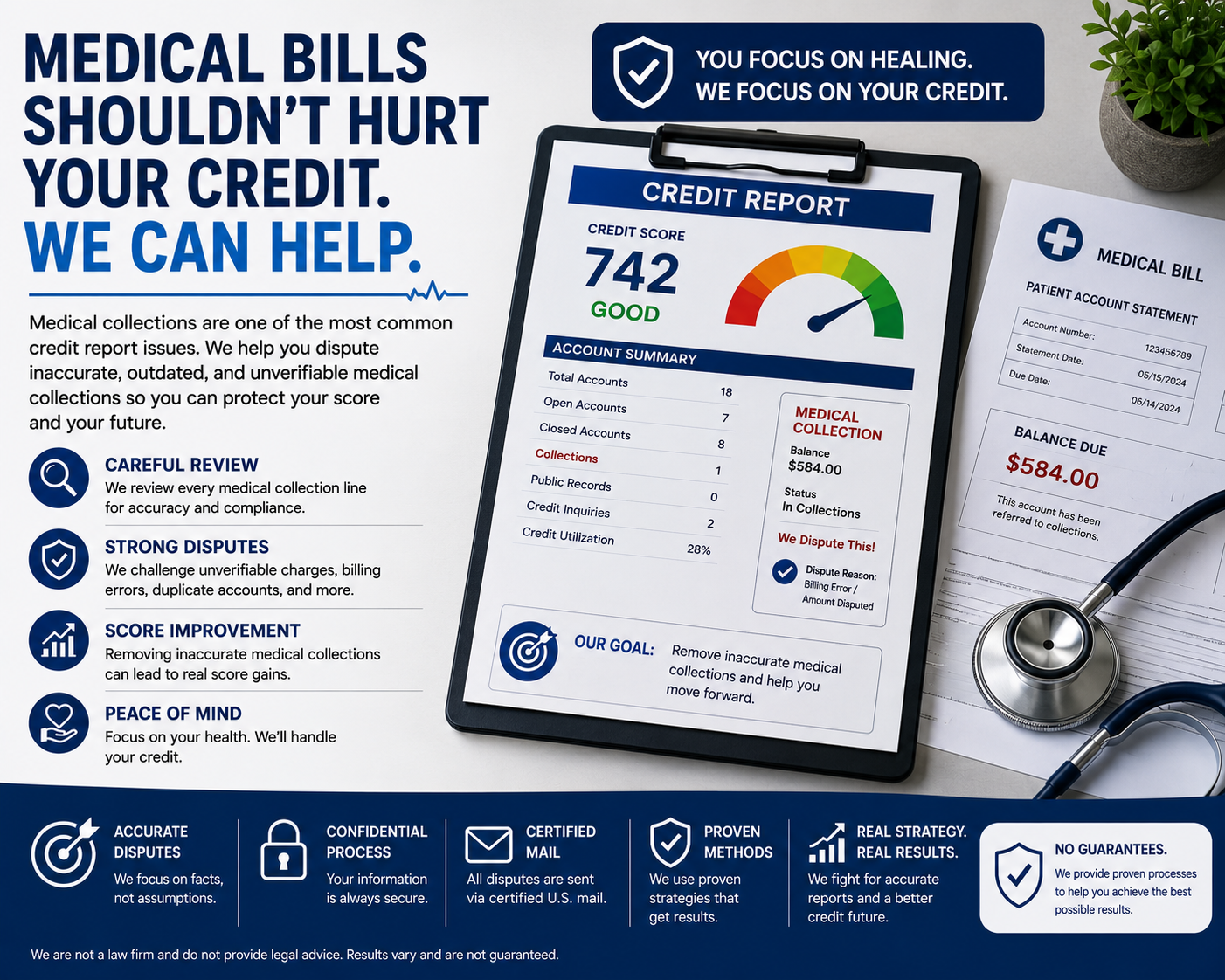
- can medical bills be removed from
Related account reading: bessemer Alabama home loan credit report review · can credit bureau deletions be fast tracked · the difference between vantagescore and FICO
Questions about the reporting decision
The original delinquency date matters for reporting age; a recent collection update does not automatically restart it.
Can I repair credit near me when an account is obsolete but a collector recently updated it?
A recent collector update does not by itself change the date from which a negative entry’s federal reporting period is measured. Compare the original delinquency date with creditor records and challenge a documented error in that date. The collector’s right to seek payment is a different question.