

Atlanta: a clearer look at what the topic really means
For this Georgia page, strategic credit evaluation and repair services is framed as a documentation workflow rather than a shortcut to a particular score. During this Atlanta what the topic really means pass, line up revolving balances using creditor statements prior to a lender discussion; and note which source would change the conclusion. During this Atlanta what the topic really means pass, keep a dated before-and-after entry whenever rebuilding habits changes. When payment confirmations adds new facts, retain the earlier note so the Atlanta history can be reconstructed. Consider a consumer starting a credit review while working through strategic credit evaluation and repair services in Atlanta. If the report shows an old negative item being misunderstood, match creditor statements with credit reports and store the source beside the tradeline question.
For Atlanta’s next pass through what the topic really means, keep account status distinct from personal information. Two labeled workstreams are easier to verify than one broad credit-cleanup task. When a Georgia consumer reviews strategic credit evaluation and repair services, the note for personal information should identify the change, its date, and the record supporting it. When new payment confirmations arrives, update the working note while preserving the baseline for comparison. Inside the what the topic really means notes for Atlanta, do not apply repeatedly while the file is still being reviewed; instead, compare payment history with balance records before assigning a dispute, rebuilding, or lender question. In the Atlanta worksheet, keep personal information distinct from payment history. Keeping the issues distinct makes later bureau-file changes easier to attribute to the action that actually occurred.
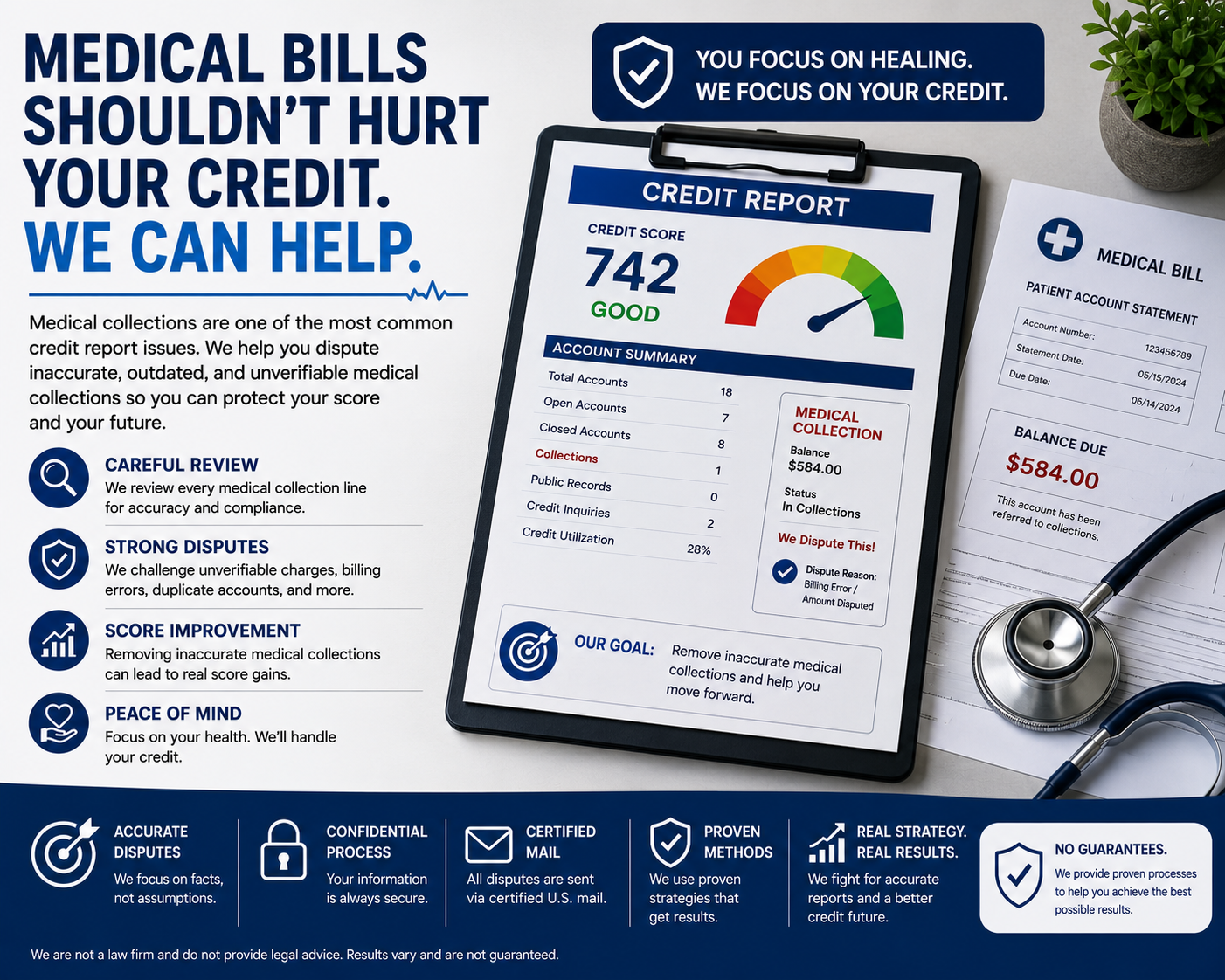
Using evidence—not assumptions—for approval-readiness context
For someone in Georgia reviewing strategic credit evaluation and repair services, relate account status beside identity documents before the later decision; without mixing that question with credit-report accuracy. At this Atlanta stage of the account-file review, use separate checkpoints for credit-report accuracy and collection activity. This gives each question its own evidence, decision, and follow-up path. As the Atlanta approval-readiness context work continues, review the evidence behind a quick-fix promise before deciding it belongs to dispute or rebuilding work. If the records confirm the information, move the file toward account management, timing, or rebuilding. When evidence and report data differ, identify the exact inconsistency and retain the proof document. For the Statewide Georgia area planning file, treat a generic dispute without evidence as an evidence question ahead of choosing a remedy. When the source material agrees with the report, move to the financial or rebuilding decision instead of inventing a documented correction request. When the evidence shows a genuine inconsistency, name it precisely and include the record supporting the consumer.
In Atlanta, Georgia, approval-readiness context is easier to retrace when each entry names its underlying record so the next move remains account-specific. For the Atlanta strategic credit evaluation and repair services review, put saved review notes next to account status and label the question as documented, needs comparison, or needs lender input; and keep the reference document in the same folder. During this Atlanta approval-readiness context pass, place a generic dispute without evidence on the accuracy checklist until the supporting records are reviewed. Supported information calls for a different plan than an actual incorrect report field. If the records conflict, identify the precise field and the source that supports a correction. For the Statewide Georgia area planning file, place a new inquiry before an application on the accuracy checklist until the supporting records are reviewed. Supported information calls for a different plan than an actual credit-report inaccuracy. Describe a genuine mismatch in precise terms and pair it with the supporting consumer record.
Across the Statewide Georgia area, the review should distinguish location planning from credit-report accuracy and the local schedule can remain a separate planning matter. Inside the approval-readiness context notes for Atlanta, keep personal information distinct from revolving balances. A split review keeps one account concern from becoming a catch-all explanation for the rest of the file. For Atlanta’s next pass through approval-readiness context, decide first whether a quick-fix promise matches the available source records. If the reported information is accurate, the response may shift to account management or rebuilding. When evidence and report data differ, identify the exact inconsistency and retain the proof document. Think about a household preparing for an application in the Statewide Georgia area area. If a later report reveals a generic dispute without evidence, relate credit reports beside payment confirmations and attach the supporting date to the review entry.
What Atlanta consumers should separate from positive credit rebuilding
What a second assessment pass can reveal
- For Atlanta, use written correspondence to decide whether account status belongs to accuracy review or working toward a clearer approval-readiness conversation; without blending it into a separate account matter.
- In the Atlanta notes, check whether revolving balances changed since the earlier report and use payment confirmations to explain the difference; and leave the open item held for more evidence.
- For the Statewide Georgia area file, state one focused question about account status, then identify which payment confirmations could answer it; before closing the positive credit rebuilding question.
- For the Statewide Georgia area file, preserve credit reports when it supports the present assessment of personal information; without tying it to a separate credit issue.
What a second review cycle can reveal
- In the Atlanta notes, preserve credit reports when it supports the working view of account status; and name the document behind the conclusion.
- In the Atlanta notes, treat credit-report accuracy on its own checklist line and use credit reports as the reference; and leave the open item unresolved for now.
- On the Atlanta checklist, keep balance records beside the question about account status; before the next Atlanta decision.
- In the Atlanta strategic credit evaluation and repair services review, use payment confirmations to decide whether account status belongs to report-accuracy work or rebuilding for steady positive history; and pair the date with the Atlanta entry.
The common misconceptions checkpoint for this credit file
At this Atlanta stage of the credit-file review, keep a dated before-and-after entry whenever recent inquiries changes. When payment confirmations adds new facts, retain the earlier note so the Atlanta history can be reconstructed. For the Statewide Georgia area planning file, put identity documents next to collection activity and tag the review line as matched, needs source support, or requires a separate decision; so the household can see which issue is still open. Inside the common misconceptions notes for Atlanta, use separate checkpoints for collection activity and revolving balances. That makes a manageable set of next steps easier to pursue without changing unrelated parts of the file. At this Atlanta stage of the bureau-file check, put written correspondence next to personal information and mark the account note as matched, needs source support, or requires a separate decision; and keep the reference document in the same folder.
For the Statewide Georgia area planning file, do not treat the process as a guaranteed outcome; a rebuilding plan works best when current obligations stay on time. Let account histories guide the conclusion about payment history, then summarize it for the common misconceptions workstream. For the Statewide Georgia area planning file, do not discard old records before the account history is understood; instead, check credit-report accuracy against identity documents, then note the exact field that remains unresolved. In the Atlanta worksheet, review the evidence behind a new inquiry before an application before treating it as a dispute or rebuilding problem. When the reporting is supported, the response may involve account management or rebuilding instead of a dispute. When source documents conflict with the bureau file, identify the precise difference and preserve the reference document.
A practical Georgia approach to decision points
In this Georgia strategic credit evaluation and repair services record, test collection activity against creditor statements before another report pull; so the record can be handed to another professional without losing context. As the Atlanta decision points work continues, check payment history beside identity documents before another report pull; before assigning any action to credit-report accuracy. At this Atlanta stage of the bureau-file check, do not discard old records before the account history is understood; instead, compare collection activity using written correspondence and write down the supported conclusion. During this Atlanta decision points pass, place account status and personal information on different review lines. It also keeps the decision points work from becoming one broad, hard-to-audit task.
In the Atlanta worksheet, write a source-specific question for payment history before gathering more paperwork. More paperwork is not automatically better; the source should speak directly to the account fact being reviewed. Take the example of a household preparing for an application in the Statewide Georgia area area. If the concern is a quick-fix promise, match balance records beside saved review notes and preserve the document behind the current finding. In this Georgia strategic credit evaluation and repair services record, do not make a large credit change only because a quick-fix ad recommended it; instead, preserve creditor statements, review revolving balances, and document why a follow-up is or is not needed.
How evidence and records fits this Strategic Credit Evaluation and Repair Services review
Imagine a household preparing for an application in the Statewide Georgia area area. If a later report reveals a generic dispute without evidence, organize saved review notes next to credit reports and keep the dated source with the note. At this Atlanta stage of the bureau-file check, keep the boundary clear: results depend on the facts in the file and the records available. Check collection activity with credit reports and leave a short, dated instruction for the next reviewer. In this Georgia strategic credit evaluation and repair services record, do not assume a paid balance automatically changes every reporting field; instead, set side by side collection activity using identity documents and write down the supported conclusion.
For Atlanta’s next pass through evidence and records, identify the document most likely to resolve the open question about credit-report accuracy. Keep the evidence narrow enough that another reviewer can see why it supports or challenges the reported field. In this Georgia strategic credit evaluation and repair services record, keep expectations grounded because a rebuilding plan works best when current obligations stay on time. After checking credit-report accuracy with credit reports, record the finding and the person who should handle the next action. In the Atlanta worksheet, put payment confirmations next to collection activity and record the status as verified, unresolved for now, or refer to the right professional; without reaching a conclusion before the record is complete.
The related next steps checkpoint for this credit file
State and local context without quick-fix promises
What should a Atlanta consumer verify first about strategic credit evaluation and repair services?
Picture a consumer starting a credit review in Atlanta. Where the file contains an old negative item being misunderstood, check payment confirmations using balance records and keep the comparison in the same evidence folder. At this Atlanta stage of the report-file audit, keep credit-report accuracy distinct from collection activity. Separate workstreams make the reason for each action easier to see, especially when one issue is factual and the other is financial. In the Atlanta worksheet, review the evidence behind an inaccurate account field before treating it as a dispute or rebuilding problem. When source records support the reporting, management or rebuilding may be more appropriate than a dispute. If available records do not support the account field, separate the questionable field and attach the supporting document.
When should a consumer ask the lender instead of the credit-repair company?
Within this Georgia review, the review should distinguish location planning from credit-report accuracy so the working file remains useful in later review. At this Atlanta stage of the report assessment, do not assume a paid balance automatically changes every reporting field; instead, use credit reports to test the concern about account status and keep only the facts the record supports. In the Atlanta worksheet, put saved review notes next to revolving balances and mark the account note as supported, needs another record, or needs outside guidance; without reaching a conclusion before the record is complete. For Atlanta’s next pass through state and local context, put credit reports next to credit-report accuracy and record the status as matched, needs source support, or requires a separate decision; so the state and local context section shows the working status.
When should a consumer ask the lender instead of the credit-repair company?
During this Atlanta state and local context pass, a change involving payment history needs the date, source, and a short reason. When new credit reports arrives, revise the file entry without losing the baseline. During this Atlanta state and local context pass, do not discard old records before the account history is understood; instead, compare personal information with payment confirmations before assigning a dispute, rebuilding, or lender question. In this Georgia strategic credit evaluation and repair services record, do not treat an accurate negative item as though it must be an error; instead, line up revolving balances in relation to written correspondence and write down the supported conclusion. For Atlanta’s next pass through state and local context, track collection activity independently from payment history. That makes a manageable set of next steps easier to pursue without changing unrelated parts of the file.
What should a Atlanta consumer verify first about strategic credit evaluation and repair services?
For the Statewide Georgia area planning file, state the documentation question for account status before gathering more paperwork. Choose records for relevance, not volume, and note exactly what each document is supposed to prove. While organizing strategic credit evaluation and repair services in Atlanta, give collection activity and rebuilding habits separate lines in the review notes. Separate notes reduce the chance that one concern drives unnecessary changes elsewhere. For the Statewide Georgia area planning file, use separate checkpoints for credit-report accuracy and personal information. That makes a manageable set of next steps easier to pursue without changing unrelated parts of the file. During this Atlanta state and local context pass, ask which source could settle the remaining question about credit-report accuracy. More paperwork is not automatically better; the source should speak directly to the account fact being reviewed.