The issue is rarely just one account. A single collection, charge-off, high card balance, or late payment can look different depending on the rest of the file around it. That is why the next step should be organized, not rushed.
This post focuses on El Paso credit application preparation. The common problem is that consumers may need to handle collections, thin-file issues, or past late payments before applying. That does not mean a specific account will be removed, a score will move a certain number of points, or an approval will happen on command. It means the file should be read carefully before the next move is made.
The practical goal is to review the file and prepare documents before the next decision. A useful plan looks at what the report shows now, what documents can support the consumer’s position, how current accounts are being handled, and whether the next application should happen now or after more preparation. For more context, review trusted nationwide credit experts, compare it with pricing and plan options, and use timeline for report review when the account history needs a deeper look.
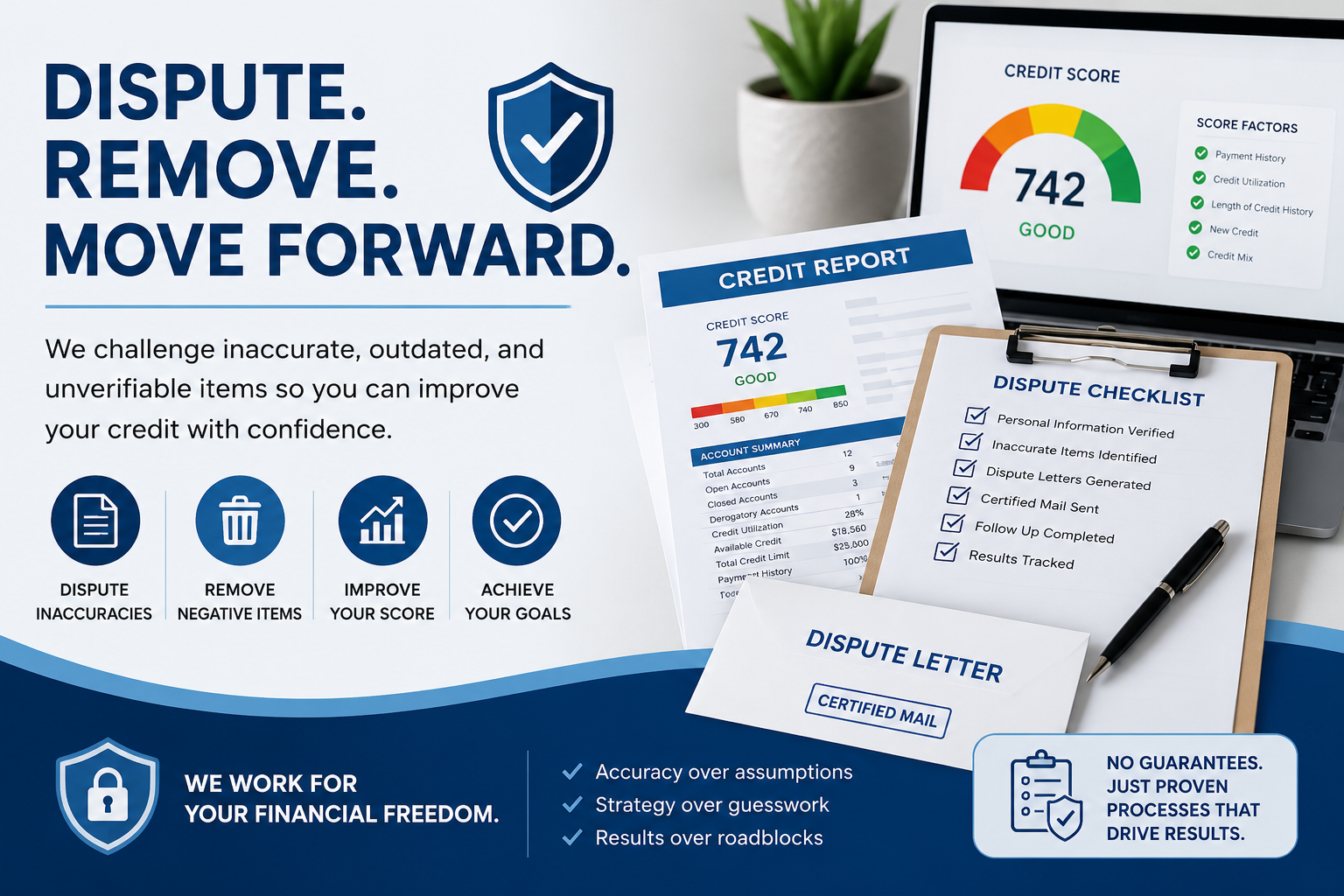
The Simple Explanation
El paso credit application preparation is easier to understand when the file is divided into three parts: reporting accuracy, current credit behavior, and the next approval goal. Reporting accuracy asks whether the information is correct. Current behavior asks whether the consumer is managing open accounts well. The approval goal asks how a lender, landlord, or finance company may read the file right now.
This matters because two consumers can have similar scores and very different risks on paper. One file may have older negative items but strong current behavior. Another may have fewer old issues but recent late payments and high balances. The details change the plan.
What Usually Matters First
Recent late payments, high revolving balances, active collections, unresolved charge-offs, identity mismatches, and multiple new inquiries can all create friction. The order depends on the goal. A rental screen may react strongly to unpaid collections. A mortgage review may care about dispute remarks, documented explanations, and payment patterns. An auto lender may care about prior repossession and current installment history.
For a broader review, compare Texas credit repair help, Austin credit repair services, and Dallas credit repair services before deciding what to address first.
What Not to Assume
Do not assume every negative account is removable. Do not assume paying an account will automatically improve every part of the report. Do not assume a new card will fix high utilization if the old balances stay high. Do not assume a denial means approval is impossible later. A better plan looks at the facts and avoids promises that the report may not support.
The safer approach is to review the account, document the concern, protect current payments, and build a timeline. El Paso credit repair page and Illinois credit repair resource can help keep that process realistic.
How to Turn the Topic Into a Plan
Start with a clean list. Write down each negative account, each high balance, each recent late payment, and each possible personal information issue. Next to each item, write the account type, bureau, balance, status, date reported, and what proof exists. Then decide which issue is most connected to the next approval goal.
When the file needs support beyond education, compare California statewide credit repair page, credit repair near you resource, and nationwide credit repair help to understand the available process and service path.
How to Prioritize the Next Move
The first priority should be the issue most likely to interfere with the next decision. For El Paso credit application preparation, that may be a recent derogatory mark, an active high revolving balance, a balance that is reporting too high, or a personal information problem that makes the file difficult to match. The consumer should not assume the oldest account is always first or that the largest balance is always first. The next approval goal changes the order.
A file being prepared for personal loan review should be reviewed differently from a file being reviewed only for general rebuilding. The question is not just whether something looks bad. The question is whether that item creates confusion, risk, or an extra documentation request at the point where a reviewer needs a clean explanation.
A practical priority system can be simple. Mark items as urgent, important, or watch-only. Urgent items are recent problems, active collections, identity concerns, or balances that may affect the next review. Important items still matter but may not block the immediate goal. Watch-only items should be tracked, but they should not distract from the issues that carry more weight right now.
Why Timing Can Change the Result of the Same Action
The same action can be helpful or poorly timed depending on when it happens. A payment may need time to update. A dispute may create temporary remarks. A new credit account may create an inquiry before it creates useful history. A balance reduction may not show until the creditor reports again. This is why timing should be part of the plan instead of an afterthought.
Consumers often get frustrated because they take a reasonable step and expect the report to change immediately. Credit reporting usually moves in cycles. A creditor may report once per month, a bureau may update after receiving data, and different reports may not refresh on the same day. Tracking dates helps keep the process grounded when updates appear uneven.
Before any major application, the consumer should avoid creating new uncertainty. That means staying current on every open account, keeping revolving balances under control when possible, avoiding unnecessary applications, and not starting broad disputes without understanding how the timing may affect review. The safest move is usually the one that improves clarity, not the one that creates more questions.
How Documentation Supports a Cleaner Story
Documentation does not have to be complicated, but it should be organized. A simple folder can hold credit report copies, account statements, letters, proof of payment, insurance explanations, identity documents, and notes about phone calls or mailed responses. The folder should show what the consumer knew, what was requested, and what changed over time.
If a collector, creditor, landlord, lender, or bureau asks for information later, the consumer is in a better position when the proof is already saved. That does not guarantee a certain answer, but it can prevent the consumer from relying on memory during a stressful approval process. A written record is usually stronger than a rushed explanation.
Documentation is especially important when a debt has been transferred, when the same account appears more than once, when a paid account still shows a balance, or when the account may not belong to the consumer. Those issues should be handled with facts, dates, and proof rather than repeated generic disputes.
How Current Account Behavior Protects the Plan
Credit repair can review old information, but current account behavior still shapes how the file is read. A consumer who is making every payment on time, keeping balances lower, and avoiding unnecessary new debt is building a more stable picture. That stability matters because many reviewers care about what is happening now, not only what went wrong before.
Current behavior also gives the consumer something positive to control. Older accounts may require letters, waiting periods, documentation, or investigations. Current payments and balances can often be managed more directly. That gives the rebuilding plan a daily rhythm instead of leaving everything dependent on a bureau response.
This is why the repair plan and rebuilding plan should work together. The repair side asks whether reported information is accurate and supportable. The rebuilding side asks whether the file is becoming healthier going forward. When both sides are handled together, the consumer is less likely to fix one problem while accidentally creating another.
When to Pause Before Applying
Sometimes the best next move is not another dispute or another account. Sometimes it is a pause. A pause may make sense when a recent payment needs to report, a balance reduction has not updated, a dispute response is pending, or documentation is still missing. Waiting can feel uncomfortable, but applying while the file is unclear can create another denial and more stress.
A pause should still be productive. During that time, the consumer can gather proof, keep accounts current, lower balances where possible, check whether reports updated, and prepare explanations for older negative history. The pause becomes part of the plan rather than wasted time.
For El Paso credit application preparation, the strongest plan is usually the one that keeps the next decision in view. Each action should answer a practical question: does this make the report more accurate, more stable, easier to document, or easier for a reviewer to understand? If the answer is no, the action may need to wait.
A Practical Review Checklist
- Save the current three-bureau report before taking action.
- Mark recent late payments, open collections, charge-offs, high balances, and dispute remarks.
- Gather proof before sending any dispute or making any payment agreement.
- Lower avoidable revolving balances when approval timing is important.
- Track updates by date instead of reacting to every alert.
This checklist supports El Paso credit application preparation because it keeps the consumer focused on evidence, timing, and current account behavior instead of panic. It also prevents the plan from turning into a pile of scattered letters, rushed payments, and unexplained report changes.
What a Cleaner File Should Show Over Time
Over time, the file should begin to show fewer surprises. That does not mean every negative item disappears. It means the consumer knows which accounts are accurate, which ones are being reviewed, which documents support the next step, and which current habits need to stay protected. A cleaner file is easier to explain because the consumer is not discovering problems during the application itself.
The review should also become more specific. Early in the process, the file may feel overwhelming because every account looks urgent. After a careful review, the consumer should be able to say which item affects timing, which item affects documentation, which item affects balances, and which item simply needs to be watched. Specific planning reduces wasted effort.
This approach also helps prevent overcorrection. Some consumers respond to old credit problems by avoiding all credit. Others respond by opening too many accounts at once. Neither extreme is usually helpful. A practical rebuilding plan uses credit carefully, tracks reporting cycles, and keeps the next goal in view without taking on unnecessary risk.
That is the steady purpose behind El Paso credit application preparation. The consumer is not trying to force the report into a perfect story. The consumer is trying to make the report accurate, organized, documented, and less confusing before the next important decision. That is a stronger foundation than panic, guessing, or repeating the same action without a record of what changed.
Common Questions
What should I avoid during repair?
Avoid new late payments, unnecessary applications, high balances, vague disputes, and payment agreements that are not documented in writing.
How do I know what to work on first?
Start with the issue most connected to the next approval goal, then consider accuracy, balance, recency, account type, and available proof.
Is credit repair the same as credit rebuilding?
No. Credit repair focuses on reviewing and challenging inaccurate or unsupported reporting. Credit rebuilding focuses on current habits such as payment history, balances, and responsible account use.
Can one small account hurt approval?
Sometimes. A small account can still matter if it is recent, unpaid, in collections, or connected to a pattern of current instability.
Do I need all three credit reports?
Yes. Each bureau can show different account data, dates, balances, and remarks. Reviewing only one report can miss problems that appear elsewhere.
A Safer Way to Move Forward
The best next step for El Paso credit application preparation is usually not the loudest or fastest option. It is the one that matches the report, the documents, and the consumer’s next decision. Review the file, protect current payments, keep balances under control when possible, and avoid making several major credit moves at the same time.
When a consumer treats credit repair as a sequence instead of a reaction, the file is easier to understand and the next approval conversation becomes more organized. That does not guarantee a result, but it does create a stronger foundation for rebuilding, documentation, and responsible planning.
★ WE VALUE YOUR FEEDBACK ★
Share Your Experience With Superior Credit Repair
Has our credit education, mortgage-preparation guidance or credit-file assistance helped you move closer to your financial goals?
Choose the Superior Credit Repair office or service area that assisted you. Your honest feedback helps that local team build trust and continue providing helpful credit education to families preparing for a mortgage and other important financial goals.
Please select the correct location.
Only choose the office, representative or service area that actually assisted you.
Only choose the office, representative or service area that actually assisted you.
Support Your Local Superior Credit Repair Office
SUPPORT THIS LOCAL OFFICE
★ Leave an Honest Google Review
Featured Review Location 1 SUPPORT THIS LOCAL OFFICE
★ Leave an Honest Google Review
Featured Review Location 2 SUPPORT THIS LOCAL OFFICE
★ Leave an Honest Google Review
Featured Review Location 3 SUPPORT THIS LOCAL OFFICE
★ Leave an Honest Google Review
Featured Review Location 4
★ Leave an Honest Google Review
Featured Review Location 1 SUPPORT THIS LOCAL OFFICE
★ Leave an Honest Google Review
Featured Review Location 2 SUPPORT THIS LOCAL OFFICE
★ Leave an Honest Google Review
Featured Review Location 3 SUPPORT THIS LOCAL OFFICE
★ Leave an Honest Google Review
Featured Review Location 4
Additional Superior Credit Repair Locations
★ Leave an Honest Google Review
Review Location 5 ★ Leave an Honest Google Review
Review Location 6 ★ Leave an Honest Google Review
Review Location 7
Review Location 5 ★ Leave an Honest Google Review
Review Location 6 ★ Leave an Honest Google Review
Review Location 7
Reviews are voluntary. Please share your genuine experience with the Superior Credit Repair location that assisted you. Individual credit results and timelines vary based on each person’s credit profile, documentation, creditor responses and financial circumstances.