


Read the provider’s disclosures before paying
Ask for the precise service scope, billing timing, cancellation rights and a record of any completed work. Debt collection laws govern some creditor and collector conduct; the Credit Repair Organizations Act instead addresses covered providers’ disclosures, contracts, and prohibited credit-service practices.
Which contract terms should I review before paying an organization to repair credit near me?
For credit report errors concerning a charged-off account, compare the creditor’s dated statements with the disputed bureau field before asserting that its status is wrong. Businesses selling covered credit-related assistance must comply with the Credit Repair Organizations Act. The FCRA governs the investigation of inaccurate consumer reporting; a dispute about a credit-repair provider’s advance fee instead calls for separate contract and CROA analysis.
A company’s chosen marketing name does not by itself determine whether the statute applies. If Jefferson Capital Systems is named in a dispute, identify its specific collection entry and compare it with the original account history.
The actual services, sales claims, and compensation terms need analysis under the law.
Who is covered by federal credit-repair rules
Contract and conduct rules under the Credit Repair Organizations Act do not grant anyone a right to erase valid debt. The explanations under credit repair services in Alabama should match those obligations.
Required disclosures, written contracts, and prohibited representations fall within the Credit Repair Organizations Act’s regulation of covered providers. A company’s marketing title does not determine whether the law applies; the actual services and transactions matter. Covered providers should not suggest that accurate history can be removed by special methods or that consumers must buy assistance to exercise basic reporting rights. Fee timing and cancellation questions warrant careful review before enrollment. FDCPA does not automatically remove a correctly reported debt, even when the consumer challenges the collection calls.
Accurate credit reporting matters to consumers hiring a covered credit-repair firm, but the Credit Repair Organizations Act primarily regulates what that firm promises and charges, not the creditor’s reporting date. The consumer should understand service scope, fees, and cancellation rights in writing. The FDCPA may apply to covered debt-collector misconduct, but it is not a blanket rule for billing disputes with a credit-repair provider. Accurate collections may remain reportable after the consumer pays the balance, subject to applicable rules.
A credit report review should identify any genuine account discrepancy, while compliance with the Credit Repair Organizations Act depends on the provider’s written contract and actual billing conduct.
The credit repair law sits alongside the Fair Credit Reporting Act (FCRA) and the Fair Debt Collection Practices Act (FDCPA), and each statute governs a different party.
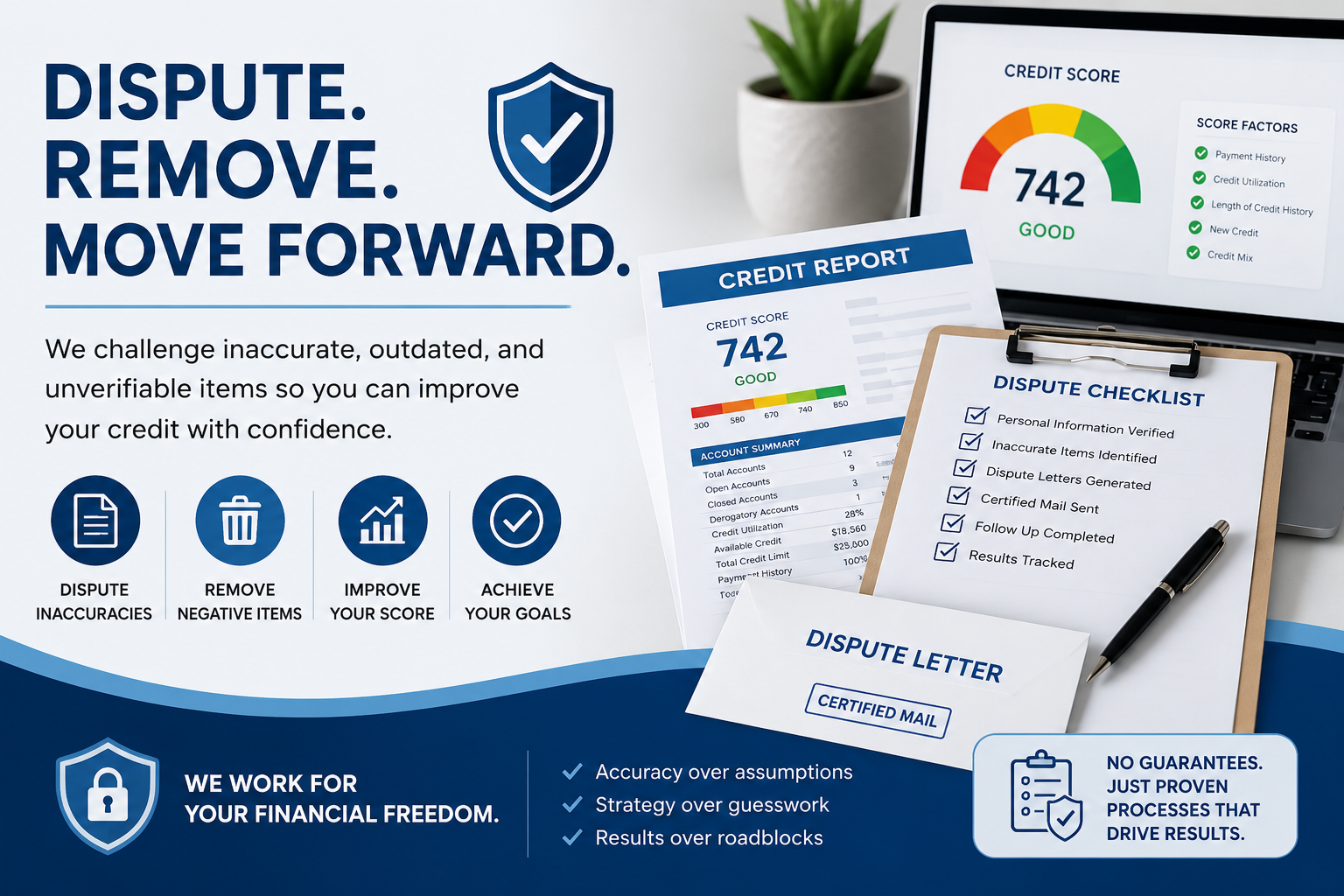
Understand the difference between provider duties and bureau disputes
Covered credit-repair organizations have statutory duties regarding disclosures, contracts and prohibited practices.
Can I repair credit near me if a service charges me before doing the covered work?
The fair debt collection practices act fdcpa addresses covered collectors’ conduct, while a credit-repair provider’s advance fees must be assessed under the rules applicable to that provider. Providers should obtain qualified legal guidance about their actual contracting and collection practices. The Consumer Credit Protection Act includes distinct consumer protections; identify the particular statute and conduct before describing a billing violation.
If the dispute concerns a reported late payment, use the creditor’s statement for that exact month, rather than the credit-repair company’s invoice, to test accuracy. An invoice label cannot transform the same regulated work into an unrelated completed service. An attorney evaluating possible fees should review the contract, payment record and particular statute, rather than assume a remedy from an unhappy customer’s score. For covered organizations, the Credit Repair Organizations Act sets federal duties involving disclosures and truthful descriptions of services.
Federal law restricts certain advance payments for covered credit-repair services. An entry furnished by Jefferson Capital Systems should be evaluated for the stated owner, balance and dates before any letter is sent.
Advance-fee restrictions can apply to covered credit-repair organizations; consumers should review the actual contract and payment terms.
Retain the signed contract, cancellation notice and itemized receipt to establish whether a credit-repair provider billed for work it actually performed. A Fair Debt Collection Practices claim depends on covered collection conduct, such as a misleading demand, and the consumer’s saved communication.
What a written service contract should explain
Companies offering certain credit-improvement services may be subject to the Credit Repair Organizations Act’s restrictions and disclosure requirements. A company should identify the actual work it will provide and avoid suggesting that a fee can purchase deletion of truthful information. The agreement should also explain the consumer’s rights under applicable law and the relevant cancellation provisions. A promise to change a score by a predetermined number is not the same as a description of account research or document preparation. Consumers can challenge inaccurate report information through authorized channels without purchasing a commercial letter package.
Businesses may offer education, monitoring and dispute assistance as separate products, but a change in the product’s name does not necessarily settle the legal analysis of what service is being sold. A consumer needs to understand what is included in the invoice, how supporting records are handled and whether optional subscriptions continue after the initial review. A provider should not ask the consumer to falsely deny a legitimate account or file a fabricated identity-theft report. Lawful dispute preparation begins with actual creditor records and a specific alleged error, regardless of what marketing materials call the service. Debt collector harassment complaints concern the collector’s specific conduct, while a credit-repair provider’s billing practices are evaluated under a different set of obligations.
A billing complaint is not the same as a credit-report error
Debt collection laws do not automatically decide whether a credit-repair organization’s early charge was lawful; examine the contract, actual work, and payment timing separately. Accurate account history cannot lawfully be removed on command through a private letter. Accurate account corrections can help fix credit, but a misattributed account must be documented before a bureau changes it. The Fair Debt Collection Practices Act regulates specified debt-collector behavior; it does not automatically resolve a credit-repair service contract dispute.
A consumer should examine the actual written terms rather than accept an invoice label as proof the underlying law does not apply.
A credit restoration service subject to the Credit Repair Organizations Act cannot promise to eliminate truthful debts or bypass federal limits merely by calling a charge an enrollment fee.
A credit repair provider should avoid misrepresenting legal rights or expected scoring results. A covered credit-repair organization must avoid misleading claims, and the consumer should verify which reported account is actually disputed.
Disputes must be grounded in actual documents rather than fictional identity theft assertions.
Compare the written agreement with the services delivered
The written agreement should describe services, obligations and consumer rights without hiding material terms in a sales pitch. An FCRA dispute over a wrong payment date is separate from a CROA concern about a provider’s billing practices. Evidence for the first comes from the creditor and bureau; evidence for the second may include the contract, invoice and communications. A claimed FDCPA violation depends on the collector’s conduct rather than a consumer’s dissatisfaction with the score.
The Fair Credit Reporting Act (FCRA) concerns information furnished to credit files, not whether a provider’s enrollment fee was lawfully collected. A contract should describe what the consumer actually receives and when the service is performed.
Financial education, budgeting, and credit repair may overlap in marketing but have distinct legal characteristics. Credit education, reporting assistance and debt settlement are different services with different legal and financial consequences.
Creating a separate entity or invoice does not necessarily remove federal regulatory coverage.
Track cancellation and payment records under the contract
A covered credit-repair agreement should explain the proposed work, cancellation rights and the limits on collecting fees. Discuss the provider billing practice documentation
The client’s right to dispute personally
A provider cannot lawfully imply that only a paid business can invoke federal bureau procedures. For an allegedly unauthorized card, the signed application and identity-theft paperwork matter more than the provider’s sales presentation.
An attorney addressing a collection notice should identify the collector’s conduct and applicable law before considering any remedy involving fees. A credit report review should identify the specific error and available evidence. An inaccurate credit report entry may support a documented dispute, but the provider’s fee and cancellation obligations still depend on the signed agreement and applicable law.
A credit report repair service should follow the Credit Repair Organizations Act’s contract and fee requirements while explaining that accurately reported negative history is not automatically removable. A verification response needs to be read against what was originally challenged, not against a preferred score. The consumer disclosure and signed agreement help a credit report repair service demonstrate what work was offered, charged for, and actually performed. Consumers can fix credit report errors through documented disputes without paying a company to invent a complaint. Inaccurate credit reporting should be addressed with a dated record of the field at issue and the furnisher responsible.
Consumers can obtain reports and challenge inaccurate information without hiring a professional.
How to judge an error after the first bureau answer
An investigation response may correct a balance, adjust an account status or leave the challenged information unchanged. The consumer should compare the response with the statement that originally supported the dispute. A verified item is not proof that every related account field is correct, but repeating the same unsupported demand does not create a right to deletion either. If the creditor’s dated document clearly contradicts an unresolved reported month, the next communication can identify that precise problem. Preserve the initial report and the response so it is possible to determine what was actually examined.
A collection dispute can involve a creditor, a third-party collector and more than one reporting agency. The business furnishing the challenged information should be identified before a consumer attempts to route documents to it. Statutory collector communication rights are separate from bureau accuracy duties, even when both questions concern the same obligation. A company offering credit repair services should explain those distinctions without presenting a regulatory complaint as a shortcut that automatically removes an otherwise accurate collection. A company’s promise to delete accurate entries should be evaluated against the actual legal rights available.
Contracts and consumer communications
Covered organizations should preserve disclosures and signed agreements as required by the relevant rules. The FDCPA governs specified practices of covered debt collectors, separate from bureau investigation procedures.
Before paying someone to fix credit, review the dated bank transaction record and signed service contract to see whether a fee was collected before the covered work was completed. Misleading testimonials or fixed-result claims can create additional compliance concerns.
Read the contract’s cancellation clause and billed service dates to separate a fee disagreement from a disputed account on a bureau file. The consumer needs to know cancellation options and the actual organization receiving sensitive documents. To fix credit report errors, identify the exact bureau field and attach the statement or letter proving it is wrong.
The Consumer Credit Protection Act is a federal statutory framework that includes several types of consumer financial safeguards.
When the matter involves a lawyer
An attorney may analyze specific federal and state issues depending on the client relationship. Credit report errors must be documented from creditor and bureau records; a dispute about a provider’s billing practice should instead rely on its contract and transaction receipts. A dispute about reporting facts differs from legal representation in an actual lawsuit.
Credit restoration governed by the Credit Repair Organizations Act must not be marketed as a way to remove an accurate but costly debt from a consumer’s file.
A standard commercial service should not claim a right to issue legal judgments or compel a lender decision. A lawyer can assess whether a covered credit-repair provider violated disclosure or advance-fee rules and whether statutory remedies, including attorney fees, may be available. For a provider billing practice complaint, an attorney will need the service agreement, charge dates, and work records before advising whether recovery or attorney fees may be available.
Before paying a covered credit repair organization
Misleading sales representations and covered service agreements are both addressed by the Credit Repair Organizations Act. It does not excuse a creditor from its own accurate reporting obligations under separate law.
Under the FDCPA, certain collection communications must comply with restrictions that are separate from the FCRA rules for disputed reporting accuracy. Alleged debt collector harassment should be documented from the actual communication. Claims about inaccurate credit reports require the original furnishing evidence; a service provider’s cancellation notice proves neither accuracy nor inaccuracy. When inaccurate credit reports are involved, ask which account entries the provider actually reviewed before deciding whether the billed work was performed. When Bridgecrest DriveTime appears in the file, verify the lender or servicer name and which entity furnished the disputed data.
An inaccurate credit report entry should be described using the account identifier and a dated creditor record. A credit restoration service cannot promise that a lawful dispute will result in deletion. Do not assume Portfolio Recovery must delete a correctly reported account simply because a credit-repair business advertised that result.
Sales promises, contract terms, and fee practices of covered companies must comply with the Credit Repair Organizations Act. Getting credit fixed requires supporting records when the problem is inaccurate account information. Inaccurate credit reporting should be challenged through a focused dispute supported by dated account records. The services described in an advertisement should be tested against those obligations before the consumer pays or provides sensitive records. A Bridgecrest DriveTime account complaint requires the actual auto-loan agreement and payment ledger, not a generic credit-repair template.
CROA is distinct from the Fair Credit Reporting Act. A consumer cannot have credit fixed by changing a true payment history; the legal dispute must identify a reporting mistake. One addresses important provider conduct; the other regulates consumer reporting matters, including relevant investigation procedures. If Portfolio Recovery is the reported collector, obtain the placement notice and challenge only a documented inaccuracy.
- Credit Repair Consultation
- Improve Credit Score for Approval
- Remove Collections Legally
- Credit Repair Timeline
- Bad credit mortgage brokers near me
- Can i get a mortgage with a 550 credit score
- Can you get a joint mortgage if one person has bad credit
- FHA loan bad credit
- FHA loan minimum credit score requirements
- First time home buyer programs bad credit
- Hard money home loans for primary residence
- Home loans for 500 credit score
- How much down payment for a mortgage with bad credit
- How to buy a house with bad credit
- How to fix credit score quickly for a mortgage
- Minimum credit score for home loan
- No credit check mortgage lenders
- Portfolio lenders for bad credit
- Rent to own homes no credit check
- Subprime mortgage lenders
- Unconventional mortgage loans with bad credit
- USDA loan credit score requirements
- VA loan with poor credit
Related account reading: getting your credit mortgage-ready · Helena mortgage credit · gardendale Alabama home loan credit report review · history of the FICO score system
Follow the verified record in the credit-repair contract
An invoice description is not enough to decide whether federal restrictions apply to the underlying credit-report service. Review the Credit Repair Organizations Act concern