

You open the mailbox, sort through bills and flyers, and then one envelope grabs your attention. It says you may be pre-approved for a personal loan. If you're juggling credit cards, trying to consolidate debt, or covering an urgent expense, that kind of offer can feel like relief.
That's why Tripoint Lending gets attention. For some borrowers, it looks like a shortcut to cash flow. For others, it raises questions about what the offer really means, who funds the loan, and whether the final terms will match the marketing.
For readers searching for Tripoint Lending personal loans reviews, the smartest approach isn't to stop at star ratings. It's to learn how to evaluate the offer behind the mailer, the business model behind the brand, and the credit factors that shape what you may qualify for. That matters even more if you're trying to rebuild credit, prepare for a mortgage, or avoid taking on expensive debt that could make future financing harder.
Table of Contents
- Understanding Offers from Tripoint Lending
- Is Tripoint Lending a Direct Lender or a Broker
- Loan Amounts Rates and Repayment Terms
- Aggregating Tripoint Customer Reviews and Complaints
- A Balanced Look at Pros and Cons
- How Lenders Evaluate Your Credit Profile
- Steps to Strengthen Your Credit for Better Loan Options
- Frequently Asked Questions
Understanding Offers from Tripoint Lending
A mailed loan offer often uses language that sounds more certain than it really is. Words like pre-approved or pre-selected can make borrowers think the hard part is done. In reality, those phrases often mean you've passed an initial screening, not that you've been fully underwritten or guaranteed a specific loan.
Tripoint Lending's public materials describe fixed-rate online loans, and its personal-loans page emphasizes fast funding and flexible terms on the Tripoint Lending website. Public commentary also notes that the company has used mailed pre-approval-style offers, and BBB complaint patterns include concerns about repeated calls and contact practices. That combination suggests a company with a broad consumer marketing strategy rather than a small local lender.
Here's where borrowers often get confused. The mailer may focus on a simple message: get money, lower payments, move on. But the borrowing decision itself is more layered than that.
What a mail offer really tells you
A mail offer can be useful, but only if you treat it as an invitation to investigate, not as a final approval. Ask yourself:
- What product is being offered: A personal loan, a debt consolidation program, or something else.
- Who is making the final credit decision: The company on the envelope or another provider behind the scenes.
- What your long-term goal is: Short-term cash relief, lower monthly payments, or keeping your credit strong for a future mortgage.
A loan that solves this month's pressure can create next year's approval problem if the rate is too high or the product isn't what you expected.
For a first-time homebuyer, this matters a lot. If you're trying to qualify for FHA, VA, USDA, or conventional financing later, the wrong personal loan can increase your monthly obligations, affect your debt-to-income picture, and leave less room to improve your credit profile.
Is Tripoint Lending a Direct Lender or a Broker
The first question to answer isn't whether Tripoint is legitimate. The first question is what role it plays in the transaction.
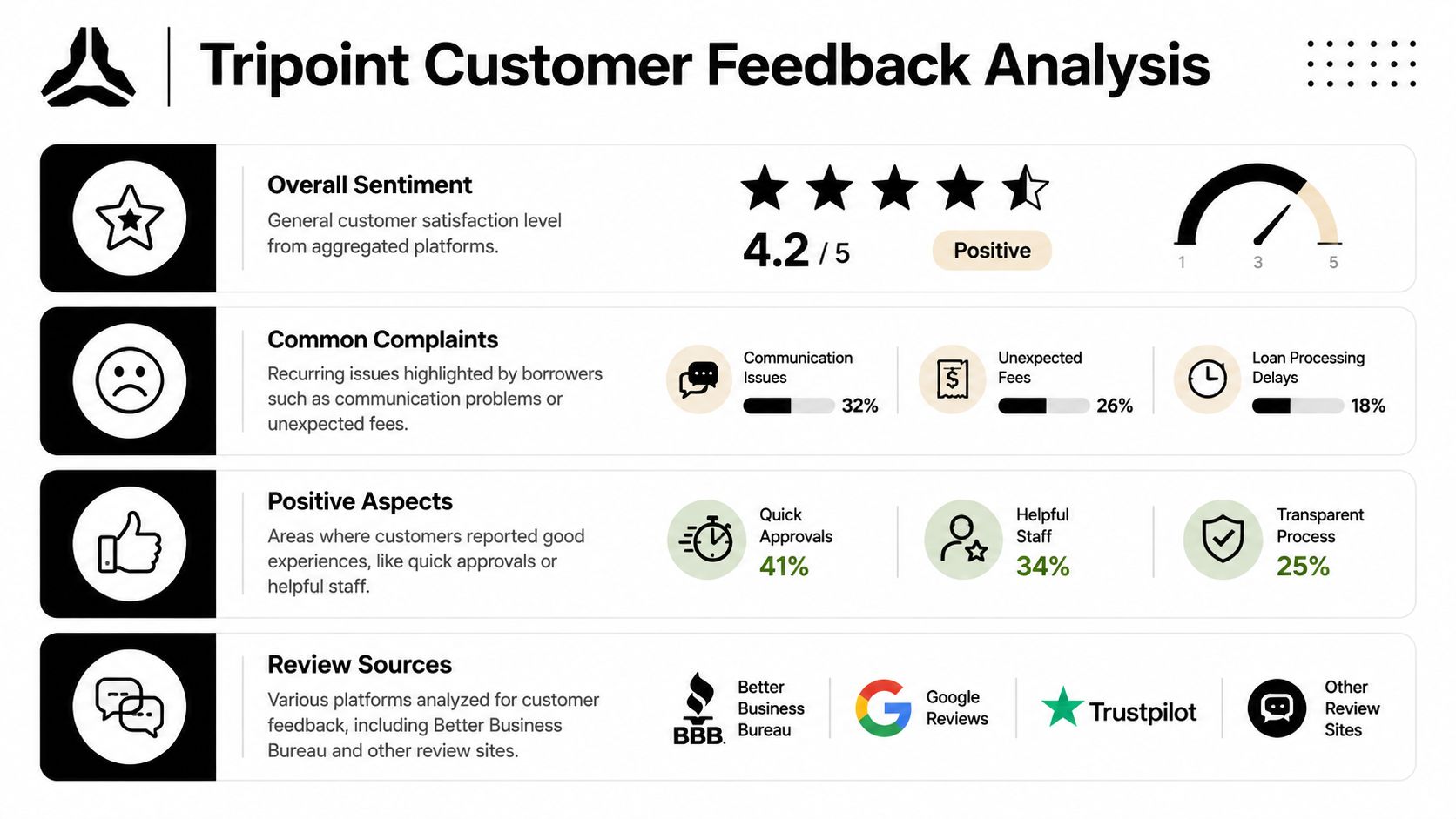
Multiple reviews and third-party summaries describe TriPoint as a broker or debt-relief marketer rather than a direct lender, with reports that some applicants receive soft-pull pre-selection marketing and are then routed to different offers or settlement-style programs. That product classification risk matters because a broker-driven funnel can change the effective APR, fees, funding timeline, and even the product type compared with what the mailer may have implied, according to this Finder review of TriPoint Lending.
Why the distinction matters
A direct lender usually underwrites and funds the loan itself. A broker or marketplace generally collects your information and connects you with other providers.
That sounds like a technical detail, but it affects almost everything:
| Type | Main role | What the borrower should watch |
|---|---|---|
| Direct lender | Reviews the application and funds the loan | Final terms are tied to that lender's underwriting |
| Broker or marketplace | Matches you with offers from other providers | The final offer may come from another company with different pricing or product options |
If you think you're applying to one lender but you're really entering a broader lead and matching process, your expectations can get out of sync fast. You may expect one product and be shown another. You may expect one rate range and receive something much more expensive. You may also get follow-up calls that feel aggressive if your information moves through a marketing-driven funnel.
What to ask before you apply
Before you complete any application, ask these questions plainly:
- Are you the lender funding the loan, or are you matching me with lenders?
- Will I be evaluated for products other than a standard personal loan?
- What happens to my contact information after I submit it?
- Will I see the final lender's name before I move forward?
Practical rule: Never assume the brand on the mailer is the same company that will set your final terms.
This is especially important for borrowers with bruised credit. If your credit file has late payments, collections, high utilization, or charge-offs, you're more likely to be shown less favorable options. That doesn't mean you should never apply. It means you should understand the business model before you consent to the process.
Loan Amounts Rates and Repayment Terms
Once you know how a company operates, the next step is to look at the structure of the loan itself. Every personal loan, whether offered directly or through a partner network, comes down to the same cost categories.
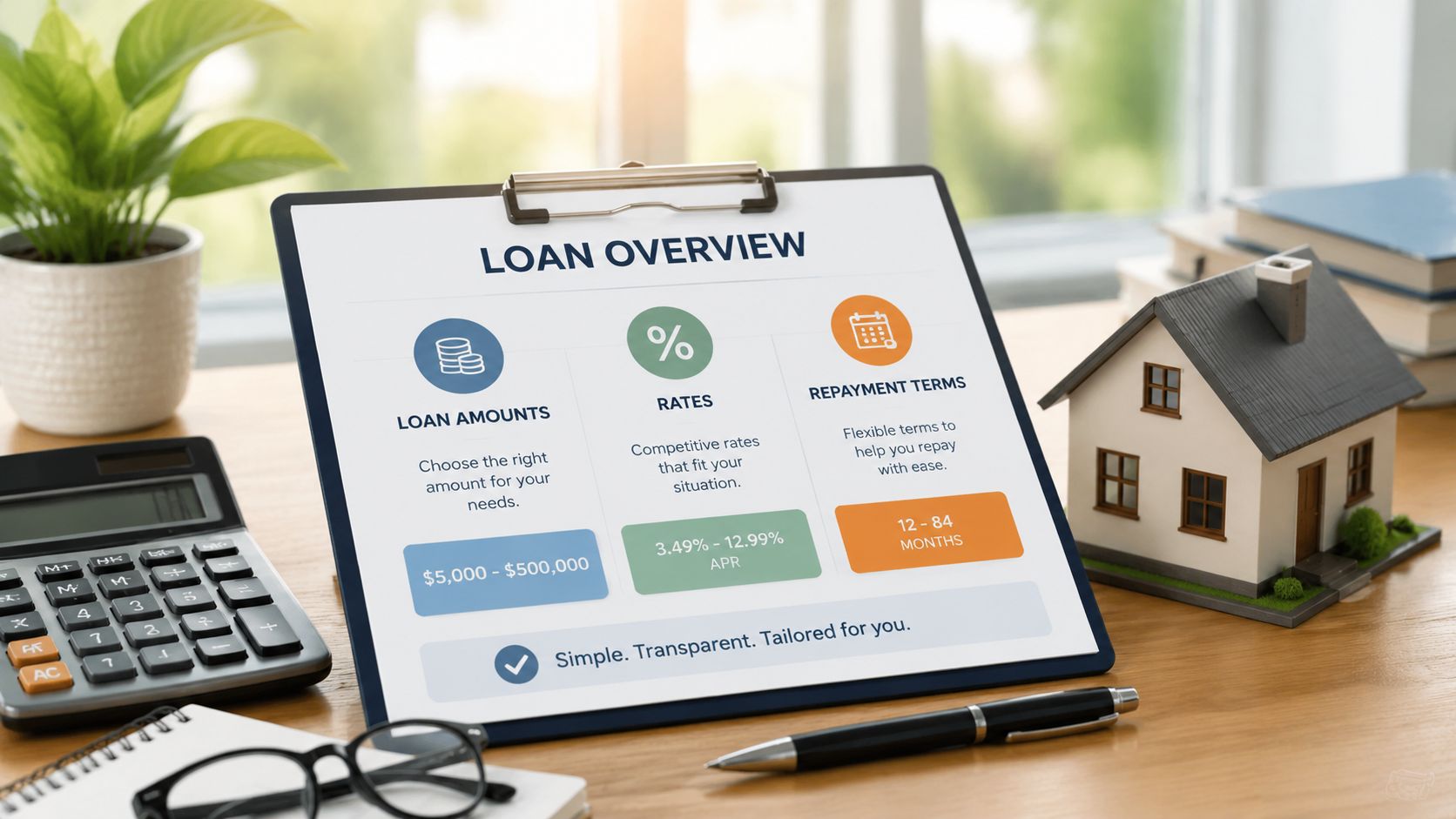
What a personal loan offer usually includes
A borrower should look at four pieces together, not one by one:
- APR: This is the annual cost of borrowing, including interest and some loan charges.
- Fees: Some loans include upfront or built-in charges that raise the overall cost.
- Repayment term: A longer term can lower the monthly payment but increase the total amount paid over time.
- Monthly obligation: This affects your budget and any future mortgage underwriting.
If you focus only on the monthly payment, you can miss the bigger issue. A lower payment stretched over a longer term can still be a costly deal.
Why weaker credit usually means higher cost
Many mailed offers disappoint consumers. Advertised terms are often designed to attract attention, but the most appealing version of the offer usually goes to borrowers with the strongest profiles. If your file shows recent missed payments, high revolving balances, collection activity, or unstable account history, lenders often price for that risk.
That's why some consumer feedback centers on a gap between marketing expectations and final loan terms. A personal loan can still make sense in some cases, especially if it replaces more damaging debt or solves a short-term liquidity issue. But the loan should be evaluated against your broader financial plan.
Ask yourself:
- Will this payment strain my budget?
- Will this increase my debt-to-income burden before I apply for a home loan?
- Am I borrowing because I need a strategic tool, or because I'm out of options?
For homebuyers, a high-cost personal loan can create a second problem. It may not just be expensive today. It can also complicate underwriting later if a mortgage lender sees added monthly debt, recent credit activity, or signs that your finances are still unstable.
Aggregating Tripoint Customer Reviews and Complaints
When people look up Tripoint Lending personal loans reviews, they usually want one simple answer: good or bad. The actual answer is more mixed.
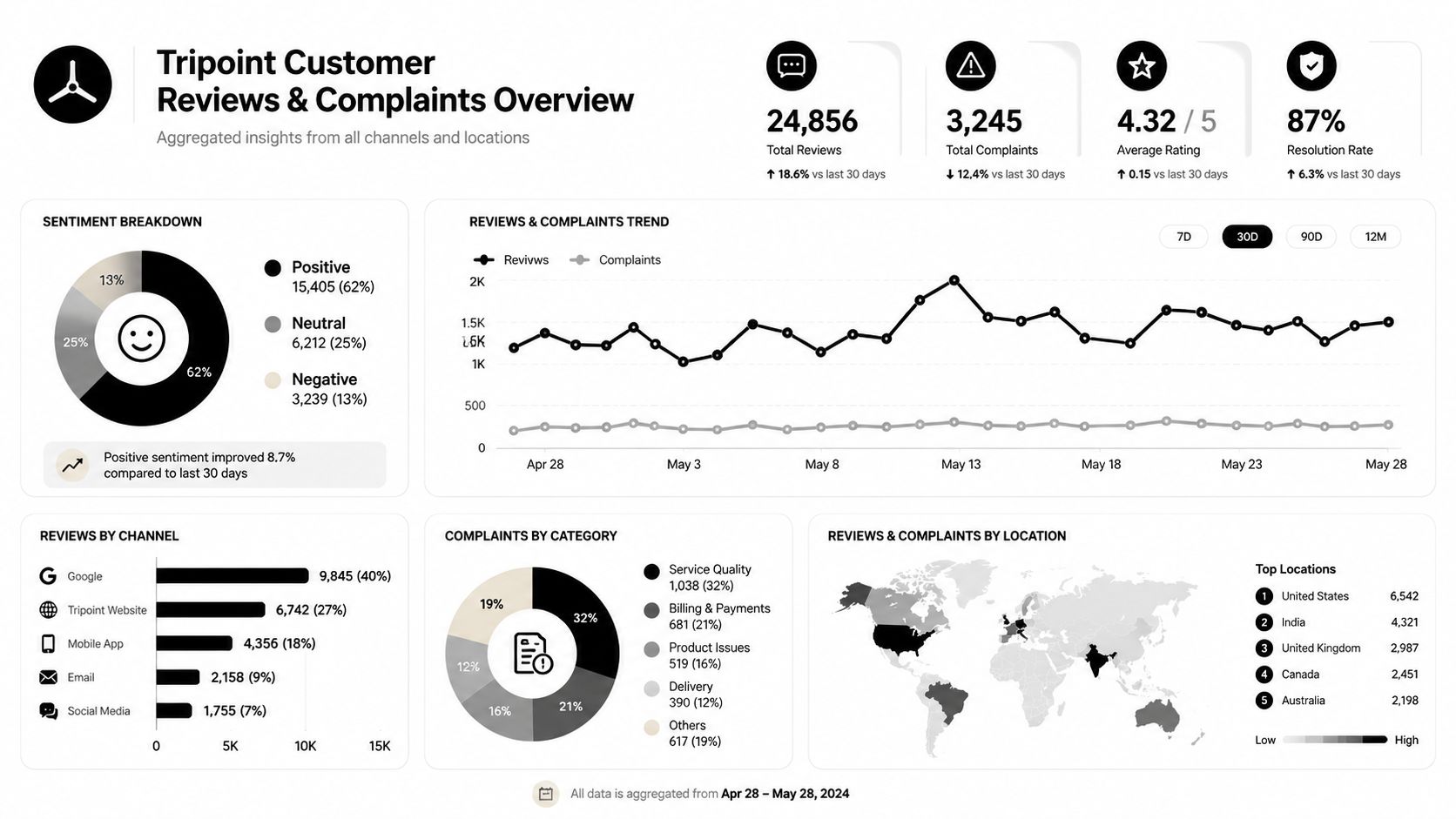
Tripoint Lending's BBB customer review page shows a 3.94/5-star average across 201 customer reviews on the BBB customer reviews page for Tripoint Lending. That's useful because it reflects a larger review base than a small handful of comments. The same review set also includes complaints about receiving a “very low amount at a very high interest,” which is exactly the kind of mismatch borrowers worry about when comparing a mail offer with actual approval terms.
What the review mix suggests
Independent commentary notes that Tripoint's BBB profile has carried an A+ rating, while third-party summaries have cited Google review averages around 4.3/5 stars based on hundreds of reviews. At the same time, public discussion also points to complaints about unwanted calls, high-cost offers, and confusion about what product was being presented.
That tells you something important. Reviews don't just measure whether a company exists or whether some customers had a smooth experience. They also reveal where borrower expectations break down.
Common themes in consumer feedback include:
- Positive service experiences: Some borrowers describe helpful staff or a smooth application path.
- Contact concerns: Some complaints focus on repeated calls or unwanted follow-up.
- Offer frustration: Some consumers expected one kind of loan and felt they were shown less favorable terms.
- Cost concerns: Some borrowers felt the approved amount or pricing didn't match what they hoped for.
A borrower preparing for homeownership should read those comments through a practical lens. Star ratings are useful, but substance matters more. If your credit isn't strong, the key question isn't whether someone else had a good experience. It's whether the product you're likely to receive fits your finances without hurting your next goal.
For borrowers working on mortgage readiness, stories from people rebuilding their credit can be more useful than generic lender praise. A good example is How Alabamians improved credit for homeownership, which shows how credit preparation often matters more than rushing into financing.
Why review platforms can tell different stories
TriPoint's public review picture is also inconsistent across platforms. One source reports a Trustpilot rating around 4.6/5 based on 500+ reviews, while another reports BBB customer reviews around 3.98/5 and Trustpilot at 2.9/5 based on only 2 reviews, according to this summary of Tripoint Lending reviews and ratings. That inconsistency means a single platform snapshot can be misleading.
Don't ask, “What's the star rating?” Ask, “Which platform, what sample size, and what are people actually complaining about?”
That question leads to better judgment. A high rating on one platform doesn't erase serious complaints on another. A lower rating doesn't mean every borrower had a bad outcome. You have to read past the stars.
A Balanced Look at Pros and Cons
Some borrowers may still decide that exploring a Tripoint offer is worth it. Others may decide the uncertainty is too high. A balanced review helps you sort that out quickly.
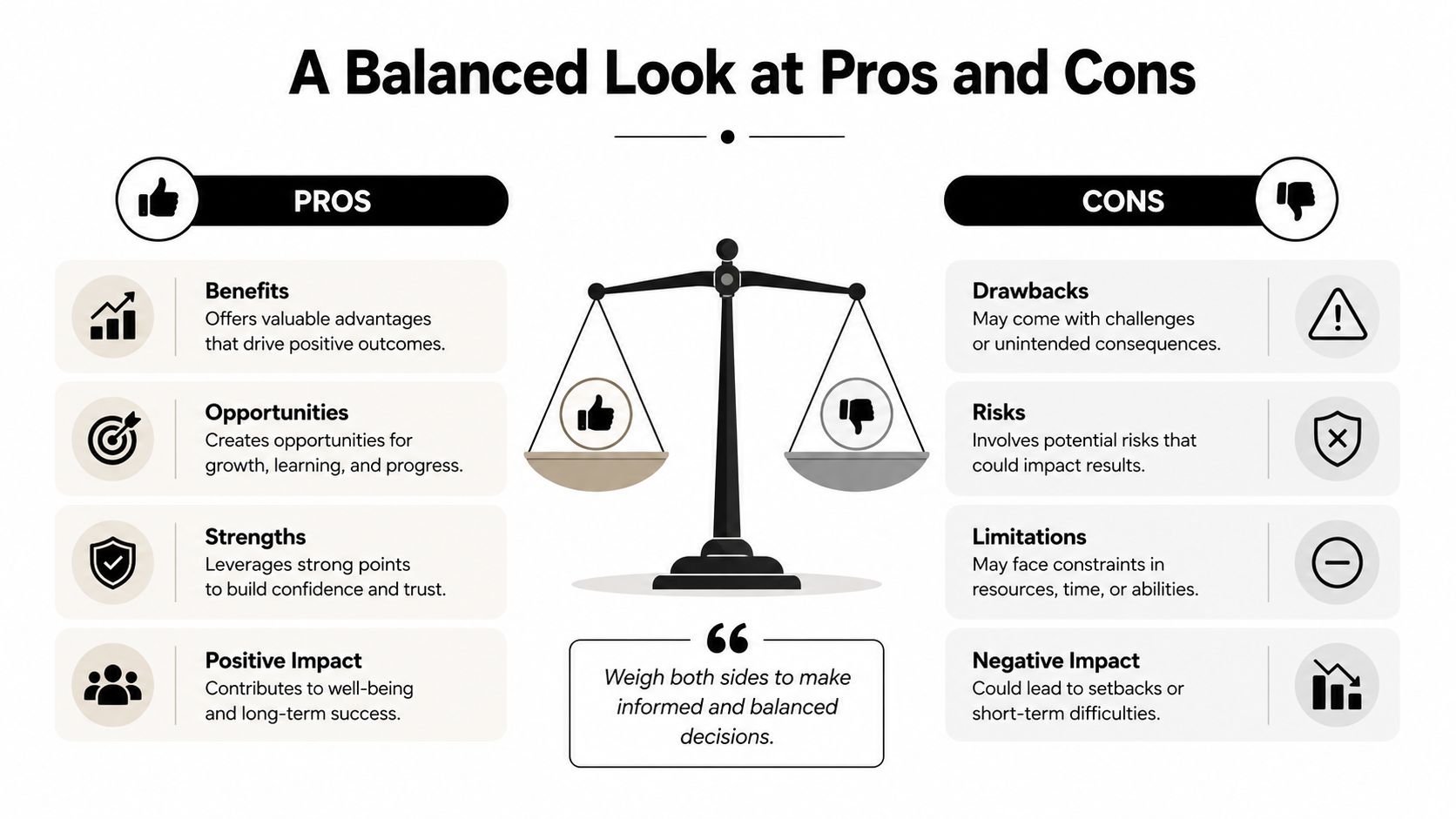
Potential advantages
- Broad visibility in the market: Many consumers encounter the brand through mail and online channels, so it isn't an obscure operation.
- Online convenience: The process appears designed to move quickly and appeal to borrowers looking for a simple starting point.
- Possible fit for some borrowers: If your profile matches partner criteria, you may find an option that meets a short-term need.
Important drawbacks
- Unclear product expectations: If a borrower assumes Tripoint is the direct lender, the process can feel confusing.
- Mixed customer experience: Complaint themes suggest that communication and final offer quality may vary widely.
- Risk to future borrowing plans: A high-cost loan can interfere with bigger goals, especially if you're also dealing with late payments, collections, or high balances.
For someone trying to qualify for a mortgage later, caution matters more than speed. If you're still rebuilding, spend time understanding late payments and credit before adding a new personal loan to the file.
The best loan isn't always the fastest one. It's the one that fits your budget, your credit profile, and your next financial objective.
How Lenders Evaluate Your Credit Profile
Tripoint is only one case study. The larger lesson is how lenders evaluate any borrower who applies for unsecured financing.
A lender usually wants to answer two questions. First, are you likely to repay on time? Second, if something goes wrong, how much risk does your credit file suggest? The answer comes from a mix of credit data, income information, debt levels, and account history.
The credit factors that shape loan decisions
Start with the basics.
Payment history is often the first thing underwriters notice. Recent late payments can signal ongoing stress, even if your current income looks solid.
Credit utilization matters too. If your revolving accounts are carrying high balances, lenders may see less flexibility in your monthly budget. If you want a simple breakdown, these credit score components explained can help you understand how different parts of your file work together.
Then there's debt-to-income ratio, often called DTI. That's the relationship between your monthly debt obligations and your monthly income. A borrower can have a decent score but still be overextended. In that case, approval may be harder, or the pricing may be less favorable.
Other common issues include:
- Collections: These can suggest unresolved obligations.
- Charge-offs: These usually indicate an account the creditor has written off as a loss.
- Thin credit history: A limited file makes it harder for lenders to predict repayment behavior.
- Recent credit activity: Multiple applications in a short period can raise concern.
Why this matters for homebuyers
Mortgage lenders usually review your file more carefully than a general personal-loan marketer does. A personal loan taken out during a stressful period may help in one sense but hurt in another if it raises monthly debt or signals instability before a home application.
If your household is trying to improve approval readiness, it helps to combine credit education with money management habits at home. Resources like these practical steps for family finances can support the budgeting side of that work.
A calm rule of thumb is simple. Don't evaluate a personal loan by asking only, “Can I get approved?” Ask, “How will this look to the next lender I care about?”
Steps to Strengthen Your Credit for Better Loan Options
If your current offers look expensive, that doesn't automatically mean you have to accept them. In many cases, the better move is to improve the file first, then borrow from a stronger position.
Start with your credit reports
Pull your reports and read them line by line. Look for:
- Inaccurate account details: Wrong balances, dates, payment history, or account status.
- Outdated negative items: Information that should no longer be reported.
- Unverifiable entries: Accounts that can't be properly substantiated through the dispute process.
- Duplicate reporting: The same debt appearing in a way that creates confusion.
If you find questionable information, the proper response is documentation and a structured dispute process. Credit repair should be approached as a legal and factual review, not as a shortcut or a promise. Results vary based on the account history, available records, creditor responses, and what the credit bureaus can verify.
Build a stronger file while you dispute errors
Disputing inaccurate information is only one part of credit restoration. Lenders also want to see current stability.
That usually means:
- Bring current accounts on time and keep them there.
- Lower revolving balances where possible.
- Avoid opening unnecessary new debt before a major financing goal.
- Keep older accounts in good standing if they still fit your budget.
- Build positive recent history month by month.
For families planning to buy, this kind of steady work often matters more than chasing another loan offer. If you're early in that process, this guide to credit improvement for first-time homebuyers is a useful place to start.
One practical option is to get help reviewing the file before making another borrowing decision. Superior Credit Repair can review your credit report, help identify inaccurate or questionable items, and explain a step-by-step plan for improving your credit profile. You can request a free credit analysis or consultation to better understand your options.
Credit improvement works best as a long-term plan. Clean up errors, build positive habits, and then apply when your file better supports the terms you want.
Frequently Asked Questions
Does a pre-approved mailer mean I'm guaranteed a loan
No. A pre-approved or pre-selected mailer usually means you met an initial screening standard. Final approval still depends on the full review of your credit, income, debt obligations, and sometimes the actual lender behind the offer.
Is a soft pull the same as a hard inquiry
No. A soft pull is generally used for pre-screening and doesn't carry the same impact as a formal credit application inquiry. A hard inquiry usually happens when you move into a full application for credit. You should ask when each type of review occurs before submitting information.
If my credit is weak, should I still take a personal loan
Sometimes a personal loan can help, but not every loan helps in the long run. If the payment is too high or the terms are too expensive, it can make financial stress worse. That's especially true if you plan to apply for a mortgage, auto loan, or apartment soon.
What's a better first step if I'm trying to buy a home later
For many borrowers, the better first step is reviewing the credit file, correcting inaccuracies, lowering balances, and stabilizing payment history before taking on more debt. If you have broader questions about disputes, rebuilding, and realistic timelines, these credit repair FAQs are a helpful next read.
Are online lender reviews enough to make a decision
No. Reviews are useful, but they're only one piece. You also need to understand the company's role, the final lender, the exact terms, the total repayment cost, and how the loan fits your broader financial goals.
If you're weighing a personal loan offer and want to understand how your credit may affect your real options, Superior Credit Repair can help you review your credit report, identify inaccurate, outdated, unverifiable, or misleading items, and outline practical next steps for building a stronger credit profile. Results vary, but a careful review can help you make a more informed borrowing decision before applying for personal, auto, or mortgage financing.
Was this guide helpful?
Superior Credit Repair Online provides educational credit guidance for individuals and families preparing for major financial goals like buying a home, applying for a mortgage, refinancing, or rebuilding after credit challenges.
If this information helped you better understand your credit report or your next steps, we would appreciate your honest feedback. You are welcome to share your experience with Superior Credit Repair on our Google Business Profile.