Most consumers do not sit down to study credit reports for fun. They usually look closely after a denial, a surprise collection notice, a lender request, or a score drop that does not match what they expected. The goal is not to make the report perfect overnight; the goal is to make the next decision more informed.
This post focuses on utilization spikes. The common problem is that credit card balances rise while older negative accounts are being disputed or reviewed. That does not mean every negative item can be removed, and it does not mean a single step fixes the file. It means the account should be reviewed with enough detail to understand what is accurate, what is incomplete, what is outdated, and what may need supporting proof.
The practical goal is to avoid letting current balances hide progress on the rest of the file. A consumer who understands the account before acting is less likely to send vague disputes, make poorly timed payments, or apply while the file is still sending mixed signals. For related background, compare the account against service locations page, then use trusted credit repair support and credit repair service comparison guide when the situation calls for a broader review.
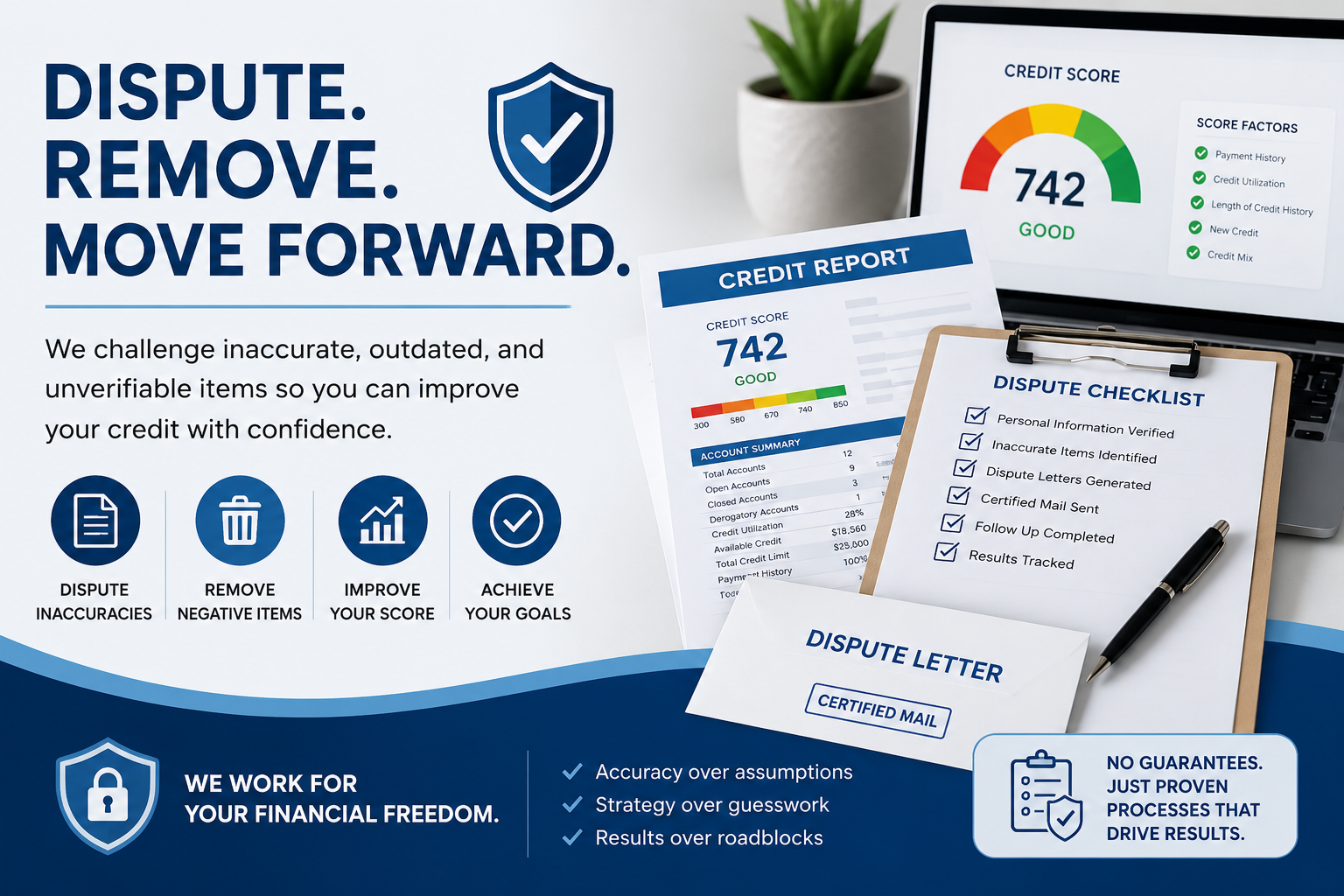
Start With the Part You Can Control
Utilization spikes can feel discouraging because the report may show old hardship long after life has stabilized. The first thing to control is not the past. It is the next decision. That means protecting current accounts, avoiding new late payments, lowering high balances when possible, and collecting proof before making claims.
The emotional urge is to fix everything at once. A better approach is to choose the account most connected to the next goal and the issue most supported by documents. The using secured credit cards responsibly gives a starting point, while late payment review process helps keep the plan tied to realistic timing.
Separate Repair Work From Rebuilding Work
Repair work asks whether the report is accurate, complete, timely, and properly connected to the consumer. Rebuilding work asks whether current behavior is getting stronger. These tracks should run together. A consumer may dispute an incorrect collection while also lowering card balances. A consumer may gather charge-off documents while protecting a new secured card from high utilization.
For the rebuilding track, review trusted credit repair resource and three credit bureaus explained. For reporting concerns, use credit repair education guide and keep the claim specific.
Do Not Let One Account Control the Entire Plan
One account can matter, but it should not make the plan reckless. If credit card balances rise while older negative accounts are being disputed or reviewed then the next step should be chosen carefully. Paying, disputing, settling, applying, or opening new credit can all have consequences depending on timing. A clean plan usually has fewer surprises than a fast plan.
Consumers preparing for a larger decision should also compare the issue against credit repair pricing page and trusted credit repair support so the file is not being judged by one isolated account only.
Measure Progress by the File, Not Just the Score
Scores move for many reasons. Utilization, account age, inquiries, payment history, and account updates can all change the number. A score alert may not explain whether a dispute worked, whether a balance updated, or whether a collection changed status. The report itself is the record that needs to be read.
The recovery mindset should be steady: review, document, act, track, and rebuild. If the file is complex, service locations page and credit repair service comparison guide can help connect the account issue to the larger credit repair process.
A Practical Way to Sort the Next Step
It is also helpful to avoid creating new confusion. Opening several accounts, disputing everything at once, paying an account without saving records, or applying during an active correction period can make the file harder to read. A slower sequence may protect the next approval review.
A good credit repair plan also looks for what is current. Old negative items may be painful, but current accounts often control whether the file looks stable. A person who lowers balances, protects open accounts, and avoids unnecessary applications may give future reviewers a better picture while older issues are being challenged or documented. The safest action is the one supported by the report, the documents, and the next real-life approval goal.
How to Keep the Review Practical
A practical review asks what the account is, who is reporting it, which bureau is showing it, what date appears, what balance appears, and what documents are available. It also asks what the consumer is trying to accomplish next. The answer may be different for a mortgage review, an apartment application, an auto approval, or a general rebuilding plan. When the next goal is clear, the credit repair work can be sequenced with less confusion.
Consumers should also keep a simple tracking sheet. Record the date the report was pulled, the account name, the bureau, the exact problem, the documents available, the action taken, and the result. This keeps the file organized and makes it easier to see whether a response actually fixed the reporting issue or only changed a small detail.
Questions Consumers Often Ask
Can utilization spikes be disputed?
It can be reviewed for dispute only when there is a factual issue, such as wrong balance, wrong status, duplicate reporting, outdated dates, missing ownership details, or an account that does not belong to the consumer. A dispute should be supported by documents whenever possible.
Should I pay first or dispute first?
That depends on the account, the documents available, and the next approval goal. Paying without records can make later correction harder. Disputing without a factual basis can waste time. Review the report and gather proof before deciding the order.
Will this stop me from getting approved?
It may affect a review, but approval decisions depend on the full file, including income, balances, recent payment behavior, debt ratios, account age, and the type of application. The goal is to reduce avoidable risk signals before the file is reviewed.
How long should I track the account after it changes?
Track the account through at least one full update cycle and compare all three bureaus. If the account changes after a dispute, payment, settlement, or transfer, save the updated report and compare it with your earlier copy.
It is also helpful to avoid creating new confusion. Opening several accounts, disputing everything at once, paying an account without saving records, or applying during an active correction period can make the file harder to read. A slower sequence may protect the next approval review.
Progress should be measured in more than score movement. A better file may have clearer account status, lower balances, fewer unresolved errors, better documentation, and stronger current payment behavior. Those pieces help create a more organized credit picture even when some old history remains.
A good credit repair plan also looks for what is current. Old negative items may be painful, but current accounts often control whether the file looks stable. A person who lowers balances, protects open accounts, and avoids unnecessary applications may give future reviewers a better picture while older issues are being challenged or documented.
The account name alone does not tell the full story. The bureau entry may contain a status, remark, balance, date opened, date reported, and ownership trail. Each field can matter. A correction request should be tied to the field that appears wrong, incomplete, or unsupported.
Consumers should be careful with advice that treats every account the same. Medical collections, auto charge-offs, BNPL late payments, debt buyer accounts, and old revolving charge-offs can each have different records and different timing concerns. The best next step depends on the documents available and the decision coming next.
It is also helpful to avoid creating new confusion. Opening several accounts, disputing everything at once, paying an account without saving records, or applying during an active correction period can make the file harder to read. A slower sequence may protect the next approval review.