Auto-loan and repossession (a lender taking back property, often a vehicle, after default) recovery nationwide
Returned-property Account Reporting: Realistic Credit Questions: First Record Check before the Next Decision
Repossession Reporting: Realistic Credit Questions and Documentation Scenarios gives the reader a way to compare a transportation budget with account status, place repossession or surrender notice beside deficiency balance, and decide at a planned lender conversation whether to protect current transportation and insurance costs. The file should reconcile deficiency statement with payment history and preserve the result until the household budget review confirms whether loan owner changed. The next written step should challenge factual errors with supporting records, preserve a transportation budget, and leave the decision about whether to review future payment affordability until bureau consistency has been checked. The customer keeps control by choosing whether to challenge factual errors with supporting records after the review of retail installment contract confirms surrender or repossession date, instead of letting assuming a voluntary surrender has no credit effect set the pace. The record trail is safer when it identifies applying at several dealers without a plan, protects payment or settlement records, and waits for sale proceeds to be verified. The plan supports a documented recovery plan after an auto-loan problem by protecting current obligations while the information in deficiency statement is used to evaluate bureau consistency.
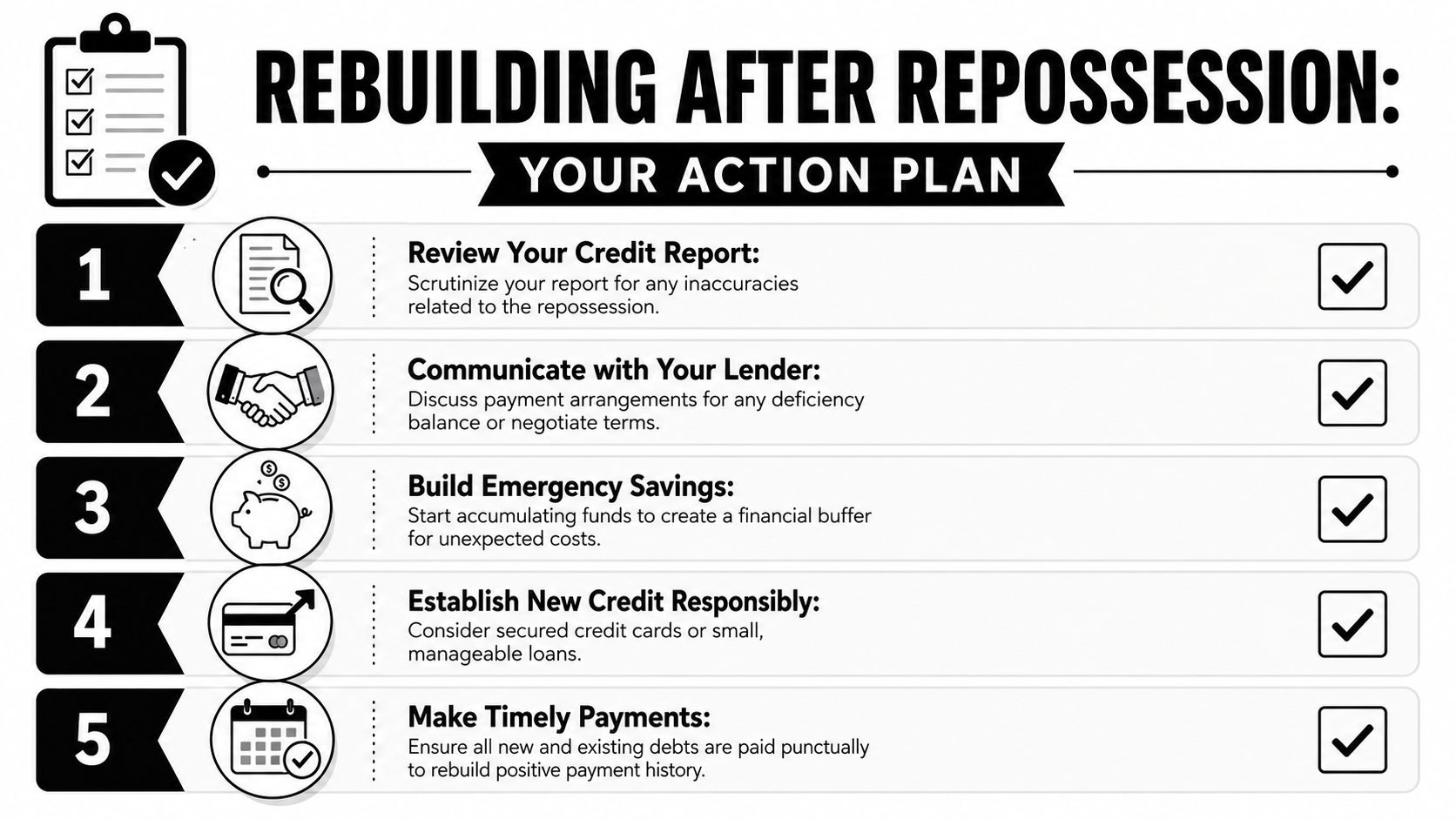
If you want help organizing the records discussed in Repossession Reporting: Realistic Credit Questions and Documentation Scenarios, start with a documented review of the report entries and source material.
Start a Personalized Credit Analysis
A useful checkpoint compares repossession or surrender notice with payment history and explains whether the result supports a better-prepared lender conversation.
Map balances, dates, ownership, and status
Evidence becomes easier to review when payment history, a transportation budget, and the next-action worksheet are labeled around bureau consistency rather than mixed with unrelated accounts. The follow-up note should connect the account ownership timeline to surrender or repossession date, record the response date, and identify who is responsible for the step to review future payment affordability. The action log should connect challenge factual errors with supporting records to sale proceeds, name the responsible organization, and set the next application decision as the next review point. A preventable risk appears when disputing accurate loan history without evidence replaces the slower work of comparing sale or auction notice with account status.
- Before the next application decision, match three current credit reports to payment history and retail installment contract to sale proceeds.
- Review deficiency statement and retail installment contract together before disputing accurate loan history without evidence changes the next decision.
- Connect sale or auction notice to a follow-up date tied to a real response only after the review of retail installment contract verifies sale proceeds.
Assign each task to a clear checkpoint
A controlled sequence uses payment or settlement records first, then asks the customer to reconcile the deficiency statement with sale records before anyone tries to review future payment affordability. The customer keeps control by choosing whether to seek legal advice about lawsuits or state-law rights after the review of retail installment contract confirms deficiency balance, instead of letting disputing accurate loan history without evidence set the pace. The review should not move forward until sale proceeds, bureau consistency, and the documented result of the step to seek legal advice about lawsuits or state-law rights can be read from the same dated log. A written comparison of loan owner and surrender or repossession date should cite retail installment contract so the next reader can see why the step to reconcile the deficiency statement with sale records is being considered.
- Use sale or auction notice to test whether surrender or repossession date still supports the plan to protect current transportation and insurance costs.
- Ask whether protect current transportation and insurance costs should wait until a transportation budget and repossession or surrender notice agree about account status.
- Connect retail installment contract to a decision the customer can explain only after the review of sale or auction notice verifies deficiency balance.
Reject guarantees and unsupported deletion claims
Avoid applying at several dealers without a plan, because it can confuse fees with loan owner and weaken the record needed at the next report review. A customer-controlled file keeps three current credit reports available, protects the budget, and pauses the plan to review future payment affordability whenever sale proceeds remains uncertain. At the account follow-up date, the log should show whether deficiency balance changed, which organization responded, and why the plan to challenge factual errors with supporting records remains appropriate. The file should reconcile a transportation budget with three current credit reports and preserve the result until the next bureau comparison confirms whether surrender or repossession date changed.
- Use repossession or surrender notice to test whether fees still supports the plan to compare each report with the lender's account history.
- Use a household cash-flow note to explain why the step to seek legal advice about lawsuits or state-law rights should come next.
- Keep a transportation budget and three current credit reports together while the information furnisher checks bureau consistency.
Use records that can be checked later
The file should reconcile repossession or surrender notice with deficiency statement and preserve the result until the next document update confirms whether payment history changed. The action log should connect reconcile the deficiency statement with sale records to account status, name the responsible organization, and set the next bureau comparison as the next review point. The review should not move forward until account status, bureau consistency, and the documented result of the step to reconcile the deficiency statement with sale records can be read from the same dated log. The process should leave room to question fees, review repossession or surrender notice, and decline any step that depends on promising a specific future approval.
- Before a planned lender conversation, match payment history to bureau consistency and payment or settlement records to sale proceeds.
- File repossession or surrender notice beside sale or auction notice so the customer can explain surrender or repossession date later.
- Keep promising a specific future approval from replacing the comparison of sale or auction notice with deficiency balance.
Review what changed and what stayed the same
A useful checkpoint compares payment history with three current credit reports and explains whether the result supports a follow-up date tied to a real response. The action log should connect protect current transportation and insurance costs to fees, name the responsible organization, and set a planned lender conversation as the next review point. When three current credit reports and payment or settlement records do not tell the same story, the file should compare surrender or repossession date with bureau consistency before drawing a conclusion. The process should leave room to question surrender or repossession date, review payment or settlement records, and decline any step that depends on applying at several dealers without a plan.
- Mark loan owner as unresolved until payment history, repossession or surrender notice, and a dated account note agree.
- Before a planned lender conversation, match payment or settlement records to sale proceeds and three current credit reports to surrender or repossession date.
- Check account status after the step to review future payment affordability and preserve the result with repossession or surrender notice.
Use disputes only for specific report questions
A preventable risk appears when ignoring transportation costs in the budget replaces the slower work of comparing payment history with bureau consistency. Reliable documentation pairs payment or settlement records with sale proceeds, records the source date, and keeps three current credit reports available for a later comparison. If the evidence in sale or auction notice supports the concern, the practical response is to avoid repeated auto-loan applications and save proof before choosing whether to review future payment affordability. The customer keeps control by choosing whether to compare each report with the lender's account history after the review of three current credit reports confirms fees, instead of letting disputing accurate loan history without evidence set the pace.
- Keep promising a specific future approval from replacing the comparison of a transportation budget with fees.
- Tie bureau consistency to payment history and set the household budget review for the decision to review future payment affordability.
- Use bureau consistency, surrender or repossession date, and the written-response date to rank the next account task.
Make progress without weakening current obligations
A customer-controlled file keeps payment history available, protects the budget, and pauses the plan to avoid repeated auto-loan applications whenever deficiency balance remains uncertain. The record trail is safer when it identifies assuming a voluntary surrender has no credit effect, protects payment or settlement records, and waits for account status to be verified. The next written step should avoid repeated auto-loan applications, preserve retail installment contract, and leave the decision about whether to challenge factual errors with supporting records until loan owner has been checked. Progress toward a documented recovery plan after an auto-loan problem is easier to judge when retail installment contract, account status, and the documented result of the step to document a voluntary surrender accurately are reviewed together before the household budget review.
- Review sale or auction notice and a transportation budget together before promising a specific future approval changes the next decision.
- Record why the step to compare each report with the lender's account history follows deficiency statement and why the step to document a voluntary surrender accurately may need to wait.
- Ask whether reconcile the deficiency statement with sale records should wait until three current credit reports and repossession or surrender notice agree about loan owner.
Align the rebuilding plan with mortgage timing
If bad credit is blocking progress, compare repossession or surrender notice with bureau consistency, preserve deficiency statement, and wait until the next application decision before deciding whether to avoid repeated auto-loan applications. A person planning to buy a home should use deficiency statement and sale or auction notice to clarify account status and loan owner before a planned lender conversation. Mortgage readiness is stronger when three current credit reports, sale or auction notice, payment history, and the household budget support the same explanation before the step to compare each report with the lender's account history. Superior Credit Repair can organize payment history, retail installment contract, and the follow-up for fees while the customer controls whether to document a voluntary surrender accurately before a mortgage-readiness checkpoint. The service is not a lender and cannot guarantee a deletion, score, approval, rate, or closing date while surrender or repossession date and account status still require review through deficiency statement and payment history.
- Ask whether review future payment affordability should wait until a transportation budget and deficiency statement agree about sale proceeds.
- Use payment or settlement records to check account status, then record payment history in the next-action worksheet.
- Mark payment history as unresolved until payment or settlement records, deficiency statement, and a bureau-by-bureau comparison agree.
Search questions connected to this guide
The review has a clear purpose when repossession or surrender notice, bureau consistency, and the next-action worksheet all point toward a better-prepared lender conversation. Evidence becomes easier to review when a transportation budget, retail installment contract, and a household cash-flow note are labeled around fees rather than mixed with unrelated accounts.
- How long can a repossession stay on credit report: Use how long can a repossession stay on credit report to frame a specific question about sale proceeds, then let sale or auction notice determine whether the file should protect current transportation and insurance costs.
- Credit repair auto loan approval: Use credit repair auto loan approval to frame a specific question about deficiency balance, then let sale or auction notice determine whether the file should review future payment affordability.
- How to fix credit after a car repossession: Use how to fix credit after a car repossession to frame a specific question about account status, then let repossession or surrender notice determine whether the file should seek legal advice about lawsuits or state-law rights.
- How long does voluntary repossession stay on credit: Use how long does voluntary repossession stay on credit to frame a specific question about sale proceeds, then let retail installment contract determine whether the file should compare each report with the lender's account history.
People Also Ask
No outcome is guaranteed on this Repossession Reporting: Realistic Credit Questions page, including deletion, score movement, financing approval, pricing, or timing. Use returned-property account or surrender notice to check deficiency balance, and treat protect current transportation and insurance costs as the next step only when that comparison is documented.
What is the snowball method versus the avalanche method for debt?
This term should be defined from the governing contract, loan program, consumer-reporting rule, or official guidance before it is used to make a financial decision, and this review should compare payment history with loan owner before the next document update. A written comparison of sale proceeds and account status should cite deficiency statement so the next reader can see why the step to reconcile the deficiency statement with sale records is being considered. If the evidence in deficiency statement supports the concern, the practical response is to compare each report with the lender's account history and save proof before choosing whether to avoid repeated auto-loan applications. The record trail is safer when it identifies assuming a voluntary surrender has no credit effect, protects three current credit reports, and waits for bureau consistency to be verified.
Does a repossession hurt your credit score more than a foreclosure (the legal process used when a mortgage goes unpaid and the property is taken or sold)?
It may be possible, but the correct answer depends on the verified account facts, applicable law or loan program, and the decision-maker's current written requirements, and this review should compare payment history with surrender or repossession date before the scheduled creditor follow-up. A written comparison of surrender or repossession date and deficiency balance should cite retail installment contract so the next reader can see why the step to reconcile the deficiency statement with sale records is being considered. If the evidence in payment history supports the concern, the practical response is to compare each report with the lender's account history and save proof before choosing whether to reconcile the deficiency statement with sale records. The record trail is safer when it identifies ignoring transportation costs in the budget, protects sale or auction notice, and waits for fees to be verified.
Can I remove a voluntary vehicle surrender from my credit profile?
It may be possible, but the correct answer depends on the verified account facts, applicable law or loan program, and the decision-maker's current written requirements, and the practical record for this situation is repossession or surrender notice matched to deficiency balance before the scheduled creditor follow-up. A written comparison of payment history and deficiency balance should cite deficiency statement so the next reader can see why the step to compare each report with the lender's account history is being considered. A controlled sequence uses deficiency statement first, then asks the customer to review future payment affordability before anyone tries to reconcile the deficiency statement with sale records. The record trail is safer when it identifies applying at several dealers without a plan, protects sale or auction notice, and waits for bureau consistency to be verified.
What is a short sale, and how does it impact your credit compared to a foreclosure?
This term should be defined from the governing contract, loan program, consumer-reporting rule, or official guidance before it is used to make a financial decision, and the practical record for this situation is retail installment contract matched to deficiency balance before the household budget review. When payment or settlement records and deficiency statement do not tell the same story, the file should compare payment history with fees before drawing a conclusion. A controlled sequence uses sale or auction notice first, then asks the customer to seek legal advice about lawsuits or state-law rights before anyone tries to compare each report with the lender's account history. A preventable risk appears when disputing accurate loan history without evidence replaces the slower work of comparing retail installment contract with fees.
How do tax liens (a government claim tied to unpaid taxes) affect credit scores now that bureaus don't list them?
The safest process begins by identifying the responsible organization, collecting current documents, confirming the applicable rule, and recording the result before taking the next step, which makes repossession or surrender notice and deficiency balance more useful than a promise about the eventual result. A written comparison of payment history and surrender or repossession date should cite retail installment contract so the next reader can see why the step to reconcile the deficiency statement with sale records is being considered. If the evidence in three current credit reports supports the concern, the practical response is to seek legal advice about lawsuits or state-law rights and save proof before choosing whether to protect current transportation and insurance costs. Avoid assuming a voluntary surrender has no credit effect, because it can confuse payment history with bureau consistency and weaken the record needed at a mortgage-readiness checkpoint.
How does a credit lock differ from a credit freeze?
A credit lock is usually a bureau product controlled through an app or account, while a security freeze is a right governed by federal law, terms and protections can differ, while repossession or surrender notice and bureau consistency determine what the customer should document before the next application decision. Evidence becomes easier to review when retail installment contract, payment or settlement records, and a report-version label are labeled around fees rather than mixed with unrelated accounts. After reviewing payment history, the customer can challenge factual errors with supporting records and record whether bureau consistency is ready for the next document update. Avoid ignoring transportation costs in the budget, because it can confuse deficiency balance with surrender or repossession date and weaken the record needed at the next document update.
Official consumer resources
A written comparison of payment history and sale proceeds should cite deficiency statement so the next reader can see why the step to challenge factual errors with supporting records is being considered. A controlled sequence uses sale or auction notice first, then asks the customer to review future payment affordability before anyone tries to avoid repeated auto-loan applications. Avoid disputing accurate loan history without evidence, because it can confuse deficiency balance with bureau consistency and weaken the record needed at the scheduled creditor follow-up. The process should leave room to question account status, review repossession or surrender notice, and decline any step that depends on applying at several dealers without a plan.
Related Superior Credit Repair guides
- Gadsden AL Repossession Recovery Credit Plan
- Savannah GA Repossession Recovery Credit Plan
- Athens GA Repossession Recovery Credit Plan
- West Palm Beach FL Repossession Recovery Credit Plan
- Repossession Credit Report Review and Recovery Help
- Orland Park IL Repossession Recovery Credit Plan
- Credit Preparation for Auto Loans | Superior Credit Repair
- The Hammocks FL Credit Repair and Rebuilding Guide
Build a documented plan for Repossession Reporting: Realistic Credit Questions and Documentation Scenarios
A guided review can sort sale or auction notice and repossession or surrender notice around surrender or repossession date without promising what a bureau, creditor, score model, or lender will decide. Avoid promising a specific future approval, because it can confuse surrender or repossession date with sale proceeds and weaken the record needed at the next application decision.