Nationwide Credit Repair Company • Georgia Credit Repair
Georgia collections can create several separate problems on a credit report: the debt may be unfamiliar, the balance may be wrong, or both the original lender and a collector may be displaying confusing statuses. The right response depends on which fact needs correction, not how alarming the entry looks.
Superior Credit Repair offers information about reviewing bureau records, assembling proof, and understanding dispute and rebuilding options. Whether a particular service is available in Georgia depends on state law and the circumstances of the request.
What to check before contacting a collector
If a Georgia collection concerns an unfamiliar creditor, identify the debt owner and the date of first delinquency before sending a generic dispute. A balance problem, a mistaken identity, and an expired reporting period involve different facts.
A single credit report often contains enough detail to distinguish a collection placed by a third party from a delinquency still held by the original creditor. If several credit problems appear together, take them one by one so the account numbers and dates are not mixed up.
Gather the collection notice, original creditor statement, any payoff letter, and the relevant bureau entry. A lender may also want the most recent account status when assessing a housing application.
The credit repair Georgia residents can pursue independently includes obtaining their bureau reports and disputing factual errors without paying an intermediary. Before you check your credit with a lender, review the information the collector actually furnished and keep a dated copy for your records. If the entries differ among bureaus, describe each difference precisely instead of asking them to delete the whole file.
First identify who is reporting the collection
A collection account is not necessarily the same record as the original loan, card, utility bill, or medical charge. Some creditors collect their own overdue balances, while others assign accounts to outside agencies or sell them to debt buyers. That distinction matters because two entries can describe different stages of the same obligation without automatically being duplicates. Look at the name of each furnisher, the account dates, the reported balance, and whether the original creditor still claims money is due.
An entry that belongs to somebody else may raise an identity theft concern, while a familiar account with an inflated balance raises a different question. A credit report that identifies the same obligation under two company names should be read with the assignment or sale notice nearby.
Begin by obtaining copies from the three nationwide bureaus. A credit report review should show which collector appears on each version, whether the dates agree, and whether payments already made are reflected. If a collector's name is unfamiliar, compare it with letters from the original creditor before assuming identity theft. Consumers who believe an account is not theirs should document that concern separately from an ordinary balance dispute.
Legitimate credit repair services do not change who owes a debt merely by challenging how a collector names the account. First ask the company that sent the letter for enough information to connect that company with the original bill.
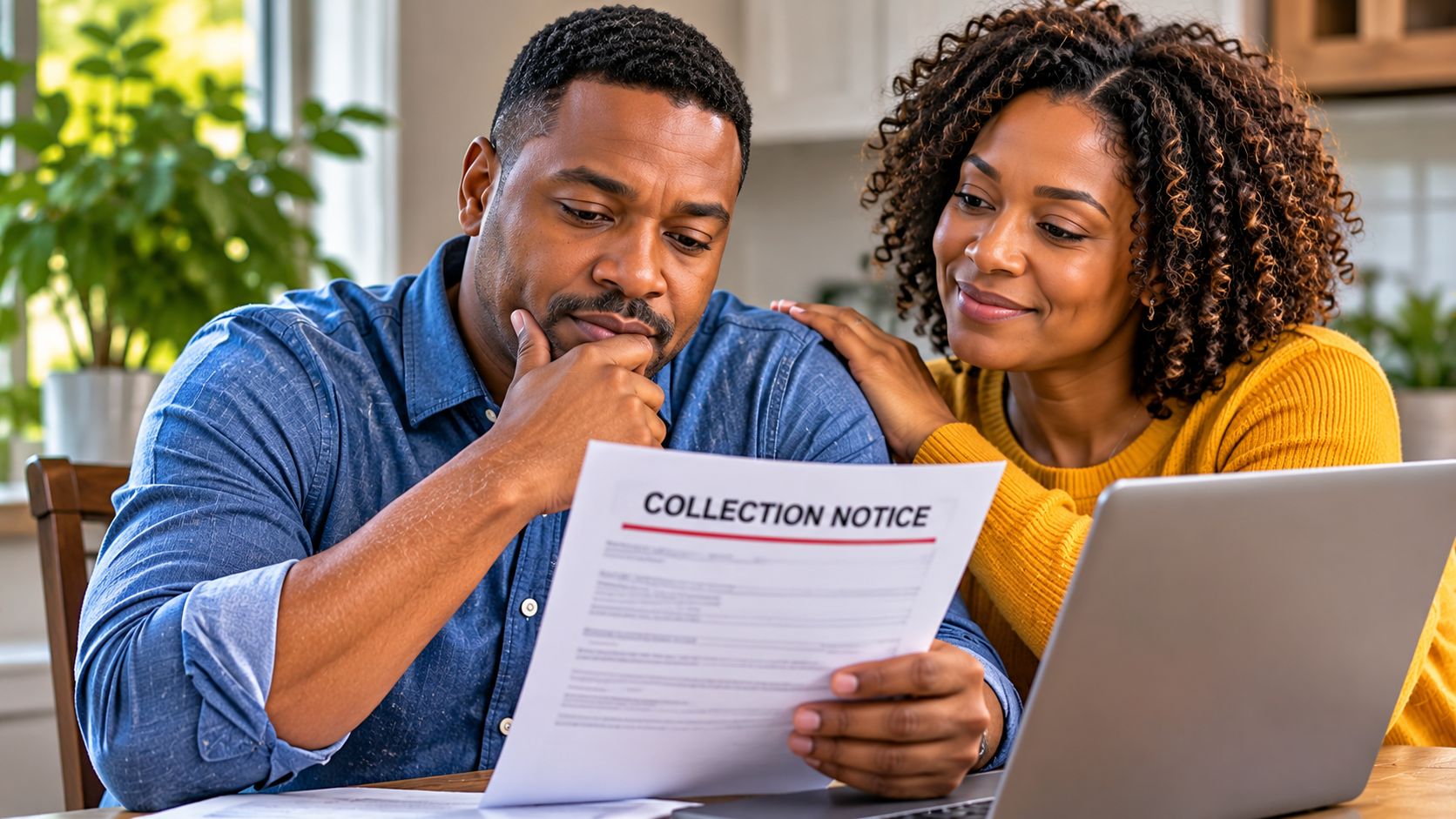
A collection notice and a bureau entry serve different purposes
A debt collector's first written notice normally provides information about the creditor, amount, and ways to question the debt. A bureau entry is a reporting record that lenders may see. Asking a debt collector to validate a debt and disputing inaccurate material with a bureau are related, but they are not interchangeable procedures. The collector's response may help establish who owns the obligation; the bureau's investigation addresses the accuracy of what appears on its file.
Good credit repair advice distinguishes the collector's validation process from the bureau's duty to investigate its own information. A credit record may contain an entry worth disputing even if the consumer agrees that some debt remains payable.
If the collection notice contains a deadline for requesting verification, pay attention to it. Keep the envelope, the letter, and proof of when a response was sent. A written explanation of what you dispute is more useful than a form letter claiming that every collection is invalid. For example, a consumer may accept that a bill exists while disputing the amount currently reported or whether a payment was credited.
A credit repair firm should not advise sending the same objection repeatedly without addressing the collector's response. The next letter should explain what the last answer failed to establish, such as a disputed amount or ownership detail.
Read the timeline before addressing the balance
The date a collection agency opened an internal account does not necessarily restart the federal credit-reporting period for the original delinquency. The date of first delinquency on the underlying account is often more important when determining how long an adverse collection can remain. Most negative information is generally reported for about seven years, subject to exceptions. Collection and enforcement deadlines also involve a separate statute of limitations, which depends on the obligation and applicable law.
A collection may arise after a contract is breached, but the records that support judgments are different from the statements showing missed payments. The task is to identify whether the entry in front of you contains a provable mistake, rather than treating every negative record as equivalent.
Do not confuse an old collection with a judgment or a bankruptcy. Judgments, bankruptcies, and ordinary collection tradelines involve different rules and source documents. Someone trying to remove bankruptcies from a file should not assume the same dispute reasoning applies to a collector's payment history. A creditor may also have legal rights after reporting ends; the end of a reporting period does not, by itself, cancel a valid debt.
Look for specific errors that documents can prove
A credit repair review of collections is strongest when it identifies a concrete discrepancy. Examples include a balance that fails to reflect a documented payment, an account assigned to the wrong consumer, a second collector still showing an active balance after a transfer, or an inaccurate delinquency date. Send relevant pages, not a pile of unrelated papers. If the issue is a duplicate, explain which entries concern the same obligation and why the reported status is misleading.
Credit repair companies should explain that a bureau can verify a correct collection even after the consumer supplies paperwork. A new credit report is useful only if you compare the precise status, balance, and date with the proof supporting your objection.
A collection can appear on one credit report but not another because furnishers do not always report to every bureau. That difference alone is not proof of wrongdoing. The credit bureaus must investigate qualifying disputes, and furnishers have duties to examine disputed information. When the response is incomplete, note what evidence was overlooked and consider the appropriate follow-up. Accurate negative items generally cannot be removed just because credit repair companies are hired.
A credit report review performed after an investigation can show whether an updated collector balance actually replaced the earlier figure. If the account still lists the wrong owner, identify the creditor transfer documents that support that claim rather than challenging unrelated entries.
Decide whether payment, settlement, or a dispute comes first
Payment can resolve an outstanding obligation, but the paid collection might remain visible if it is otherwise reportable. If you negotiate with a debt buyer, request the terms in writing and confirm how the account will be shown after payment. Avoid handing over banking details to an unknown caller without verifying who is collecting. A settlement offer is a financial decision, not a credit repair shortcut; consider possible tax consequences and the effect on other household bills.
People confronting several credit problems may need a budget discussion before negotiating any one collection. Trying to secure credit for a car or rental should not force an agreement with a collector whose ownership or amount has not yet been verified.
A collector may agree to correct an inaccurate balance without deleting an accurate account history. After the transaction, retain receipts and the written explanation of any agreement. If a later credit report continues to show an incorrect unpaid amount, those records can support a new targeted dispute. Do not assume that merely paying a bill will fix your credit automatically, and do not ignore a lawsuit or court notice while discussing the report.
A responsible credit report repair service can explain the distinction between proof of payment and the legal obligation that existed before payment. If you want to repair your credit, examine whether the updated account status is correct and continue paying present obligations on time.
Separate collection corrections from current borrowing habits
Credit restoration is not limited to disputing old entries. Consistent on-time payments, manageable revolving balances, and fewer unnecessary applications can help establish a better current record. Secured credit cards can offer a way to develop payment history, but compare fees, deposits, and reporting practices first. A secured credit account is not a substitute for resolving a legitimate collection obligation.
Card programs backed by deposits differ in fees and reporting practices. To secure credit on reasonable terms in the future, compare those costs with the practical need to resolve balances that are actually due.
People asking who can fix your credit may be looking for a company, but the consumer retains the right to check records and submit disputes for free. If you choose to discuss credit repair services with a provider, seek clear written terms describing what will actually be done. A credit restoration service cannot responsibly promise that an accurate collection will disappear. In Georgia, additional state restrictions govern many paid credit repair arrangements.
State law places limits on paid arrangements for changing credit records. Direct disputes are free, so review Georgia's consumer guidance before signing a contract with a provider.
Collections matter differently to renters, auto buyers, and mortgage applicants
The next lender or property manager may care about whether a collection is disputed, paid, open, or associated with a recent missed payment. Underwriting policies vary. A real estate broker can help explain a purchase process, but a broker does not determine what the credit bureaus must report. Mortgage financing decisions also depend on income, other debts, program rules, and the lender's particular requirements. Credit repair advice that treats every collection as identical misses those differences.
A real estate broker may request a timeline of unresolved collections before a home search, but the mortgage lender makes its own underwriting decision. A credit report should be accurate before anyone relies on the listed balances to estimate the debt burden.
For a future home purchase, keep a concise record of each collection: the original obligation, current owner, known balance, status of any dispute, and copies of actual responses. When a credit report shows an error, explain it rather than filing a new complaint on the strength of a search result. A credit report repair service can help organize information only within applicable legal limits; the same accuracy check is available directly to consumers without charge.
When you want to repair your credit, the time a correction takes may feel frustrating, yet a second unsupported dispute is rarely a useful shortcut. When an application is approaching, bring the account correspondence to the lender and ask which documentation is relevant.
Georgia law and realistic expectations
Georgia's Attorney General cautions that, with limited exceptions, operating a business that sells credit repair services is prohibited under state law. The state also warns about advance charges, invented credit identities, and claims that accurate negative information can be erased. Check the provider's legal status before signing an agreement or paying for credit repair. A second written explanation of any fee is worth requesting if the contract leaves you uncertain about what will be delivered.
The credit repair Georgia consumers may do for themselves is different from a promise to delete a true collection. A credit restoration service is not an exemption from Georgia's restrictions simply because it describes its work with another label.
Some people look for repair credit near me because they want a local conversation. Location does not change the federal right to dispute an inaccurate credit record, and a nearby address does not establish whether a provider may lawfully offer paid services. Others searching repair credit near me are mainly trying to understand why a collection survived payment. Start with the account history, then decide whether the real issue is reporting accuracy, repayment, or ordinary rebuilding.
If you need to check your credit before meeting a housing counselor, keep the current bureau copies and any collector responses together. The documents matter more than whether an adviser is located down the street.
Questions about credit repair collections
Can a paid collection account stay on my report?
Yes. Payment changes what you owe but does not invariably erase the history of an otherwise accurate collection. Compare the status on each bureau copy with the receipt or settlement agreement. If a paid balance still appears as unpaid, a documented correction request may be appropriate. Different scoring models may treat collections differently.
Should I dispute an account I recognize but cannot afford to pay?
Being unable to pay is not itself evidence of a reporting error. You can still examine ownership, dates, amounts, and whether the listed account belongs to you. If those details are accurate, options may involve a budget discussion or negotiation with the actual owner rather than a credit report dispute.
A consumer may evaluate secured credit cards after addressing a collection, but fees and whether the issuer reports activity deserve attention. Before using credit repair services, find out which actions the provider can lawfully perform in Georgia. A credit report can still reflect a valid debt while the consumer works out affordable payment terms with its owner. No particular paid provider is required to negotiate directly with a verified collector.
Does the statute of limitations erase a collection from the bureaus?
No. A debt collection lawsuit deadline and the federal reporting period address separate questions. The statute of limitations concerns the time allowed to sue on a particular obligation; reporting depends on credit-reporting rules. When an old collector contacts you, obtain legal advice before acknowledging or paying a debt if you are unsure about its status.
What documents should I keep after reaching a settlement?
Keep the signed terms, collector correspondence, proof of payment, and each new bureau copy that shows the updated account. Those documents can clarify whether a remaining balance is accurate. Do not rely on a telephone promise that the account will vanish; ask for a written explanation of the reporting status that was agreed to.
People who want to remove bankruptcies from their files should examine the rules for those records rather than treating a collector's disputed balance as the same problem. Someone asking who can fix your credit should know that a documented correction often begins with the creditor's own transaction history. If the agreed settlement terms are unclear, request clarification before discussing what the bureaus ought to display.
Can I correct a collection without hiring a company?
Yes. You may check your credit directly, contact the relevant bureau and furnisher, and challenge mistakes at no charge. If you seek outside guidance, distinguish educational information from a paid credit repair company or credit repair firm. Review Georgia's rules and be cautious of anyone promising a new credit identity or certain results.
Further reading for related decisions
Collection inquiries can lead into other financial questions. This reading is organized into nearby account problems, reporting procedures, Georgia collection guides, and optional mortgage topics. The first group separates the issues that can coexist on a borrower's file without requiring the same resolution.
Similar account concerns
Credit repair after repossession georgia — If a car lender sold a vehicle after default, there may be a separate question about whether the remaining debt is being stated correctly. The explanation there distinguishes the original installment contract from the collector's later balance.
Credit repair collections georgia — For the collection in front of you, begin with the original creditor, transfer history, and dates rather than accepting the entry at face value. This companion discussion explains which financial papers are most useful when a debt changes hands.
Credit repair late payments georgia — An earlier missed installment can remain visible even after a collector opens an account. Those two facts require separate records, and a corrected collection balance does not automatically alter the original lender's payment history.
Credit repair medical debt georgia — Medical billing may involve insurance adjustments, provider corrections, and different treatment of medical debt in consumer reports. Review the billing trail before equating every medical collection with a missed card or vehicle payment.
High credit card utilization georgia — Card balances are a current borrowing issue that can persist after an old collection is resolved. The linked explanation helps separate an accurate high revolving balance from a number the issuer furnished incorrectly.
Identity and verification errors georgia — An unfamiliar collection account may belong to another person or involve stolen identifying information. These issues require a different evidence trail from a debt that the consumer recognizes but believes was overstated.
Write down the collector name, amount, ownership trail, and the specific disputed field. Include the receipt or letter that supports the request. A verified, accurate collection is not deleted just because a company promises to fix it.
The most useful next step is a focused request about the specific credit report entry that does not match your documents, followed by an inspection of the written answer. Every account needs its own evidence; avoid paying simply because an unsolicited caller promises a quick correction.
The Atlanta and Columbus map searches are included as regional references; confirm any office appointment independently. Atlanta map and Columbus map.
Nationwide Bad-Credit Mortgage and Homebuyer Guides
Use these educational guides to compare mortgage-readiness questions,
government-backed programs, score ranges, down-payment planning, and
higher-cost alternatives. Program rules and lender overlays can change,
so confirm current requirements before applying.