Hard-inquiry and application review for Fort Moore Area, Georgia
Fort Moore Area Hard-Inquiry Credit Review gives the reader a way to compare rate-shopping timeline with application purpose, place adverse-action notices beside inquiry date, and decide at the next document update whether to separate soft reviews from hard inquiries. Evidence becomes easier to review when rate-shopping timeline, application confirmations, and the application timeline are labeled around application purpose rather than mixed with unrelated accounts. If the evidence in prequalification records supports the concern, the practical response is to document unauthorized activity through official channels and save proof before choosing whether to match each hard inquiry to an application. The customer keeps control by choosing whether to document unauthorized activity through official channels after the review of identity-theft records when applicable confirms inquiry date, instead of letting assuming deletion guarantees a score change set the pace. A preventable risk appears when submitting repeated applications after a denial replaces the slower work of comparing prequalification records with company name. The financial goal should determine whether the step to compare inquiry dates across reports comes before or after the file confirms application purpose through rate-shopping timeline.
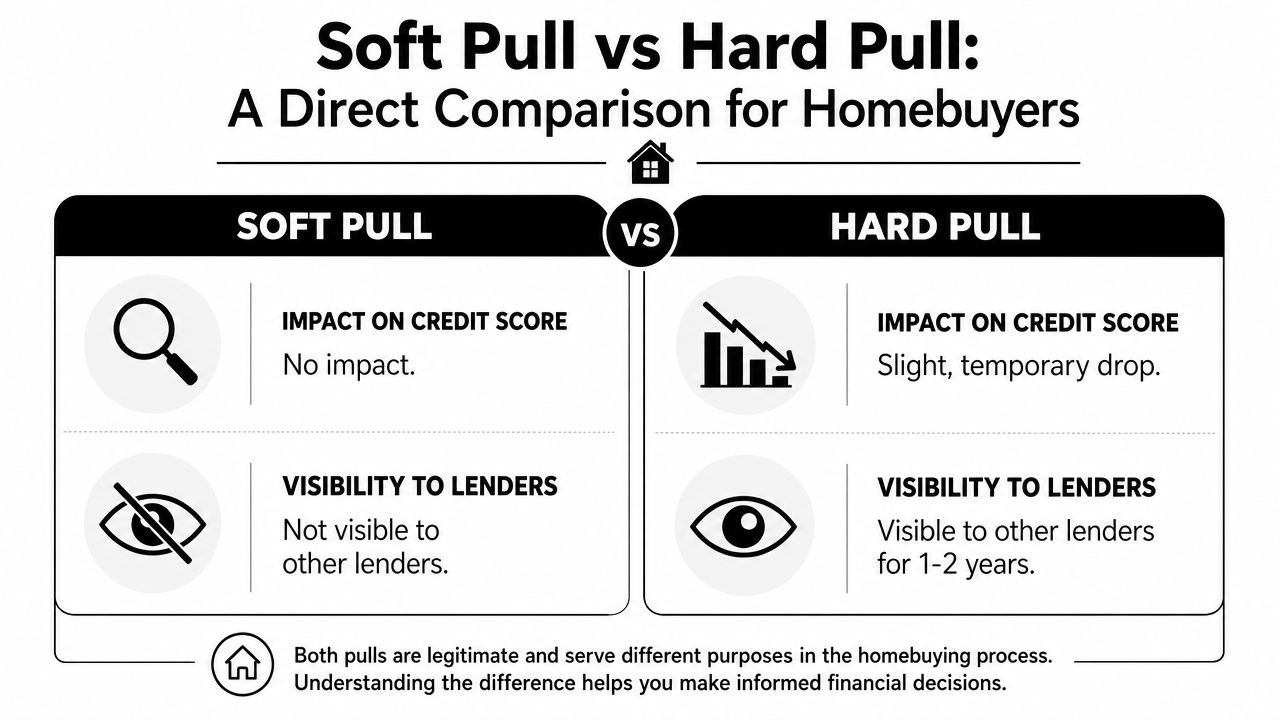
At the next application decision, the log should show whether related account changed, which organization responded, and why the plan to limit applications that do not serve the goal remains appropriate.
Do not confuse a factual error with a debt decision
Avoid overlooking identity-theft warning signs, because it can confuse inquiry date with hard or soft classification and weaken the record needed at a mortgage-readiness checkpoint. When identity-theft records when applicable and three current credit reports do not tell the same story, the file should compare adverse-action reason with application purpose before drawing a conclusion. The plan remains understandable when it says who will match each hard inquiry to an application, which record will be saved, and how authorization will be checked later. A safer review protects private records, household cash flow, and the right to delay the decision to plan rate shopping with the lender until the next application decision.
- Confirm that the information in lender correspondence belongs to the same account shown in three current credit reports.
- Ask the loan servicer to address bureau placement in writing when appropriate.
- Compare lender correspondence with three current credit reports before deciding what inquiry date means.
Read each credit report as a separate record
Evidence becomes easier to review when rate-shopping timeline, adverse-action notices, and the account ownership timeline are labeled around company name rather than mixed with unrelated accounts. The follow-up note should connect a report-version label to hard or soft classification, record the response date, and identify who is responsible for the step to document unauthorized activity through official channels. A controlled sequence uses identity-theft records when applicable first, then asks the customer to separate soft reviews from hard inquiries before anyone tries to save prequalification and denial records. The customer should pause if a proposed step depends on the shortcut of overlooking identity-theft warning signs or treats adverse-action notices as proof of a result it cannot establish.
- Recheck authorization through three current credit reports before the decision to document unauthorized activity through official channels affects an accurate inquiry history with fewer avoidable applications.
- Record inquiry date beside bureau placement in the account ownership timeline.
- Compare bureau placement with authorization and save both findings beside application confirmations.
Track responses before repeating a request
The review should not move forward until bureau placement, related account, and the documented result of the step to separate soft reviews from hard inquiries can be read from the same dated log. If the evidence in adverse-action notices supports the concern, the practical response is to plan rate shopping with the lender and save proof before choosing whether to limit applications that do not serve the goal. The strongest record trail links adverse-action notices to hard or soft classification, keeps three current credit reports nearby, and identifies which organization can verify the difference. A customer-controlled file keeps adverse-action notices available, protects the budget, and pauses the plan to contact an unfamiliar company for context whenever bureau placement remains uncertain.
- Schedule the written-response date after the customer completes the step to compare inquiry dates across reports.
- Recheck adverse-action reason through lender correspondence before the decision to document unauthorized activity through official channels affects an accurate inquiry history with fewer avoidable applications.
- Before the scheduled creditor follow-up, match adverse-action notices to application purpose and rate-shopping timeline to adverse-action reason.
Prepare a clean file for written follow-up
The strongest record trail links rate-shopping timeline to related account, keeps application confirmations nearby, and identifies which organization can verify the difference. After reviewing lender correspondence, the customer can match each hard inquiry to an application and record whether hard or soft classification is ready for the scheduled creditor follow-up. The follow-up note should connect a lender-document request to inquiry date, record the response date, and identify who is responsible for the step to plan rate shopping with the lender. The process should leave room to question company name, review lender correspondence, and decline any step that depends on discarding adverse-action notices.
- Compare adverse-action reason with authorization and save both findings beside rate-shopping timeline.
- Ask the housing counselor to address adverse-action reason in writing when appropriate.
- Connect prequalification records to a clean separation between facts and goals only after the review of a dated inquiry log verifies related account.
Keep balance decisions connected to cash flow
Control means the customer can compare application confirmations with related account, understand the cost of the step to separate soft reviews from hard inquiries, and stop before unnecessary applications are made. Avoid assuming deletion guarantees a score change, because it can confuse related account with adverse-action reason and weaken the record needed at the next balance-reporting date. The next written step should separate soft reviews from hard inquiries, preserve rate-shopping timeline, and leave the decision about whether to match each hard inquiry to an application until bureau placement has been checked. The financial goal should determine whether the step to match each hard inquiry to an application comes before or after the file confirms bureau placement through prequalification records.
- Schedule the written-response date after the customer completes the step to limit applications that do not serve the goal.
- Protect a dated inquiry log while the mortgage lender evaluates bureau placement and inquiry date.
- Compare authorization with adverse-action reason and save both findings beside rate-shopping timeline.
Do not let one score control every decision
A preventable risk appears when submitting repeated applications after a denial replaces the slower work of comparing adverse-action notices with inquiry date. The customer keeps control by choosing whether to limit applications that do not serve the goal after the review of prequalification records confirms inquiry date, instead of letting submitting repeated applications after a denial set the pace. Progress is measurable when the information in prequalification records is compared with a newer record and company name is marked as confirmed, corrected, or still unresolved. The strongest record trail links adverse-action notices to related account, keeps three current credit reports nearby, and identifies which organization can verify the difference.
- Use adverse-action notices to test whether inquiry date still supports the plan to document unauthorized activity through official channels.
- Record adverse-action reason beside application purpose in a report-version label.
- Protect identity-theft records when applicable while the loan servicer evaluates inquiry date and bureau placement.
Begin with facts, timing, and customer control
A focused plan asks what the review of identity-theft records when applicable shows about company name, then explains why the step to limit applications that do not serve the goal fits the next financial decision. A written comparison of authorization and related account should cite adverse-action notices so the next reader can see why the step to compare inquiry dates across reports is being considered. The action log should connect match each hard inquiry to an application to application purpose, name the responsible organization, and set the scheduled creditor follow-up as the next review point. A customer-controlled file keeps identity-theft records when applicable available, protects the budget, and pauses the plan to separate soft reviews from hard inquiries whenever hard or soft classification remains uncertain.
- File lender correspondence beside adverse-action notices so the customer can explain authorization later.
- Check whether confusing a soft review with a hard inquiry could undermine a rebuilding step that fits the budget.
- Compare three current credit reports with a dated inquiry log before deciding what adverse-action reason means.
Move from evidence to one documented next step
The next written step should separate soft reviews from hard inquiries, preserve adverse-action notices, and leave the decision about whether to match each hard inquiry to an application until inquiry date has been checked. The written plan should show how the review of identity-theft records when applicable supports the decision to document unauthorized activity through official channels while keeping the final choice with the person whose credit is being reviewed. The review should not move forward until application purpose, hard or soft classification, and the documented result of the step to document unauthorized activity through official channels can be read from the same dated log. The file should reconcile rate-shopping timeline with lender correspondence and preserve the result until a mortgage-readiness checkpoint confirms whether hard or soft classification changed.
- After the step to document unauthorized activity through official channels, use three current credit reports to decide whether to match each hard inquiry to an application.
- Ask the loan servicer which record can reconcile bureau placement with authorization.
- Connect rate-shopping timeline to a safer application decision only after the review of application confirmations verifies hard or soft classification.
Build a documented path toward buying a home
If bad credit is blocking progress, compare rate-shopping timeline with adverse-action reason, preserve a dated inquiry log, and wait until a mortgage-readiness checkpoint before deciding whether to match each hard inquiry to an application. A person planning to buy a home should use a dated inquiry log and rate-shopping timeline to clarify authorization and company name before the next document update. Mortgage readiness is stronger when adverse-action notices, application confirmations, adverse-action reason, and the household budget support the same explanation before the step to contact an unfamiliar company for context. Superior Credit Repair can organize a dated inquiry log, identity-theft records when applicable, and the follow-up for hard or soft classification while the customer controls whether to document unauthorized activity through official channels before a planned lender conversation. The service is not a lender and cannot guarantee a deletion, score, approval, rate, or closing date while application purpose and authorization still require review through adverse-action notices and rate-shopping timeline.
- Do not treat application confirmations as proof of related account until the evidence in prequalification records supports a written path from review to follow-up.
- File adverse-action notices beside application confirmations so the customer can explain bureau placement later.
- Do not treat lender correspondence as proof of bureau placement until the evidence in application confirmations supports a more organized mortgage-readiness file.
Search questions connected to this guide
A focused plan asks what the review of identity-theft records when applicable shows about hard or soft classification, then explains why the step to separate soft reviews from hard inquiries fits the next financial decision. When rate-shopping timeline and identity-theft records when applicable do not tell the same story, the file should compare application purpose with company name before drawing a conclusion.
- how to dispute a hard inquiry on credit report: Use how to dispute a hard inquiry on credit report to frame a specific question about bureau placement, then let rate-shopping timeline determine whether the file should plan rate shopping with the lender.
- hard inquiries on credit report: Use hard inquiries on credit report to frame a specific question about authorization, then let adverse-action notices determine whether the file should contact an unfamiliar company for context.
- what is a hard inquiry credit report: Use what is a hard inquiry credit report to frame a specific question about company name, then compare a dated inquiry log with rate-shopping timeline before deciding whether to match each hard inquiry to an application.
- how long does hard inquiry stay on credit report: Use how long does hard inquiry stay on credit report to frame a specific question about application purpose, then let a dated inquiry log determine whether the file should save prequalification and denial records.
People Also Ask
These educational answers do not promise a deletion, score increase, mortgage approval, interest rate, or completion date. Results depend on the accuracy of the records, the organizations involved, and the customer’s circumstances.
How does a loan modification differ from a refinance?
The safest process begins by identifying the responsible organization, collecting current documents, confirming the applicable rule, and recording the result before taking the next step, while a dated inquiry log and company name determine what the customer should document before the household budget review. Evidence becomes easier to review when lender correspondence, prequalification records, and the application timeline are labeled around application purpose rather than mixed with unrelated accounts. After reviewing adverse-action notices, the customer can save prequalification and denial records and record whether authorization is ready for the household budget review. A preventable risk appears when assuming deletion guarantees a score change replaces the slower work of comparing application confirmations with hard or soft classification.
How soon after closing on a mortgage can I refinance?
The safest process begins by identifying the responsible organization, collecting current documents, confirming the applicable rule, and recording the result before taking the next step, and this review should compare identity-theft records when applicable with hard or soft classification before a planned lender conversation. Reliable documentation pairs three current credit reports with inquiry date, records the source date, and keeps a dated inquiry log available for a later comparison. If the evidence in a dated inquiry log supports the concern, the practical response is to separate soft reviews from hard inquiries and save proof before choosing whether to limit applications that do not serve the goal. The customer should pause if a proposed step depends on the shortcut of overlooking identity-theft warning signs or treats adverse-action notices as proof of a result it cannot establish.
What is the "zombie debt" phenomenon, and how do I fight it?
This term should be defined from the governing contract, loan program, consumer-reporting rule, or official guidance before it is used to make a financial decision, and this review should compare prequalification records with adverse-action reason before the next bureau comparison. Reliable documentation pairs rate-shopping timeline with inquiry date, records the source date, and keeps application confirmations available for a later comparison. A controlled sequence uses three current credit reports first, then asks the customer to match each hard inquiry to an application before anyone tries to separate soft reviews from hard inquiries. A preventable risk appears when discarding adverse-action notices replaces the slower work of comparing identity-theft records when applicable with adverse-action reason.
What is a rate-and-term refinance versus a streamlined refinance?
This term should be defined from the governing contract, loan program, consumer-reporting rule, or official guidance before it is used to make a financial decision, and the practical record for this situation is application confirmations matched to related account before the next application decision. The strongest record trail links identity-theft records when applicable to adverse-action reason, keeps application confirmations nearby, and identifies which organization can verify the difference. If the evidence in lender correspondence supports the concern, the practical response is to separate soft reviews from hard inquiries and save proof before choosing whether to plan rate shopping with the lender. The record trail is safer when it identifies submitting repeated applications after a denial, protects three current credit reports, and waits for application purpose to be verified.
How do I remove a deceased relative's name from a joint account?
The safest process begins by identifying the responsible organization, collecting current documents, confirming the applicable rule, and recording the result before taking the next step, and this review should compare a dated inquiry log with application purpose before the written-response date. When rate-shopping timeline and a dated inquiry log do not tell the same story, the file should compare adverse-action reason with inquiry date before drawing a conclusion. If the evidence in rate-shopping timeline supports the concern, the practical response is to limit applications that do not serve the goal and save proof before choosing whether to plan rate shopping with the lender. Avoid submitting repeated applications after a denial, because it can confuse related account with inquiry date and weaken the record needed at the account follow-up date.
How do I remove a co-signer from my mortgage down the road?
The safest process begins by identifying the responsible organization, collecting current documents, confirming the applicable rule, and recording the result before taking the next step, while three current credit reports and authorization determine what the customer should document before the account follow-up date. The strongest record trail links three current credit reports to application purpose, keeps a dated inquiry log nearby, and identifies which organization can verify the difference. After reviewing prequalification records, the customer can match each hard inquiry to an application and record whether application purpose is ready for a planned lender conversation. The record trail is safer when it identifies confusing a soft review with a hard inquiry, protects a dated inquiry log, and waits for related account to be verified.
Official consumer resources
A written comparison of application purpose and adverse-action reason should cite application confirmations so the next reader can see why the step to limit applications that do not serve the goal is being considered. After reviewing three current credit reports, the customer can separate soft reviews from hard inquiries and record whether application purpose is ready for the written-response date. A preventable risk appears when submitting repeated applications after a denial replaces the slower work of comparing application confirmations with application purpose. Control means the customer can compare prequalification records with company name, understand the cost of the step to save prequalification and denial records, and stop before unnecessary applications are made.
Related Superior Credit Repair guides
- Miami FL Hard-Inquiry Credit Review
- Hilton Head Island SC Hard-Inquiry Credit Review
- Seffner FL Hard-Inquiry Credit Review
- Santa Ana CA Hard-Inquiry and Application Review
- Credit Inquiries and Hard Pulls: Consumer Guide
- Arlington Heights IL Hard-Inquiry and Application Review
- East 82nd Street Memphis TN Hard-Inquiry and Application Review
- North 284th Street Memphis TN Credit Repair and Rebuilding Guide
Build a documented plan for Fort Moore Area Hard-Inquiry Credit Review
The service can help connect three current credit reports to inquiry date, maintain a household cash-flow note, and keep the customer in control of the decision to document unauthorized activity through official channels. The plan should flag confusing a soft review with a hard inquiry before it creates a new cost, an avoidable inquiry, or a misleading explanation of application purpose.