Credit-score factor and rebuilding review nationwide
Compare Loan statements and Three current credit reports on New account before choosing the next action
For this review, FICO (a common credit-score model lenders use) is used with that plain meaning throughout the account file. Put payment calendar beside card statements and find the dated value for recent inquiry first. A mismatch in reported utilization (the share of a credit limit already in use) should stay separate from payment history until the entry in score-factor notices identifies which value is current. Before choosing an action on payment history, the reviewer should be able to answer from card statements: Are recent applications serving a clear goal? The next review date for new account in recent inquiry list should also resolve this question: Which factors are named in the current score notice? Stop if payment calendar and three current credit reports still tell different stories about new account; the unresolved difference is the next item to investigate. Once the discrepancy (a mismatch between two records) is isolated, “Review reports for factual errors” can be considered as the next step, with recent inquiry list kept as the supporting record. Before moving on, record the entry for credit mix from three current credit reports and whether “Keep older well-managed accounts under review” follows from that fact.
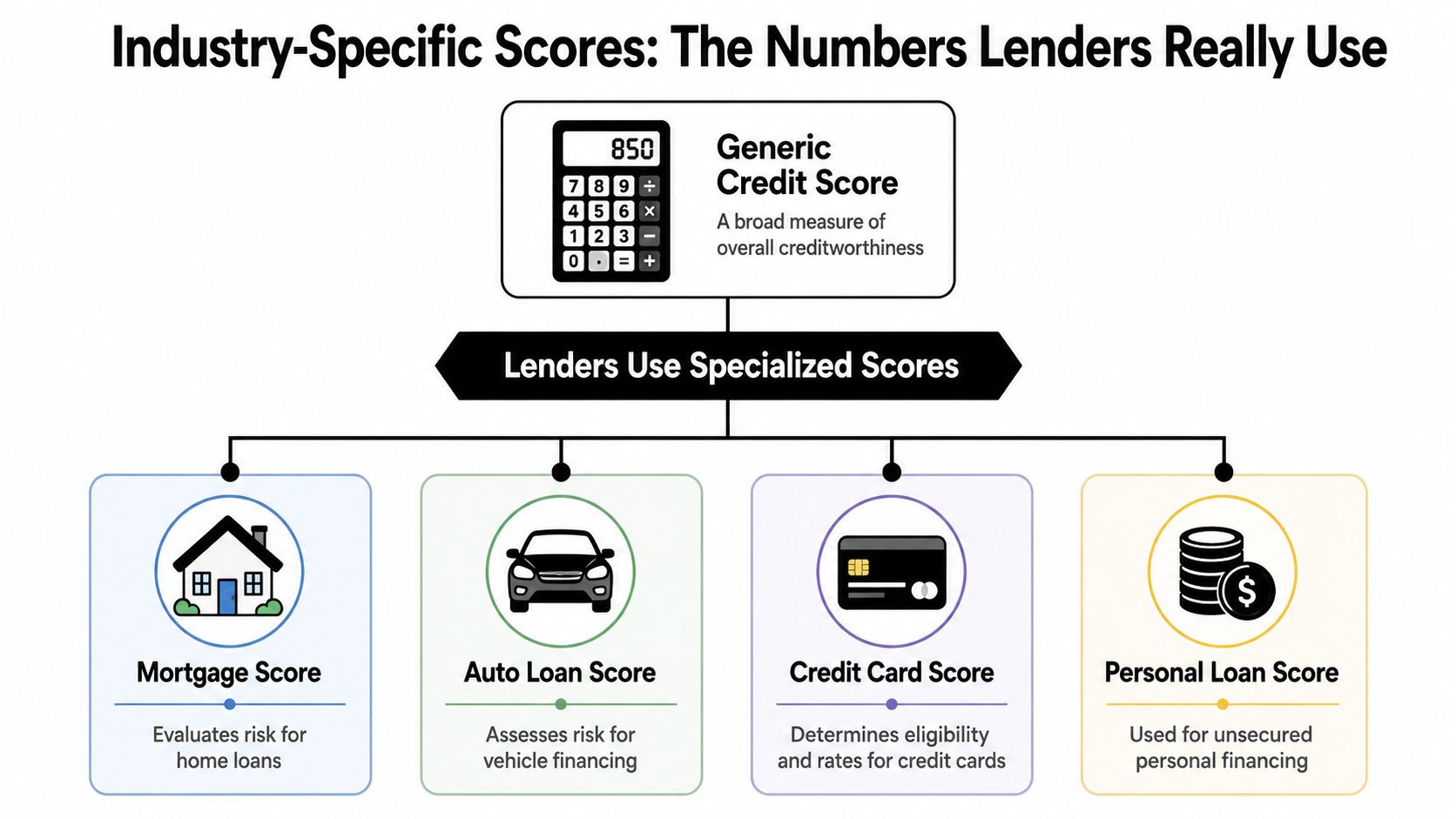
Check Account age against Payment calendar before moving on with FICO (The file should show what the evidence in Card statements says about Recent inquiry, who can respond to a difference, and when Recent inquiry list should be checked again. For the nationwide Account age check in Card statements, use Loan statements and Score-factor notices to test the Reported utilization entry, then choose the next step from the documented difference rather than a promised outcome. For the next decision about New account, the Reported utilization step remains optional when the evidence in Loan statements does not support it or when the customer chooses a different timing, budget, or privacy tradeoff.
Start with the record that can verify New account in Loan statements
Review Three current credit reports before choosing the next step on New account; use Loan statements to keep the Reported utilization purpose concrete: tie Reported utilization to Loan statements, note the unresolved point, and define the evidence needed before moving on. For Account age, with Three current credit reports open for comparison, use Loan statements to answer one concrete question about Reported utilization: Which factors are named in the current score notice? For the nationwide Credit mix check in Payment calendar, use Card statements and Recent inquiry list to answer the Recent inquiry question, then choose the next step from the documented difference. At the next dated review of Reported utilization, compare the current entry with the saved record. In the nationwide New account review, answer the Payment history question with Three current credit reports, separate it from Credit mix, and state what would justify another action. Using Card statements, review Reported utilization; the New account record should name the organization that can address the entry, with Loan statements kept as the source.
- What source should support Recent inquiry before the file moves on to Reported utilization?
- What source should support New account before the file moves on to Payment history for the FICO Scoring Models and Credit Factors review?
- If Recent inquiry changed after the last response, which entry in Recent inquiry list should be compared with Score-factor notices?
- How should the file document Account age if Payment calendar and Score-factor notices still do not agree?
- What source should support Account age before the file moves on to Recent inquiry?
Use Loan statements and Three current credit reports to support the review of New account
For New account, use Loan statements to support this step: connect each report question to a statement, notice, confirmation, or official record that can answer it. During the review of Credit mix in Score-factor notices, the New account review should move toward a more stable credit profile built through repeatable habits, while recognizing that one action cannot dictate a creditor, bureau, landlord, or lender decision. In the nationwide Payment history review, if the plan starts moving toward comparing scores from different models as if they were identical, return to the New account evidence in Loan statements before continuing. Keep score-factor notices with negative item accuracy and recent inquiry list with recent inquiry, using separate account records. For Account age, check Three current credit reports against Recent inquiry list before moving on. For New account, keep a completed correction separate from a pending request, denial, or rebuilding task in Loan statements.
- Score-factor notices
- Card statements
- Payment calendar
- Recent inquiry list
- Loan statements
- Three current credit reports
Check whether Loan statements and Three current credit reports agree on New account
Use Card statements to verify Credit mix before making the next decision. For a nationwide decision about New account, compare the same account, date, status, and balance across each bureau before deciding what is actually inconsistent. While checking Reported utilization in Loan statements, a controlled sequence can protect every due date, document the result, and then lower revolving balances within the budget. With the nationwide Account age record open, do not respond by comparing scores from different models as if they were identical, because speed without documentation can make the next review harder. For New account, use Loan statements to support this step: compare the same account, date, status, and balance across each bureau before deciding what is actually inconsistent. Using Recent inquiry list, review Recent inquiry; the New account review should move toward a more stable credit profile built through repeatable habits, while recognizing that one action cannot dictate a creditor, bureau, landlord, or lender decision.
- New account
- Reported utilization
- Payment history
- Account age
- Credit mix
- Recent inquiry
Advance the file only when New account has a documented answer
For New account, use Loan statements to support this step: move from review to evidence, action, response tracking, and a later checkpoint without repeating unsupported requests. Before closing New account, using Payment calendar as the evidence source, use Loan statements to tie the New account question to the evidence, protect current payments, and schedule a measured follow-up. For the nationwide Recent inquiry check in Recent inquiry list, a strong result is better organization around a more stable credit profile built through repeatable habits, even when accurate negative information remains. For New account in Loan statements, the New account file should mark closing an old card without analysis before money, applications, or sensitive documents are involved as a risk before moving on. A controlled sequence can compare progress over consistent checkpoints, document the result, and then protect every due date.
- Write the factual explanation for New account
- Match Loan statements to the New account finding
- Record delivery and response dates for Three current credit reports
- Mark Reported utilization on the saved report
- Send copies of Score-factor notices rather than original records
- Compare the response with the next report update for Payment history
Track response dates for New account using Loan statements
For New account, use Loan statements to support this step: record what changed, what stayed the same, what evidence was considered, and who owns the next follow-up. With Three current credit reports open for Payment history, start the Reported utilization check with one question that Loan statements can answer: Which factors are named in the current score notice? For the nationwide Recent inquiry check, this part of the credit-score improvement plan exists to record what changed, what stayed the same, what evidence was considered, and who owns the next follow-up. Use separate account files when connecting a monthly progress log to reported utilization and card statements to new account. With Score-factor notices beside the Account age entry, one preventable error is opening several accounts at once; a written checkpoint gives the customer time to choose a safer response.
- Record the date Loan statements were reviewed for New account
- Write one factual note explaining the Reported utilization difference
- Mark the Payment history entry on a saved report
- Save copies of Three current credit reports and keep the originals
- Match Score-factor notices to the account fact it supports
- Compare the response with the next report update for New account
Request a Free Credit Analysis
Document New account without promising a particular outcome
For New account, use Loan statements to support this step: rely on truthful records, focused explanations, and official guidance while avoiding claims that accurate information must be removed. During a check of Payment history against Loan statements, for New account, carrying interest because of a score myth is a reason to pause and verify the record. In the nationwide file for New account, keep a dated answer to this Reported utilization question with Loan statements: Is progress being compared with the same type of score? Use Loan statements to track the first action: keep older well-managed accounts under review. A later review can decide whether to read score-factor notices rather than guessing. With Card statements beside the Credit mix entry, a useful credit-score improvement plan should rely on truthful records, focused explanations, and official guidance while avoiding claims that accurate information must be removed.
- When Three current credit reports and Score-factor notices disagree, which dated entry should control the Account age review?
- Before another request is sent, what evidence in Recent inquiry list would settle the New account question for the FICO Scoring Models and Credit Factors review?
- Before another request is sent, what evidence in Three current credit reports would settle the Reported utilization question?
- When Three current credit reports and Recent inquiry list disagree, which dated entry should control the New account review?
- How should the file document Credit mix if Loan statements and Recent inquiry list still do not agree?
Protect current obligations while reviewing New account
In the review of Recent inquiry, after checking Recent inquiry list against Recent inquiry list. In the nationwide New account review, keep new late payments and avoidable fees from undermining progress while correspondence (letters and other written messages) or updates are pending. During the review of Account age in Three current credit reports, a controlled sequence can avoid products that add cost without a clear purpose, document the result, and then limit unnecessary applications. During the nationwide Reported utilization review, use Loan statements to measure progress on New account toward a more stable credit profile built through repeatable habits while keeping every decision under the customer's control. Compare a monthly progress log with household budget; the pair can show whether credit mix agrees with recent inquiry. Using Three current credit reports, review New account; the New account review should pause at comparing scores from different models as if they were identical and return to the documented evidence in Loan statements.
- What source should support Recent inquiry before the file moves on to Reported utilization?
- Which date in Score-factor notices should trigger a fresh check of Account age against Payment calendar?
- Which change to Payment history should be recorded after comparing Score-factor notices with Recent inquiry list?
- Before another request is sent, what evidence in Card statements would settle the Payment history question?
- What result would close the Recent inquiry checkpoint without mixing it with the separate Reported utilization decision for the FICO Scoring Models and Credit Factors review?
Use New account in Loan statements to narrow the next decision
Keep Payment calendar available as evidence for Recent inquiry. During the nationwide New account review, choose steps that support the stated objective without sacrificing current payments, essential expenses, or cash reserves. During the Account age check in Score-factor notices, one preventable error is carrying interest because of a score myth; a written checkpoint gives the customer time to choose a safer response. Before the next nationwide Payment history step, if the concern is “how to fix credit score”, start with the New account entry in Loan statements. Next, avoid products that add cost without a clear purpose; once that is documented in Card statements, read score-factor notices rather than guessing. Compare Recent inquiry list with the saved New account entry, when a deadline or lawsuit affects consumers nationwide, the credit-review file should be taken to an appropriately qualified local professional before moving on.
- How to fix credit score
- Fix my credit score
- How to fix my credit score
- How to repair credit score
Treat New account as a fact question before choosing a strategy
Use Three current credit reports to verify Account age before making the next decision. For a nationwide decision about New account, treat a factual correction, debt decision, application decision, and rebuilding habit as different kinds of work. While checking Credit mix in Card statements, one preventable error is carrying interest because of a score myth; a written checkpoint gives the customer time to choose a safer response. Use Loan statements as the comparison record for the nationwide Account age review. Use Three current credit reports to verify New account nationwide, with the consumer's dated records and any applicable deadline kept in the file. At the next dated review of Credit mix, the purpose is a more stable credit profile built through repeatable habits, not a guaranteed deletion, score increase, approval, rate, or completion date. For New account, record who will limit unnecessary applications and when the customer will protect every due date; keep that timing beside Loan statements.
- What source should support Recent inquiry before the file moves on to Reported utilization for the FICO Scoring Models and Credit Factors review?
- How should the file document Reported utilization if Loan statements and Score-factor notices still do not agree?
- Does Loan statements support the same New account value shown in Card statements, or does that difference need a separate note?
- If New account changed after the last response, which entry in Three current credit reports should be compared with Recent inquiry list?
- What result would close the Recent inquiry checkpoint without mixing it with the separate Reported utilization decision?
Keep common mistakes out of the New account review
Compare the entry in Three current credit reports with the saved Payment history entry before moving on. Before the next nationwide New account step, identify actions that can waste money, create inquiries, weaken documentation, or turn an accurate issue into a misleading claim. During the review of New account in Payment calendar, one preventable error is carrying interest because of a score myth; a written checkpoint gives the customer time to choose a safer response. After the file records New account from Three current credit reports, if the concern is “how to fix credit score”, start with the New account entry in Loan statements. For the next decision, review Recent inquiry. For New account nationwide, compare Loan statements with the current report and apply the relevant reporting rules; contracts, court deadlines, and local legal questions may require qualified local advice. Once Reported utilization has a dated entry in Card statements, use Loan statements to measure progress toward a more stable credit profile built through repeatable habits; do not treat any single action as control over a creditor, bureau, landlord, or lender decision.
- Combining New account and Reported utilization in one vague explanation
- Challenging a correct Payment history entry only because it is negative
- Using an outdated Loan statements as the only evidence for Account age
- Discarding written responses tied to Credit mix
- Sending a generic request without support from Three current credit reports
- Assuming every bureau reports New account the same way
Use Loan statements to answer search questions about New account
Use the questions below to clarify New account for FICO Scoring Models and Credit Factors. For FICO Scoring Models and Credit Factors, answer each question with current records and realistic expectations.
- How to repair credit score — compare New account in Loan statements; the records should determine the answer.
- Fix my credit score — start with the Reported utilization entry in Three current credit reports and compare it with Score-factor notices before choosing a response.
- How to fix my credit score — treat this as a question about Payment history, then test the facts with Score-factor notices and Card statements.
- How to fix credit score — compare Account age in Card statements; the records should determine the answer.
People Also Ask
Are recent applications serving a clear goal?
For FICO Scoring Models and Credit Factors, begin with a monthly progress log and household budget so the answer is tied to current records. In the answer about New account, check new account and score-model difference separately, because one correct field does not prove that the full account entry is accurate. In the nationwide file for Credit mix, the practical next step is to protect every due date, record the result, and then decide whether it is appropriate to read score-factor notices rather than guessing. After checking New account in Three current credit reports, for consumers nationwide, legal deadlines or contract questions should be confirmed with the responsible organization or a qualified local professional. After comparing the Recent inquiry entry in Recent inquiry list with Recent inquiry list, no answer to “Are recent applications serving a clear goal?” can honestly promise a deletion, score increase, approval, rate, or completion date.
Which factors are named in the current score notice?
For FICO Scoring Models and Credit Factors, begin with payment calendar and household budget so the answer is tied to current records. In the nationwide file for Recent inquiry, check reported utilization and recent inquiry separately, because one correct field does not prove that the full account entry is accurate. At this stage of the Reported utilization review, the practical next step is to review reports for factual errors, record the result, and then decide whether it is appropriate to avoid products that add cost without a clear purpose. For the New account question on this page, using Three current credit reports as the source record, for consumers nationwide, legal deadlines or contract questions should be confirmed with the responsible organization or a qualified local professional. When the question turns to Reported utilization, no answer to “Which factors are named in the current score notice?” can honestly promise a deletion, score increase, approval, rate, or completion date.
Is progress being compared with the same type of score?
For FICO Scoring Models and Credit Factors, begin with household budget and score-factor notices so the answer is tied to current records. When the file reaches the next Payment history checkpoint, check score-model difference and recent inquiry separately, because one correct field does not prove that the full account entry is accurate. In the review of Reported utilization, after checking Card statements against Recent inquiry list, the practical next step is to lower revolving balances within the budget, record the result, and then decide whether it is appropriate to read score-factor notices rather than guessing. For a reader checking Payment history against Recent inquiry list, for consumers nationwide, legal deadlines or contract questions should be confirmed with the responsible organization or a qualified local professional. For this nationwide review of New account, no answer to “Is progress being compared with the same type of score?” can honestly promise a deletion, score increase, approval, rate, or completion date.
Which revolving balance can be reduced safely?
For FICO Scoring Models and Credit Factors, begin with loan statements and recent inquiry list so the answer is tied to current records. After comparing the Payment history entry in Recent inquiry list with Score-factor notices, check recent inquiry and account age separately, because one correct field does not prove that the full account entry is accurate. For this question about Account age, the practical next step is to read score-factor notices rather than guessing, record the result, and then decide whether it is appropriate to limit unnecessary applications. For the nationwide Credit mix using Score-factor notices check, legal deadlines or contract questions should be confirmed with the responsible organization or a qualified local professional. At the next dated review of Account age, no answer to “Which revolving balance can be reduced safely?” can honestly promise a deletion, score increase, approval, rate, or completion date.
Are all current payments protected?
For FICO Scoring Models and Credit Factors, begin with card statements and household budget so the answer is tied to current records. For a reader checking Credit mix against Card statements, check negative item accuracy and score-model difference separately, because one correct field does not prove that the full account entry is accurate. For the nationwide Credit mix using Score-factor notices check, the practical next step is to read score-factor notices rather than guessing, record the result, and then decide whether it is appropriate to keep older well-managed accounts under review. When the file reaches the next Credit mix checkpoint, for consumers nationwide, legal deadlines or contract questions should be confirmed with the responsible organization or a qualified local professional. For this Account age decision; use Three current credit reports as the verification source, no answer to “Are all current payments protected?” can honestly promise a deletion, score increase, approval, rate, or completion date.
Do the reports contain a documented error?
For FICO Scoring Models and Credit Factors, begin with card statements and three current credit reports so the answer is tied to current records. In this nationwide Account age worksheet, check new account and recent inquiry separately, because one correct field does not prove that the full account entry is accurate. Before closing the checkpoint for Recent inquiry, the practical next step is to review reports for factual errors, record the result, and then decide whether it is appropriate to compare progress over consistent checkpoints. With Recent inquiry list documented for Payment history, for consumers nationwide, legal deadlines or contract questions should be confirmed with the responsible organization or a qualified local professional. For this Recent inquiry question, no answer to “Do the reports contain a documented error?” can honestly promise a deletion, score increase, approval, rate, or completion date.
Official consumer resources
Official sources give FICO Scoring Models and Credit Factors a reliable starting point, but they do not decide the facts of a particular account. Before closing New account, use the first resource to understand the rules or consumer process connected to credit-score improvement plan. Using Loan statements for New account, use the second to obtain or interpret the report information needed for the review. Preserve the page reference and access date with the review because official instructions and reporting practices may change. For FICO Scoring Models and Credit Factors, when the issue involves a lawsuit, bankruptcy choice, tax question, contract, or state deadline, seek advice from a qualified professional rather than treating this educational page as legal advice. A related record may mention credit utilization (the share of a credit limit already in use); compare that item with score-factor notices before treating it as part of payment history.
Related Superior Credit Repair guides
- Decatur GA Credit Score Improvement Plan | Superior Credit Repair
- Better Credit Repair Nationwide: Score Improvement Roadmap
- Three Credit Bureaus Explained: Experian, Equifax, and TransUnion
- Lowell AR Credit Utilization and Card Balance Plan
- Posen IL Auto Financing Credit Preparation
- Amarillo TX Apartment Approval Credit Help | Superior Credit Repair
- Seattle WA Third Avenue Credit Repair Guide
- How to Write a Credit Dispute Letter
Build a documented plan for FICO Scoring Models and Credit Factors
Superior Credit Repair can help organize the reports, supporting records, response log, and rebuilding priorities for FICO Scoring Models and Credit Factors. In the Recent inquiry evidence review against Payment calendar, for New account, use Loan statements to connect payment history, revolving balances, account age, credit mix, and recent applications to documented habits rather than a promised number. In the nationwide file for Recent inquiry, it does not promise deletions, score increases, approvals, rates, or completion dates, and the customer keeps control of every decision.