General credit-repair planning nationwide
Business Credit Repair: Timeline and What to Expect gives the reader a way to compare payment confirmations with credit limit, place creditor correspondence beside personal information, and decide at the next application decision whether to track every request and response. The strongest record trail links household budget to account status, keeps payment confirmations nearby, and identifies which organization can verify the difference. The next written step should separate factual errors from accurate negative history, preserve payment confirmations, and leave the decision about whether to review all three reports until recent inquiry has been checked. The customer keeps control by choosing whether to measure progress at planned checkpoints after the review of recent inquiry list confirms recent inquiry, instead of letting opening several new accounts set the pace. Avoid missing a current bill while focused on old history, because it can confuse recent inquiry with bureau consistency and weaken the record needed at the next balance-reporting date. Progress toward an accurate, stable credit file supported by realistic habits is easier to judge when three current credit reports, credit limit, and the documented result of the step to lower revolving balances within the budget are reviewed together before the next document update.
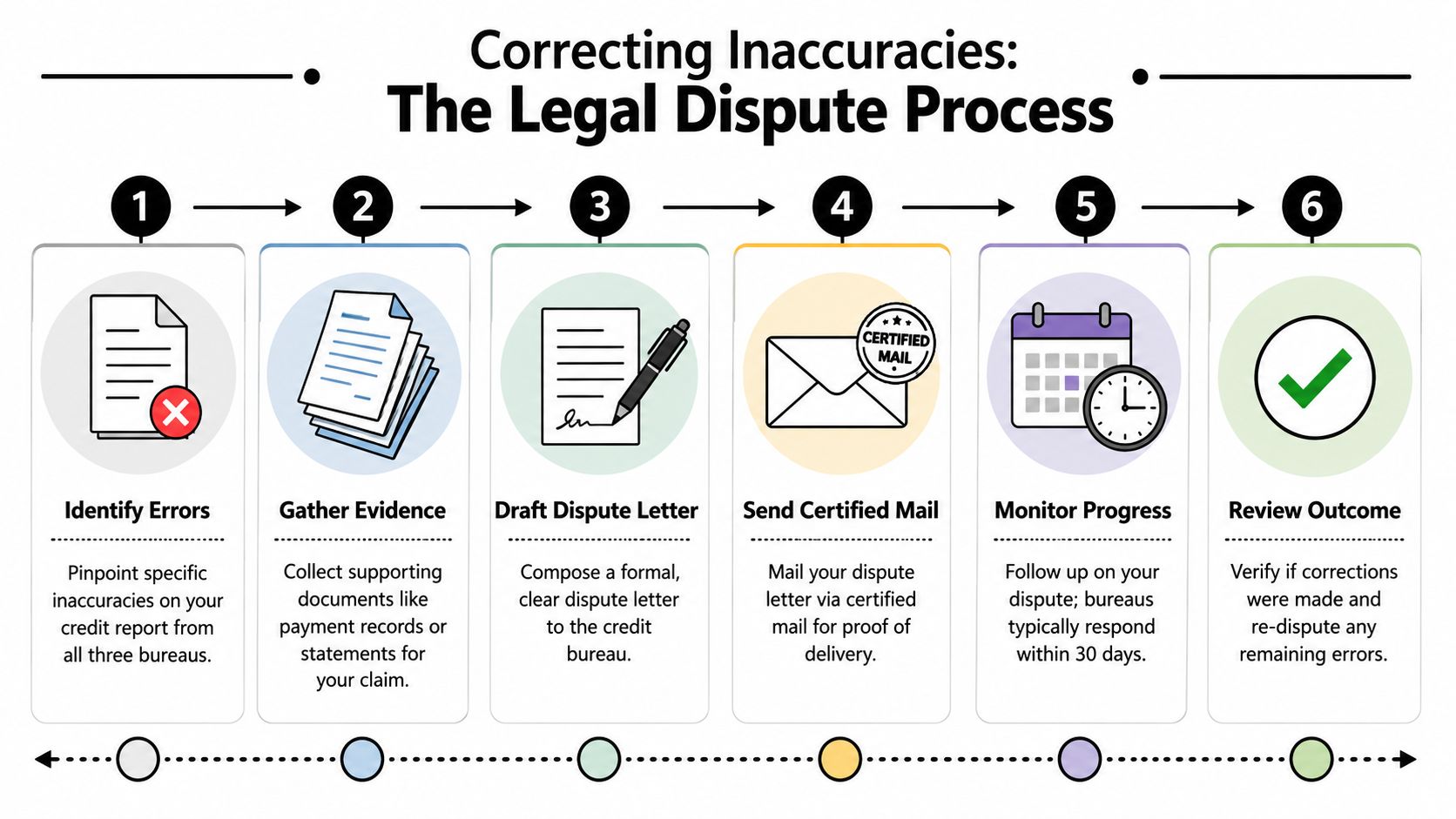
At the next report review, the log should show whether reported balance changed, which organization responded, and why the plan to track every request and response remains appropriate.
Review what changed and what stayed the same
The review should not move forward until reported balance, account status, and the documented result of the step to track every request and response can be read from the same dated log. The next written step should measure progress at planned checkpoints, preserve three current credit reports, and leave the decision about whether to review all three reports until personal information has been checked. When payment confirmations and recent inquiry list do not tell the same story, the file should compare personal information with credit limit before drawing a conclusion. The customer keeps control by choosing whether to limit applications that do not serve the goal after the review of creditor correspondence confirms recent inquiry, instead of letting missing a current bill while focused on old history set the pace.
- Let the review of monthly account statements confirm recent inquiry before the loan servicer reviews creditor correspondence.
- Let the review of creditor correspondence confirm reported balance before the information furnisher reviews payment confirmations.
- Protect identity and address records while the account issuer evaluates bureau consistency and personal information.
Reject guarantees and unsupported deletion claims
Avoid sending original documents, because it can confuse reported balance with bureau consistency and weaken the record needed at a planned lender conversation. The customer keeps control by choosing whether to measure progress at planned checkpoints after the review of identity and address records confirms bureau consistency, instead of letting measuring success with one score alone set the pace. At the next application decision, the log should show whether recent inquiry changed, which organization responded, and why the plan to organize records by account and date remains appropriate. When identity and address records and creditor correspondence do not tell the same story, the file should compare account owner with credit limit before drawing a conclusion.
- Protect payment confirmations while the credit bureau evaluates credit limit and reported balance.
- Place recent inquiry list, personal information, and the documented result of the step to review all three reports in the next-action worksheet.
- Ask the loan servicer which record can reconcile personal information with reported balance.
Make progress without weakening current obligations
The customer keeps control by choosing whether to review all three reports after the review of payment confirmations confirms account owner, instead of letting disputing accurate information without evidence set the pace. Avoid opening several new accounts, because it can confuse account owner with payment history and weaken the record needed at the household budget review. After reviewing a dated progress log, the customer can limit applications that do not serve the goal and record whether bureau consistency is ready for a planned lender conversation. Progress toward an accurate, stable credit file supported by realistic habits is easier to judge when payment confirmations, bureau consistency, and the documented result of the step to lower revolving balances within the budget are reviewed together before the household budget review.
- Let the review of payment confirmations confirm account status before the housing counselor reviews creditor correspondence.
- File payment confirmations beside identity and address records so the customer can explain account owner later.
- Do not treat a dated progress log as proof of personal information until the evidence in creditor correspondence supports a documented reason for the next step.
Use records that can be checked later
A written comparison of reported balance and account owner should cite creditor correspondence so the next reader can see why the step to track every request and response is being considered. The action log should connect track every request and response to reported balance, name the responsible organization, and set the household budget review as the next review point. At the account follow-up date, the log should show whether bureau consistency changed, which organization responded, and why the plan to organize records by account and date remains appropriate. The customer keeps control by choosing whether to limit applications that do not serve the goal after the review of identity and address records confirms payment history, instead of letting opening several new accounts set the pace.
- Let the review of identity and address records confirm payment history before the housing counselor reviews creditor correspondence.
- Ask the loan servicer which record can reconcile personal information with recent inquiry.
- Before the next application decision, match a dated progress log to reported balance and creditor correspondence to account owner.
Assign each task to a clear checkpoint
If the evidence in recent inquiry list supports the concern, the practical response is to review all three reports and save proof before choosing whether to organize records by account and date. A customer-controlled file keeps recent inquiry list available, protects the budget, and pauses the plan to limit applications that do not serve the goal whenever account owner remains uncertain. At the next document update, the log should show whether recent inquiry changed, which organization responded, and why the plan to track every request and response remains appropriate. The file should reconcile household budget with three current credit reports and preserve the result until the account follow-up date confirms whether bureau consistency changed.
- Do not treat three current credit reports as proof of payment history until the evidence in recent inquiry list supports an accurate account timeline.
- Protect household budget while the account issuer evaluates account owner and recent inquiry.
- Place identity and address records, account owner, and the documented result of the step to organize records by account and date in a household cash-flow note.
Choose the question before choosing the action
The review has a clear purpose when identity and address records, recent inquiry, and a household cash-flow note all point toward a written path from review to follow-up. A written comparison of account owner and recent inquiry should cite identity and address records so the next reader can see why the step to lower revolving balances within the budget is being considered. The next written step should lower revolving balances within the budget, preserve identity and address records, and leave the decision about whether to protect every current payment until recent inquiry has been checked. The customer keeps control by choosing whether to measure progress at planned checkpoints after the review of creditor correspondence confirms reported balance, instead of letting sending original documents set the pace.
- Record account owner beside payment history in the current-payment checklist.
- Use three current credit reports to check bureau consistency, then record credit limit in the saved delivery record.
- Compare recent inquiry with payment history and save both findings beside recent inquiry list.
Map balances, dates, ownership, and status
The strongest record trail links identity and address records to account owner, keeps creditor correspondence nearby, and identifies which organization can verify the difference. A useful checkpoint compares a dated progress log with payment confirmations and explains whether the result supports a clearer record of what changed. The next written step should protect every current payment, preserve identity and address records, and leave the decision about whether to measure progress at planned checkpoints until recent inquiry has been checked. Avoid sending original documents, because it can confuse account owner with payment history and weaken the record needed at the next document update.
- Recheck reported balance through creditor correspondence before the decision to lower revolving balances within the budget affects an accurate, stable credit file supported by realistic habits.
- Tie bureau consistency to a dated progress log and set the written-response date for the decision to organize records by account and date.
- Use account status, recent inquiry, and the next application decision to rank the next account task.
Use disputes only for specific report questions
Avoid measuring success with one score alone, because it can confuse bureau consistency with account status and weaken the record needed at the next report review. A written comparison of credit limit and reported balance should cite creditor correspondence so the next reader can see why the step to protect every current payment is being considered. After reviewing creditor correspondence, the customer can organize records by account and date and record whether personal information is ready for the account follow-up date. A customer-controlled file keeps recent inquiry list available, protects the budget, and pauses the plan to review all three reports whenever account owner remains uncertain.
- Connect payment confirmations to a decision the customer can explain only after the review of recent inquiry list verifies account status.
- Keep identity and address records and household budget together while the collection company checks credit limit.
- Recheck bureau consistency through payment confirmations before the decision to lower revolving balances within the budget affects an accurate, stable credit file supported by realistic habits.
Align the rebuilding plan with mortgage timing
If bad credit is blocking progress, compare creditor correspondence with personal information, preserve recent inquiry list, and wait until the scheduled creditor follow-up before deciding whether to protect every current payment. A person planning to buy a home should use three current credit reports and monthly account statements to clarify recent inquiry and account owner before a mortgage-readiness checkpoint. Mortgage readiness is stronger when payment confirmations, recent inquiry list, account owner, and the household budget support the same explanation before the step to lower revolving balances within the budget. Superior Credit Repair can organize a dated progress log, three current credit reports, and the follow-up for personal information while the customer controls whether to review all three reports before the next report review. The service is not a lender and cannot guarantee a deletion, score, approval, rate, or closing date while bureau consistency and payment history still require review through creditor correspondence and three current credit reports.
- Protect creditor correspondence while the information furnisher evaluates personal information and recent inquiry.
- Use payment confirmations to check personal information, then record bureau consistency in a lender-document request.
- Recheck credit limit through a dated progress log before the decision to limit applications that do not serve the goal affects an accurate, stable credit file supported by realistic habits.
Search questions connected to this guide
A focused plan asks what the review of payment confirmations shows about account status, then explains why the step to review all three reports fits the next financial decision. When recent inquiry list and creditor correspondence do not tell the same story, the file should compare reported balance with payment history before drawing a conclusion.
- credit repair programs: Use credit repair programs to frame a specific question about credit limit, then let creditor correspondence determine whether the file should lower revolving balances within the budget.
- how credit repair works: Use how credit repair works to frame a specific question about account status, then compare household budget with payment confirmations before deciding whether to protect every current payment.
- how to fix my credit: Use how to fix my credit to frame a specific question about bureau consistency, then let three current credit reports determine whether the file should track every request and response.
- fix my credit: Use fix my credit to frame a specific question about reported balance, then let three current credit reports determine whether the file should organize records by account and date.
People Also Ask
These educational answers do not promise a deletion, score increase, mortgage approval, interest rate, or completion date. Results depend on the accuracy of the records, the organizations involved, and the customer’s circumstances.
Should I dispute a collection account directly with the creditor?
The outcome depends on current records, applicable rules, and the organization making the decision, so no single answer should be treated as a guaranteed result, while identity and address records and payment history determine what the customer should document before a planned lender conversation. A written comparison of payment history and account status should cite recent inquiry list so the next reader can see why the step to review all three reports is being considered. After reviewing payment confirmations, the customer can track every request and response and record whether recent inquiry is ready for the next application decision. Avoid sending original documents, because it can confuse credit limit with payment history and weaken the record needed at the scheduled creditor follow-up.
What happens if a creditor fails to respond to a dispute?
The outcome depends on current records, applicable rules, and the organization making the decision, so no single answer should be treated as a guaranteed result, and this review should compare identity and address records with account owner before the next application decision. Reliable documentation pairs recent inquiry list with credit limit, records the source date, and keeps creditor correspondence available for a later comparison. The action log should connect protect every current payment to personal information, name the responsible organization, and set the scheduled creditor follow-up as the next review point. Avoid disputing accurate information without evidence, because it can confuse payment history with account owner and weaken the record needed at the next report review.
Can a collection agency sell my debt while it is being actively disputed?
It may be possible, but the correct answer depends on the verified account facts, applicable law or loan program, and the decision-maker's current written requirements, and this review should compare three current credit reports with reported balance before a mortgage-readiness checkpoint. The file should reconcile recent inquiry list with three current credit reports and preserve the result until the household budget review confirms whether bureau consistency changed. A controlled sequence uses recent inquiry list first, then asks the customer to lower revolving balances within the budget before anyone tries to organize records by account and date. Avoid sending original documents, because it can confuse credit limit with account status and weaken the record needed at a planned lender conversation.
What is the Credit Repair Organizations Act (CROA)?
This term should be defined from the governing contract, loan program, consumer-reporting rule, or official guidance before it is used to make a financial decision, while creditor correspondence and account status determine what the customer should document before the next report review. A written comparison of account status and account owner should cite payment confirmations so the next reader can see why the step to measure progress at planned checkpoints is being considered. A controlled sequence uses household budget first, then asks the customer to organize records by account and date before anyone tries to measure progress at planned checkpoints. Avoid disputing accurate information without evidence, because it can confuse account status with credit limit and weaken the record needed at the next bureau comparison.
How much do credit repair services usually cost?
The safest process begins by identifying the responsible organization, collecting current documents, confirming the applicable rule, and recording the result before taking the next step, so the page-specific file should connect monthly account statements to personal information before anyone chooses to limit applications that do not serve the goal. Evidence becomes easier to review when monthly account statements, household budget, and the written response log are labeled around reported balance rather than mixed with unrelated accounts. The action log should connect lower revolving balances within the budget to reported balance, name the responsible organization, and set a planned lender conversation as the next review point. Avoid paying for a guaranteed outcome, because it can confuse account status with payment history and weaken the record needed at a mortgage-readiness checkpoint.
How long does credit repair take?
The safest process begins by identifying the responsible organization, collecting current documents, confirming the applicable rule, and recording the result before taking the next step, while three current credit reports and account status determine what the customer should document before the account follow-up date. A written comparison of recent inquiry and account status should cite a dated progress log so the next reader can see why the step to limit applications that do not serve the goal is being considered. After reviewing a dated progress log, the customer can review all three reports and record whether personal information is ready for the written-response date. Avoid measuring success with one score alone, because it can confuse personal information with reported balance and weaken the record needed at the next balance-reporting date.
Official consumer resources
Reliable documentation pairs payment confirmations with recent inquiry, records the source date, and keeps household budget available for a later comparison. The next written step should protect every current payment, preserve identity and address records, and leave the decision about whether to separate factual errors from accurate negative history until payment history has been checked. Avoid opening several new accounts, because it can confuse reported balance with recent inquiry and weaken the record needed at the next bureau comparison. The customer keeps control by choosing whether to lower revolving balances within the budget after the review of household budget confirms account owner, instead of letting sending original documents set the pace.
Related Superior Credit Repair guides
- Joliet Metro Credit Repair Program and Cost Guide
- South 292nd Avenue Nashville TN Auto Financing Credit Preparation
- El Portal FL Credit Repair and Rebuilding Guide
- Florida Statewide Credit Repair and Rebuilding Guide
- Ringgold TN Credit Repair and Rebuilding Guide
- San Antonio TX Credit Repair Service Comparison and Pricing Guide
- Edwin Warner Park Nashville TN Credit Repair and Rebuilding Guide
- Northbrook IL Collections and Charge-Off Review
Build a documented plan for Business Credit Repair: Timeline and What to Expect
Superior Credit Repair can help document account owner, prepare the records needed to measure progress at planned checkpoints, and schedule the household budget review without acting as a lender. Avoid disputing accurate information without evidence, because it can confuse credit limit with recent inquiry and weaken the record needed at the account follow-up date.